Keiko Kitagawa in Fast & Furious Tokyo Drift: Everything You Need to Know
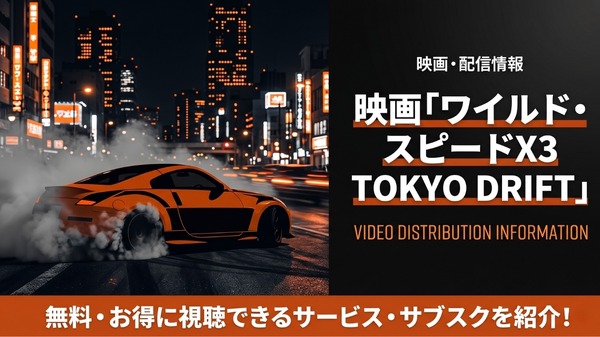
When Universal Pictures released The Fast and the Furious: Tokyo Drift in the summer of 2006, audiences encountered a sharp departure from the franchise's previous Dominic Toretto storylines. Director Justin Lin relocated the narrative directly to the neon-lit, underground car culture of Japan's capital. Decades later, the film has aged into a cult classic, maintained in heavy rotation across international streaming catalogs. As detailed in a distribution overview by an アニメ!アニメ!Anime Anime Report, the third installment continues to draw audiences across Japanese and global platforms, leading viewers to revisit its sprawling ensemble cast.
Among the domestic Japanese actors who appeared in the film, one face stands out distinctly to modern audiences: Keiko Kitagawa. Long before she became a household name across Japanese television and cinema, a nineteen-year-old Kitagawa appeared on-screen as Reiko, a key member of Han Lue's mechanical crew. For international viewers tracking her filmography, the brief performance represents a fascinating bridge between Japanese pop culture and mid-2000s Hollywood studio filmmaking.
📌 Quick Summary:
- The Role: Keiko Kitagawa portrays Reiko, an in-house tuner and crew member inside Han Lue's drift garage.
- Career Crossroads: The film marked Kitagawa's lone Hollywood project, filmed shortly after her live-action breakout as Sailor Mars in Pretty Guardian Sailor Moon.
- Screen Presence: Viewers can spot her diagnosing telemetry, modifying engine setups, and standing track-side alongside Bow Wow and Jason Tobin.
Reiko’s Role in Han Lue’s Underground Racing Garage
Inside the cavernous, multi-level garage operated by Han Lue (Sung Kang), the drifting subculture functions like a professional racing paddock. Sean Boswell (Lucas Black) enters this space as an outsider with zero grasp of drift physics, relying entirely on Han's inner circle to rebuild his shattered machinery. Keiko Kitagawa plays Reiko, the sharp, headphone-wearing mechanic who operates alongside software expert Earl (Jason Tobin) and parts hustler Twinkie (Bow Wow).
Reiko is not merely set dressing. In several pivotal garage sequences, she monitors engine performance, interfaces with digital diagnostic setups, and helps prep the team's prized vehicles, including the iconic veilside-tuned Mazda RX-7 and the Nissan Silvia S15. While Sean struggles to navigate the social hierarchy of Tokyo's street racing world, Reiko provides visual groundedness to Han’s outfit. She embodies the technical acumen required to keep high-strung drift machines operating on public asphalt.
Her lines are sparse and delivered primarily in casual Japanese, preserving authentic local energy rather than forcing an English-speaking caricature. Kitagawa plays Reiko with an easygoing confidence, often seen chewing gum, managing tools, or observing garage antics with cool amusement.
From Sailor Mars to Hollywood: Kitagawa’s 2006 Turning Point
Kitagawa entered the entertainment business through competitive fashion modeling, serving as an exclusive model for Japan's Seventeen magazine from 2003 through 2006. Her acting career launched almost simultaneously when Toei Company cast her as Rei Hino (Sailor Mars) in the 52-episode live-action television adaptation of Pretty Guardian Sailor Moon (2003, 2004). That series established her initial fan base in Japan.
Landing a role in a high-profile Universal Pictures production was an unexpected development for a domestic teen idol. Director Justin Lin was determined to populate Tokyo with genuine Japanese talent rather than relying solely on Asian-American actors flown in from California. Universal held casting calls in Tokyo, scouting rising talent capable of fitting seamlessly into street racing subcultures. Kitagawa secured the role of Reiko in late 2005, filming her sequences while still attending Meiji University in Tokyo.
The production arrived at an inflection point. While many young actors use American studio projects to pursue an international career, Kitagawa treated Tokyo Drift as an experimental step. It arrived during the exact transitional window when she graduated from teen modeling into serious domestic acting work.
| Cast Member | Character | Role in Tokyo Drift | Notable Industry Context |
|---|---|---|---|
| Keiko Kitagawa | Reiko | Han’s diagnostic & telemetry tuner | Transitioned from Sailor Moon to A-list Japanese drama stardom |
| Sonny Chiba (Shinichi Chiba) | Kamata | Yakuza boss and uncle to D.K. | Legendary martial artist; starred in The Street Fighter and Kill Bill |
| Satoshi Tsumabuki | Ex-Guy Starter | Counts down the race at Shibuya scramble | Japan Academy Film Prize-winning leading actor (Waterboys, Villain) |
| Keiichi Tsuchiya | Fisherman Cameo | Critiques Sean’s clumsy drift angles | The real-life "Drift King" who inspired modern drifting competition |
On-Set Realities and Filming Between Los Angeles and Tokyo
Filming Tokyo Drift presented severe logistical headaches for Universal Pictures. Japanese municipal authorities notoriously deny permits for high-speed street racing shoots in dense commercial hubs. As a result, the production relied on a hybrid shooting method.
Director Justin Lin shot clandestine, guerrilla-style footage on the streets of Shibuya and Shinjuku with a barebones crew. For narrative dialogue, wide shots, and complex stunt work, production designers painstakingly recreated central Tokyo streets, parking garages, and alleys on massive backlots in California.
Kitagawa split her production time between local shoots in Japan and stage setups. On set, she interacted frequently with Lucas Black and Sung Kang. Crew reports noted that although Kitagawa spoke conversational English, Lin encouraged her to maintain her natural Japanese expressions to preserve the setting's authenticity. In the film's climax, as Sean's crew rebuilds the 1967 Ford Mustang Fastback using a twin-turbo Nissan RB26DETT engine, Reiko works alongside the rest of the crew to fabricate mounting brackets and tune fuel delivery systems.

Why Kitagawa Walked Away from Western Studios
American studio debuts often spark sustained attempts to break into the US casting pool. Kitagawa chose a radically different path. Immediately following the release of Tokyo Drift in 2006, she redirected all professional momentum back to the Japanese domestic market.
The decision paid off swiftly:
- In 2007, she landed her first domestic television series lead in TV Asahi's Mop Girl, which won her the 55th Television Drama Academy Award for Best Special Achievement.
- In 2008, Fuji TV cast her as the female lead in their prestigious Getsu 9 prime-time slot for Taiyo to Umi no Kyoshitsu.
- By 2009, she starred opposite Tomohisa Yamashita in the hit sports-romance drama Buzzer Beat, cementing her status as an elite television star in Japan.
Staying in Japan allowed Kitagawa to command top billing in major domestic releases like Paradise Kiss (2011), The After-Dinner Mysteries (2011, 2013), and Your Eyes Tell (2020), rather than competing for limited, often stereotyped supporting parts in Western films. In hindsight, her appearance in Tokyo Drift remains an isolated curiosity in a domestic career spanning more than two decades.
Frequently Asked Questions (FAQ)
Q1: Exactly which scenes feature Keiko Kitagawa in Tokyo Drift?
A1: Kitagawa appears in several garage and paddock sequences. Her most visible moments include the scene where Sean first inspects Han's car collection, various mid-film tuning montages where she adjusts diagnostics on portable laptops, and the climactic sequence where the team fits an RB26DETT engine into Sean's Ford Mustang.
Q2: Did Keiko Kitagawa speak English during the film?
A2: Most of her dialogue consists of brief, authentic Japanese exchanges with Han's crew members. She speaks limited English lines when interacting directly with Twinkie and Sean, matching the organic linguistic blend of the multicultural garage team.
Q3: Does her character Reiko ever return in subsequent Fast & Furious sequels?
A3: No. While Han Lue (Sung Kang) and Sean Boswell (Lucas Black) returned for later installments like *Furious 7* and *F9*, Kitagawa's Reiko remained exclusive to the 2006 movie. Jason Tobin's Earl returned in *F9*, but Kitagawa had long since established herself as an elite headlining star in Japan, making an uncredited or brief cameo appearance impractical.
The Cultural Significance of Tokyo Drift's Ensemble Cast
Looking back at Tokyo Drift, the film holds a unique place in Hollywood action cinema. At a time when Western productions frequently used green screens and digital stand-ins to simulate Asian locations, Justin Lin pulled actual street racers, icons of Japanese martial arts cinema, and emerging local actors into the frame.
Keiko Kitagawa’s unpretentious turn as Reiko preserves a snapshot of an artist on the verge of massive domestic success. Rather than an afterthought, her brief screen presence remains a favorite discovery for film enthusiasts, demonstrating how one of Japan's most recognizable screen actors spent an early summer immersed in the high-octane world of Hollywood drift culture.