Lost in Translation: Comparing Jujutsu Kaisen Chapter 177 Raw Japanese to Official Localizations
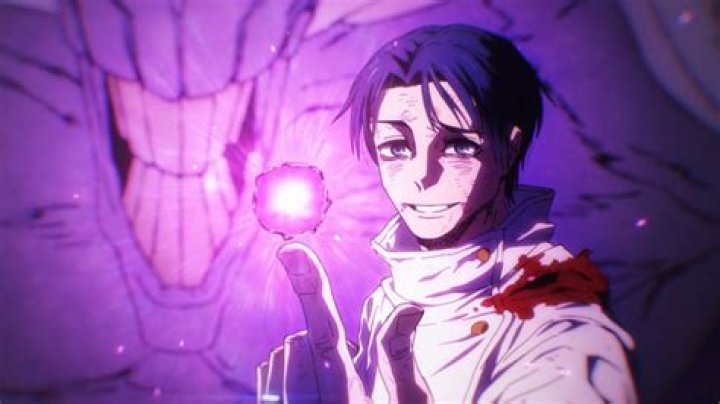
When Chapter 177 of Gege Akutami’s Jujutsu Kaisen landed in raw scans across social media forums before its official publication in Weekly Shonen Jump, it triggered an immediate frenzy among readers. Centered on the volatile three-way deadlock in the Sendai Colony arc, the chapter pit Yuta Okkotsu against two reincarnated sorcerers from distant historical eras: Ryu Ishigori, a combatant driven by insatiable hunger for an equal clash, and Takako Uro, a former assassin burdened by historical betrayal. The chapter culminated in a pivotal mechanical reveal regarding Yuta’s cursed technique and his connection to Rika.
Early fan interpretations and direct commercial localizations diverged dramatically in how they framed these combat mechanics and historical grudges. Rushed raw leaks, published days ahead of the digital release on Manga Plus and Viz Media, scrambled key grammatical markers regarding Yuta’s five-minute ring manifestation. Examining the original Japanese text alongside the official English scripts reveals how small shifts in vocabulary obscured essential power dynamics, technique restrictions, and feudal character motivations.
📌 Key Takeaways:
- The Core Mechanic: Chapter 177 explicitly established that Yuta Okkotsu can only access his copied cursed techniques, weapon cache, and infinite cursed energy for five minutes through the ring connection to Rika.
- The Leak Divergence: Hasty online translations of the raw Japanese dialogue blurred the boundary between Rika's partial lingering manifestation and her fully manifested state, sparking weeks of confusion across competitive combat forums.
- Feudal Lore Nuance: Takako Uro's fury toward the Fujiwara clan relies on Classical Japanese rhetorical phrasing that English localizations flattened into generic aristocratic resentment.
The Sendai Colony Standoff and the Pressure of Weekly Leaks
The Sendai Colony remains one of the densest combat sequences in Jujutsu Kaisen. Chapter 177, titled "Sendai Colony, Part 4," caught Yuta Okkotsu on the defensive after absorbing repeated heavy strikes from Ryu Ishigori's Granite Blast and Takako Uro's spatial manipulation technique, Sky Manipulation. The physical pacing moved at breakneck speed. Yuta’s cursed energy reserves were being actively depleted by constant hand-to-hand combat and instantaneous Reverse Cursed Technique healing.
Between 2022 and 2026, the circulation cycle for Weekly Shonen Jump chapters followed an aggressive underground pipeline. Physical magazine issues reached Japanese distribution hubs on Wednesdays, feeding digital leakers who photographed printed pages under low lighting. Fan groups raced against a 24-hour clock to clean raw scans, translate dialogue bubbles, and upload pirated chapters to reader sites by Thursday night.
In this speed-obsessed workflow, accuracy suffered. Chapter 177 contained intricate tactical narration written in Akutami's signature condensed prose, packed with technical jargon (術式, jutsu-shiki) and classical historical pronouns. When the scans hit social feeds, readers latched onto rough approximations of Yuta's limits. The rush to deliver immediate impressions obscured critical distinctions in Akutami's narration, particularly the fundamental rules governing Yuta’s reliance on Rika.
Rika's Five-Minute Timer: Unpacking the Japanese Syntax
The defining beat of Chapter 177 occurs on its final pages. Battered by Ishigori’s sustained barrage and Uro’s deflections, Yuta slips a metal ring onto his left hand, uttering the call: "Come, Rika" (おいで、里香). Akutami’s accompanying narration broke down the technical reality behind Yuta’s post-Volume 0 power set.
The original Japanese narration states:
「指輪を通した『里香』との完全な顕現・呪力の接続においてのみ、乙骨は外付けの術式と呪力の補給を受けることができる。その接続可能時間は5分間。」
Early fan translations based on raw photographic leaks rendered this as an open-ended statement implying Rika's general manifestation had a passive five-minute ceiling, or conversely, that Yuta could copy techniques indefinitely while the timer ran. The Japanese grammatical structure is far more precise:
The operative term is **完全な顕現** (*kanzen na kengen*), meaning "full manifestation," contrasted against Rika’s default, partially materialized state. In baseline skirmishes throughout Sendai, Rika operates as an autonomous, shadowy mass of cursed energy capable of throwing punches and protecting civilians. The raw text confirms that only through the ring-mediated connection does Yuta achieve two specific conditions: access to stored cursed techniques (外付けの術式, *sotodzuke no jutsu-shiki*, literally "externally attached cursed techniques") and an active replenishment of raw cursed energy (呪力の補給, *juryoku no hokyū*).
The official English release captured the restriction with stronger grammatical fidelity, stating: "Only while connected to Rika via the ring can Okkotsu use his external cursed techniques and receive supplies of cursed energy. He can sustain this connection for a sustained limit of five minutes." This distinction resolved arguments across Reddit community threads like r/Jujutsushi, where enthusiasts had spent days debating whether Yuta suffered from permanent cursed energy burnout.
Comparing Raw Japanese Script Against Published English Editions
A direct textual comparison of key panels illustrates where scanlation leaks fell short and where the official localization made specific trade-offs between literal phrasing and natural English readability.
| Scene & Character Dialogue | Raw Japanese (Akutami Script) | Early Raw Scan Translation | Official English Localization |
|---|---|---|---|
| Ryu Ishigori: Assessing Yuta's bottomless cursed energy capacity. | 底が見えねぇタンクだな (Soko ga mienee tanku da na) | "His tank has no bottom at all." | "A tank with no bottom, huh?" |
| Ryu Ishigori: Describing his appetite for combat and fulfillment. | 腹八分目すら知らん (Hara hachibunme sura shiran) | "I don't even know what being eight-tenths full feels like." | "I don't even know what being moderately satisfied feels like." |
| Takako Uro: Condemning Yuta's selfless moral philosophy. | 藤原の人間か!貴様らには名前がない! (Fujiwara no ningen ka! Kisamara ni wa namae ga nai!) | "Are you a Fujiwara?! You guys don't have names!" | "Are you one of the Fujiwara?! None of you have your own names!" |
| Narration: Clarification on Rika's manifestation mechanic. | 完全な顕現・呪力の接続においてのみ (Kanzen na kengen / juryoku no setsuzoku ni oite nomi) | "Only during her full manifestation and cursed energy connection..." | "Only while connected to Rika via the ring..." |
Fujiwara Clan Grudges and Cultural Idioms: Takako Uro’s Fury
The dialogue between Yuta and Takako Uro in Chapter 177 carries deep historical freight that tests translation limits. Uro was the captain of the Toh (日月星進隊), an elite squad of assassins serving the northern branch of the historical Fujiwara clan during the Heian era. Her resentment toward Yuta stems directly from his philosophical defense of fighting for others rather than individual desire.
When Uro spits the accusation about the Fujiwara, Akutami employs archaic pronouns and phrasing rooted in aristocratic exploitation. In Heian society, subordinate assassins were treated as disposable tools without personal lineage or legacy, literally stripped of personal identity so noble houses could maintain public purity. The phrase 貴様らには名前がない (Kisamara ni wa namae ga nai) carries double meaning. It denounces Yuta as someone lacking an authentic sense of self, while simultaneously referencing how the historical Fujiwara discarded covert agents after exploiting their service.
Scanlators translated this literally as "You people have no names," which confused Western readers who assumed Uro was referring to a specific biological curse or pseudonym. The official version added subtle clarity: "None of you have your own names."
Similarly, Ryu Ishigori’s ongoing food metaphors required creative handling. Ishigori views combat purely through culinary satiety. His reference to 腹八分目 (hara hachibunme) draws on a traditional Japanese dietary proverb advising people to eat until they are 80 percent full. While the raw scan translated this literally, the official release contextualized it as "moderately satisfied." This choice sacrificed the culinary idiom to preserve Ishigori’s emotional hunger for English readers.
Granite Blast and the Output Dynamic
Chapter 177 provided concrete figures regarding cursed energy dynamics that became central to power comparisons throughout the Culling Game. Ryu Ishigori was formally introduced as possessing the highest cursed energy output in history among all Culling Game participants.
In Japanese sorcery terminology, Akutami strictly distinguishes between two metrics:
- 呪力量 (juryoku-ryō): Total cursed energy reserve (the volume of energy stored in the body).
- 呪力出力 (juryoku-shutsuryoku): Cursed energy output (the maximum volume of energy discharged in a single attack).
Yuta possesses an ocean of energy (juryoku-ryō second only to Satoru Gojo), but his output is standard for a special-grade sorcerer. Ishigori operates under the inverse dynamic: his total pool is smaller than Yuta's, but his discharge capacity (shutsuryoku) is devastatingly massive.
The raw text explains that Ishigori's signature technique, Granite Blast, expels pure cursed energy like an artillery shell. Because his technique simply fires cursed energy without complex elemental conversion, Ishigori can achieve maximum output regardless of whether he activates his innate cursed technique or fires unrefined energy beams.
In early Thursday leaks, scanlators frequently conflated "output" with "reserves," causing wide speculation that Ishigori possessed more raw cursed energy than Yuta. The confusion required days of linguistic corrections by bilingual community translators on Twitter and Reddit before the official Sunday chapter release verified the mechanics.
The Mechanics of Raw Manga Scans and Localization Pressures
The speed at which manga scans move from illicit printing house photos to English aggregators creates structural vulnerabilities in translation quality. Translating dynamic Japanese shonen battle manga is not simply a matter of substituting vocabulary. Japanese is a high-context language characterized by omitted subjects, gendered speech registers, and dense historical puns.
Official translators working under Shueisha and Viz Media operate with editorial style guides, glossaries, and direct access to editorial departments for clarification on complex world-building rules. Independent scan teams lack these safety nets. A scanlator working at 3:00 AM on Thursday morning with a blurry telephone photo of a double-page spread faces immense friction:
- Blurry ink prints make visually similar kanji easy to confuse, particularly complex characters common in supernatural abilities.
- Tiny phonetic guides (furigana) running alongside kanji often blur entirely on low-resolution digital scans, forcing translators to guess character readings.
- Scan groups rush to publish first because aggregator site traffic and ad revenue concentrate heavily within the initial six hours after a leak appears.
These factors explain why Chapter 177’s intricate mechanics around Rika and the Fujiwara ancestral lore suffered from distortion upon first contact with international audiences.
Frequently Asked Questions (FAQ)
What was the main translation error in the Jujutsu Kaisen 177 raw leaks?
The most significant distortion involved Yuta’s five-minute timer. Early leak translations implied Rika could only exist physically for five minutes. The actual Japanese text clarified that the five-minute limit applies specifically to Yuta using the ring to access copied techniques, full Rika manifestation, and direct cursed energy replenishment.
Why did Takako Uro hate the Fujiwara clan in Chapter 177?
Uro served as the captain of an elite assassin squad under the Fujiwara clan during the Heian era. Her masters treated her squad as faceless, expendable instruments, framing and executing her to protect their political standing. Her dialogue in Chapter 177 reflects her bitterness toward anyone fighting selflessly for others rather than claiming their own individual identity.
What makes Ryu Ishigori's cursed energy output unique?
Ishigori possesses the highest raw cursed energy discharge capacity (*shutsuryoku*) recorded in the Culling Game. Unlike other sorcerers whose release power depends on activating complex innate techniques, Ishigori discharges identical maximum firepower whether firing basic energy blasts or releasing his specialized Granite Blast.
The Evolution of Manga Translation Literacy
The linguistic debates sparked by Jujutsu Kaisen Chapter 177 underscore a permanent shift in how international audiences consume serialized manga. Readers no longer passively accept the first English script that appears on their social feeds. The friction between rushed raw leaks and verified Sunday releases has turned ordinary fans into active text analysts who scrutinize kanji roots, grammatical qualifiers, and editorial notes.
Akutami’s writing style relies on dense technical frameworks reminiscent of computer programming and legal contracts. When high-stakes abilities like Yuta’s five-minute ring manifestation are revealed, every particle in the sentence structure carries strategic consequences for future battles. The Sendai Colony arc demonstrated that while raw leaks provide immediate narrative gratification, authentic understanding requires waiting for the nuance embedded within the original script.