Manta Ray vs. Stingray: The Deadly Mistake Most People Make in the Water
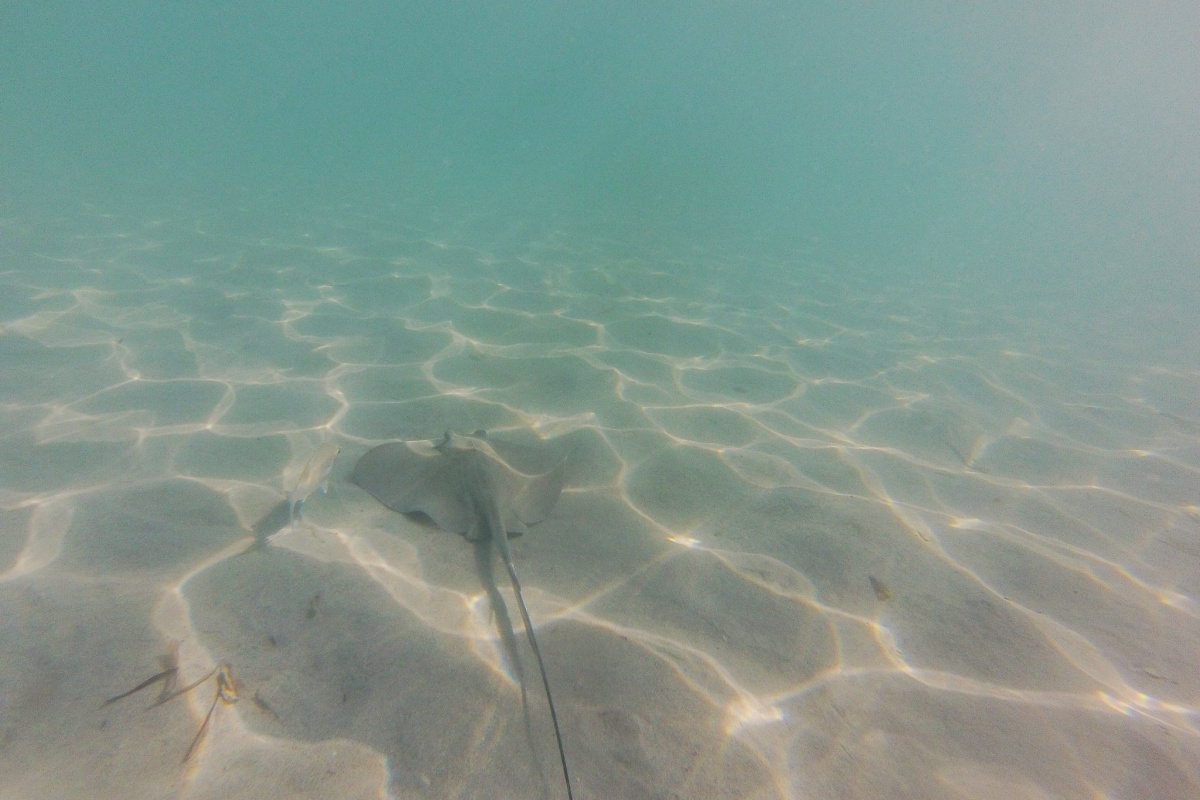
Every summer, coastal emergency rooms treat thousands of beachgoers who make the same agonizing mistake: stepping directly onto a concealed, venomous tail spine barb buried beneath a few inches of coastal silt. At the same time, wildlife tour operators in Indonesia and the Caribbean charge hundreds of dollars per excursion so divers can float inches away from enormous, winged silhouettes moving effortlessly through open water. Both creatures belong to the elasmobranch subclass of cartilaginous fish, sharing flat silhouettes and flexible skeletons made entirely of cartilage, yet conflating them leads to either irrational panic or life-threatening beach blunders.
The confusion between stingrays and manta rays remains one of the ocean's most pervasive wildlife misconceptions. While popular culture often lumps every diamond-shaped swimmer under the catch-all label of "stingray," their evolutionary paths diverged millions of years ago. As highlighted by an Excite エキサイト Report covering groundbreaking marine tracking data, modern international research confirms that these open-water giants possess sophisticated navigational senses that guide them across open ocean channels and oceanic drop-offs, operating on a behavioral plane completely foreign to their shallow-water cousins.
📌 Key Takeaways:
- Defensive Hazard: True stingrays possess a razor-sharp, serrated spine coated in protein toxins that strike when stepped on; manta rays carry no barb, possess zero venom, and cannot sting.
- Locomotion & Habitat: Stingrays are bottom-dwelling scavengers camouflaged under coastal sand, while mantas are constant pelagic swimmers cruising open water columns.
- Anatomical Markers: Mantas feed using terminal mouths flanked by horn-like cephalic lobes to funnel plankton; stingrays feed using underslung jaws built to crush hard shells.
The Sand Bar Trap: Why Waders Fear the Wrong Animal
Wading into murky, waist-deep coastal water presents a very real danger, but it never comes from a manta ray. True stingrays thrive in benthic marine habitats, spending daylight hours burrowed under fine sand with only their spiracles and predatory eyes exposed. When an unsuspecting swimmer steps onto their back, the stingray reacts purely on survival reflex: its muscular tail whips upward and forward, driving a calcified, serrated spine directly into the swimmer's foot or ankle.
The trauma inflicted by a stingray barb is mechanical and biochemical. The barb tears soft flesh upon entry and rips further on extraction due to backward-facing serrations. Simultaneously, a glandular epithelial sheath ruptures, flooding the puncture with heat-sensitive protein venom. Victims experience immediate, searing pain that radiates up the limb, accompanied by localized tissue necrosis and severe swelling. In rare cases where the barb strikes the thoracic or peritoneal cavities, as in the 2006 death of conservationist Steve Irwin, the physical puncture to vital organs proves fatal.
Mantas, by contrast, possess no defensive spine. Over millions of years of open-ocean evolution, ancestral mantas lost the tail stinger entirely, exchanging physical armor for speed, massive size, and exceptional maneuverability. Encounters with mantas in coastal shallows are exceedingly rare because their respiratory systems require constant movement to push water through their gill slits, preventing them from ever lying motionless on the seafloor.
Cephalic Lobes and Forward Jaws: The Filter Feeding Architecture
A glance at mouth position immediately reveals how an elasmobranch lives and eats. True stingrays feature a ventral mouth positioned flat against the underside of their disc. Equipped with rows of flattened, plate-like teeth, their jaws exert crushing force to crack open clams, oysters, crabs, and mantis shrimp scavenged from the sediment.
Mantas evolved in a different direction. Their mouth sits in a terminal position at the very front of the head, opening into a massive cavern lined with intricate filter plates. Flanking the mouth are two flexible, horn-like flaps known as cephalic lobes. When resting or cruising long distances, a manta rolls these lobes into tight spirals to streamline its body. When feeding, it unfurls them into broad funnels that channel thousands of gallons of plankton-rich seawater directly into its mouth.
Inside the pharynx, sophisticated gill branchial arches separate microscopic zooplankton, tiny fish larvae, and krill from the water, pushing the nutrients toward the esophagus while expelling filtered seawater through five pairs of ventral gill slits. Watching an oceanic manta execute barrel rolls beneath an upwelling zone reveals an animal engineered for oceanic grazing, entirely unequipped to bite or chew human flesh.
Diagnostic Features: Mantas vs. Bottom-Dwelling Stingrays
To distinguish between these two families during coastal swims or open-water dives, examine the core morphological traits detailed below:
| Diagnostic Feature | Manta Rays (Mobula) | True Stingrays (Dasyatidae) |
|---|---|---|
| Tail Spine Barb & Venom | Absent; completely harmless whip-like tail | Present; one or more serrated, venomous barbs |
| Wingspan & Weight | 3.0m, 8.0m (up to 3,000 kg / 3 metric tons) | 0.3m, 2.1m (typically 2 kg, 100 kg) |
| Mouth Anatomy & Diet | Terminal (front-facing); filter feeds on zooplankton | Ventral (underside); crushes mollusks and crustaceans |
| Cephalic Lobes | Prominent, mobile horn-like feeding paddles | Absent; continuous rounded or pointed snout disc |
| Water Column Position | Pelagic swimmer; moves continuously through open water | Benthic bottom dweller; rests stationary on sand/mud |
| Primary Human Hazard | Accidental collision due to immense size | Venomous puncture wound from stepped-on tail spine |
The 2025 Taxonomy Shift: Unmasking the Atlantic Manta Ray
Marine biologists long classified all mantas as a single worldwide species. That consensus shattered in 2009 when Dr. Andrea Marshall split the genus into two recognized varieties: the giant oceanic manta ray (*Mobula birostris*), which can span up to 8 meters and weigh up to 3 metric tons, and the smaller, coastally oriented reef manta ray (*Mobula alfredi*), which averages 3 to 5 meters in width.
Taxonomic certainty shifted again in late 2025. Following extensive morphological analysis and genetic sequencing, scientists officially confirmed a third distinct species: the Atlantic manta ray (*Mobula yarae*). Documented extensively along the eastern coast of Florida, the Gulf of Mexico, and the Caribbean basin, *Mobula yarae* had spent decades misidentified as an undersized oceanic manta.
The confirmation of *Mobula yarae* carries immediate legal implications for international conservation. Because regional populations in the Atlantic face heavy pressure from commercial shipping lanes, gillnet entanglement, and recreational boat strikes, formal species recognition unlocks targeted protective mandates under regional marine treaties. Identifying distinct populations ensures fisheries management cannot treat Atlantic groups as an endless, interchangeable reserve of open-ocean biomass.
From Komodo to the Florida Coast: Safe Ocean Encounters
For certified divers, encountering a pelagic manta in its natural habitat represents a pinnacle marine experience. Prime global sites include Indonesia's Komodo National Park, a UNESCO World Heritage reserve established in 1991 that protects both prehistoric monitor lizards ashore and vibrant upwelling channels offshore, alongside cleaning stations in the Maldives and the Socorro Islands of Mexico.
At these underwater sites, mantas hover over coral knolls while small wrasses and butterflyfish clean parasites from their skin and gills. Professional dive protocols mandate clear rules to protect both animals and divers:
- Maintain Negative Buoyancy: Divers must kneel or settle on sandy patches well outside the designated cleaning zone without kicking up silt.
- Zero-Touch Enforcement: Never reach out to touch a passing manta. Human hands strip away their protective mucous coating, leaving their skin vulnerable to bacterial and fungal infections.
- Clear Flight Paths: Never position your body directly above a manta or hover directly in its line of sight. Trapping a manta against a reef shelf causes stress and prompts the animal to abandon the cleaning station.
The Stingray Shuffle: Essential Shoreline Safety Protocol
While mantas demand respectful viewing distance in deep water, true stingrays demand tactical foot placement along sunny surf breaks. The single most effective method for preventing an agonized trip to the emergency room is the stingray shuffle safety technique.
Instead of lifting your feet and taking standard walking steps through murky shoreline water, drag your feet across the top of the sand. Sliding your soles forward kicks up plumes of sediment and transmits low-frequency acoustic vibrations through the sea bottom. Resting stingrays detect these physical tremors long before your body arrives, giving them ample time to flutter their wings and glide away safely.
If a barb does pierce skin, proper field treatment must begin immediately:
- Submerge in Hot Water: Immerse the affected foot or leg in clean water heated to roughly 110°F to 115°F (43°C to 46°C), or as hot as the patient can tolerate without scalding. Heat denatures the complex protein chains within stingray venom, neutralizing the excruciating throbbing pain within 30 to 90 minutes.
- Do Not Bandage Tightly: Allow blood to flush minor fragments of the venom sheath out of the wound naturally rather than sealing bacteria inside.
- Seek Medical Evaluation: Ocean sediment harbors virulent marine pathogens, particularly *Vibrio* bacteria. Wounds frequently require professional irrigation, tetanus updates, X-rays to spot broken barb fragments, and specialized oral antibiotics.
Frequently Asked Questions (FAQ)
Q1: Can a manta ray kill or sting a human?
A1: No. Manta rays do not possess a venomous stinger, sharp teeth, or venom glands. They are filter feeders that consume microscopic plankton and small fish larvae. The only physical danger stems from accidental blunt-force collisions if a three-ton oceanic manta breaches or startles near an inattentive swimmer.
Q2: Why do stingrays bury themselves in coastal shallows?
A2: Stingrays are benthic ambush predators that camouflage beneath sand to hide from apex predators like hammerhead sharks, while waiting to strike passing crabs, worms, and mollusks. They do not hunt humans; defensive strikes occur exclusively when a swimmer accidentally steps directly onto their disguised disc.
Q3: How can you quickly tell if a swimming ray is a manta or a stingray?
A3: Observe mouth placement and movement. If the animal possesses two horn-like paddles (cephalic lobes) funneling water into a mouth positioned right at the front of its head while flapping wings gracefully through mid-water, it is a manta ray. If the mouth sits underneath a flat body resting on the sea bottom, it is a benthic ray.
Navigating Elasmobranch Encounters
Distinguishing between stingrays and manta rays replaces misplaced coastal anxiety with practical ocean awareness. Benthic stingrays are common coastal dwellers that demand a sliding step whenever you enter shallow surf. Pelagic mantas are gentle filter feeders that offer thrilling, completely venom-free encounters across offshore drop-offs.
As warming waters shift migration corridors and recent discoveries like *Mobula yarae* reshape marine taxonomy, learning how these creatures operate keeps both swimmers and wildlife safe. Shuffle your feet across the sandy shallows, keep your hands off the pelagic gliders, and you can appreciate these ancient elasmobranchs without landing in an emergency clinic.