No Braiding Skills Required: How Faux Cornrow Topsy Tails Replaced Traditional Braids
No Braiding Skills Required: How Faux Cornrow Topsy Tails Replaced Traditional Braids
Backstage at hip-hop dance showcases and across festival campgrounds, a quiet mechanical shift has overtaken hairstyling mirrors. For decades, achieving clean, scalp-skimming rows required either years of finger dexterity or a two-hour salon appointment with a seasoned braider. Today, performers, athletes, and festival-goers are bypassing underhand three-strand plaits entirely. In their place is a viral Japanese salon technique known as kururinpa, reimagined globally as the faux cornrow topsy tail hack.
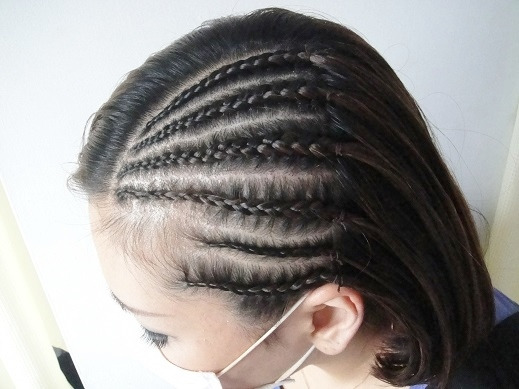
By securing micro-sections of hair with miniature elastic bands and flipping each ponytail inward using fingers or a plastic loop, stylists reproduce the ribbed architecture of cornrows without twisting a single three-strand braid. The method eliminates hours of manual strain, delivers immediate tension relief for sensitive scalps, and holds firm under heavy sweat. What started as an internet styling shortcut has evolved into a practical staple for everyday wear and competitive stages alike.
📌 Key Takeaways:
- The Innovation: The elastic band cornrow method uses inverted ponytail flips (topsy tails) linked in sequence down the scalp, mimicking traditional cornrows without intricate braiding skills.
- Scalp Health: Because elastics distribute weight horizontally across segmented bases, the style reduces localized follicle stress and lowers the risk of traction alopecia.
- Accessibility: The process works on short bobs, layered cuts, and fine textures, taking roughly 10 to 15 minutes per side with minimal equipment.
From Tokyo Salons to Global Stages: The Rise of Kururinpa Cornrows
The term kururinpa surfaced in Japanese beauty magazines during the early 2010s to describe a quick way to embellish basic ponytails. Stylists pulled an elastic down slightly, split the hair above it, and turned the tail through the center gap. The inverted loop produced an elegant, rolled edge resembling a chignon. For years, the technique lived primarily in bridal updos and elementary school morning routines.
Around late 2023, Japanese street dance instructors and salon colorists began running these inverted flips in tight, linear successions straight back along the scalp. When linked end-to-end, where the tail of the first flip feeds directly into the elastic base of the next, the rolled edges sit flush against the cranium. Viewed from three feet away, the structure mirrors the raised ridges of classic cornrows.
TikTok and Instagram dance communities accelerated the transition. In high-energy hip-hop competitions and summer music festivals, dancers needed hairstyles that could endure intense choreography without coming undone. Traditional braiding on fine or straight hair often slipped without heavy wax, while genuine tight cornrows caused throbbing scalp pain for dancers unaccustomed to continuous tension. The elastic-anchored faux cornrow provided a fast, durable alternative that anyone could assemble backstage in under ten minutes.
The Mechanics of Scalp Tension Relief and Hair Preservation
The popularity of faux cornrows goes beyond speed. It directly addresses scalp health. Classic cornrows rely on continuous, manual tension applied right at the root, pulling hair follicles in an upward or directional shear. When worn repeatedly or installed too tightly, this tension strains the dermal papilla, often resulting in tension headaches, follicle inflammation, and traction alopecia along the frontal hairline.
The elastic band cornrow method alters the physics of the hold. Each section is anchored individually with a miniature polyurethane elastic band. The tension remains isolated within that specific square-inch quadrant rather than transferring down a continuous braided strand. Because the inverted flip curls over the elastic, the hair covers the band while sitting softly against the scalp.
Dermatologists and trichologists frequently warn against high-tension protective styles left in for extended durations. With faux cornrows, users generally dismantle the style after a single performance, workout, or weekend festival. Removal requires clipping the tiny rubber bands with a seam ripper or coated elastic cutter, which takes less than 60 seconds and eliminates the mechanical breakage caused by tugging out stubborn knots.
Performance Benchmark: Traditional Braids Versus Topsy Tail Cornrows
Choosing between traditional braiding and the faux cornrow topsy tail hack comes down to longevity, installation speed, and technical comfort. The table below outlines how both methods perform across practical use cases.
| Styling Attribute | Traditional Cornrows | Faux Topsy Tail Rows |
|---|---|---|
| Application Time | 45, 120 minutes depending on rows | 8, 15 minutes total |
| Skill Barrier | High; requires clean three-strand grip control | Low; requires basic sectioning and loop flipping |
| Wear Duration | 1, 4 weeks with maintenance | 1, 3 days maximum |
| Scalp Tension Level | Moderate to high tension at the root | Minimal; weight distributed across elastic anchors |
| Minimum Hair Length | 3, 4 inches minimum for grip | 1.5, 2 inches on short crops and bobs |
| Material Cost | $0, $15 (rattail comb, styling jam) | $3, $6 (polyband pack, hair loop tool) |
Executing Clean Parting and Flawless Pull-Through Sections
The difference between a polished stage look and a messy cluster comes down to parting precision. A stainless-steel pintail comb is essential. Begin by tracing clean, parallel lines back from the forehead toward the crown or nape. Clip away surrounding hair with duckbill clamps so rogue strands do not get caught in the bands.
Working on a single track, carve out a front quadrant roughly one inch wide by one inch deep. Smooth the hair using a fingertip of water-based edge control or matte styling pomade. Secure the section with a clear or color-matched polyurethane elastic. Do not overtighten; leave roughly a quarter-inch of give between the scalp and the band.
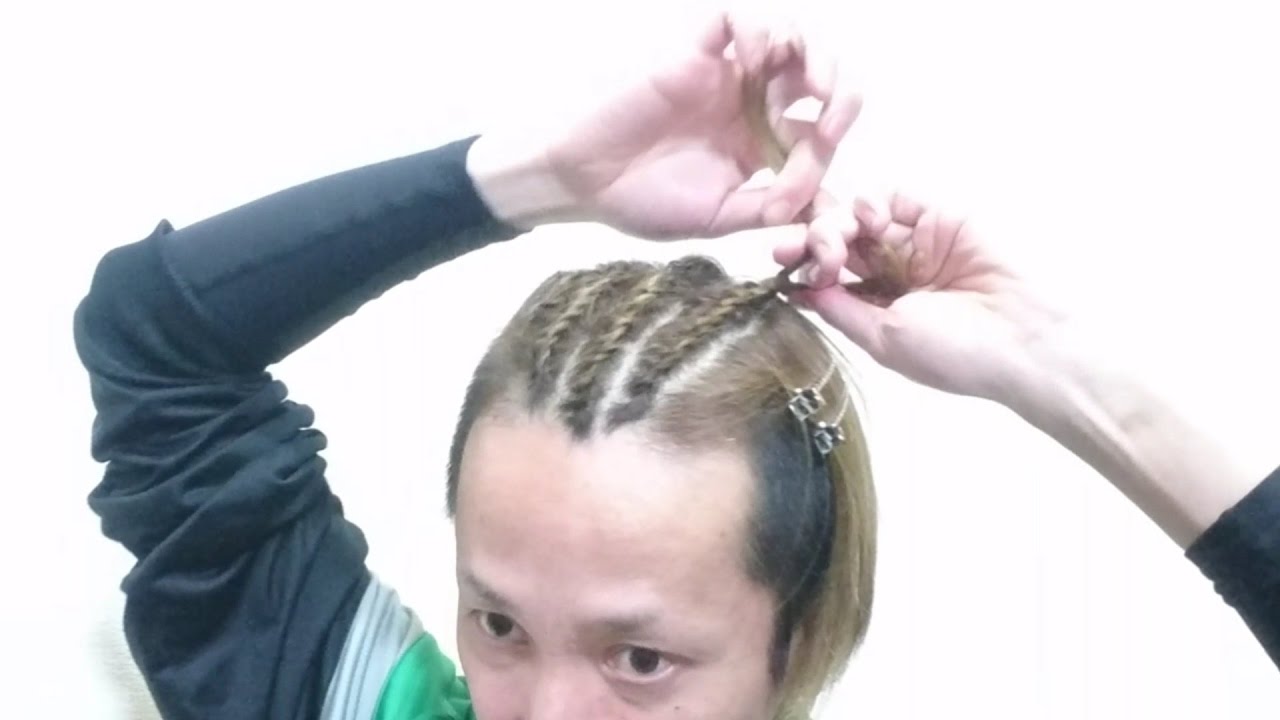
Next comes the inversion. Slide a miniature plastic hair loop styling tool upward from underneath the ponytail, through the hair base between the elastic and your scalp. Thread the ponytail tail through the loop, then pull the tool back down. The tail flips down through its own center, rolling the outer edges inward. Repeat the process for the next section, gathering the previous ponytail tail into the new elastic before looping again. The sequence creates a secure chain that stays intact during rigorous movement.
Short Hair Styling Hacks and Festival Customization
Traditional braiders often struggle with short hair, especially blunt bobs, grown-out pixie cuts, and tapered sides. When hair is shorter than three inches, standard plaits tend to fray or pop out midway down the scalp. The elastic-based topsy tail technique solves this problem because each elastic firmly grips short stubble before the flip occurs.
Festival-goers have adapted this method to incorporate vivid colors without chemical bleach. By sliding synthetic kanekalon hair, metallic ribbons, or neon threads through the elastics before threading the topsy tail, wearers lock vibrant highlights into the ridge. The loop naturally conceals the attachment point, producing a runway-grade effect for just a few dollars in materials.
For fine hair textures that easily show exposed scalp gaps, stylists recommend gentle "pancake" spreading. After finishing a row, grip the outer curves of each rolled loop with thumb and forefinger, pulling gently outward by roughly two millimeters. This slight adjustment broadens the ridge, conceals the underlying elastics, and gives the impression of thick, dense hair.
Frequently Asked Questions (FAQ)
Q1: Will mini rubber bands break or snap my hair during removal?
A1: Never pull or yank elastics down the hair shaft. Slide a specialized plastic band cutter or the tip of a seam ripper under the loop and snip the elastic cleanly. This preserves the cuticle and prevents snagging or split ends.
Q2: How do I keep the elastic bands from showing through the hair?
A2: Match your elastic bands closely to your hair shade (black, brown, or clear for lighter tones). After pulling the tail through, tighten the base by splitting the tail into two halves and tugging gently outward, which draws the loop flush over the band.
Q3: Can this style handle rainy outdoor concerts or sweaty workouts?
A3: Yes. Because every link is anchored by an independent elastic band, the rows will not unravel if one section gets wet or loose. Applying a thin coat of humidity-resistant edge pomade before parting keeps flyaways grounded even in heavy humidity.
Practical Takeaways for Fast, Low-Impact Styling
The faux cornrow topsy tail hack shows how simple mechanical modifications can modernize traditional hair routines. By taking the friction out of complex braiding, it opens sleek, high-impact styles to performers with short cuts, athletes prone to scalp irritation, and everyday users who lack hours to spare in front of a mirror.
With an inexpensive pack of polyurethane elastics, a parting comb, and ten minutes of practice, anyone can assemble clean, sweat-proof ridges that hold all day. As performance routines and festival fashion demand greater efficiency, this braidless method offers an accessible, damage-free staple for modern styling.