Plate Science: Visual Breakdown of How to Structure an All-You-Can-Eat Run
Every all-you-can-eat layout is an architectural trap engineered to trigger premature fullness. Restaurants design their floor plans around starch-heavy decoys, hyper-palatable sodium bombs, and cheap carbohydrates, nudging diners to hit their biological limit within twenty minutes. Unlocking the true potential of an unlimited dining run requires understanding gastrointestinal mechanics rather than simply starving oneself beforehand. Recent investigative coverage on Japanese hotpot culture, highlighted by a February 2026 getnews.jp Report analyzing competitive ordering patterns at the popular chain Shabu-Yo, shows that diners who systematically choreograph their plates consume significantly more high-grade protein while avoiding early gastrointestinal exhaustion.
📌 Key Takeaways:
- The Priming Trap: Fasting before a buffet shrinks functional gastric compliance and invites rapid blood sugar crashes that kill appetite early.
- Sequencing Rule: Eating lean, thinly sliced proteins and low-fermentable vegetables before touching high-density starches delays mechanical stomach distension.
- Sensory Resets: Temperature and flavor variety exploit sensory-specific satiety, allowing diners to bypass cognitive fullness cues safely.
The Physiology of Premature Fullness and Gastric Volume Expansion
The human stomach is not a rigid bucket. In a resting state, it holds roughly 75 milliliters of fluid, but it can distend to accommodate between 1.5 and 2 liters under sustained gastric volume expansion. Mechanoreceptors lining the stomach wall continuously monitor this physical stretching, firing signals along the vagus nerve directly to the hypothalamus to trigger satiation. When a diner swallows dense, poorly masticated solids or guzzles excessive liquid, those mechanoreceptors light up almost instantly.
Pre-buffet preparation determines how forgiving that muscular pouch will be. Total fasting for twelve hours is a critical tactical error. Prolonged fasting increases stomach acidity and reduces gastric wall compliance, which leads to cramping and rapid nausea as soon as heavy food arrives. Experienced competitive eaters consume a moderate, high-fiber meal paired with 500 to 750 milliliters of water roughly three to four hours before dining. This pre-load exercises the smooth muscle walls without leaving residual matter in the gut, ensuring the digestive tract is primed for digestion rate optimization.
Food Sequencing Science: Managing Hormonal Satiety Triggers
Hormonal appetite suppression triggers operate on chemical timers. When dietary fats and concentrated proteins enter the duodenum, endocrine cells secrete cholecystokinin (CCK) and peptide YY (PYY). These chemicals slow gastric emptying and send unmistakable satiety commands to the central nervous system within roughly twenty minutes of the first bite. If your initial plate is smothered in heavy mayonnaise, cheese, or deep-fried breading, that hormonal brake drops hard before you even consider a second trip to the carving station.
A calculated buffet eating strategy relies on strict nutritional sequencing. Diners should begin with warm, lean items that pass easily into the lower stomach without forming dense, hard-to-churn boluses. Clear broths, delicate sashimi, or thinly sliced meats provide immediate satisfaction while keeping gastric pressure minimal. Save complex fats for the middle act. By delaying heavy lipid saturation, diners push the hormonal satiety cascade past the forty-minute mark, buying valuable time to enjoy high-value cuts.
Tactical Dining at the Hotpot Counter: Lessons from Shabu-Yo
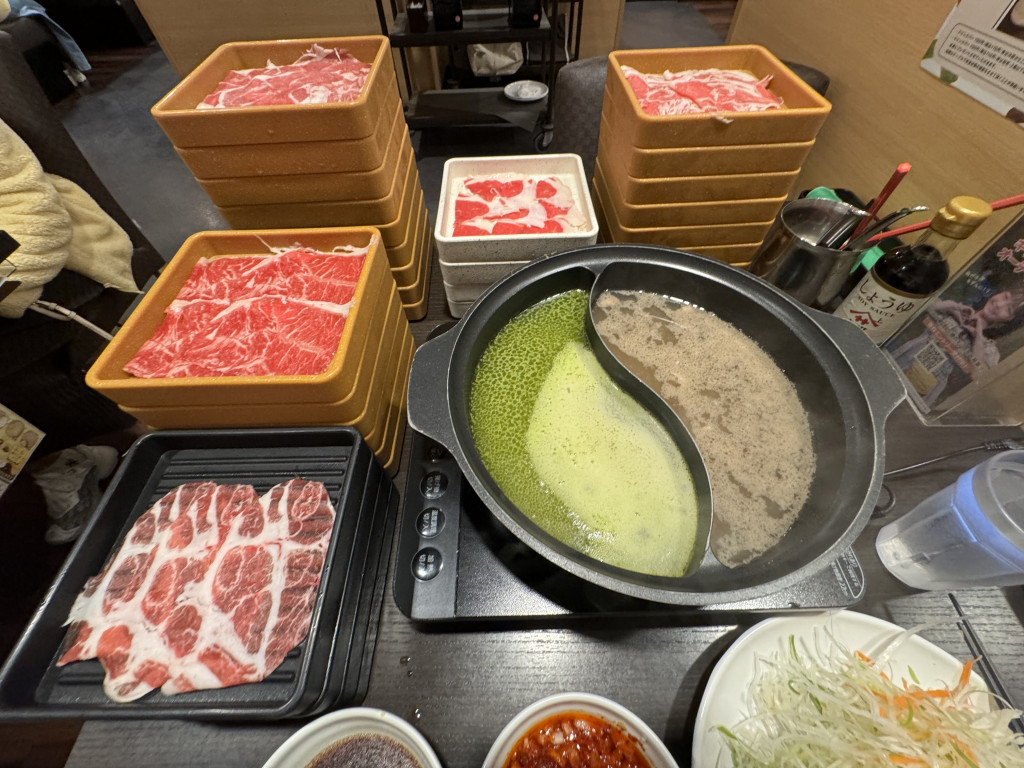
Japanese shabu-shabu provides the ultimate proving ground for food sequencing science. Operating across hundreds of locations, brands like Shabu-Yo offer diners unlimited pork, beef, seasonal vegetables, noodles, and dessert bars on tight 80- to 100-minute dining clocks. Amateur eaters often fill their opening wire baskets with udon, ramen bricks, and heavy potato starches, effectively ending their meal inside half an hour. Seasoned hotpot veterans approach the broth with surgical precision.
Broth selection dictates pacing. Choosing a heavily sweetened sukiyaki base or a thick tonkotsu broth saturates the palate and speeds up sensory exhaustion. An unseasoned kombu dashi or light soy broth keeps the digestive tract clear. Thinly cut beef brisket or pork collar should be cooked in gentle, simmering water rather than rolling boils, preserving meat tenderness so the jaw does not fatigue. Between meat rounds, diners should submerge bok choy, bean sprouts, and mushrooms. These high-moisture vegetables scour residual fat from the tongue while introducing valuable roughage that prevents heavy fats from coating the stomach lining.
| Dining Phase | Macronutrient Focus | Target Selection | Physiological Objective |
|---|---|---|---|
| Phase 1 (0, 20 min) | Lean Protein & Warm Fluids | Clear kombu broth, lean beef, maguro sashimi | Gentle gastric expansion without CCK hormone spikes |
| Phase 2 (20, 50 min) | Mixed Fats & Fibrous Greens | Pork belly, brassicas, king oyster mushrooms | Maximizing high-value protein intake; palate clearing |
| Phase 3 (50, 70 min) | Strategic Carbohydrates | Kuzukiri noodles, nigiri sushi, steamed dumplings | Controlled glycogen loading before peak fullness hits |
| Phase 4 (70, 90 min) | Simple Sugars & Acidics | Soft serve ice cream, fresh citrus, crisp waffles | Sensory-specific satiety reset; gastric muscle relaxation |

Carb-Pacing and Sodium Bloat Prevention
Carbohydrates are cheap for the house and deadly for the diner. Rice, noodles, and bread swell significantly once they absorb hot broth and stomach fluids, turning into a dense gel that grinds digestion to a halt. At all-you-can-eat sushi bars, the kitchen often shapes rice pads into dense, vinegar-heavy blocks weighing 20 to 25 grams each, effectively stuffing diners with cheap starch before they consume expensive fish. Requesting smaller rice portions or alternating between nigiri and sashimi is fundamental to carb-pacing techniques.
Sodium poses an equally aggressive threat. Commercial buffet stocks and dipping sauces often pack upwards of 1,200 milligrams of sodium per serving. High salt concentrations trigger rapid fluid shifts into the digestive lumen, producing painful bloating and acute thirst. If you quench that salt-induced thirst by chugging large glasses of ice water, you drop the internal temperature of your stomach, congealing consumed animal fats into an unyielding mass. Combat this by diluting commercial dipping sauces with plain hot water, squeezing fresh lemon juice over cooked meats, and sipping room-temperature roasted barley tea throughout the session.
The Neuroscience of Sensory-Specific Satiety and the Dessert Stomach
When diners claim they have a separate "dessert stomach," they are describing a well-documented neurological reflex known as sensory-specific satiety. As you consume large quantities of savory, umami-rich, or salty foods, your brain's reward centers gradually reduce dopamine production in response to those specific flavors. You feel physically incapable of swallowing another bite of beef brisket. The brain simply grew bored of the flavor profile.
Introducing a completely different sensory category, particularly cold, sweet, or acidic dishes, instantly re-engages hedonic pathways. The anticipation of sugar stimulates orexin release, relaxing the proximal stomach and creating literal physical space for dessert. Soft serve machines and waffle irons at buffets are not just child-friendly novelties; they provide the ultimate flavor contrast. Taking a small, single-spoonful palate cleanser of citrus sorbet or a dollop of soft serve mid-meal resets your taste receptors, wiping out flavor fatigue and allowing you to resume your main course comfortably.
Balancing Biological Capacity Against Culinary Enjoyment
Executing an all-you-can-eat marathon requires honest self-assessment. Highly aggressive eating methods are built for healthy metabolisms capable of handling sudden spikes in dietary intake. Individuals managing insulin resistance, chronic acid reflux, or gallbladder issues should never attempt competitive food sequencing, as sudden massive protein and fat loads place heavy stress on digestive organs.
True success at an unlimited buffet is not measured by pushing your body to the edge of physical discomfort. It centers on maximizing value and culinary variety without feeling groggy twenty minutes after sitting down. By rejecting starch traps, staggering protein consumption, and neutralizing sodium spikes, diners regain control of the table. You transform an overwhelming, restaurant-engineered buffet run into a measured, deeply satisfying dining experience.
Frequently Asked Questions (FAQ)
Q1: How far in advance should I drink water before hitting a buffet?
A1: Stop drinking large volumes of liquid roughly 45 minutes before your meal. Consuming large amounts of water immediately prior to sitting down dilutes gastric acid and prematurely triggers stomach wall mechanoreceptors. Once seated, restrict yourself to small sips of warm tea or room-temperature water to keep swallowing smooth without bloating.
Q2: Does fasting all day before an all-you-can-eat meal actually help?
A2: No. Starving yourself for hours causes your stomach walls to contract, reduces enzyme readiness, and triggers sharp drops in blood sugar. When you finally sit down, intense hunger leads to frantic, fast-paced chewing and heavy starch consumption, cutting your total dining time short. Eat a light, balanced meal three to four hours beforehand instead.
Q3: What causes immediate bloat during salty shabu-shabu or hotpot sessions?
A3: High-sodium broths pull water into the digestive tract through osmosis, causing rapid distension of the intestinal wall. Paired with drinking ice-cold sodas or iced water, consumed animal fats solidify quickly inside the stomach. Combat this by diluting sauces with plain hot broth, using citrus juices, and sipping hot green or barley tea.
Mastering the Art of the Long Meal
Beating the all-you-can-eat circuit does not demand professional eating skills or uncomfortable overeating. The difference between feeling uncomfortably stuffed and walking away satisfied comes down to understanding gastrointestinal biology. When you recognize why restaurants place heavy carbohydrates upfront, how excess sodium forces early water retention, and why temperature switches wake up your palate, the buffet stops being a trap. Dine methodically, control your pacing, and let the science of digestion work in your favor.