Pronunciation and Tone Guide: Essential Vietnamese Greetings Decoded with Examples
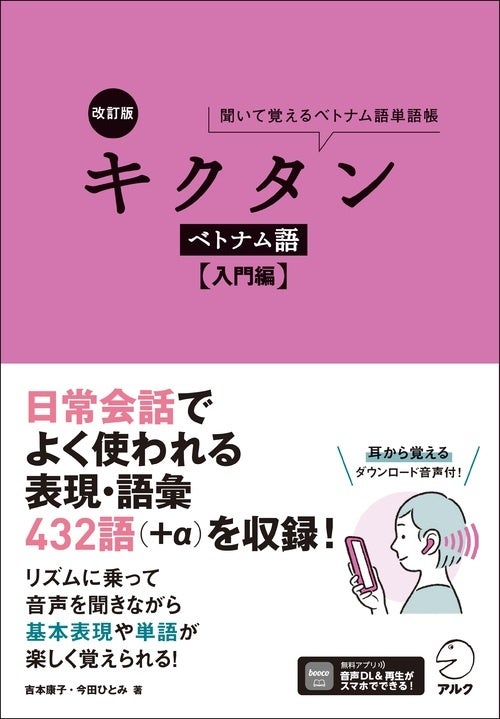
Most foreign travelers arrive in Hanoi or Ho Chi Minh City armed with a single greeting: xin chào. Within hours of walking through local markets or sitting at street-side coffee shops, they notice something perplexing. Local residents rarely say it to one another. Instead, conversations open with inquiries about whether someone has eaten, casual references to family hierarchies, or subtle nods paired with age-graded pronouns. Educational publishers are taking note of this gap between textbook phrases and real speech. Tokyo-based language publisher ALC recently updated its foundational instructional catalog, rolling out revised editions of its beginner curricula alongside targeted guides like Cho Nyumon Vietnamese, which focuses on 60 situational conversational structures to fix this disconnect, according to a recent PR TIMES Report.
📌 Key Takeaways:
- The Textbook Trap: The phrase xin chào functions primarily as a neutral, polite greeting for foreigners or formal service interactions, not casual daily speech among locals.
- Tonal Accuracy Dictates Meaning: Vietnamese relies on six distinct vocal pitches in the North and five in the South; misplacing a tone changes the lexical definition entirely.
- Kinship Over Pronouns: Standard greetings require selecting age-appropriate familial honorifics like anh, chị, and em rather than generic words for "you" and "I."
The Mechanics of Xin Chào: Meaning, Register, and Modern Usage
Every phrasebook lists xin chào as the direct equivalent of "hello." Grammatically, xin acts as a polite marker meaning "to ask" or "to beg respectfully," while chào is the verb meaning "to greet." When combined, the expression creates a safe, emotionally detached greeting suitable for hotel front desks, commercial broadcasts, and interactions where the speaker knows nothing about the listener's age or social standing.
Real social interactions operate on entirely different rules. Vietnamese conversation relies on personal involvement. Walking into a family-run phở shop and barking xin chào at the proprietor sounds distant, robotic, and occasionally awkward. Locals default to dynamic kinship structures. You greet the person by acknowledging who they are in relation to you. A younger customer addressing an older male vendor drops the sterile xin and uses Em chào anh. That small shift bridges a psychological gap that textbook formulas widen.
Deciphering the Six Tones and Phonetic Variations
Vietnamese is an analytical tonal language. The pitch contour applied to a vowel cluster determines the root meaning of the syllable. Getting the consonants right means nothing if the voice moves in the wrong direction.
Standard Northern Vietnamese uses six tones, marked clearly in the Latin-based Quốc Ngữ script. The level tone (thanh ngang) carries no diacritic mark and requires a steady, mid-range pitch with relaxed vocal cords. The acute accent marks the rising tone (thanh sắc), where the voice starts mid-high and climbs sharply, similar to an urgent question in English. The grave accent indicates the falling tone (thanh huyền), pulling the voice down smoothly into a deep, trailing murmur, as heard in the word chào.
More complex contours require physical tension. The hook above a vowel indicates the asking tone (thanh hỏi), which dips into lower registers before swinging back up. The tilde marks the broken, rising tone (thanh ngã), featuring an abrupt glottal stop that chokes off the sound before jumping to a higher register. Finally, the underdot signifies the heavy constricted tone (thanh nặng), dropped low into the throat and snapped shut abruptly. Southern dialects collapse the asking and broken tones into a single contour, creating regional cadence differences that confuse beginner listeners.
Kinship Pronouns: How Age and Gender Shape Every Salutation
English relies on universal pronouns like "you" and "I." Vietnamese discards this neutrality entirely, forcing speakers to map social hierarchies before opening their mouths. You cannot simply say "hello" without defining your relationship to the listener.
The system is built on extended family roles. When speaking to a male slightly older than yourself, you address him as anh (older brother). An older woman of similar generation becomes chị (older sister). If the other person is noticeably younger than you, regardless of gender, they are em (younger sibling). In each scenario, you refer to yourself using your own relative rank. Speaking to an older man, you refer to yourself as em and address him as anh.
The hierarchy extends across generations. Addressing someone old enough to be your parent requires chú for a man or cô for a woman. For individuals matching your grandparents' generation, you use ông (grandfather) or bà (grandmother). Mastering these basic terms eliminates social friction immediately.
| Vietnamese Phrase | Phonetic Guide | Social Context & Register |
|---|---|---|
| Xin chào | Sin chow (Falling pitch on chào) | Formal, generic greeting; standard for service staff and strangers. |
| Em chào anh | Em chow ahn | Standard respectful greeting from a younger speaker to an older male peer. |
| Chào chị | Chow chee (Heavy drop on chị) | Friendly, direct salutation to a woman slightly older than the speaker. |
| Ăn cơm chưa? | Ahn kuhm chee-uh? | "Have you eaten yet?" Highly common casual street greeting among acquaintances. |
| Cảm ơn | Kahm uhn (Dip-rise pitch on cảm) | Universal "thank you"; pairing with honorifics elevates politeness. |
| Tạm biệt | Tahm bee-et (Heavy drop on both) | Standard formal farewell; casual departures usually use simple plans to meet again. |

Northern Versus Southern Conversational Etiquette
Regional divergence shapes daily speech patterns across Vietnam. In Hanoi and northern provinces, social exchanges tilt conservative and structured. Initial greetings are measured. Northern speakers value explicit deference, making precise use of the particle ạ at the end of sentences (for example, Vâng, chào anh ạ). This tiny particle signals deep respect toward seniors, clients, or authorities.
Head south toward Ho Chi Minh City, the Mekong Delta, and surrounding industrial hubs, and the social rhythm changes noticeably. Southerners tend to shorten exchanges, favoring approachable warmth over formal deference. The northern greeting Đi đâu đấy? (Where are you heading?) transforms phonetically and rhythmically into quick, energetic banter. Southern speakers frequently soften consonants: initial "v" sounds shift toward an English "y" or "w," and the terminal consonants lose their sharp northern crispness. Treating every interaction with identical textbook phrasing ignores this deep cultural geography.
Everyday Conversational Openers and Departure Rituals
Listen closely to neighbors meeting on the street in Da Nang or Hai Phong. They rarely say "good morning" or "good afternoon." Daily interaction revolves around practical care questions.
The single most ubiquitous daily opener is Ăn cơm chưa? (Have you eaten rice yet?). This is not an explicit invitation to lunch or dinner; it functions identically to an English "How are you doing?" The expected response is brief. If you have eaten, you reply Ăn rồi (Eaten already). If not, you say Chưa (Not yet). Asking about food signals communal care, rooted in an agrarian history where caloric stability was the foundation of community wellness.
Saying goodbye follows similar informal conventions. The literal textbook expression tạm biệt carries a heavy, final tone, often reserved for long-term partings or official announcements. In daily life, Vietnamese speakers prefer forward-looking departure phrases. Saying Hẹn gặp lại (See you again) or simply stating your next immediate action, like Em về nhé (I am heading home now, okay?), keeps social ties open and casual.
Pronouncing Gratitude and Basic Courtesies
Expressing gratitude correctly avoids awkward misinterpretations. The phrase cảm ơn requires careful attention to the first syllable. The word cảm carries the asking tone (thanh hỏi). The voice must drop down and scoop upward. Flattening the tone turns the word into an unnatural drone that local listeners struggle to process.
Politeness can be dialed up instantly by framing gratitude with personal pronouns. A generic cảm ơn works for quick cash transactions. Adding terms to say Em cảm ơn anh (Younger sibling thanks older brother) shifts the dynamic from a transactional interaction into genuine warmth. When someone thanks you, the customary response is Không có chi (It is nothing, common in the Central and Southern regions) or Không có gì (No problem, standard Northern usage). Dropping a stiff English-style "you're welcome" in favor of these colloquial deflections matches local cadence naturally.
Frequently Asked Questions (FAQ)
Q1: Is it considered offensive if a tourist uses "xin chào" exclusively?
A1: Not at all. Native speakers recognize foreign accents immediately and appreciate the effort to speak Vietnamese. However, relying solely on xin chào keeps your interactions formal and distant compared to using basic kinship pronouns.
Q2: How do I know which kinship pronoun to use if someone looks roughly my age?
A2: When meeting someone who appears close to your age, defaulting to bạn (friend) is acceptable in casual settings. In professional or semi-formal contexts, men can safely be addressed as anh and women as chị as a mark of courtesy, after which the other person will quickly clarify their relative age.
Q3: Why do Vietnamese speakers ask where I am going instead of saying hello?
A3: Phrases like Đi đâu đấy? (Where are you going?) are social phatic expressions, not interrogations. They serve to acknowledge your presence and show community interest. You do not need to give a detailed itinerary; a simple answer like Đi dạo (Going for a walk) or Đi làm (Going to work) is sufficient.
Navigating Conversational Norms in Contemporary Vietnam
Mastering Vietnamese greetings requires moving past direct dictionary translation. Language here serves as an ongoing social map, requiring speakers to read age, context, and regional tone before uttering a single vowel. While foreign travelers will always find forgiveness for flat tones and generic phrases, taking time to learn the six vocal pitches and core kinship honorifics transforms everyday interactions. Moving from an awkward xin chào to an effortless Em chào chị opens doors to genuine hospitality across every province of the country.