Rare Machinery and Le Mans Icons: What You Will Actually See at Toyota's Nagoya Museum
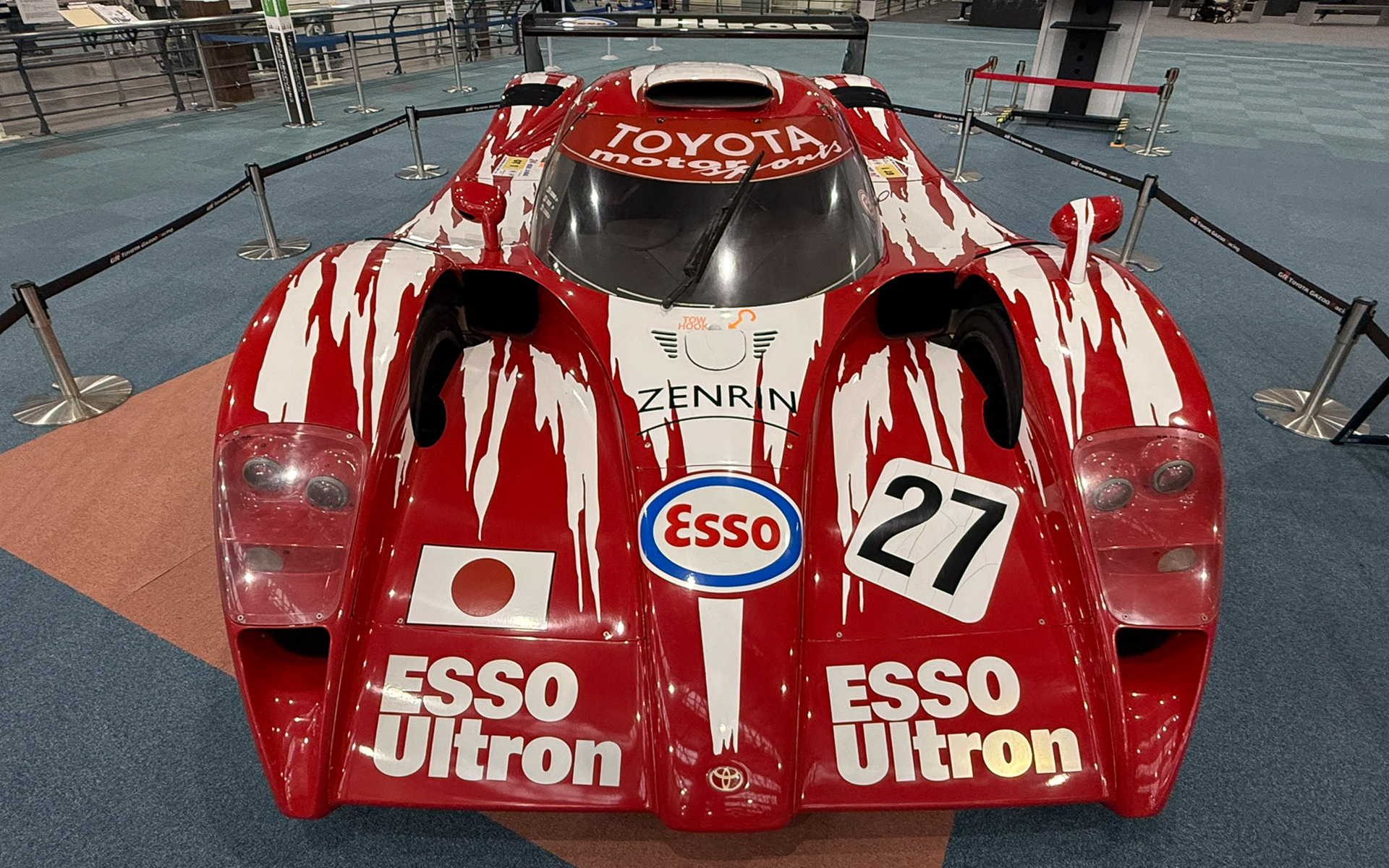
Tucked into the red-brick industrial blocks of Noritake-shinmachi in Nagoya’s Nishi Ward stands the physical birthplace of Japan’s largest conglomerate. Long before assembly lines churned out hybrid engines and hydrogen prototypes, this 1911 plant hummed with spinning shuttles and raw cotton thread. Today, the Toyota Commemorative Museum of Industry and Technology preserves that foundation, pairing 19th-century mechanical looms with peak twentieth-century racing artifacts like the carbon-fiber Toyota TS020 GT-One. According to a Car Watch Report documenting Toyota's four decades of endurance racing, the facility brought the historic 1998 Le Mans chassis out of storage for public view, showcasing the long engineering arc that connects mechanical weaving to global motorsport.
Most tourists head toward central Tokyo or Kyoto temples, entirely bypassing the industrial heartland that shaped modern Japan. Those who make the short trek from Nagoya Station step onto factory floors where century-old machinery still clatters at full speed. Museum technicians grease gears by hand, demonstrating how nineteenth-century loom designs evolved directly into the just-in-time logistics that define the global automotive landscape.
📌 Key Takeaways:
- Industrial Roots: The museum occupies the original 1911 Toyoda Spinning and Weaving plant, maintaining authentic red-brick architecture and functional historic workshops.
- Operational Relics: Curators run daily live machinery demonstrations across both the Textile Machinery Pavilion and the Automotive Pavilion, including Sakichi Toyoda’s 1924 Type G automatic loom.
- Motorsport Heritage: Rotating special exhibits highlight rare competition machines, including the 1998 Toyota TS020 GT-One driven by Ukyo Katayama, Toshio Suzuki, and Keiichi Tsuchiya at the Le Mans 24 Hours.
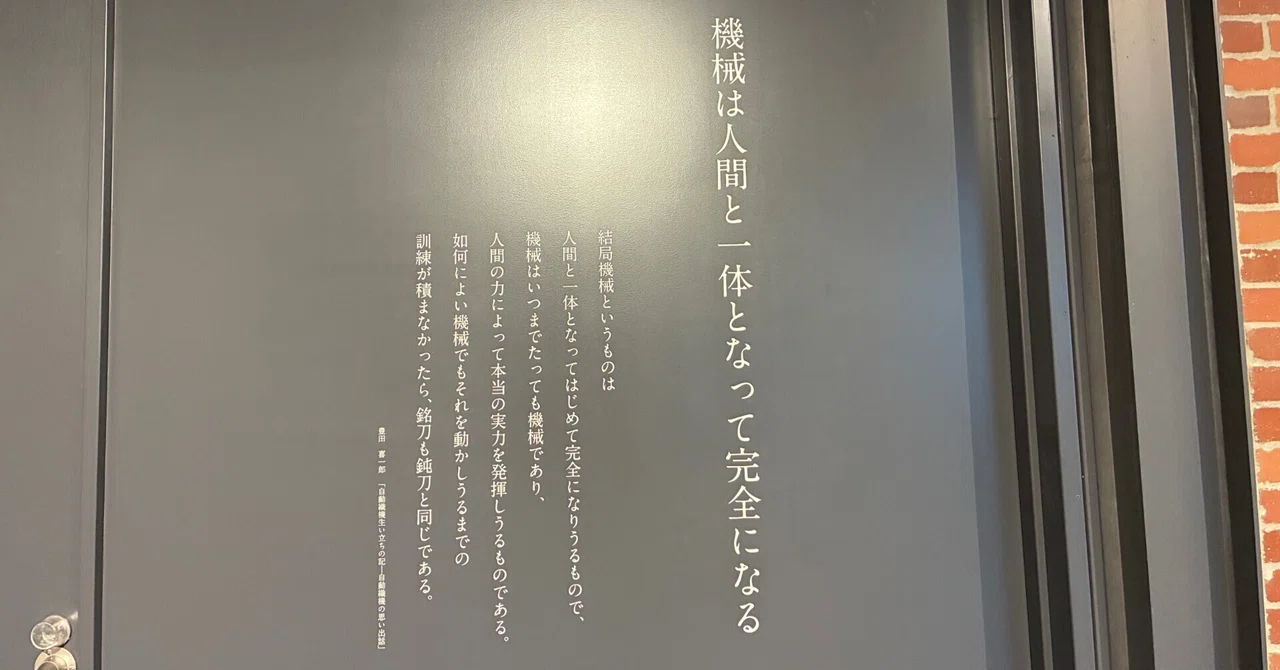
- Manufacturing Philosophy: The complex traces the foundation of the Toyota Production System, anchored in the principle that machinery only achieves true perfection when integrated with human judgment.
The Red-Brick Plant in Noritake-shinmachi
The complex does not feel like a sterile municipal archive. Walking into Noritake-shinmachi, the smell of warm machine oil and aged structural brick hits you immediately. Sakichi Toyoda established this pilot spinning plant in 1911 to test experimental textile mechanisms under factory conditions. When Toyota converted the facility into a public museum in 1994, engineers retained the sawtooth factory roof, original wood beams, and steel trusses.
The space anchors Nagoya industrial heritage within its actual geographic footprint. Rather than isolating machines behind glass barriers, the open-floor layout positions visitors along the production lines. Belt drives snake from overhead shafts, while cast-iron frames shake the floorboards when switched on. It shows how industrial wealth accumulated in Aichi Prefecture through decades of stubborn trial and error, well before automotive manufacturing was even considered viable in Japan.
The Textile Machinery Pavilion: Live Gears and Sakichi Toyoda’s Inventions
Spanning 3,600 square meters, the Textile Machinery Pavilion traces the physical progression from manual spinning wheels to high-speed computerized air-jet looms. Nearly every major machine on the floor runs during live machinery demonstrations. Staff members guide raw cotton into foot-operated wooden frames, spin thread on English water-frame replicas, and flip the switches on giant industrial looms.
The centerpiece is the 1924 Type G automatic loom, an invention that altered early twentieth-century manufacturing. Prior to Sakichi Toyoda’s breakthrough, broken threads required operators to halt the entire assembly to reload shuttles manually. Sakichi engineered a non-stop shuttle change mechanism that swapped out empty bobbins at full operating speed. The design dramatically reduced thread breakage and automated fault detection, establishing the foundation of jidoka, automation with a human touch, which later became a pillar of modern industrial quality control.
Inside the Automotive Pavilion: Metal Presses and Prototype Casting
Crossing into the Automotive Pavilion reveals the abrupt mechanical leap engineered by Sakichi’s son, Kiichiro Toyoda. In the early 1930s, Kiichiro dismantled imported American automobiles to study their metallurgical composition and tooling constraints. The museum meticulously reconstructs his 1934 prototype casting shop, complete with earthen sand-molding boxes and a functional overhead foundry crane.
The display demonstrates how Kiichiro broke automotive manufacturing into modular steps. Visitors can operate hands-on stations showing gear-cutting mechanics, manual sheet-metal beating, and early cylinder-block casting. Further down the hall, an operational 600-ton stamping press purchased from Danly in 1955 stands as a towering symbol of Japan's postwar mass-production era. Nearby displays outline the Toyota Production System history, charting the exact workflows created to eliminate inventory waste and align worker authority with line stoppage.
A Century of Manufacturing Evolution
The operational progression within the museum reflects shifts in manufacturing scale, drive mechanisms, and material tolerances over the last century.
| Artifact / Machine | Era & Introduction | Core Mechanical Advance | Operational Status |
|---|---|---|---|
| Toyoda Wooden Hand Loom | 1890 | Single-action shuttle motion doubling manual efficiency | Demonstrated daily by museum staff |
| Toyoda Type G Automatic Loom | 1924 | High-speed non-stop shuttle replacement and auto-stop sensors | Fully operational mechanical demonstration |
| Toyoda Standard Sedan Model AA | 1936 | Synchronized body-on-frame assembly; 3.4L overhead-valve 6-cylinder | Complete running prototype replica |
| Danly 600-Ton Transfer Press | 1955 | Rapid single-stroke panel pressing replacing manual hammer forming | Static machinery display on factory floor |
| Toyota TS020 GT-One (Car 27) | 1998, 1999 | Carbon-composite monocoque chassis; twin-turbo 3.6L V8 (R36V) | Preserved historic racing display |
The Le Mans Bloodline: Preserving the TS020 GT-One
While the museum's core focuses on industrial assembly, its motorsports collection offers a direct look into competitive vehicle dynamics. Commemorating decades of sports car development, the museum highlighted the legendary 1998 Toyota TS020 GT-One chassis. Engineered specifically for the Le Mans 24 Hours under the extreme GT1 regulations, the TS020 remains one of the most striking competition vehicles ever built by Toyota Motorsport GmbH.
The preserved Car No. 27 entered Le Mans piloted by an all-Japanese driving trio: former Formula 1 driver Ukyo Katayama, Super GT veteran Toshio Suzuki, and racing icon Keiichi Tsuchiya. The chassis features an ultra-low carbon-fiber tub designed by Andre de Cortanze, built around a twin-turbocharged 3.6-liter V8 engine pushing over 600 horsepower. Seeing its aerodynamic tunnels, raw weave, and aggressive diffuser parked beneath vintage factory ceilings creates an unmissable contrast. It illustrates how early metallurgy and structural stamping matured into lightweight composites and wind-tunnel aero.
The Monozukuri Spirit in an Era of Automation
Throughout the exhibits, visitors encounter the cultural framework of the monozukuri spirit, an ethos centered on craftsmanship, continuous refinement, and practical manufacturing wisdom. Early writings from Kiichiro Toyoda framed machines as incomplete constructs that only achieve balance when paired with conscientious human operators. His notes stress that blind automation invites systemic error, whereas human-centered problem solving builds durable resilience.
The museum emphasizes learning through structural failure. For nearly 30 years, educational workshops held across Toyota’s historical venues have introduced families and engineering students to mechanical fundamentals through hands-on fabrication. Instead of obscuring broken gears and production bottlenecks, the curation exposes early cracked cylinder blocks and bent loom shuttles. The institution treats these missteps as the necessary price of technical competence.
Frequently Asked Questions (FAQ)
Q1: What is the difference between this museum and the Toyota Automobile Museum in Nagakute?
The Toyota Commemorative Museum of Industry and Technology in Noritake-shinmachi focuses on manufacturing processes, industrial machinery, textile history, and shop-floor engineering. The Toyota Automobile Museum in Nagakute focuses purely on the global history of road cars, displaying hundreds of finished classic vehicles from various global manufacturers.
Q2: How do you reach the museum from Nagoya Station?
The museum sits approximately 15 minutes on foot north of Nagoya Station. Alternatively, visitors can take the Meitetsu Nagoya Line one stop to Sako Station and walk three minutes, or ride the Nagoya Sightseeing Route Bus "Me-Guru" directly to the museum gate.
Q3: Are the live machinery demonstrations available daily?
Yes. Both the textile machinery and the casting and machining workshops run multiple demonstrations throughout the morning and afternoon. Dedicated museum technicians explain the mechanical actions in real time, with English audio guides and multi-language signage positioned at every station.
Nagoya Industrial Heritage as a Living Blueprint
Automated manufacturing systems and computational design dominate contemporary vehicle production. Yet wandering through the echoing halls of the Noritake-shinmachi factory reveals an indispensable truth: modern industrial output began with thread tension, hand-shaped sand molds, and raw mechanical timing. The Toyota Commemorative Museum of Industry and Technology avoids the nostalgia of typical automotive showrooms. By keeping nineteenth-century looms rattling alongside composite Le Mans prototypes, it offers an unvarnished study of physical engineering that remains directly relevant today.