Real Gear vs Anime Art: The Exact Musical Instruments Behind Sound! Euphonium's Iconic Mascots
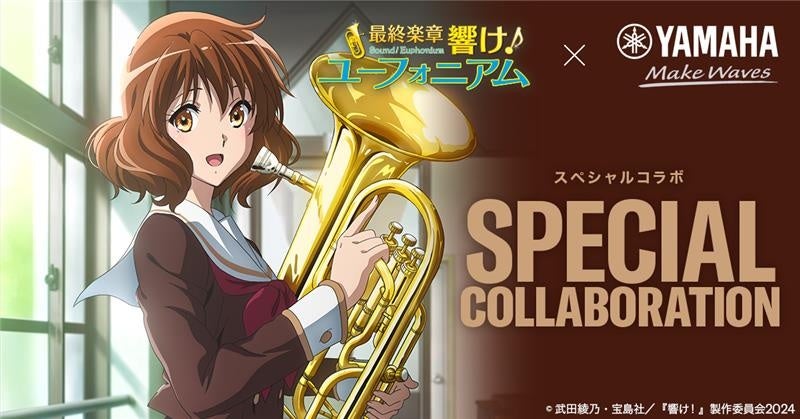
When the first part of Sound! Euphonium: Final Movement opened in Japanese theaters on April 24, 2026, it marked the beginning of the end for Kyoto Animation’s eleven-year symphonic saga. Alongside the cinematic premiere, Yamaha Music Japan launched a nationwide retail campaign across its flagship stores, placing life-size character cutouts of band president Kumiko Oumae beside concert-grade brass displays, as confirmed by the official PR TIMES Report. The timing could not be more deliberate. Between theatrical stage greetings and promotional tie-ins scheduled for the May 31, 2026 Koshien Brass Band Festival, the franchise's obsessive focus on instrument mechanics has once again sparked intense curiosity among musicians and anime fans alike.
Central to this visual identity is an odd aesthetic duality. On screen, Kyoto Animation renders piston valves, water keys, and lacquer reflections with photorealistic precision. Off stage, those same instruments morph into derpy, bulbous plush mascots known colloquially as Gakki-kun (literally "Instrument Boys") and the cult-favorite Tubacabra. Understanding the appeal of Kitauji High School’s wind section requires looking at both sides: the real Japanese brass catalog and the stylized cartoon avatars that turn heavy brass tubing into collectible pop icons.
📌 Key Takeaways:
- Hardware Authenticity: Every instrument played by Kitauji High School students maps to a real production model, led by Kumiko Oumae's silver-plated Yamaha YEP-621S euphonium and Reina Kousaka's custom Xeno trumpet.
- The Mascot Counterpart: The chibi Gakki-kun strap figures and Hazuki Katou's menacing Tubacabra originated as hand-drawn band good-luck charms before becoming high-demand theater merchandise.
- Production Precision: Kyoto Animation animators physically measured factory horns at Yamaha’s Hamamatsu facilities to ensure hand fingerings and valve action accurately match the recorded musical score.
The Whimsical Origins of Gakki-kun and Tubacabra
In Japanese high school wind ensembles, decorating instrument cases with handmade felt badges and strap charms is an entrenched ritual. Kitauji High School reflects that culture down to the smallest stitch. The Gakki-kun mascots first appeared as incidental background gags: soft-sculpture instrument bodies sporting dot eyes, stubby limbs, and stitched smiles hanging from gig bags. They softened the brutal emotional pressure of competition prep.
Hazuki Katou’s companion mascot, Tubacabra, took that cute concept and turned it sideways. Named after the mythical bloodsucking Chupacabra, this monstrous yet endearing tuba creature features jagged felt teeth protruding from its brass bell, button eyes, and tiny webbed wings. What began as a visual punchline about the tuba's imposing size quickly became a merchandising hit. For the 2026 theatrical run, theatergoers lined up for exclusive acrylic stands and mascot straps featuring Kumiko, Reina, and Mayu Kuroe alongside their stylized instrument familiars. The contrast works because the mascots never replace the real instruments on screen. Instead, they serve as emotional totems for teenage players grinding through grueling rehearsal schedules.
Kumiko Oumae’s Euphonium and the Yamaha YEP-621 Lineage
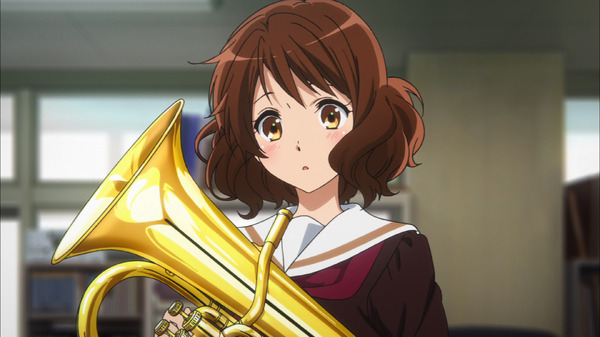
Behind the soft mascot charms sits serious acoustic engineering. Kumiko Oumae’s signature instrument is not a fictional composite. It is an exact rendering of the Yamaha YEP-621S, an intermediate-to-professional compensating four-valve euphonium finished in clear silver plate. Retailing between $3,800 and $4,600 depending on import duties and currency rates, the YEP-621S is a staple of conservatory preparatory programs and competitive high school bands.
The visual accuracy Kyoto Animation brought to this horn set a new baseline for the industry. Animators did not draw approximate metal loops. They captured the specific 11-inch yellow-brass bell flare, the layout of the top three inline valves, and the distinctive fourth side-action valve operated by Kumiko’s left index finger. When Kumiko works the fourth valve to correct low-register intonation during concert scenes, the animation team matches the physical slide extension to the exact fingering required for the pitch. In the 2026 theatrical chapters, Mayu Kuroe’s arrival introduced the gold-lacquered counterpart, the Yamaha YEP-621, creating a visual and sonic clash between Kumiko's cool silver warmth and Mayu's brighter brass tone.
Kitauji High School Band Roster vs. Factory Yamaha Hardware
The production design team at Kyoto Animation established an official equipment ledger for every member of the concert band. Rather than outfitting all students with top-tier professional horns, the creators distributed equipment based on student backgrounds, school loaner programs, and family finances.
| Band Member | Mascot Persona | Real-World Instrument Model | Retail Hardware Tier |
|---|---|---|---|
| Kumiko Oumae | Eupho-kun | Yamaha YEP-621S (Silver-plated) | Intermediate / Semi-Pro ($4,200) |
| Hazuki Katou | Tubacabra | Yamaha YBB-641II (Rotary BBb Tuba) | Professional School Loaner ($8,500) |
| Reina Kousaka | Trumpet-kun | Yamaha YTR-8335RS (Xeno Custom) | Custom Professional ($3,100) |
| Sapphire Kawashima | Contrabass-kun | Oriente HO-30 Double Bass | Orchestral Entry ($2,600) |
| Mayu Kuroe | Eupho-chan (Gold) | Yamaha YEP-621 (Clear Lacquer) | Intermediate Standard ($3,700) |
Notice the structural contrast in Hazuki’s tuba. As a beginner, she does not own her horn. She plays Kitauji’s battered school loaner: a rotary-valve Yamaha YBB-641II. The animators painted tiny dings into the lower bow and slight discoloration near the leadpipe, grounding her character's daily struggle in physical reality. When she slips a plush Tubacabra cover over the bell during marching practice, it feels completely earned.
How Kyoto Animation Rebuilt Instrument Anatomy on Screen
Most animation studios struggle with brass instruments. Tubing bends are difficult to keep consistent across rotating camera angles, and valve caps easily distort into flat ovals. Kyoto Animation solved this problem by creating dedicated 3D CAD proxy models based directly on Yamaha technical schematics. The digital team set up exact geometry for each bell, brace, and valve casing, then had traditional 2D key animators hand-draw line art over the digital wireframes.
The result is absolute kinetic fidelity. Watch any performance sequence from the 2026 films: light sources track across polished lacquer as the characters sway, reflections warp over curved bells, and spit valves open at rhythmically sensible rest bars. Most crucially, the fingerings are authentic. If Reina plays a concert D above the staff on her Xeno trumpet, her right hand hits the first and second valves simultaneously. If Kumiko plays an alternate C fingering, her index finger drops onto the fourth side valve. It is an unyielding approach to production design that respects the craft of real musicians.
Commercial Impact: From Cinema Lobbies to Wind Band Recruitment
The intersection of authentic hardware and mascot merchandise created an unexpected pipeline for Yamaha Music Japan. Japanese music instrument retailers reported measurable upticks in brass and woodwind school trial signups following each broadcast season. The 2026 campaign capitalized directly on this dynamic by combining in-store displays of Kumiko’s YEP-621S with limited-edition goods, including theater-exclusive clear stands distributed between May 22 and May 28, 2026 during the film's fifth box-office week.
The mascots make intimidating metal hardware approachable. A high-grade double bass or rotary tuba can appear cold, massive, and expensive to an incoming tenth grader. A plush Tubacabra strap hanging off a canvas bag reframes that heavy equipment into a beloved companion. Fans who might never purchase a $4,000 euphonium still buy Gakki-kun keychains, attend live film concerts, or take up secondary school instruments, keeping Japan's regional brass band scene vibrant.
Frequently Asked Questions (FAQ)
Q1: What exact model is Kumiko Oumae's euphonium in Sound! Euphonium?
Kumiko plays a silver-plated Yamaha YEP-621S. It is a compensating four-valve intermediate-to-professional horn featuring a 3-top plus 1-side valve layout, making it well-suited for advanced high school and collegiate brass players.
Q2: What is the difference between Gakki-kun and Tubacabra?
Gakki-kun refers broadly to the friendly anthropomorphic instrument mascots drawn with simple smiling faces and fabric bodies. Tubacabra is Hazuki Katou's specific, toothy mascot design based on her tuba, playfully parodying the legendary mythical beast Chupacabra.
Q3: Should beginner musicians buy the instruments seen in the anime?
Models like Reina's Yamaha Xeno trumpet ($3,100+) and Kumiko's YEP-621S ($4,200+) are expensive professional tools. True beginners should look at student-tier models such as the Yamaha YTR-2330 trumpet or Yamaha YEP-321 euphonium, which offer solid durability and intonation at a fraction of the cost.
The Living Legacy of Kitauji's Sound in 2026
With the concluding chapter of Sound! Euphonium locked for its theatrical premiere on September 11, 2026, Kyoto Animation leaves behind an unprecedented technical record. By refusing to cut corners on valve mechanics, horn weights, and acoustical realities, the studio turned an animated school band drama into an authentic celebration of wind music. Whether hanging as a felt mascot from a gig bag or glistening under stage spotlights as hammered brass, Kitauji’s gear proves that when art honors real-world craft, the music resonates far beyond the screen.