Revaty to Aizu Travel Guide: Schedule, Boarding Window, and Real-Time Transit at Kita-Senju
Passengers hurrying through the labyrinth of Kita-Senju Station during morning rush hour often miss the discreet passage that leads straight to the mountainous heart of Tohoku. While Asakusa serves as the historic terminus for Tobu Railway, seasoned travelers bound for Tochigi and Fukushima board further north at Kita-Senju, where major subway lines intersect directly with intercity rail. The streamlined Tobu 500 series limited express, branded as the Revaty, links Tokyo directly to remote northern termini without requiring a single train transfer.
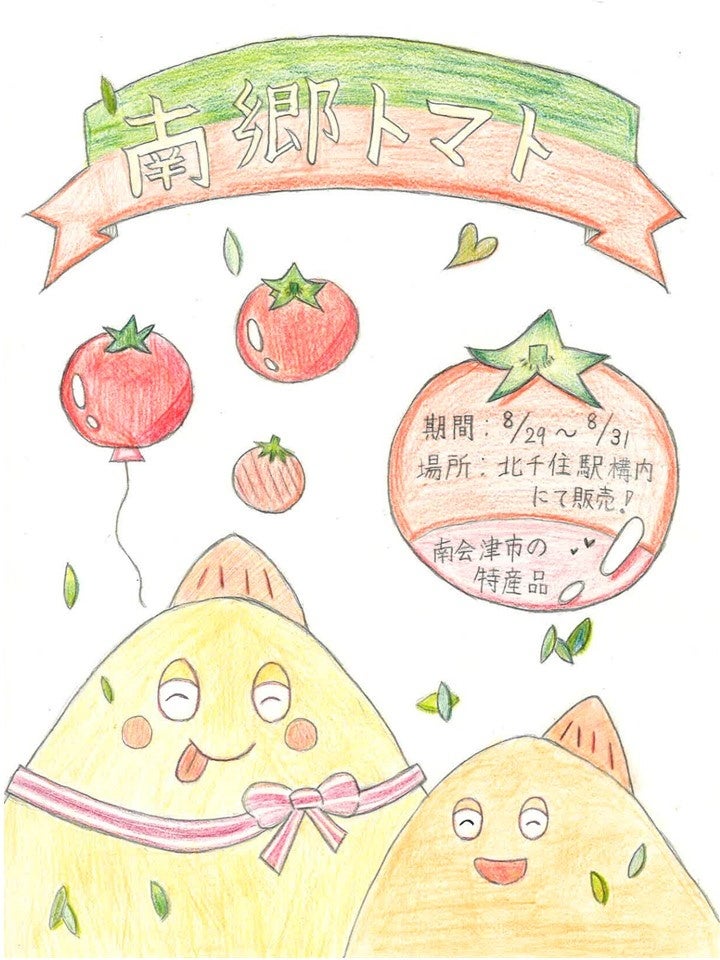
Beyond ordinary passenger service, this express corridor functions as an active civic bridge between urban Tokyo and rural Fukushima. According to a PR TIMES Report, local educational and tourism bodies, including Adachi Ward's Senju Sakurazutsumi Junior High School and Fukushima's Tajima High School, routinely partner with Tobu Railway to transport fresh Minami-Aizu agricultural produce directly into Kita-Senju aboard scheduled Revaty services, turning the passenger concourse into an impromptu regional market.
📌 Key Takeaways:
- Boarding Location: All outbound Tobu Limited Express Revaty services depart exclusively from Platform 1 on the 1st floor of Kita-Senju Station, accessible via a dedicated express boarding gate.
- Transit Requirements: Boarding requires both a standard base fare (IC card or paper ticket) and a reserved-seat limited express surcharge ticket purchased before entering the train.
- Direct Tohoku Access: The Revaty Aizu direct connection takes approximately 3 hours and 15 minutes to reach Aizu-Tajima without requiring equipment changes along the Tobu, Yagan, and Aizu railway lines.
Navigating Platform 1 and the Dedicated Express Boarding Gate
Kita-Senju functions as an intricate multi-level transit complex operated jointly by Tobu, Tokyo Metro, JR East, and the Tsukuba Express. Navigating the Kita-Senju multi-level concourse requires close attention to vertical signage. The Tobu Skytree Line express platform is situated on the 1st-floor ground level, specifically designated as Platform 1. Local commuter trains also run through this platform edge, but Tobu isolates limited express passengers using a distinct boarding protocol.
To board the Revaty, travelers must walk toward the mid-platform section of Platform 1. There, Tobu operates an enclosed, sheltered limited express waiting lounge alongside a dedicated express boarding gate. Station staff stand stationed at these access turnstiles during express departure windows. You cannot simply walk onto the train from the open commuter platform edge when the automated car doors open; ticket inspectors verify reservations right at the entrance gate before clearing passengers onto the cordoned boarding zone.
Arriving early prevents unforced boarding errors. If you arrive via the Tokyo Metro Chiyoda Line or Hibiya Line, stay inside the paid fare zone and follow overhead directional boards pointing toward "Tobu Skytree Line Tracks 1, 4." Hibiya Line trains terminate on the 3rd floor; you must descend two levels via central escalators to reach the 1st-floor platform. Chiyoda Line trains arrive in the basement; take the designated transfer stairs directly up to the ground-level concourse.
Ticketing Rules: Base Fares Versus the Limited Express Surcharge
Boarding a Tobu 500 series limited express train without a seat reservation triggers penalties. Tobu operates a strict two-tier fare system across all its premium services. Commuters and long-distance travelers need both a standard fare payment to cover the physical track distance and a reserved-seat limited express surcharge ticket.
You can pay your base transportation fare using an IC card like Suica or Pasmo tapped at the outer turnstiles. The seat surcharge, however, must be issued as a digital ticket via Tobu's online reservation system or collected as a physical coupon from express ticket vending machines positioned throughout the Kita-Senju concourse. Automated ticket machines standing directly outside the Platform 1 express gate allow last-minute purchases if seats remain unreserved, though high-demand morning services to Nikko and Aizu regularly sell out days in advance during autumn foliage and ski seasons.
| Service Designation | Primary Route Destination | Average Travel Time from Kita-Senju | Express Surcharge (Adult) |
|---|---|---|---|
| Revaty Aizu | Aizu-Tajima (via Yagan & Aizu lines) | 3 hr 10 min, 3 hr 25 min | ¥2,160, ¥2,520 |
| Revaty Kegon | Tobu-Nikko | 1 hr 40 min, 1 hr 50 min | ¥1,470, ¥1,650 |
| Revaty Kinu | Kinugawa-Onsen | 2 hr 00 min, 2 hr 10 min | ¥1,470, ¥1,650 |
| Revaty Ryomo | Ota / Akagi (Gunma Prefecture) | 1 hr 25 min, 1 hr 45 min | ¥1,250, ¥1,450 |
The Tobu 500 Series Fleet Architecture and Decoupling Operations
The technical flexibility of the Tobu 500 series limited express sets it apart from earlier express generations like the Spacia 100 series. Engineered by Kawasaki Heavy Industries, each Revaty trainset consists of three self-contained cars with cab connections at both ends. This modular architecture allows Tobu to couple two three-car units into a single six-car train at Asakusa and Kita-Senju, operating them jointly along the main trunk line.
At Shimo-Imaichi Station in Tochigi Prefecture, operations split. The front three cars uncouple to continue north along the Kinugawa line toward Aizu-Tajima, while the rear three cars peel off toward Tobu-Nikko. Passengers must check their issued carriage numbers before stepping past the dedicated express boarding gate at Kita-Senju. Sitting in cars 1 through 3 sends you deep into Fukushima; boarding cars 4 through 6 routes you into the historic shrines of Nikko. Onboard conductors make English and Japanese announcements, but boarding the right car initially eliminates stressful mid-trip migrations through cramped gangways.
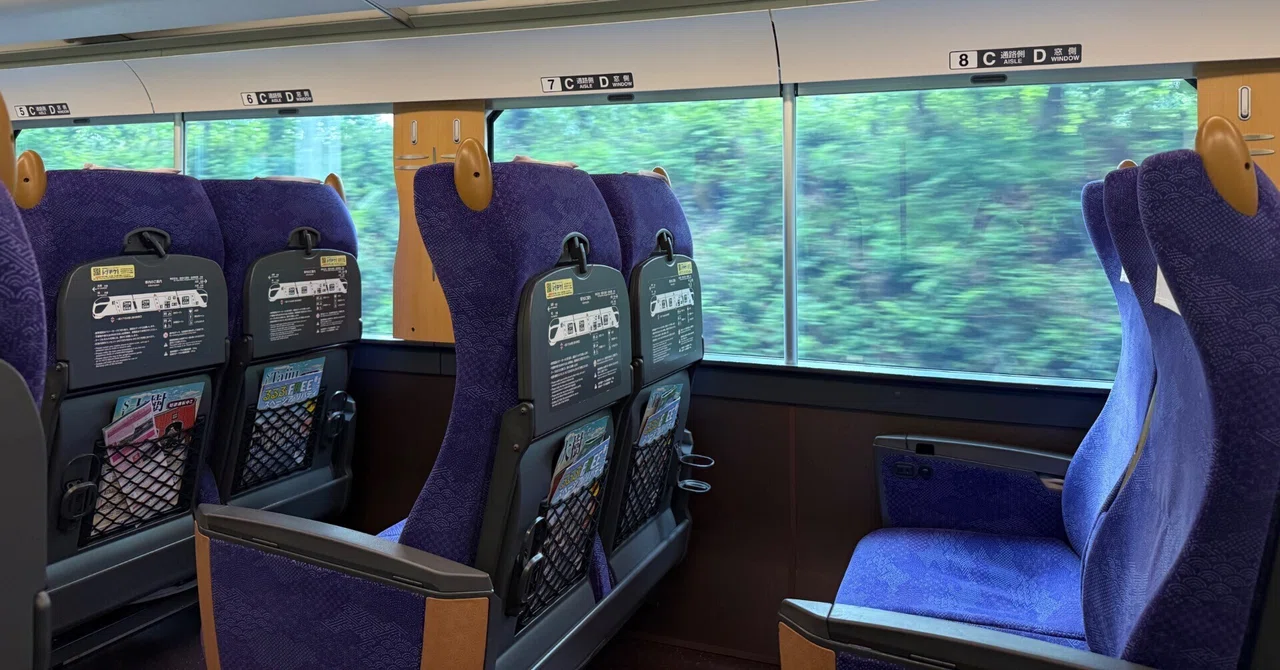
Each seat features dedicated AC power outlets, free onboard Wi-Fi, and ergonomic headrests framed by warm cedar wood trim intended to evoke Tochigi's natural landscapes. Unlike commuter trains, overhead luggage racks easily accommodate standard roller bags, while designated end-of-car zones hold larger winter gear and outdoor backpacks.
Morning Timetable Strategy and Onboard Provisioning
The Revaty Aizu departure schedule features limited departures daily, making punctuality mandatory. Early morning departures, particularly the Revaty Aizu 101 and 111, pull into Platform 1 at Kita-Senju shortly after 6:40 AM and 9:40 AM respectively. The dwell time at Kita-Senju lasts roughly 60 seconds. Train operators prioritize mainline schedule adherence, meaning doors close swiftly once waiting passengers step aboard.
Planning breakfast demands tactical foresight. Many station bento kiosks inside Kita-Senju do not open their shutters before 7:00 AM. Travelers boarding the earliest outbound express runs frequently report empty storefronts on the central transfer concourse. Convenience stores situated just outside the central ticket gates, such as the 7-Eleven outlets near the West and East exits, open earlier and provide rice balls, hot drinks, and bento trays. Pick up your provisions before passing through the main ticket barriers; the platform-level kiosks offer little more than bottled green tea and chewing gum.
The onboard experience rewards early preparation. As the train clears Greater Tokyo's concrete perimeter, the urban backdrop yields to the floodplains of the Tone River and the cedar-dense foothills of the Nikko mountain range. For passengers traveling through to Aizu-Tajima, the final 40 minutes along the Aizu Railway showcase rugged river valleys, tunnels carved into limestone bluffs, and single-track mountain railroading at its most picturesque.
Connecting Urban Classrooms and Mountain Agriculture via Rail Freight
Passenger transportation represents only half the Revaty's modern mission along the Kita-Senju corridor. In recent years, Tobu Railway transformed the 500 series into a quiet testbed for intra-prefectural high-speed cargo delivery, reviving the historic concept of passenger-train freight (nieki) to combat rural economic contraction.
Agricultural producers across Fukushima's Minami-Aizu district face severe transport hurdles due to trucking labor shortages and rising fuel overheads. In response, high school students from Fukushima Prefectural Tajima High School collaborate with middle schoolers from Adachi Ward's Senju Sakurazutsumi Junior High School to curate selections of fresh local goods, including high-altitude mountain tomatoes, seasonal asparagus, and Aizu timber craft products.
Farmers pack these goods in early dawn crates, loading them into unused modular spaces aboard the morning's first inbound Revaty run. By mid-morning, the train pulls alongside Kita-Senju's Platform 1, unloading regional produce straight into the urban concourse where students host community farmers' markets. This supply-chain link demonstrates how modern passenger rail assets can serve regional revitalization without requiring dedicated diesel freight infrastructure.
Frequently Asked Questions (FAQ)
Q1: Can I board the Tobu Limited Express Revaty using only a Suica or Pasmo IC card?
A1: No. A transit IC card covers solely the standard base fare. You must also hold a valid reserved-seat limited express surcharge ticket before entering the train. Buying your seat voucher online or from station vending machines prior to boarding avoids penalty fees.
Q2: How much transfer time should I allow between Tokyo Metro lines and Platform 1 at Kita-Senju?
A2: Allow at least 8 to 12 minutes. Kita-Senju is a dense four-story complex. Moving from the underground Chiyoda Line platforms or upper-level Hibiya Line tracks down to the 1st-floor express platform requires passing through multiple stairs, escalators, and the dedicated Platform 1 check gate.
Q3: Does the Revaty Aizu require changing trains between Tokyo and Fukushima?
A3: No. The train operates as a through-service along three connected rail systems: the Tobu Skytree/Nikko/Kinugawa Lines, the Yagan Railway Aizu Kinugawa Line, and the Aizu Railway Aizu Line. You remain in your reserved seat all the way from Kita-Senju to Aizu-Tajima.
Q4: Are food and drink carts available for purchase on the Revaty?
A4: Regular onboard trolley cart services do not run on the Tobu 500 series Revaty. Passengers must purchase snacks, boxed lunches (*ekiben*), and drinks from station concourse convenience stores before boarding.
Strategic Takeaways for Boarding at Kita-Senju
Navigating Kita-Senju Station for an excursion to Nikko or the southern reaches of Fukushima proves remarkably straightforward once you map the multi-level layout in advance. Platform 1 remains the operational focal point for all northbound limited express traffic. Securing a seat reservation digitally prior to arrival bypasses ticket counter queues, while budgeting an extra ten minutes ensures smooth transit through the inner express gate. Whether heading north for alpine scenery or sampling high-altitude Fukushima produce transported via the morning rail link, boarding the Tobu 500 series at Kita-Senju offers an efficient, seamless gateway into eastern Japan's mountain country.