SPICY CURRY Roka Hits Yoshinoya Nationwide: Availability, End Dates, and Menu Details
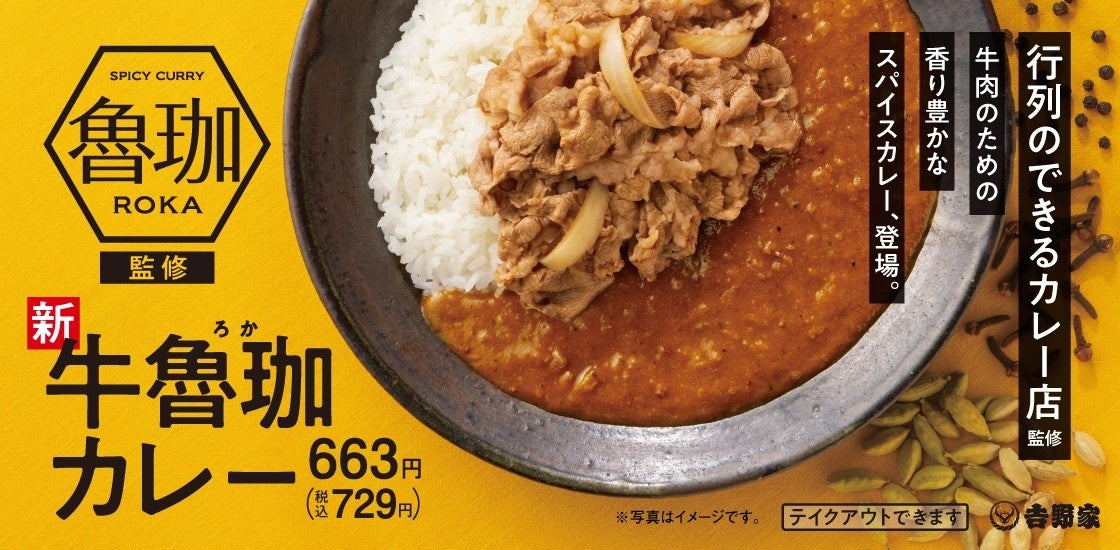
Lines outside SPICY CURRY Roka in Tokyo's Hyakunincho neighborhood routinely begin forming well before dawn. Patrons brave freezing winter mornings or blistering summer humidity simply to secure a numbered entry ticket for one of the shop’s few counter stools. That exclusivity evaporated overnight when Yoshinoya rolled out its nationwide collaboration with Roka founder Chef Eri Saito across more than a thousand fast-casual restaurants. As detailed in a primary Yahoo!ニュース Report on the collaboration, the project introduces a bespoke spice curry sauce explicitly calibrated to cut through the sweet, soy-braised fat of standard Yoshinoya beef.
The collaboration bypasses the mild, flour-thickened roux profiles that defined twentieth-century Japanese beef curry. By bringing craft spice dynamics to late-night highway service areas and train station storefronts, the initiative turns an elusive culinary subculture into accessible everyday dining.
📌 Key Takeaways:
- The Timeline: Launched nationwide on January 16, the limited-time release is scheduled to run through late April across participating Yoshinoya storefronts.
- The Economics: Base Gyu Roka Curry starts at ¥729 for dine-in and ¥716 for takeout, offering a budget gateway to one of Tokyo's most exclusive recipes.
- The Culinary Shift: Chef Eri Saito developed an aromatic, whole-spice profile designed specifically to harmonize with sweet dashi-simmered beef rather than overpowering it.
From Okubo’s Morning Ledger to Over a Thousand Fast-Food Counters
SPICY CURRY Roka opened in Okubo in 2016 and quickly redefined Tokyo's spice curry conversation. Chef Eri Saito, widely recognized in national culinary media as a leading innovator in modern spice blending, spent years mastering South Indian cooking techniques before developing her signature format: an aromatic curry sauce paired alongside traditional Taiwanese lu rou fan. Her Okubo flagship operates on a strict reservation ledger system. If your name is not on the clipboard by 9:30 AM, you do not eat.
Scaling that idiosyncratic craftsmanship to Yoshinoya’s commercial kitchen footprint required severe technical concessions. Yoshinoya serves hundreds of thousands of meals daily. A high-turnover fast-food chain cannot hand-roast small pans of whole fenugreek and cumin seeds for every order. Instead, Saito supervised the development of a production-scale spice concentrate that mimics the sharp, floral volatile oils of freshly cracked whole spices when brought to temperature on Yoshinoya’s steam tables.
The partnership marks a sharp break from Yoshinoya’s historical menu strategy. While the chain has offered dark, roux-thickened curries for decades, those dishes existed largely as utilitarian, mild carb fillers. Gyu Roka Curry approaches spice from the opposite direction, favoring acidity, cardamon aroma, and black pepper heat over gelatinous beef tallow.
Timeline, Pricing, and Takeout Rules for the Limited Run
The campaign began at 11:00 AM on Thursday, January 16, with an expected operational run lasting through late April. Because individual Yoshinoya outlets operate under varied supplier cadences, certain regional franchises may deplete their dedicated spice bases ahead of the spring target date. Availability encompasses the vast majority of Yoshinoya’s domestic network, excluding only select non-cooking highway kiosks and micro-format counters.
To preserve ease of operation, Yoshinoya established clean price tiers that reflect Japan's dual consumption tax structure. Dine-in meals incur the standard 10% rate, while takeout orders register at the reduced 8% rate.
Takeout availability remains a core driver of the rollout. Customers can order Gyu Roka Curry through digital in-app reservations, direct counter pickup, or third-party delivery services like Uber Eats and Demae-can. In-store takeaway orders separate the rice and curry sauce into split-level polypropylene containers to prevent the rice from softening during transit.
The Menu Lineup: Standard Gyu Roka Curry Versus Niku-Daku
The collaboration menu prioritizes speed of assembly. Yoshinoya condensed the offering into two primary variants: the entry-level Gyu Roka Curry and the meat-heavy Niku-daku version, which doubles down on the restaurant's legacy sliced short plate beef.
| Menu Item | Dine-In Price (Tax Included) | Takeout Price (Tax Included) | Beef Portion Profile |
|---|---|---|---|
| Gyu Roka Curry (牛魯珈カレー) | ¥729 | ¥716 | Standard single beef topping portion |
| Niku-daku Gyu Roka Curry (肉だく牛魯珈カレー) | ¥949 | ¥932 | Expanded beef topping allocation |
| Plain Roka Curry Sauce (Single Side) | ¥437 | ¥429 | Curry sauce only (no meat, no rice) |
For diners tracking macros, the baseline plate lands near 715 kilocalories, rising past 890 kilocalories when choosing the Niku-daku beef add-on. While Roka's Okubo shop garnishes plates with mustard seeds, pickled red cabbage, and hard-boiled eggs, Yoshinoya simplifies the plating down to sliced beef, aromatic sauce, and white rice. Diners seeking textural acidity often order an optional raw egg or a side of red ginger from the counter bins.

Engineering Spice Profiles to Complement Yoshinoya’s Braised Beef
The primary barrier to pairing spice curry with Yoshinoya's flagship protein is sweetening. Yoshinoya cooks thinly sliced beef short plate and yellow onions in a simmering bath of white wine, dashi, mirin, and dark soy sauce. Conventional spicy curries, which often rely on deep caramelized onion pastes, can taste unpleasantly cloying when ladled over sweet, simmered meat.
Chef Saito bypassed this clash by leaning heavily on pungent, drying spices. The sauce features sharp clove, crushed coriander, green cardamom pods, and ground black pepper. Tomato purée provides bright acid, cutting cleanly through beef fat without requiring excess vinegar.
The mouthfeel is noticeably thinner than standard Japanese family curry. It coats grains of steamed short-grain rice immediately rather than sitting on top as a heavy glaze. Heat builds steadily along the back of the palate without escalating into stunt-level chili burn. Yoshinoya targets a wide demographic that includes elderly patrons and construction crews, which required Saito to calibrate heat intensity near a medium-plus threshold: stimulating enough to satisfy spice purists, yet restrained enough to prevent walkouts.
Customer Reception and Fast-Casual Spice Culture
Online response following the mid-January release focused heavily on accessibility. On social platforms, users who spent years failing to secure reservations at Saito's Okubo location treated the Yoshinoya launch as their first contact with Roka's flavour profile. The low pricing point generated sustained buzz, especially as boutique curry houses in Shinjuku and Shibuya routinely charge ¥1,500 to ¥2,200 for similar single-origin plates.
Traditionalists raised predictable questions about fast-casual compromises. Purists pointed out that mass-produced sauce misses the blistering mustard oil finish and fresh curry leaves that define Saito’s small-batch cooking. Even so, most diners praised the collaboration for retaining genuine cardamom aroma and a dry spice kick rarely found in chain dining.
The campaign signals an evolving palette across corporate Japanese kitchens. For decades, fast-casual chains treated curry as an afterthought: uniform, safe, and sweet. The arrival of Gyu Roka Curry shows that mainstream diners are willing to trade heavy comfort roux for sharp, herbal complexity.
Frequently Asked Questions (FAQ)
Q1: What is the exact end date for Gyu Roka Curry at Yoshinoya?
Yoshinoya plans to serve the dish through late April. However, individual franchise locations operate on batch allocations and will stop serving the dish earlier if their allotted spice concentrate runs out.
Q2: Is Gyu Roka Curry available for takeout and delivery?
Yes. Takeout is available at almost all participating branches at ¥716 for the base plate and ¥932 for the Niku-daku version. Delivery platforms also carry the items, subject to standard delivery markup fees.
Q3: How spicy is the Yoshinoya collaboration compared to the real Okubo restaurant?
The Yoshinoya dish is calibrated slightly milder than SPICY CURRY Roka’s standalone recipes to accommodate a general customer base. It features sharp black pepper, cardamom, and clove aromas, but remains approachable for casual curry diners.
The Expanding Boundaries of Mass-Market Fast Casual
Collaborations between micro-scale cult chefs and massive restaurant networks often dilute the source material into mediocrity. Yoshinoya’s work with Chef Eri Saito dodges that failure by focusing squarely on flavor balance rather than mere logo placement. By designing a sauce that weaponizes the distinct, sweet richness of Yoshinoya beef, the chain turned an exclusive Tokyo obsession into practical street-level dining.
With the late-April deadline approaching, the collaboration serves as a rare experiment in mass-market spice distribution. Diners wanting to experience Saito’s balance of clove, tomato, and braised beef should seek out a counter seat before the limited spice inventory clears nationwide.