Staying at Hotel Yumeshizuku in Minamiaso: Complete Visitor Guide, Onsen, and Access
Nestled in the lush southern basin of Mount Aso’s volcanic rim, Minamiaso has quietly evolved from a pastoral farming community into one of Kyushu’s premier wellness destinations. In August 2024, hospitality and bridal conglomerate Selmo Group announced an ambitious overhaul of its flagship property, Hotel Yumeshizuku (ホテル夢しずく), aiming directly at the surge in international travelers across rural Japan. According to an official corporate filing published via PR TIMES, the sweeping renovation project modernizes guest accommodations, revitalizes communal wellness spaces, and positions the property as a luxury basecamp for exploring Aso Kuju National Park.
For decades, travelers headed straight to Kurokawa Onsen or Beppu, often bypassing the expansive caldera basin to the south. That dynamic has shifted. A revitalized transit corridor connecting Kumamoto Airport directly to the reopened Minamiaso Railway, paired with modern upgrades at boutique properties, turns Minamiaso onsen ryokan stays into compelling alternatives to crowded northern Kyushu hot spring hubs.
📌 Key Takeaways:
- The Renovation: Selmo Group’s multi-phase redesign modernizes traditional Japanese suites, upgrades communal wellness areas, and expands multilingual concierge services.
- Thermal Waters: Alkaline-rich volcanic springs power both communal open-air rotenburo baths and rentable private family onsen facilities.
- Logistics & Rates: Average double-occupancy pricing spans ¥32,000 to ¥68,000 per night, inclusive of half-board multi-course dining, reachable within 45 minutes by car from Aso Kumamoto Airport.
The Rebirth of a Caldera Sanctuary: Selmo Group’s Strategic Pivot
The southern perimeter of Mount Aso presents a geography unlike anywhere else in Japan. Volcanic ash soils yield sweet spring waters and mineral-dense aquifers that bubble to the surface at temperatures between 42°C and 49°C. Hotel Yumeshizuku sits directly atop this hydro-thermal pocket. Established as an authentic Japanese hot spring retreat, the property balanced classical ryokan hospitality with modern Western amenities for years. Yet, the physical demands of high-traffic tourism required structural renewal.
Selmo Group initiated a full-scale redesign to address modern traveler preferences: soundproofed western bedding options integrated into tatami spaces, expanded private dining configurations, and barriers removed for universal accessibility. The operator recognized that foreign visitors seeking high-end Kyushu inbound luxury travel expect the aesthetics of traditional Japanese architecture without sacrificing orthopedic bedding, private bathing options, and intuitive booking systems. Rather than stripping the resort of its rural Kumamoto identity, the project leaned into regional cedar carpentry, Aso basalt stone, and large-format panoramic windows framing the five peaks of Mount Aso.
Inside the Baths: Rotenburo Architecture and Volcanic Minerals
The defining draw of Hotel Yumeshizuku remains its geothermal water. The resort's springs are classified as mildly alkaline hypotonic thermal waters, known colloquially across Kumamoto as bijin-no-yu ("waters of beauty"). The water carries a silky, almost viscous feel that softens dry skin and soothes joint inflammation after strenuous hiking across the caldera rim.
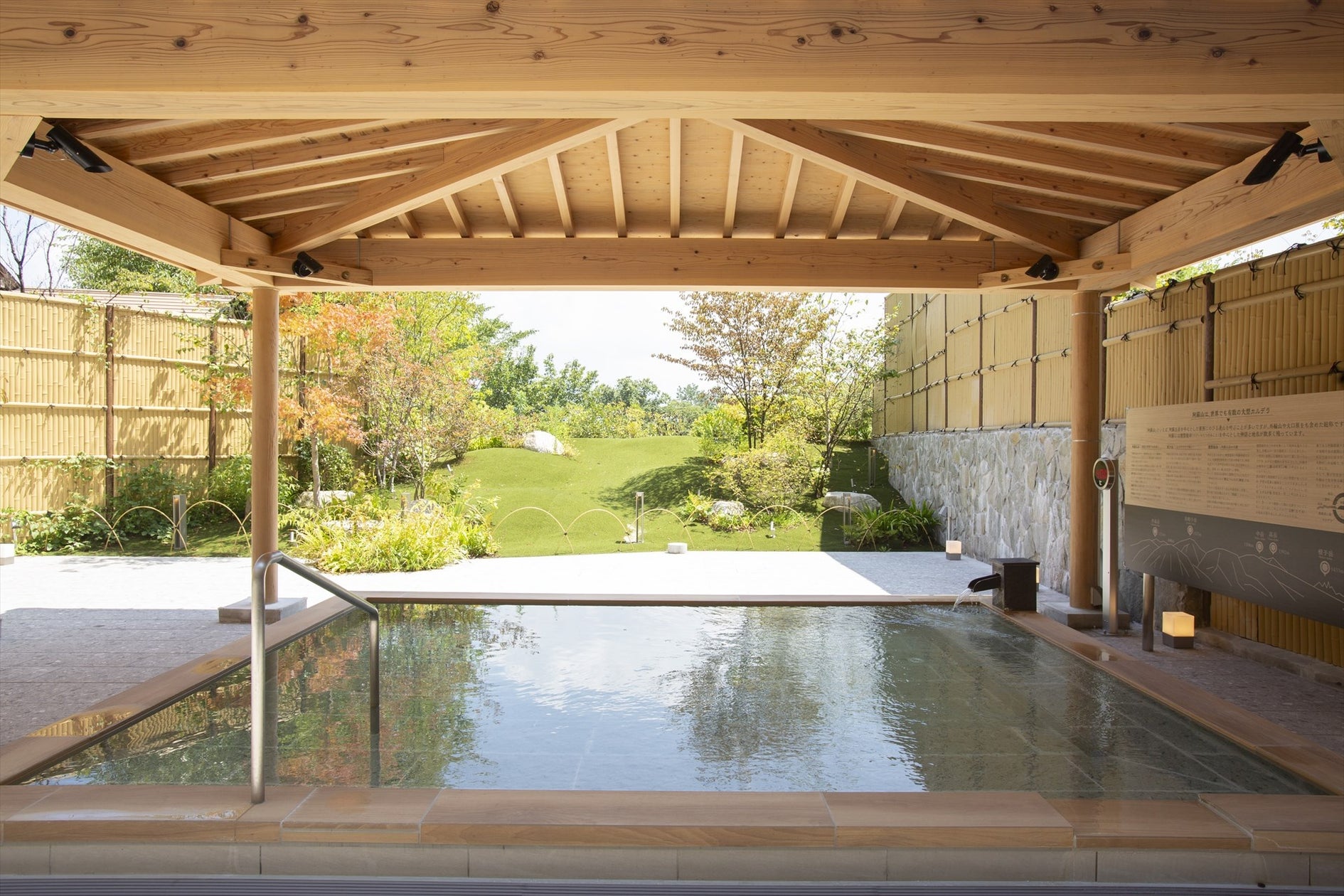
The main communal bathing complex features an indoor cedar bath alongside a rock-lined open-air rotenburo bath. Steam rises against a backdrop of manicured bamboo and seasonal Japanese maples. For international travelers who prefer seclusion or visitors with visible tattoos, the private family onsen booking system provides private, bookable outdoor pavilions. These private baths operate on 50-minute reservation windows, offering personal dressing rooms, direct garden views, and continuous free-flowing (kakenagashi) spring water refreshed continuously from the subterranean source.
Room Categories, Rates, and Booking Reality
Room configurations at Hotel Yumeshizuku range from compact Western twins to sprawling detached villas featuring their own private open-air baths. The main building accommodates standard travelers seeking a balanced ryokan experience, while the adjacent annex, Bettei Soan, caters to couples and private groups seeking seclusion.
| Room Category | Configuration | Average Nightly Rate (2 Guests, Half-Board) | Onsen Access |
|---|---|---|---|
| Standard Japanese Suite | 10, 12 tatami mats, futon bedding, garden view | ¥32,000, ¥42,000 | Communal baths + public rotenburo |
| Modern Japanese-Western Room | Twin Western beds + raised tatami living area | ¥40,000, ¥52,000 | Communal baths + reservable family onsen |
| Bettei Soan Detached Villa | Standalone villa, private terrace, master bedroom | ¥56,000, ¥78,000 | In-room dedicated rotenburo bath |
Booking windows fill up rapidly during peak foliage in late October through November, as well as during the mid-spring cherry blossom period. Guests should note that half-board rates include both dinner and breakfast. Skipping the meal plan is rarely advised, as Minamiaso’s village core shuts down dining operations early in the evening.
Caldera Terroir: Kaiseki Dining and Regional Kumamoto Cuisine
Dining at Hotel Yumeshizuku centers on the rich agricultural output of the volcanic plateau. Minamiaso's spring water feeds vast terraces of koshihikari rice, while mountain pastures support Kumamoto’s renowned red-haired wagyu cattle, known locally as Akaushi.
Dinner is served in multi-course kaiseki fashion. The kitchen prioritizes seasonal sourcing: wild mountain vegetables (sansai) in the spring, sweet river ayu fish grilled over charcoal in the summer, and hearty hot pots in the winter chill. The centerpiece of the evening meal is uniformly the grilled Akaushi beef. Unlike heavily marbled black-hair wagyu (Kuroge Washu), Akaushi features a higher ratio of lean muscle. The meat yields a deeper, savory flavor without coating the palate in excess grease. Dishes pair naturally with local Junmai sakes brewed using Aso meltwater, offering clean acidity that cuts through the savory proteins.
Navigating Transit: Transit Corridors and Minamiaso Railway Sightseeing
Reaching rural Kumamoto was once an exercise in logistical endurance, especially following infrastructure damage from the 2016 earthquakes. Today, access is streamlined. The full restoration of the Minamiaso Railway provides a scenic, stress-free route directly through the heart of the valley.
Travelers arriving via Aso Kumamoto Airport can rent a car and drive east along Route 28, passing through the Tawarayama Tunnel to reach the hotel grounds in roughly 40 to 45 minutes. For rail passengers, taking the JR Hohi Main Line to Tateno Station allows for an easy transfer to the Minamiaso Railway. Riding the open-air Torokko sightseeing train across high steel trestle bridges offers unhindered vistas of the river gorges below. Disembarking at Nakamatsu Station or Minamiaso-Shirakawasuigen Station places visitors within a quick 5-to-10-minute taxi ride or pre-arranged shuttle pickup from Hotel Yumeshizuku's front gates.
Planning Your Caldera Itinerary: Best Matches and Travel Cautions
Minamiaso appeals strongly to slow travelers, nature photographers, and hot spring purists. The proximity to Aso Kuju National Park allows for morning crater hikes followed by afternoon hot spring soaks. Those who rent private vehicles will find Hotel Yumeshizuku an exceptional base to explore the crystal-clear springs of Shirakawa Suigen, the volcanic caldera rim viewpoints at Daikanbo, and the active volcanic fumaroles of Mount Nakadake.
Conversely, travelers who rely strictly on public transit without advance planning may find the rural tempo restrictive. Trains run infrequently outside commuter hours, and late-night nightlife is non-existent. Travelers seeking vibrant city bars, international shopping districts, or rapid-transit bullet train hubs should base themselves in Kumamoto City center or Fukuoka rather than the southern caldera floor.
Frequently Asked Questions (FAQ)
Q1: Are guests with tattoos permitted to use the hot springs at Hotel Yumeshizuku?
A1: Traditional Japanese communal baths often restrict visible body art. However, Hotel Yumeshizuku provides private family onsen pavilions and detached villas with private open-air baths, allowing travelers with tattoos to bathe comfortably without restriction.
Q2: How far in advance should I reserve private family onsen times?
A2: Private bath slots fill up quickly on weekends and peak travel holidays. It is best to reserve your 50-minute bathing window at the front desk immediately upon check-in, or select a villa category that includes a personal, attached rotenburo.
Q3: Is a rental car necessary to enjoy staying in Minamiaso?
A3: While the Minamiaso Railway connects to regional rail networks, a rental car picked up at Kumamoto Airport or Kumamoto Station provides far greater flexibility for touring regional farm stands, scenic overlooks, and distant hiking trailheads at your own pace.
What Lies Ahead for Minamiaso Hospitality in 2026
As international travelers push beyond Tokyo, Kyoto, and Osaka in search of regional authenticity, Minamiaso stands out as a model for sustainable rural tourism. The ongoing modernization across properties like Hotel Yumeshizuku demonstrates how traditional ryokan operators can adapt to global hospitality standards without diluting their cultural essence. With geothermal waters flowing steadily from Mount Aso's subterranean network and a farm-to-table culinary heritage shaped by volcanic soil, southern Kumamoto offers an restorative escape anchored firmly in the natural rhythms of Kyushu.