The 1-Minute Reset: Modern Household Routine Trends Transforming Vanity Care
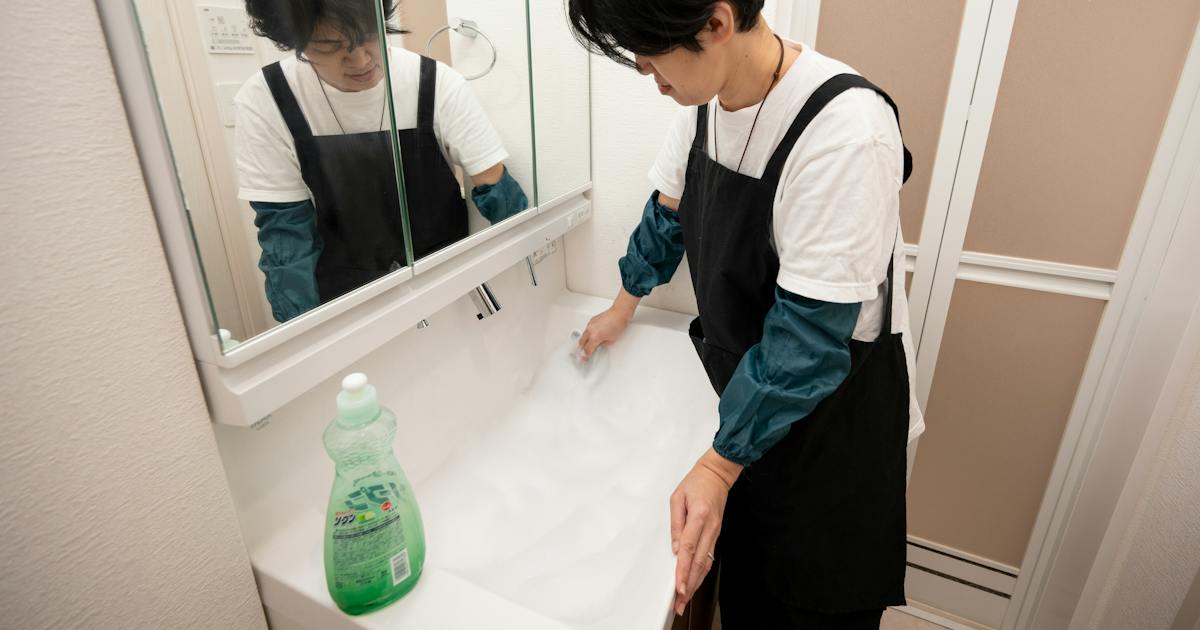
Every morning, millions of homeowners lean over their bathroom sinks, wipe the steam off the glass with a damp hand, and stare at the milky white rings drying across their mirrors. What starts as a light mist quickly hardens into stubborn, chalky scales. According to an investigative household routine dispatch published in a Yahoo!ニュース Report, the compounding exhaustion of scrubbing accumulated grime has prompted a widespread shift away from weekend marathons and toward daily maintenance. Urban dwellers are ditching aggressive Saturday bleach sessions in favor of sixty-second micro-habits that neutralize spots before they solidify.
This behavioral pivot represents a fundamental shift in home management. Rather than letting minerals bake onto glass surfaces for weeks, households are adopting preventative micro-routines that keep bathroom vanities spotless throughout the workweek. By pairing simple chemical principles with intuitive daily habits, modern homeowners are saving hours of physical labor without spending money on specialized commercial gear.
📌 Key Takeaways:
- The Behavioral Shift: Households are replacing multi-hour weekend scrubbing marathons with 60-second micro-wipes executed during regular vanity use.
- The Chemical Culprit: Stubborn mirror scales stem from calcium carbonate deposits that crystallize when tap water evaporates, requiring mild acid treatments rather than abrasive scrubbing.
- The Tool Simplification: Neutral kitchen dish soap and high-density microfiber cloths outperform harsh industrial abrasives while protecting delicate anti-fog coatings.
Why Bathroom Mirrors Develop Those Stubborn Chalky Rings
The cloudy film coating your bathroom vanity is not everyday dust. It is mineral scale, known colloquially in Japan as uroko yogore (fish-scale staining), caused by the steady evaporation of municipal tap water. Each tiny droplet splashed while washing hands or brushing teeth carries microscopic concentrations of dissolved minerals, primarily calcium, magnesium, and silica.
As the moisture evaporates into dry air, those minerals remain behind. Over days and weeks, they bond tightly to the silica in the glass surface, transforming into stubborn calcium carbonate (tansan karushiumu). Glass feels completely smooth to human fingertips, yet under microscopic analysis, it contains tiny surface pores and irregularities. The dissolved minerals settle into these microscopic valleys. Once they crystallize, standard household surface sprays simply bead up and slide right over them.
This mineral buildup accelerates in modern, energy-efficient apartments. Sealed insulation and tight draft-proofing trap warm moisture directly against cool vanity glass. When steamy vapor clings to mirror surfaces and dries slowly, each splash cycle deposits another micro-layer of minerals. By the time visible white rings appear, the deposits have formed a resilient chemical bond that ordinary dry towels cannot disturb.
The 1-Minute Reset Replacing the Weekend Chore Grind
The frustration of wrestling with baked-on water stains led to the viral rise of the "1-minute reset" (1-fun risetto). The principle is disarmingly straightforward: stop reserving mirror and sink maintenance for Saturday mornings. Instead, address surface water while it remains in a liquid, unbonded state.
The habit operates around the Japanese housekeeping philosophy of tsuide-fuki, an opportunistic, companion wipe performed alongside existing daily routines. Instead of allocating a dedicated block of chore time, you run a dry microfiber cloth across the mirror glass directly after completing your evening skincare routine or morning dental hygiene. The action requires roughly twenty to thirty seconds of actual movement.
The primary advantage of preventative maintenance (yobo soji) centers on sheer energy conservation. Liquid water droplets wipe away with zero friction. Mineral scale that has baked onto glass under vanity lights for three weeks demands sustained physical torque, chemical soaking, and careful scraping. By catching the moisture before evaporation occurs, homeowners eliminate the root cause of limescale removal (mizukaki otoshi) entirely, removing the emotional dread associated with neglected bathrooms.
Mechanical Restoration: Matching the Chemistry to the Grime
When neglected glass has already developed heavy, opaque scaling, preventative dry wiping will not resolve the issue. Restoring the glass requires matching the proper cleaning agent to the chemical nature of the soil, rather than applying blunt physical force. Calcium carbonate possesses an alkaline pH of roughly 8.5, 9.5, which means basic cleaners like standard bleach or ammonia solutions are chemically ineffective against it.
| Method & Tool | Target Soil Type | Time Required | Surface Safety Profile |
|---|---|---|---|
| Citric Acid Compress (Pack) | Heavy, calcified mineral scale | 15, 30 min dwell time | High safety; avoid natural stone & metal rims |
| Neutral Dish Detergent | Oily fingerprints, hairspray, sebum | 60, 90 seconds | Completely safe for factory coatings |
| Microfiber Dry Wipe | Fresh water splashes & condensation | 20, 45 seconds | Zero abrasion risk across all mirror styles |
| Industrial Abrasive Cream | Silica-based calcification | 5, 10 min manual scrub | High risk; permanently ruins anti-fog layers |
Neutralizing alkaline deposits requires a mild, controlled acid. Enter the citric acid compress (kuensan pakku). By dissolving roughly 5 grams of citric acid powder into 200 milliliters of warm water, you create a solution with an approximate pH of 2.5, 3.0. Spraying this onto kitchen towels pressed flush against the glass prevents the liquid from running down the wall. This lets the acid dissolve the hardened calcium bonds without manual abrasion.
For greasy splatters from toothpaste, pomade, and facial oils, acid does very little. A single drop of neutral kitchen dish detergent (daidokoroyo chusei senzai) diluted in warm water cuts through skin sebum immediately without leaving cloudy residues. Following with a split-fiber microfiber cloth lifts the suspended lipids away in one pass.

Costly Habits: Vanity Cleaning Mistakes That Damage Glass
When stubborn scale refuses to budge, many frustrated homeowners resort to aggressive tactics that end up ruining expensive vanity units. Professional cleaners emphasize that improper technique is the leading cause of permanent glass scratching, degraded silvering, and peeling anti-fog coatings.
The single most destructive error is reaching for abrasive powders or diamond scrubbing pads (kenmazai). While diamond sponges easily strip mineral scale off bare automotive glass or shower walls, contemporary vanity mirrors frequently feature factory anti-fog films (kagami no kumoridome). Rubbing these treated surfaces with abrasive grit scratches the hydrophobic coating, creating cloudy patches that fog up permanently.
Equally hazardous is letting acidic solutions pool along the bottom edge of the mirror frame. Mirror glass is manufactured with a delicate silver backing applied to the reverse face. If citric acid or vinegar drips down into the frame seam and wicks behind the edge, it oxidizes the metallic layer. The result is "black edge", a permanent, dark corrosion creeping inward from the border that no chemical cleaning product can reverse.
Building an Frictionless Vanity Care System for Busy Homes
The core secret of the 1-minute reset lies in accessibility rather than willpower. If keeping your vanity clean requires retrieving a mop bucket, hunting down specialized sprays, and unrolling paper towels from the pantry, the routine fails within three days. Behavioral friction kills home maintenance habits.
Successful micro-cleaning relies on leaving designated tools within arm's reach of the sink:
- Keep a compact, dual-sided microfiber cloth folded directly inside the vanity medicine cabinet or mounted on a discreet suction hook.
- Dedicate the soft waffle side of the cloth exclusively to collecting water splashes from the mirror and faucet base.
- Use the smooth, tight-weave side for buffing glass to an immediate, streak-free polish.
- Keep a small squeeze bottle containing 10:1 diluted neutral dish soap under the sink to handle unexpected toothpaste or makeup splatters on the spot.
By keeping your primary tools within arm's reach, wiping the mirror takes no more effort than putting away your hairbrush. The task blends seamlessly into your morning and evening routines, keeping the vanity clean without requiring dedicated chore time.
Frequently Asked Questions (FAQ)
Q1: Why does citric acid fail to remove certain cloudy spots on my mirror?
A1: If a citric acid compress produces no noticeable change after thirty minutes, the spot is likely not calcium carbonate. It is either an oil-based splatter (such as silicone residue from hair styling serums, which requires a neutral detergent or alcohol to break down) or silica scale. Silica bonds chemically with glass and generally requires gentle professional polishing.
Q2: Can I use everyday white vinegar instead of citric acid for mirror compresses?
A2: Yes, standard distilled white vinegar (roughly 5% acetic acid) works via the same acid-base neutralization process. Citric acid remains preferable because it produces zero pungent odor and does not release airborne acidic vapors that can irritate eyes in small, enclosed bathrooms.
Q3: How do I know if my bathroom mirror has an anti-fog coating?
A3: Check your vanity manual or inspect the reflection under steam. Coated mirrors resist condensation entirely or hold moisture in an even, transparent sheet rather than beading up. If your mirror has an anti-fog film, avoid all abrasive pads, melamime sponges, and harsh acids, relying solely on water and clean microfiber towels.
A Low-Effort Path to Permanently Spotless Bathrooms
Keeping a bathroom mirror pristine does not require expensive commercial chemicals or grueling weekend chore sessions. It simply requires working with everyday chemistry instead of fighting against it. By switching from harsh abrasive scrubs to gentle, routine care, you protect delicate factory coatings and prevent costly edge corrosion.
A high-quality microfiber cloth, a drop of standard dish soap, and a brief sixty-second wipe after your daily bathroom routine will keep your vanity clear and streak-free. When preventative maintenance becomes an effortless daily reflex, the frustrating cycle of weekend bathroom deep-cleaning disappears for good.