The 2026 Headscarf Revival: How Triangular Bandanas Took Over Streetwear

Utilitarian calico head coverings spent decades confined to home economics classrooms, rural garden beds, and commercial prep kitchens. That domestic association collapsed over the past two fashion cycles. Across Tokyo, Copenhagen, and New York, triangular headwraps, known in Japan as sankakukin, have migrated from back-of-house necessity to the focal point of high-low streetwear. What once looked like an institutional hair guard is now styled alongside oversized leather bombers, crisp poplin tailoring, and deconstructed sportswear.
The acceleration mirrors a wider cultural appetite for practical, weather-resistant headwear that flatters varying hair textures and lengths. Recent style coverage, including a survey on length-specific headwear coordination highlighted in an MSN lifestyle report, shows women across their 20s, 30s, and 40s abandoning rigid caps in favor of softer, customizable wraps. By understanding tension points, structural folds, and silhouette balance, everyday dressers have turned a basic geometric cloth into 2026’s most adaptable styling weapon.
📌 Key Takeaways:
- The Aesthetic Shift: Triangular wraps escaped domestic utility by intersecting with the cottagecore headwrap revival and retro 90s bandana looks on major runways.
- Geometry Matters: Executing a precise square scarf diagonal fold dictates whether a scarf sits cleanly across the brow or slips backward off the crown.
- Haircut Proportions: Modern styling demands distinct knot tying methods tailored specifically to short crops, blunt bobs, and long textured layers.
From Kitchen Duty to Paris Runways: The Cultural Trajectory
The triangular cloth has a storied, functional history. In postwar Japan, school lunch guidelines and sanitation regulations institutionalized the cotton triangle as daily gear for millions of students. Across Eastern Europe and the Mediterranean, rural farmworkers relied on folded linen kerchiefs to shield scalps from noon heat. The garment prioritized sanitation and sun defense above all else.
The turn began when European luxury houses dismantled traditional resortwear codes. Designers swapped structured sun hats for silk twill triangles tied cleanly under the jaw or knotted beneath cascading waves. Street style adopted the format immediately. The babushka scarf aesthetic gained traction among hip-hop artists and skate crews, establishing triangular bandana styling as a unisex staple rather than a purely feminine accent.
By early 2026, social video platforms turned micro-tutorials on scarf origami into viral engines. The accessory crossed demographic boundaries because it solved a universal friction point: bad hair days during unpredictable humidity. Unlike a structured baseball hat that flattens roots, an everyday casual head covering allows volume to breathe around the neck and cheekbones.
The Physics of the Diagonal Fold and Fabric Selection
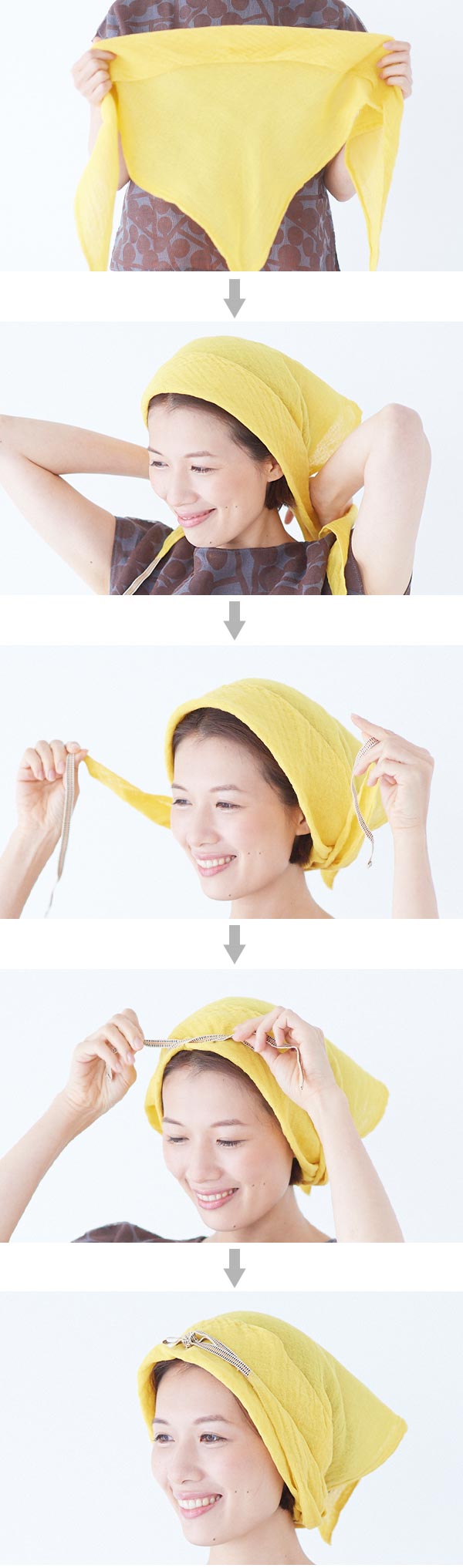
Every polished wrap begins with material behavior. Cotton bandanas offer grip but add bulk. Sateen and lightweight habotai drape cleanly, yet they slip against hair cuticles without intentional reinforcement. To execute the essential square scarf diagonal fold, lay a 55 cm to 70 cm square textile flat on a table, match opposite corners, and establish a firm crease along the hypotenuse.
Smaller 45 cm to 50 cm bandanas suit close-cropped hair or tight skull-cap applications. Pieces measuring 70 cm to 90 cm provide the tail length required for chest-draping knots or under-chin ties. If the fabric lacks natural tooth, professional stylists use invisible hair pin securing hacks before tying. Slipping two crisscrossed bobby pins flat against the scalp near the temples creates an anchor ridge that keeps slippery silk from shifting during movement.
Knot tension dictates posture. Tying the tails beneath the nape requires pulling the scarf’s base down below the occipital bone. Knotting too high forces the front hem forward into the eyebrows; knotting too low causes the sides to flare outward like sails.
Styling Strategies by Hair Length and Face Shape
The most common complaint from first-time wearers is feeling like an extra in a period drama. Avoiding that costume look comes down to hairline exposure. Pulling the fabric all the way to the front hairline emphasizes cheek volume and flattens facial depth. Leaving one to two inches of natural hair visible balances facial symmetry immediately.
| Hair Type & Cut | Recommended Scarf Dimensions | Optimal Placement & Securing Method |
|---|---|---|
| Pixie & Buzzed Crops | 45 cm, 50 cm lightweight cotton or linen | Short hair bandana placement demands positioning the folded edge right behind the ear tips, keeping the front hairline clear. |
| French Bob & Curtain Bangs | 55 cm, 65 cm silk twill or blended rayon | Bob and curtain bangs pairing requires setting the fold two finger-widths behind fringe roots, framing the cheekbones softly. |
| Shoulder-Length & Shags | 65 cm, 75 cm printed cotton canvas | Tuck the knot under the hair bulk at the nape, allowing choppy side layers to spill forward over the wrap. |
| Long Curls & Braids | 75 cm, 90 cm silk or satin | Tie loosely beneath the hair mass or style in front of the neck, letting thick lengths escape down the spine. |
For individuals with rounder face shapes, folding a narrow 1.5 cm cuff backward along the front edge introduces clean diagonal angles across the temples. Those with longer facial profiles benefit from wider, horizontal band placements that visually anchor the upper third of the head.
The Streetwear Reinterpretation: Pairing Fabrics and Outerwear
Modern headwrap styling depends on contrast. Pairing a delicate floral silk square with a prairie dress risks landing squarely in vintage cosplay. Streetwear stylists subvert the look by juxtaposing feminine silk textures against heavy, utilitarian work jackets, track pants, or technical outerwear.
Consider the retro 90s bandana look: folded dark paisley cotton tied snugly at the nape, finished with rectangular sunglasses and an oversized boxy tee. It reads urban, casual, and deliberately rough-edged. Swap the cotton for an archival equestrian scarf, drape it over a hoodie, and tie the knot beneath the chin, suddenly the outfit channels the babushka scarf aesthetic, popular across European and North American streetwear capitals throughout 2025 and 2026.
Color theory plays a vital role. Monochromatic setups, such as an olive scarf paired with an army surplus jacket, keep the headwear understated. High-contrast patterns work best when they pick up a secondary shade from footwear or knitwear, integrating the wrap into the entire silhouette rather than letting it hover as an isolated novelty.
Troubleshooting Common Wearer Mistakes
Slippage remains the primary barrier for beginners. Fine hair textures cannot support silk without added friction. To resolve this, spray dry texturizing paste or dry shampoo directly into the crown before donning the fabric. The microscopic residue creates enough grit to stop the textile from riding up the back of the skull.
Another frequent misstep is tying the knot directly over the center of the triangle point. When the tails are bound over the rear flap, the fabric bunches into an awkward pyramid. Always knot the tails beneath the triangular apex, letting the corner drop naturally over the knot. This small adjustment smooths the crown contour and maintains a flat profile from behind.
Finally, avoid over-tightening. Head scarves are not tourniquets. Excessive pressure strains the frontal hairline and triggers tension headaches within an hour. A properly balanced scarf stays put via anchor pins and balanced weight distribution, not raw physical compression.
Frequently Asked Questions (FAQ)
Q1: How do I keep a silk headscarf from sliding off fine hair throughout the day?
A1: Backcomb slightly at the crown and place two bobby pins crossed into an "X" shape along your part line. Pin the scarf through its inner folds into that hair anchor using matte U-pins that match your hair color.
Q2: Can I wear a triangular headscarf in professional or office settings?
A2: Yes, provided you opt for structured fabrics and subdued palettes. A deep navy, slate, or chocolate silk twill tied smoothly beneath the nape pairs naturally with tailored blazers, provided your front hairline and bangs remain neatly groomed.
Q3: What scarf size is best for the classic chin-tied babushka look?
A3: Choose a square scarf of at least 70 cm by 70 cm. Smaller dimensions do not leave enough fabric to knot comfortably under the chin without constricting your neck.
The Evolving Role of Practical Headwear
The migration of triangular scarves from functional domestic gear to runway wardrobe reflects a broader shift toward modular dressing. Consumers increasingly discard decorative accessories that serve only one context. A simple, well-crafted square of cotton or silk adapts instantly to seasonal shifts, windy commutes, and unwashed morning hair.
Mastering this styling tradition requires no specialized wardrobe investments. By treating the triangular headwrap as an architectural tool rather than a novelty accent, wearers can reshape basic silhouettes across every season. The headscarf has permanently left the kitchen.