The Art of Pokémon Gijinka Cosplay: How Fans Redefine Iconic Monsters into Wearable High Fashion
When cosplayer Rekochi stepped under the glass atriums of Tokyo’s Ikebukuro Sunshine City, onlookers did not see a round, purple bipedal ghost with stubby limbs. They saw an edgy, high-contrast human ensemble: deep magenta tones, sheer fishnet accents, and structured tailoring that evoked Gengar's sinister grin without donning a foam mascot suit. As documented in a detailed MSN Report by subculture photojournalist Somtam Tai, anthropomorphic character redesign has matured from casual fan art into a demanding discipline within international cosplay convention fashion.
The movement known in Japan as gijinka, the anthropomorphic redesign of non-human entities, presents an unusual design puzzle. Game Freak's creatures feature anatomy built for digital screens: spherical bodies, disproportionate heads, and quadrupedal stances. Transforming those silhouettes into human garments requires sartorial translation rather than direct replication. Across halls from Tokyo to Taipei, makers are ditching literal foam carapaces in favor of runway silhouettes, bespoke corsetry, and avant-garde streetwear.
📌 Key Takeaways:
- Design Metaphor: Pokémon gijinka cosplay abandons bulky mascot suits, translating beast proportions into humanized silhouettes, color blocking, and textured fabrics.
- Cross-Border Hotspots: Regular seasonal gatherings at Ikebukuro Sunshine City and Taipei’s Petit Fancy (PF43 and PF44) serve as testing grounds for these experimental garments.
- Execution Standards: Contemporary builds prioritize millinery, wig sculpting, and couture tailoring over prefabricated mass-market costumes.
The Visual Mechanics of Humanized Pokémon Designs
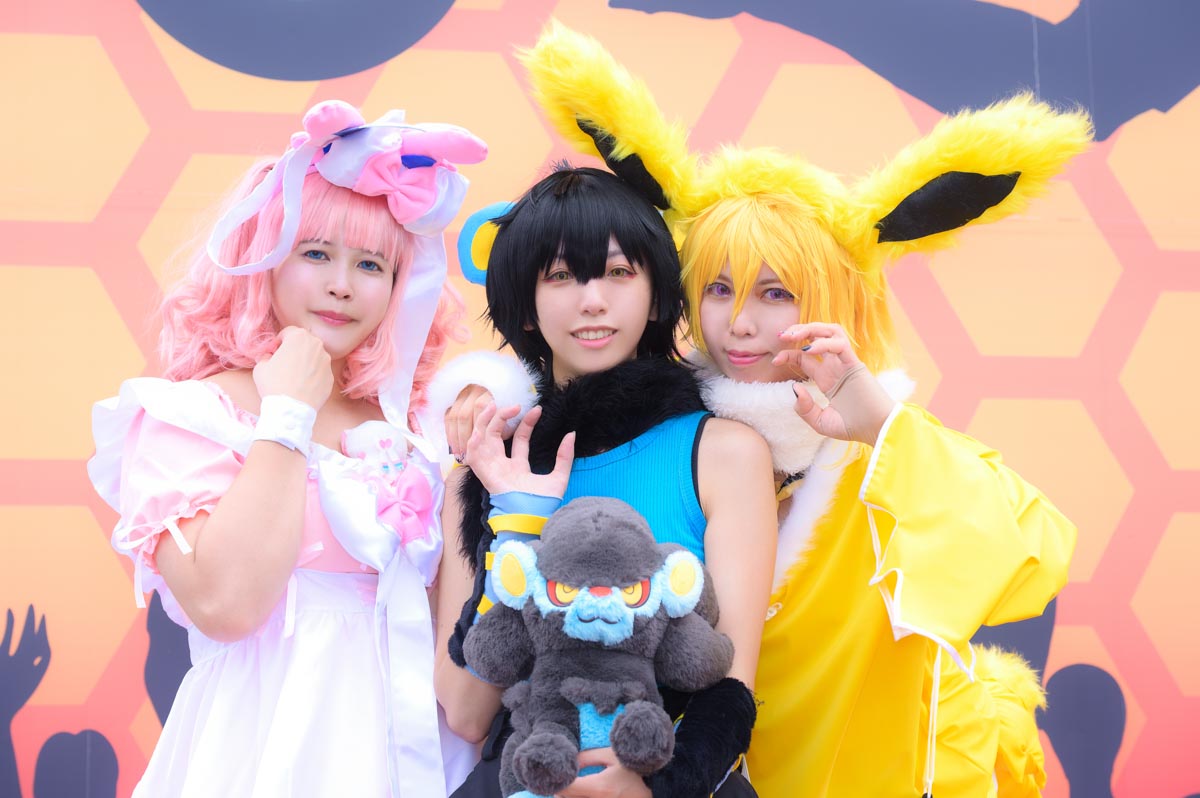
Adapting an abstract monster into human attire demands strict visual prioritization. A creature like Umbreon offers only a handful of essential signatures: midnight-black fur, crimson eyes, and yellow concentric rings. A literal translation results in a basic onesie. A fashion-forward anthropomorphic build treats those elements like luxury runway cues.
The craft relies on identifying non-negotiable creature accents. Tailors isolate ear silhouettes, forehead crests, and tail volumes, transposing them into custom headpieces, dramatic high-collared jackets, or trained skirts. Secondary details handle the lore. Water types receive organza flounces and translucent vinyl to mimic moisture. Steel and Poison types feature rigid patent leather, PVC corsets, and industrial hardware. The costume communicates the monster's elemental typing before the viewer ever spots its signature ears.
Rekochi’s Interpretations of Gengar and Umbreon
Subculture writer Somtam Tai closely tracked the emergence of these bespoke interpretations at central Tokyo venues like Ikebukuro Sunshine City. His coverage singled out cosplayer Rekochi, whose work demonstrates how stark material contrasts can convey personality.
For her Gengar cosplay transformation, Rekochi bypassed the usual bulky purple sphere. Instead, she combined swimwear-cut bodysuits with textured fishnets, spiked shoulder structures, and deep plum palettes. The aesthetic pulled directly from Gengar’s ghost-poison duality: sharp, playful, and mildly menacing. Her Umbreon gijinka took the opposite mechanical route. Rekochi swapped harsh synthetic lines for rich velvet and soft-touch fleece trims, accented by precise gold-banded arm cuffs and sculpted black ears.
These outfits succeed because they resolve an inherent limitation of anthropomorphic costuming: human proportions cannot match Ken Sugimori’s creature anatomy. By embracing high-fashion cuts, the crafter sidesteps the uncanny valley entirely.
Staging Grounds: Sunshine City to Petit Fancy Taipei
The technical evolution of anime fan art adaptations has accelerated through regional convention circuits across East Asia. In Japan, regular cosplay days at Ikebukuro Sunshine City provide tightly controlled indoor lighting and polished urban architecture, ideal for showcasing clean seam lines and fabric textures.
Across the East China Sea, Taiwan has become an equally vital workshop. The Petit Fancy gatherings, notably Petit Fancy 43 in November 2025 and Petit Fancy 44 in May 2026, hosted at Taipei Expo Park Expo Dome, demonstrate the speed of community exchange. Produced by the organizers behind Fancy Frontier (Taiwan FF), these mid-sized events encourage radical experimental designs. Independent illustrators sell their original gijinka art books inside the hall, while cosplayers bring those two-dimensional concepts to life outside on the concourse within hours.
| Design Era | Dominant Fabrication Style | Key Venues & Distribution | Typical Build Investment |
|---|---|---|---|
| Early Era (2010, 2018) | Polar fleece onesies, basic anime wigs, purchased cat ears, screen-printed cotton tees | Early forum meetups, DeviantArt galleries, general comic cons | $50, $150 |
| Transition Era (2019, 2023) | Thermoplastic armor plating, Eva foam ears, commercial maid uniforms with tailored accents | Comiket, Fancy Frontier, anime club showcases | $200, $500 |
| Modern Era (2024, 2026) | Couture costume craftsmanship, bespoke corsetry, aerated structural wigs, latex, technical streetwear | Ikebukuro Sunshine City, Petit Fancy (PF43/PF44), dedicated studio shoots | $600, $1,800 |
Couture Craftsmanship and Structural Styling
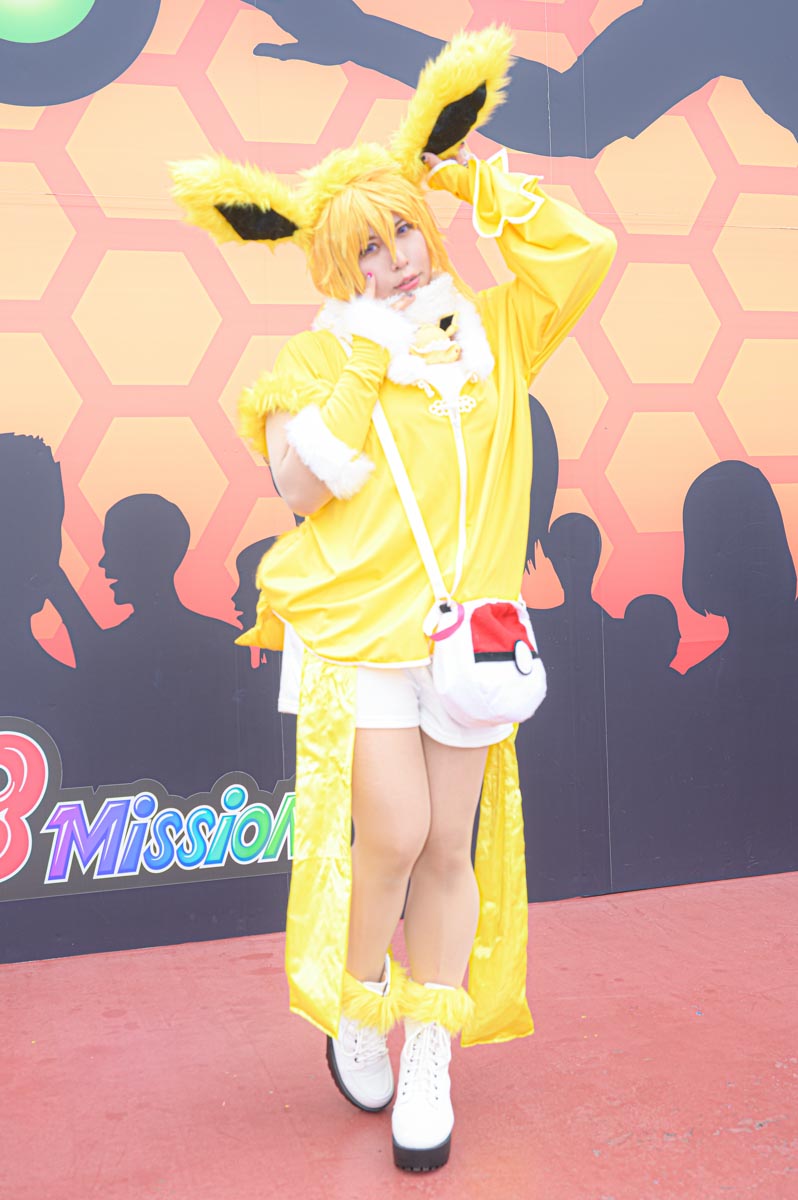
Translating quadruped or round creatures into garments forces crafters to solve distinct engineering hurdles. The hair and headwear present the first challenge. Ears cannot sit on cheap plastic headbands; the weight pulls them askew. Experienced builders mount steel wire armatures onto buckram bases hidden under dense, backcombed lace-front wigs. The wig fibers are heat-formed using industrial adhesives and acrylic spray, creating gravity-defying silhouettes that survive humid convention floors.
Fabric choices mirror this engineering focus. Instead of thin printed lycra, modern builders deploy structured wools, matte faux leathers, brocades, and boned foundations. Silhouette modification alters how the body reads from a distance. A Mega Rayquaza design might employ trailing pleated chiffon trains and layered eva-foam gauntlets to convey serpentine length without encasing the wearer in unbreathable tubing.
Intellectual Property and Community Etiquette
The surge of humanized Pokémon designs operates in an ambiguous space between fan art and corporate copyright. The Pokémon Company strictly enforces protections around commercial counterfeits, software emulation, and unlicensed merchandise. Gijinka cosplay, however, lives largely under the umbrella of transformative fan parody and non-commercial creative expression.
Because the costumer is wearing a human garment of their own design rather than an official replica of a copyrighted character model, direct legal friction is vanishingly rare. Japanese and Taiwanese conventions maintain unwritten community standards to preserve this balance. Builders avoid selling mass-produced copies of their designs, limit direct monetization to personal photobooks sold at doujinshi gatherings, and steer clear of brand sponsorships that imply an official corporate seal of approval.
Frequently Asked Questions (FAQ)
Q1: What is the main difference between Pokémon gijinka and traditional creature cosplay?
Traditional Pokémon cosplay reproduces the monster's animal or fantastical body using mascots, foam suits, or plush full-body outfits. Gijinka reinterprets the monster as an original human character wearing stylized clothing that adopts the creature's color palette, textural elements, and structural motifs.
Q2: How much does it cost to build a high-end anthropomorphic Pokémon costume?
Basic DIY versions incorporating modified streetwear can run between $100 and $250. Advanced, competition-grade garments featuring custom corsetry, wig engineering, faux fur work, and tailored tailoring typically cost between $600 and $1,800 in raw materials and studio equipment.
Q3: Are gijinka designs permitted in official cosplay competitions?
Rules vary by tournament. Events running under World Cosplay Summit (WCS) regulations usually require entrants to replicate officially published character artwork from licensed media, disqualifying original gijinka designs. However, regional craftsmanship contests and runway events frequently feature separate categories for creative redesign and fan adaptations.
The Evolution of Fan Couture
The transformation of pocket monsters into wearable couture reflects a maturing subculture. Fans who grew up collecting cards and trading on Game Boys are now accomplished tailors, patternmakers, and photographers with disposable income. They no longer treat convention halls as simple masquerade stages. By filtering fantasy creatures through runway tailoring, contemporary cosplayers have turned anthropomorphic design into one of the most innovative corners of wearable modern art.