The Complete Fabric Care Guide: How to Safely Remove Every Type of Oil Stain
A single droplet of hot cooking oil can instantly ruin a prized wardrobe staple. Whether it is an unexpected olive oil residue flicked across a poplin shirt during dinner, heavy motor grease transferred from a car door onto work pants, or butter soaking into a down jacket, lipid marks represent the most stubborn laundry hazard known to household textiles. Standard cold-water cycles will not dissolve these stains; instead, they lock the lipids deeper into the weave. According to product laboratory testing cited in The New York Times Report, removing stubborn grease depends entirely on surfactant-driven emulsification and targeted enzyme activity rather than sheer water pressure.
Most home laundering mistakes occur within the first ten minutes after a spill occurs. Rubbing the spot with a water-dampened napkin pushes liquefied triglycerides into the core of hollow fibers like cotton, or wedges them between tight synthetic filaments. Restoring the garment requires understanding how specific fatty acids behave, how different fabric matrices trap lipids, and which mechanical or chemical actions dissolve the bond without degrading the textile.
📌 Key Takeaways:
- The Chemistry: Oil is nonpolar and hydrophobic; water alone cannot break down lipid bonds without specialized surfactants or grease-cutting agents.
- The Golden Rule: Never expose a grease-stained garment to machine heat; air dry vs dryer heat determines whether an oil mark remains removable or binds permanently to the weave.
- The Protocol: Apply dry powder absorption immediately for heavy spills, followed by concentrated surfactant pre-treatment and the hottest wash cycle safe for that specific textile.
The Molecular Challenge: Why Water Drives Grease Deeper
Lipids, whether plant-based cooking oils, dairy-derived animal fats, or petroleum lubricants, are nonpolar hydrocarbons. Water molecules are intensely polar. When water strikes an untreated cooking oil splatter, surface tension forces the water to bead and slide around the fat. Mechanically rubbing a wet cloth across the spot merely disperses the oil slick over a broader surface area while driving the microscopic lipids downward into the yarn's core structure.
Culinary oils present distinct challenges based on their fatty acid structures. Extra-virgin olive oil contains heavy polyphenols and unsaturated oleic acid, which oxidize when exposed to air, leaving yellowing rings. Heavy animal butter contains saturated fats that solidify at room temperature, while high-heat frying oils polymerize under thermal stress, creating a tacky lacquer within synthetic fibers. Industrial grease carries suspended carbon particulate matter, turning clear spots into dark, abrasive lesions on delicate weaves.
Immediate Extraction: The Powder Absorption Stage
When an oil spill is fresh, the priority is bulk extraction before the liquid migrates across the weave. Blot the perimeter of the stain using an undyed microfiber towel or paper towel. Press straight down with firm fingers; do not drag sideways.
Once surface liquid stops transferring to the towel, coat the entire mark under a mound of dry absorbent powder. Baking soda oil absorption remains the standard domestic countermeasure because its fine crystalline structure generates strong capillary draw, pulling fluid oil vertically out of the yarn. Cornstarch, arrowroot powder, or talc work with comparable capillary speed. Let the powder rest untouched for 15 to 30 minutes. As the powder extracts the lipids, it will clump into discolored, crusty granules. Brush these solids away with a soft bristle brush. If a dark, saturated circle persists beneath the powder, repeat the application once more before applying wet solutions.
Chemical Disruption: The Dish Soap Degreasing Method and Enzymatic Wash
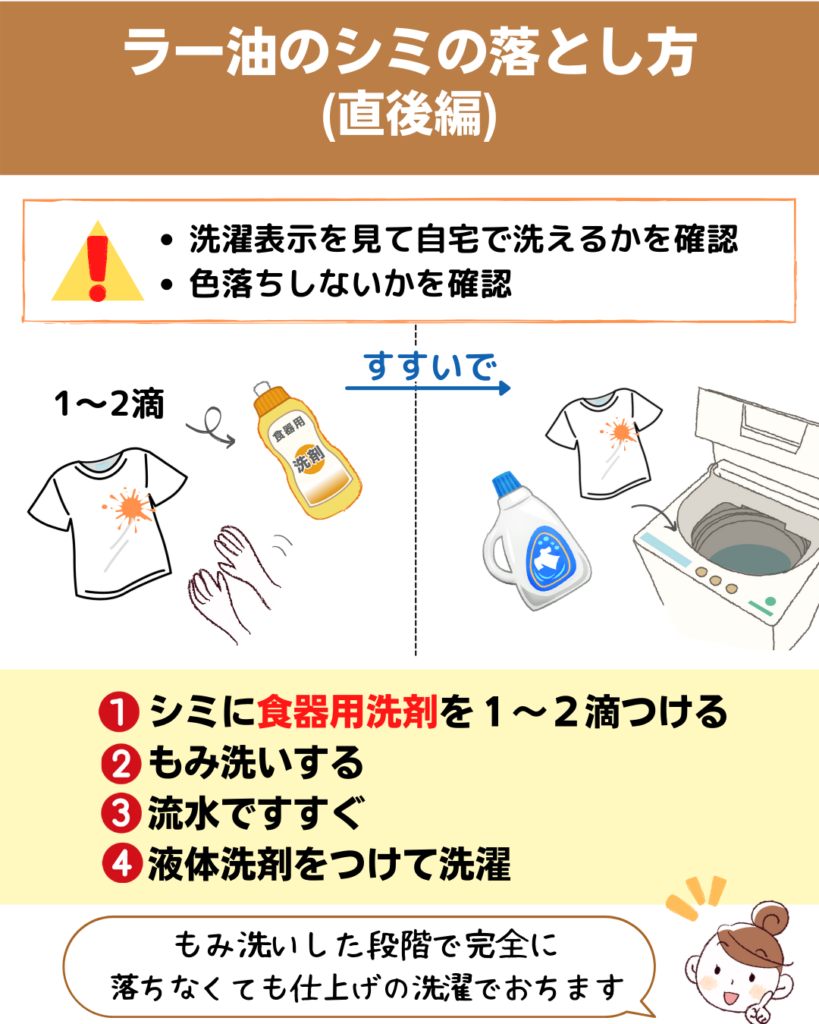
Powder extracts free-standing surface oil, but bound lipids clinging to the fiber require chemical emulsification. This is where the dish soap degreasing method proves indispensable. Household dishwashing detergents contain high concentrations of amphiphilic surfactants: molecules with one water-loving end and one oil-loving end. The lipophilic tail latches onto the hydrophobic fat globule, while the hydrophilic head anchors to wash water, suspending the grease in liquid so it flushes away cleanly.
Work a single drop of clear, dye-free dish soap directly into the fabric using a soft-bristled toothbrush or the pad of your thumb. Massage in small concentric circles from the outer edge inward to avoid spreading the perimeter. Let the surfactant rest as a laundry pre-treatment for 10 to 15 minutes.
For complex oil splatters containing proteins or starches, such as gravy, mayonnaise, or salad dressing, pair the surfactant with an enzyme-based stain remover containing lipase. Lipase is an enzyme that specifically breaks ester bonds in triglycerides, converting fatty acids into water-soluble glycerol. Avoid enzymatic solutions on protein-based animal fibers like wool, cashmere, and silk, as protease enzymes in commercial blends will break down the natural keratin in the clothing itself.
Material-Specific Protocols for Common Garments
Fabrics handle chemical concentrations, mechanical friction, and thermal shock differently. Cotton tolerates vigorous scrubbing and high water temperatures, whereas synthetic athletic jerseys melt under excessive heat, and fine silks lose their structural luster if treated with harsh alkalis.
| Fabric Type | Primary Solvent / Agent | Maximum Water Temp | Crucial Restriction |
|---|---|---|---|
| Cotton & Linen | Liquid dish soap or concentrated lipase gel | 140°F (60°C) | Rinse thoroughly; trapped detergent stiffens cotton weave. |
| Polyester & Nylon | Baking soda paste + enzyme laundry detergent | 104°F (40°C) | Avoid boiling water; synthetic filaments melt and seal oil inside. |
| Natural Silk & Wool | Cornstarch absorption + pH-neutral wool wash | 85°F (30°C) or Cold | Zero enzymatic cleaners; strictly avoid vigorous friction. |
| Down Outerwear | Localized surfactant spot-rinse + down wash | 104°F (40°C) | Do not saturate internal feathers; treat the outer shell fabric only. |
When handling cotton and polyester care, consider their opposite chemical behavior. Cotton readily absorbs water-based liquids but releases oil when treated with high heat. Polyester, an oil-based synthetic plastic, has an affinity for grease; it chemically bonds with fat molecules, making sports clothing and polyester blends notoriously prone to stubborn body oils and cooking splatters.
For delicate fabric care, particularly silk, skip liquid water entirely during the first pass. Pure silk fibers swell when soaked, trapping grease inside their inner core. Dust the mark with talc or arrowroot, let it draw the grease out over six hours, and brush it away gently. If an oily silhouette remains, take the piece to a specialist who uses commercial dry cleaning solvents such as modified hydrocarbons or liquid carbon dioxide.
Reviving Set-In Grease Stains After Heat Exposure
The hardest challenge in garment restoration is clearing set-in grease stains that have passed through an automated tumble dryer. High drum heat polymerizes vegetable oils and bakes petroleum lubricants directly into synthetic yarns. When a garment emerges from the dryer with a translucent grey spot, ordinary washing will have no effect.
To reverse thermal bonding, re-liquefy the grease with a safe nonpolar solvent before re-washing. A technical solvent like odorless mineral spirits or an industrial d-limonene (citrus terpene) solution softens the polymerized shell. Place a clean white towel behind the dry fabric, dab a small amount of citrus solvent or WD-40 onto a cotton swab, and tap the back of the stain. The solvent thins the baked grease, transferring it onto the backing towel.
Immediately follow this step with a dense layer of dry baking soda to absorb both the solvent and liberated oil. Once cleared, apply concentrated dishwashing liquid, scrub lightly with warm water, and run the garment through a hot water wash cycle at the highest temperature setting allowed by the garment care label. Never toss the item back into the dryer until the damp fabric has completely air-dried and you have checked the area under direct raking sunlight.
Frequently Asked Questions (FAQ)
Q1: Why does an oil stain look completely gone when the garment is wet, only to reappear once dry?
A1: Water darkens fabrics uniformly, masking the lower refractive index of the trapped oil. When the water evaporates, the translucent fat residue becomes visible against the dry, opaque fibers. Always verify stain removal after the garment has fully air-dried.
Q2: Can rubbing alcohol or hand sanitizer remove greasy motor oil from denim?
A2: Isopropyl alcohol acts as a mild degreaser and works well on low-viscosity petroleum lubricants, but its high volatility causes it to evaporate before breaking down heavy grease. Liquid dish soap paired with a warm solvent wash cycle is far more effective on thick engine grease.
Q3: Will using hot water right away set an oil stain permanently?
A3: No. Unlike protein stains (such as blood or egg) which curdle and set in hot water, pure oil melts at higher temperatures. Hot water liquefies the grease, helping the surfactant wash it away. However, hot water combined with tumbling mechanical friction can damage fragile wools and silks.
Protecting Fine Garments in Modern Wardrobes
Mastering grease removal comes down to avoiding friction, understanding fiber properties, and keeping heat away from unverified cleans. Most garments ruined by oil splatters are not lost to the fat itself, but to rushed scrubbing that abrades the weave, or hasty dryer cycles that permanently set the mark. Treating grease as a chemical puzzle, neutralizing it with dry absorption, breaking it down with surfactants, and verifying the fabric under natural light, keeps cherished clothing in rotation for years.