The Complete Guide to 'Ii Monmon Janjon': Answers to Every Viral Mystery and Question
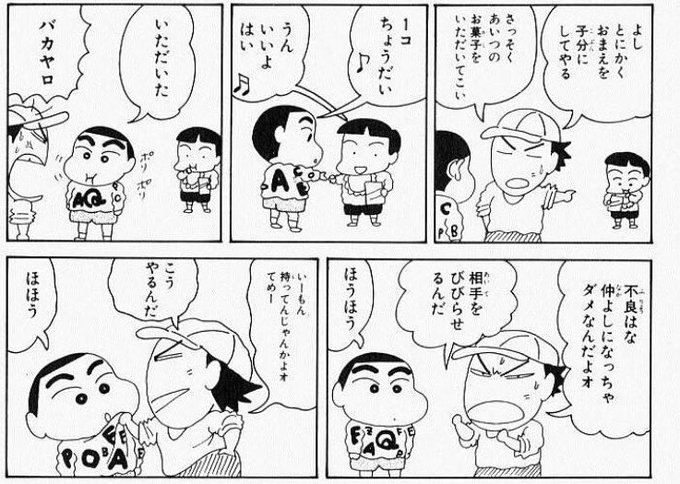
Every few months, short-form video platforms elevate an obscure string of syllables into a global auditory loop. Millions of users on TikTok, Instagram Reels, and YouTube Shorts find themselves hypnotized by six bouncing, staccato Japanese words: "Ii monmon janjon" (いーもんもん じゃんじょん). Paired with looping 2D animations, energetic cosplay skits, and frantic rhythm-game gameplay edits, the clip sounds simultaneously ultramodern and eerily ancient. Comment sections overflow with international listeners asking the same straightforward question: what does this phrase actually mean, and where did it come from?
The phrase is not modern slang cooked up in a Tokyo streamer house. It is a piece of living Japanese oral history, adapted from a centuries-old playground game chant that migrated through regional dialects, Vocaloid remix subcultures, and arcade rhythm cabinets before reaching algorithmic fame. Tracing its rise reveals how folk phonetics survive, morph, and conquer the global internet decades after their original playground contexts faded away.
📌 Key Takeaways:
- The Core Origin: "Ii monmon janjon" is a traditional Japanese children's playground chant (warabe uta) historically used as a counting-out rhyme to pick who plays the "oni" (tagger or "it").
- The Linguistic Meaning: Rather than forming a standard grammatical sentence, the chant is composed of rhythmic nonsense syllables and regional dialect wordplay rooted in historical counting routines.
- The Algorithmic Revival: A 2024, 2026 wave of rhythm-game covers, indie music producer samples, and dance-challenge loops catapulted the regional chant into an international social media sound trend.
From Edo Playgrounds to Modern Screens: The Folk Roots of Warabe Uta
Japanese folklorists categorize chants like "Ii monmon janjon" under warabe uta (童歌), traditional nursery rhymes and playground ditties passed orally between generations of children without adult supervision or written documentation. Just as English speakers rely on "Eeny, meeny, miny, moe" to settle playground disputes, Japanese children have invented hundreds of regional selection rhymes (kime-uta) across prefectures.
Folklore records compiled throughout the mid-20th century document variations of the phrase across western and central Japan, particularly in parts of the Kansai and Chugoku regions. In these neighborhood games, children formed a circle, placed their fists in the center, and chanted the cadence syllable by syllable. Whoever received the final tap on "jon" was either eliminated or appointed the oni (the demon, or "it" in hide-and-seek and tag).
Because children learned these songs purely by ear, syllables shifted rapidly from town to town. In some districts, the chant evolved into "Ii mon mon ja no mon," while neighboring towns sang "Ii mon mon janjoko jan." The phrases existed entirely outside formal dictionaries, preserved exclusively by playground oral tradition.
Deciphering the Phonetics: What Does the Chant Actually Mean?
Non-Japanese listeners frequently plug "いーもんもん じゃんじょん" into machine translation tools, only to receive nonsensical outputs about "good gates" or "tattoos." The confusion stems from Japanese homophones. Mon can mean "gate" (門) or historical currency (文), while monmon can serve as old slang for full-body tattoos. None of those definitions apply here.
Linguistically, the chant is built on sound symbolism (giseigo and gitaigo) combined with archaic regional counting words. Ethnomusicologists who study Japanese game rhymes identify the opening "Ii" as an elongation of ichi (one) or an encouraging vocable used to establish tempo. "Monmon" functions as a rhythmic foot-tapping cadence, mimicking the bounce of footsteps or the rhythmic tapping of clenched fists.
The closing phrase, "janjon," draws directly from regional dialect markers and play-selection exclamations related to janken (rock-paper-scissors). The word carries zero literal semantic weight; its entire purpose is acoustic punch. The chant is acoustic machinery designed to make turn-taking feel fair, dramatic, and fun.
How the Phrase Evolved: Playground Games vs. Viral Pop Culture
The journey from neighborhood dirt courtyards to modern smartphone speakers involved multiple distinct stages of cultural transmission.
| Era | Primary Medium | Cultural Role |
|---|---|---|
| Pre-1970s | Oral Playground Tradition | Counting-out rhyme for tag and hide-and-seek across western Japan. |
| 1980s, 2000s | Regional Folk Archives & Children's TV | Archived by cultural researchers and broadcast in educational heritage programs. |
| 2015, 2022 | Vocaloid & Arcade Rhythm Games | Sampled in electronic dance tracks, speedcore mixes, and arcade cabinets. |
| 2023, 2026 | Short-Form Video Algorithms (TikTok / Reels) | High-tempo backing loop for animation memes, dance routines, and reaction clips. |

The Sound System Pipeline: Rhythm Games and Vocaloid Remixes
Traditional folklore rarely leaps straight to mobile video apps on its own. It needs an electronic intermediary. In this case, the bridge was Japan's vibrant doujin music and rhythm-game scene.
During the late 2010s, independent music producers began scouring Japanese folk songs and regional chants for vocal chops with natural syncopation. The inherent structure of "Ii monmon janjon", two short trochees followed by an explosive cadence, fit high-tempo genres like Denpa music, Hardcore, and Future Bass. Producers working with Vocaloid engines such as Hatsune Miku and flower began dropping pitched-up recordings of the rhyme into tracks designed for arcade franchises like maimai, Chunithm, and Sound Voltex.
When rhythm gamers posted clips of their fingers flying across illuminated arcade buttons to hit notes mapped to the frantic chant, the audio detached from the game itself. Japanese social media users extracted the punchiest 7-second snippet, sped it up by 15 percent, and uploaded it as an original sound.
The Social Media Spark: Why the Audio Hook Exploded
By late 2024, the audio clip crossed over from specialized gaming circles to mainstream feeds. TikTok creators in Japan first used the bouncy, percussive cadence for synchronous hand-gesturing games reminiscent of the original playground game. Soon after, animators on YouTube Shorts and X (formerly Twitter) began creating looping character animations timed to each beat.
The sound proved ideal for viral consumption due to three distinct structural features:
- Extreme Rhythmic Predictability: The chant follows a strict four-beat meter that makes physical timing straightforward for choreographers and animators.
- Phonetic Texture: The repeated nasal consonants ("m" and "n") juxtaposed against sharp plosives ("j") tickle the brain's autonomous sensory response, making the loop endlessly replayable.
- Language Agnosticism: Because the phrase has no narrative plot, listeners do not need Japanese fluency to sing along. The human voice functions purely as a rhythm instrument.
According to social platform tracking metrics across late 2025 and early 2026, videos using iterations of the chant accumulated hundreds of millions of views worldwide, with the largest surges occurring among English-, Spanish-, and Korean-speaking demographics who had never encountered traditional warabe uta before.
Clearing the Confusion: Separating Fact from Fan Fiction
Whenever a foreign phrase trends without an explicit English translation, internet myth-making rushes in to fill the vacuum. Over the past two years, several urban legends have attached themselves to the phrase.
One widespread creepypasta claimed the phrase originated as a dark ritual chant used during ancient village sacrifices to appease mountain spirits. This narrative mirrors common internet tropes that turn innocent Japanese folklore into fabricated horror stories. Archival records from Japan's National Diet Library confirm the rhyme has always been an ordinary children's game song, with no documented religious or occult connections.
Another popular misconception claims that a commercial anime series coined the phrase as a character catchphrase. While anime characters occasionally recite playground rhymes in slice-of-life scenes, the chant predates television by over a century. The modern tracks heard on TikTok are creative adaptations of pre-existing public-domain folklore, not original commercial dialogue.
Frequently Asked Questions (FAQ)
Q1: How do you properly pronounce "いーもんもん じゃんじょん"?
It is pronounced phonetically as "Ee-mon-mon jan-jon". The initial "Ii" features a sustained long "e" vowel sound (like "feet"), followed by crisp, evenly spaced "mon-mon" syllables, and ends on two punchy, stressed beats: "jan" and "jon."
Q2: Does "Ii monmon janjon" have a literal English translation?
No. It does not translate into a grammatical sentence. It is functionally identical to English counting rhymes like "Eeny, meeny, miny, moe" or "Ink, pink, pen and ink", a playful sequence of rhythmic syllables designed to mark beats rather than convey a narrative meaning.
Q3: Why do different videos feature slightly different words or tunes?
Because the chant originated as regional oral folklore, dozen of municipal variants exist throughout Japan. Different producers and rhythm games sample different regional variants or alter the pitch, tempo, and background instrumentation to match their specific musical genres.
Q4: Is the phrase copyrighted or owned by a specific music label?
The core chant itself is historical folk material in the public domain. Specific musical arrangements, remixes, and commercial vocal tracks that sample the chant are owned by their respective artists, producers, or game publishers.
The Modern Life of Ancient Playground Rhythms
The viral explosion of "Ii monmon janjon" highlights how social media platforms act as modern oral archives. Centuries ago, a group of school children in western Japan shouted syllables into the open air to decide who would chase the others until sunset. Today, that identical sequence of acoustic beats bounces across global fiber-optic cables, soundtracking digital dances across thousands of miles.
The medium changed completely, but the underlying appeal remained untouched. Catchy phonetics, infectious cadence, and the shared joy of a looping vocal bounce still work on human ears today exactly as they did on the gravel schoolyards of old Japan.