The Complete Guide to 'OK': Meaning, True Origin, and Why Saying 'NG' Confuses Foreigners
Most common abbreviations wear their meanings on their sleeves. VP stands for vice president, ft. represents feet, and RSVP condenses a polite French request for a reply. Yet the most recognized word on the planet, spoken across every continent and baked into nearly every computer interface, hides an origin story that borders on total absurdity. As highlighted in a recent MSN Report exploring the roots of everyday linguistic shortcuts, English is saturated with abbreviations, but none took a stranger path to global dominance than the simple two-letter affirmation "OK."
Far from a solemn military code or a Latin legal doctrine, the expression traces back to a fleeting, snarky media craze in antebellum America. Understanding how two letters came to define agreement, functionality, and survival requires peeling back nearly two centuries of newspaper satire, aggressive presidential campaign slogans, and telegraph wire economics.
📌 Key Takeaways:
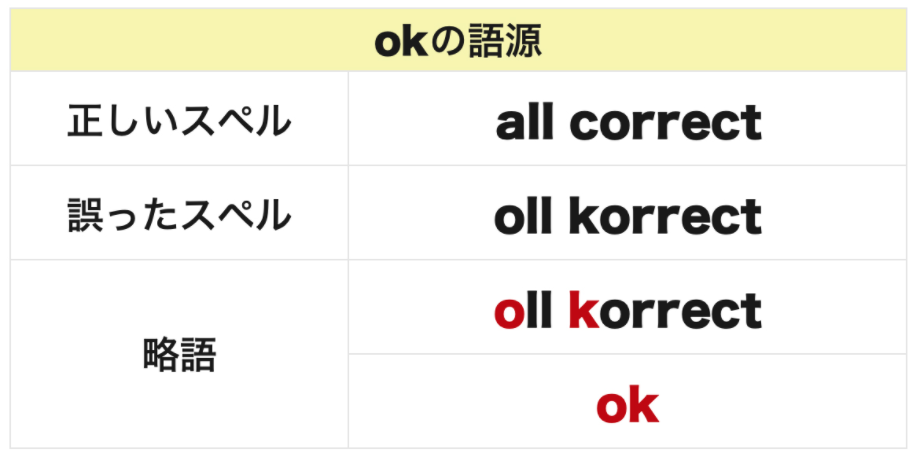
- The True Origin: OK stands for "oll korrect," a deliberate phonetic misspelling of "all correct" cooked up by an eccentric Boston newspaper editor in 1839.
- The Political Boost: President Martin Van Buren popularized the shorthand during his 1840 reelection bid, leveraging his birthplace nickname, "Old Kinderhook."
- The Cross-Cultural Trap: While "OK" is universally understood, its common Japanese-English counterpart, "NG" (No Good), routinely baffles native English speakers abroad.
The Satirical Boston Fad That Invented "Oll Korrect"
In the late 1830s, young writers and newspaper columnists in Boston, New York, and Philadelphia developed an obsession with humorous abbreviations. The trend operated exactly like modern internet meme slang. Writers took common phrases, intentionally mangled their spelling, and condensed them into cryptic initials to amuse their literate, in-the-know readers.
The earliest documented appearance of "O.K." occurred on March 23, 1839, in the pages of the Boston Morning Post. The paper's founder and editor, Charles Gordon Greene, dropped the term into an otherwise dry paragraph poking fun at a local rival's editorial dispute. Greene wrote that an agreement had been secured, following up with a parenthetical quip: "o.k., all correct."
Greene was mocking the era's intentional humorous misspelling fad. Boston wits routinely peppered their stories with abbreviations like "OW" for "oll wright" (all right), "KY" for "know yess" (no use), or "K.G." for "know go" (no go). Most of these inside jokes evaporated within weeks. "Oll korrect" survived solely because of an extraordinary collision between print culture and national electoral politics.
How Martin Van Buren's 1840 Campaign Weaponized the Phrase
If not for the brutal American presidential election of 1840, Greene’s joke would have vanished into the archives alongside "OW" and "KY." Instead, Democratic strategists running President Martin Van Buren’s reelection campaign seized on the fledgling acronym to salvage their candidate's flagging public image.
Van Buren hailed from Kinderhook, New York, earning him the folksy moniker "Old Kinderhook." Seeking a punchy rally cry to counter the Whig Party's popular "Tippecanoe and Tyler Too," Democratic operatives established partisan political clubs across the nation called "O.K. Clubs." The letters pulled double duty: they simultaneously stood for "Old Kinderhook" and reinforced the idea that Van Buren’s governance was "oll korrect."
The campaign backfired politically, William Henry Harrison routed Van Buren in the electoral college, but the lexical explosion was permanent. Street fights between partisan factions, newspaper editorial wars, and stump speeches blasted the two letters into every corner of the young republic. Within a year, virtually every American adult knew the phrase.
A Tale of Two Letters: 19th-Century Newspaper Slang vs. Survival
To grasp why OK succeeded while its contemporaries collapsed, consider the sheer volume of competing acronyms circulating in urban newsrooms during the late 1830s. The etymology of OK is not an isolated event; it represents the lone survivor of an intense linguistic ecosystem.
| Abbreviation | Original Humorous Meaning | First Print Window | Historical Fate |
|---|---|---|---|
| O.K. | "Oll Korrect" (All Correct) | March 1839 | Adopted globally; survives in all major languages |
| O.W. | "Oll Wright" (All Right) | 1838, 1839 | Extinct by 1842 |
| K.Y. | "Know Yess" (No Use) | 1838, 1840 | Extinct; replaced by modern state postal codes |
| K.G. | "Know Go" (No Go) | 1839, 1841 | Faded; "no-go" survived only as an un-abbreviated hyphenate |
| S.P. | "Small Potatoes" | 1838, 1840 | Extinct as abbreviation; phrase lingered in literature |
The tipping point that cemented OK into the machinery of global communication came in 1844 with Samuel Morse's telegraph. Railroad operators and telegraphists needed an unmistakable signal to confirm message receipt across static-heavy wires. The sharp tap-pause-tap of the Morse code letters for "O" (dash dash dash) and "K" (dash dot dash) proved acoustically distinct and rapid. The operational telegraph handbook officially incorporated the code, turning a Boston editorial gag into standard industrial protocol.
The "OK vs. Okay" Orthographic Divide
As the abbreviation aged into standard usage throughout the 20th century, writers confronted a dilemma: should an abbreviation look like an abbreviation, or should it behave like an ordinary English word?
The variant spelling "okay" appeared around the turn of the 20th century, largely as an attempt to represent the spoken cadence phonetically in narrative dialogue. Major modern style manuals remain divided. The Associated Press (AP) Stylebook strictly enforces OK (with no periods) and rejects "okay" entirely. In contrast, The Chicago Manual of Style accepts both but favors "okay" in formal, published book prose to prevent visual jarring on the printed page.
Neither is grammatically incorrect. "OK" is historically authentic; "okay" is a phonetic adaptation. In professional technical writing and corporate communications, "OK" dominates software dialog boxes and operational documentation due to its extreme visual brevity.
The "NG" Pitfall: How Japanese English Causes Confusion Abroad
The global triumph of "OK" spawned unexpected linguistic offshoots, none more problematic in international business than the term "NG". In Japan and several neighboring East Asian markets, "NG", standing for "No Good", is universally deployed as the binary opposite of "OK."
Japanese media, broadcast production, and everyday conversation treat "OK and NG" as complementary antonyms. A successful film take is an OK; a blooper or failed take is an NG. If an action is forbidden in a company policy, workers label it "NG." If a scheduled meeting time does not suit an executive, they will message back that the slot is "NG."
Drop that phrase into an office in Chicago, London, or Sydney, and communication grinds to a halt. Native English speakers do not use "NG" as an abbreviation for unacceptable, failed, or prohibited items. A London manager receiving a message stating "Friday at 2 PM is NG" will often read the acronym as "National Grid," "natural gas," or a bizarre typo for "no go."
To avoid friction in cross-border professional environments, replace "NG" with natural English idioms:
- Instead of saying "This contract draft is NG," say: "This contract draft has issues that need revision."
- Instead of saying "Friday at 3 PM is NG for me," say: "Friday at 3 PM won't work for me."
- Instead of labeling a corporate policy "NG behavior," designate it as: "strictly prohibited" or "unacceptable."
Frequently Asked Questions (FAQ)
Q1: Did OK originate from a Native American language like Choctaw?
For decades, prominent reference texts suggested OK derived from the Choctaw word okeh, meaning "it is so." Woodrow Wilson even endorsed this theory by signing official papers as "okeh." However, Columbia University etymologist Allen Walker Read definitively disproved the Choctaw myth in the 1960s through exhaustive archival research, tracing the continuous chain of primary documentation straight back to the Boston Morning Post in 1839.
Q2: Is "OK" an abbreviation or an acronym?
Strictly speaking, "OK" is an initialism because speakers pronounce the individual letter names ("oh-kay") rather than reading the letters as a single phonetic unit like "scuba" or "NASA." Because its source phrase was intentionally misspelled ("oll korrect"), it also qualifies historically as a deliberate phonetic truncation.
Q3: Should I put periods between the letters (O.K.) in emails?
Style manuals across the board have largely phased out periods. Writing "OK" without periods is standard across international corporate communications, news publishing, software development, and digital messaging. Writing "O.K." is acceptable in historical literary contexts but looks outdated in contemporary correspondence.
The Enduring Power of a 19th-Century Newspaper Prank
Language tends to shed frivolous novelties. Thousands of slang terms surge through digital culture each year, only to vanish when the next cycle arrives. OK broke every evolutionary rule of linguistics. It survived the death of the newspaper trend that bore it, rode a presidential campaign into national awareness, anchored the telegraph networks that unified the industrial economy, and settled permanently into the user interfaces that guide global technology.
Two letters, scribbled down on a spring morning in 1839 by an editor poking fun at local bad spellers, became the universal human signifier for approval. Whether flashed on an Apollo flight console, clicked on an operating system prompt, or whispered to confirm a deal, the Boston hoax endures because human speech rarely invents something so brief, versatile, and undeniably clear.