The Complete Makomodake Peeling and Cooking Guide for Beginners

Every October, farm stands across East Asia and specialty produce markets abroad display dense, spindle-shaped green reeds that look more like oversized cattails than kitchen staples. This is makomodake, the tender, swollen stem of Manchurian wild rice (Zizania latifolia), also widely known as water bamboo shoots. Because the autumn seasonal harvest lasts barely three to four weeks, encountering these thick green stalks often triggers equal parts culinary excitement and kitchen confusion. As chronicled in a Nara Shimbun Report covering the harvest in Mitsue Village, growers like Emi Okada commute across prefectures solely out of obsession with cultivating this brief seasonal treat. Yet once home cooks bring a bundle into their kitchens, the immediate challenge is deciphering how to peel away the bulk to reach the delicacy hiding beneath.
The thick exterior gives no clear hints about where the waste ends and dinner begins. Stripping down a stalk incorrectly wastes prized edible flesh or leaves fibrous, woody skins on the plate. Prepping makomodake requires a straightforward sequence: slicing through the fibrous outer sheath, trimming the basal node, recognizing the harmless dark flecks inside mature stalks, and matching the crisp edible core to the right pan technique.
📌 Quick Summary:
- The Yield: Stripping the bulky outer green sheath removal reveals a tender white shoot that represents only 30% to 40% of the stalk's total gross weight.
- The Biology: Tiny black fungal spots inside older stems stem from Ustilago esculenta, a completely harmless culinary fungus that gives the plant its swollen shape.
- Kitchen Rule: Fresh stalks require no aggressive soaking; parboiling water bamboo shoots for 90 seconds strips away any mild astringency without sacrificing crunch.
What Makomodake Actually Is: The Anatomy of a Swollen Stem
Makomodake is not true bamboo. It is the aquatic perennial grass Zizania latifolia, native to wetland basins across Japan, China, and Southeast Asia. The plant itself grows over two meters tall in waterlogged paddies. The tender vegetable sold in autumn markets is actually a biological marvel: the lower stem swells into a succulent, fleshy shoot when colonized by a specific smut fungus, Ustilago esculenta. This symbiotic interaction prevents the grass from flowering and setting seed, redirecting its energy into creating a plump, nutrient-dense stem.
The resulting edible core texture sits somewhere between tender bamboo shoot, baby sweet corn, and hearts of palm. It yields a mild sweetness with a distinct, pleasant crispness when sliced raw, turning buttery and soft when roasted or braised. Because the edible segment is buried beneath multiple fibrous layers, unpeeled makomodake looks massive compared to the usable portion. Expect to discard roughly two-thirds of each stalk's volume during prep.
Quality stalks feel heavy in the hand and show firm, vibrant green husks without slimy edges or yellowed tips. The exposed base should look clean and pale cream rather than chalky or dry brown. Stalks harvested at peak tenderness measure roughly 15 to 25 centimeters long and about 3 to 4 centimeters in diameter at the widest midsection.
Step-by-Step Outer Green Sheath Removal
Peeling makomodake by pulling individual leaves from the tip down takes unnecessary time and tears the tender shoot inside. Professional prep relies on a clean, single longitudinal score that frees the edible core in seconds.
Rinse the entire stalk under cold running water to eliminate residual field silt or marsh dust. Pat dry with a towel. Place the stalk flat on a cutting board, holding the root end firmly with your non-dominant hand.
Slice off the tough bottom base plate. Cut away roughly 5 to 10 millimeters from the very bottom of the stem, discarding the woody root disc. Then, using a sharp chef's knife or paring blade, cut off the floppy green leafy tips at the top end, keeping only the swollen middle bulge.
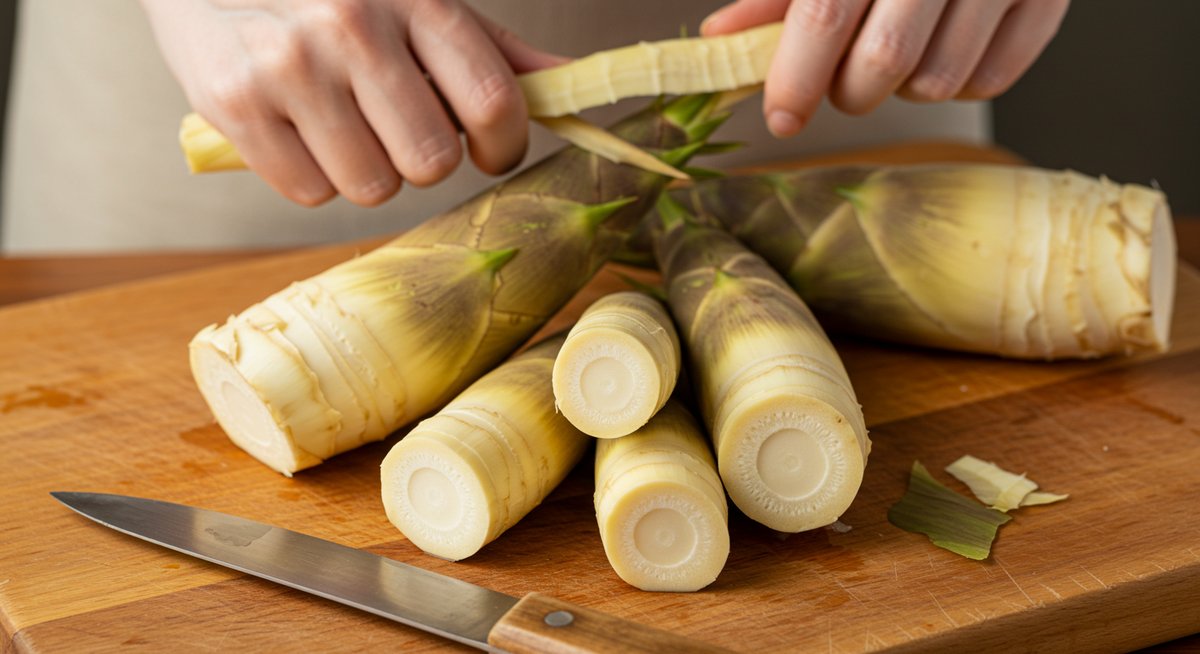
Run the tip of your knife lengthwise down the curved spine of the green casing. Cut deep enough to pierce the green wrapper layers, roughly 2 to 3 millimeters, without slicing deeply into the white flesh underneath. Insert your thumbs into the slit, pry outward, and roll the stalk out of its husk. The entire outer layer comes off in one or two swift motions.
Inspect the peeled, ivory-colored stalk. Near the bottom where the husk met the base, you will often spot a faint pale-green gradient. Run a standard vegetable peeler lightly down the lower third of the stalk to shave away any remaining fibrous skin. What remains is a smooth, milky-white cylinder ready for the cutting board.
Deciphering Black Fungal Spots: *Ustilago esculenta* Explained
First-time cooks often peel open a shoot only to find hundreds of dark, pepper-like specks running through the white interior. The immediate assumption is rot, mold, or insect damage. That assumption is incorrect.
Those markings are teliospores produced by Ustilago esculenta. In fact, without this specific fungus, the plant would never form an edible shoot at all. When harvested very early in the autumn cycle, the flesh appears solid, pristine white. As the stalk matures, the fungus begins producing spores, creating dark interior pinpoint marks known in Japanese culinary tradition as "makomo-zumi" (makomo ink).
Historically, craft workers in Japan even extracted these mature spores to create lacquer pigments and eyebrow inks. In the kitchen, shoots with moderate black spotting are safe to eat, though they carry a slightly woodier texture and an earthier, mushroom-leaning flavor profile. If a shoot is densely packed with black powder to the point that the white flesh feels spongy, dry, or hollowed out, discard it. For pristine stir-fries or raw salads, select younger stalks where the flesh remains pure ivory.
Field Guide to Prep: Matching Cuts to Cooking Methods
Makomodake does not carry the harsh bitter tannins found in raw bamboo shoots (takenoko), meaning long boiling sessions with rice bran are completely unnecessary. Cooking prep techniques depend entirely on how you plan to serve the vegetable.
For raw salads, slice the peeled core paper-thin on a mandoline. Toss the ribbons with toasted sesame oil, sea salt, and a dash of rice vinegar. For stir-fry preparation, bias-cut the shoot into 5-millimeter oval slices or julienne into matchsticks, which preserves the satisfying snap against high wok heat. If grilling or roasting, leave the shoot whole or split it in half lengthwise, brushing with miso butter or soy sauce.
| Prep Method | Cooking Time | Best Culinary Application | Texture Profile |
|---|---|---|---|
| Flash Parboil | 60, 90 seconds | Cold dressed salads, sunomono pickles | Crisp-tender, sweet, clean |
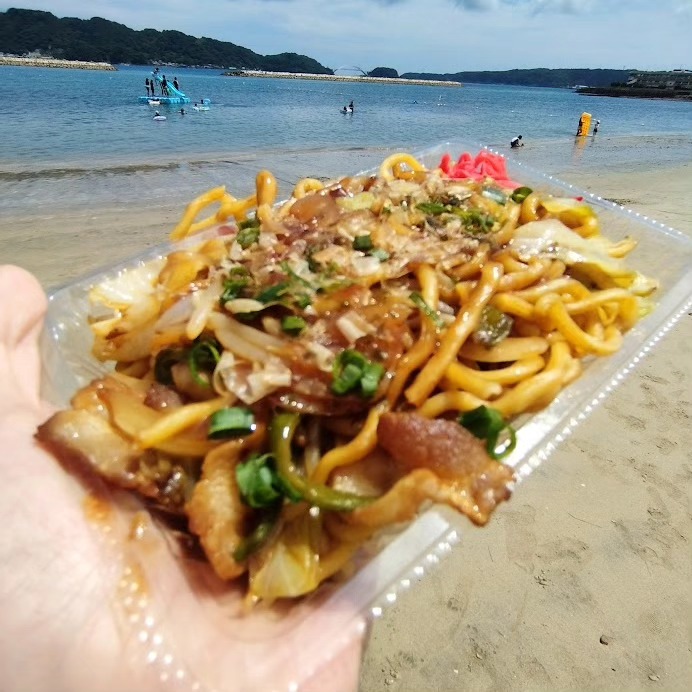
| High-Heat Stir-Fry | 2, 3 minutes | Pork belly strips, chili-garlic paste | Snappy, juicy, caramelized edges |
| Charcoal / Oven Roast | 8, 12 minutes | Whole shoot roasted in-husk, miso glaze | Steamed-tender interior, buttery |
| Tempura Fry | 2, 3 minutes at 175°C | Light batter dip with sansho pepper salt | Crunchy exterior, meltingly soft core |
When cooking with delicate broths or preparing cold dressed dishes, parboiling water bamboo shoots in lightly salted water for about 90 seconds removes any faint grassy notes while locking in moisture. Drain immediately and shock in an ice bath to preserve its pale ivory appearance.
Preserving the Harvest: Cold Storage and Freezing Hacks
Makomodake breathes rapidly once cut from the paddy. Leaving unpeeled stalks at room temperature causes them to dehydrate within 48 hours, turning the interior pithy while encouraging rapid spore formation. Proper storage safeguards both moisture and natural sugars.
For short-term refrigeration over 7 to 10 days, leave the green sheath completely intact. Wrap individual stalks in slightly damp paper towels, slip them into a ventilated produce bag, and store them upright in your refrigerator's crisper drawer. Keeping the stalks vertical mimics their natural growing position, which slows cellular respiration and moisture loss.
If you have already peeled the shoots, do not leave them exposed to air. Store peeled cylinders in an airtight glass container filled with cold water, changing the water daily. Submerged shoots stay crisp and pale for up to 5 days without oxidation.
For long-term storage spanning 1 to 2 months, freezing works well if done correctly. Never freeze raw makomodake; doing so shatters the cellular wall structure, yielding a stringy, waterlogged mess upon thawing. Instead, slice peeled shoots into bite-sized coins, blanch them in boiling water for 60 seconds, plunge into ice water, and pat thoroughly dry. Spread the pieces on a baking tray lined with parchment, freeze until solid, and transfer them into heavy-duty vacuum bags. You can drop frozen slices directly into hot stir-fries or simmering soups without thawing.
Frequently Asked Questions (FAQ)
Q1: Can I eat makomodake raw right after peeling?
A1: Yes. Fresh makomodake has virtually none of the harsh alkaloids found in raw bamboo. Slice the peeled white core thinly and serve with sea salt, lemon, or a splash of ponzu for an apple-crisp bite.
Q2: Do I need to peel off the entire green layer?
A2: Yes. The green outer casing consists of fibrous, inedible leaf sheaths. Only the pale ivory-white interior shoot and the tender, light-green transitional ring right beneath the skin are edible.
Q3: Why did my peeled shoot turn gray or show black spots after cooking?
A3: Black spots present before cooking are harmless fungal spores from Ustilago esculenta. If an entirely white shoot discolors slightly after cooking, it is simple oxidation from natural enzymes. Tossing cut pieces in a bowl of cold water with a drop of vinegar or lemon juice prevents surface discoloration.
Bringing Water Bamboo Shoots to Your Table
Cooking with makomodake offers a rare connection to traditional agricultural seasons. The plant demands wetland habitats and manual harvesting, resisting the industrial monoculture that flattens so much modern produce into year-round uniformity. Because its availability peaks and fades within a narrow window between late September and early November, working with fresh stalks requires moving quickly.
Mastering the basic knife score transforms these intimidating green husks into an accessible weeknight vegetable. Whether tossed into a flaming wok with garlic and pork, coated in crisp tempura batter, or simply charred whole over open coals, makomodake rewards basic culinary curiosity with an unmatched seasonal crunch.