The Complete Viewer's Guide to Yamapi in Lunch no Joou: Cast, Plot, and Legacy

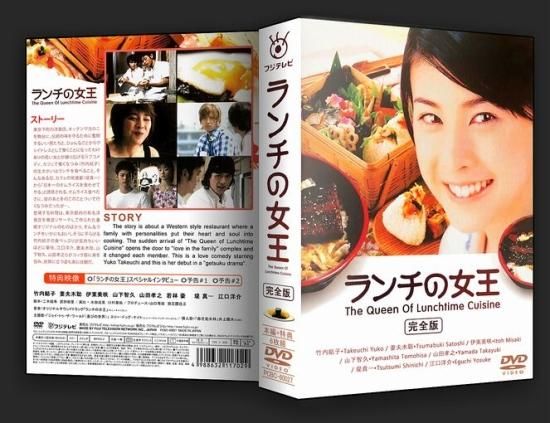
When Fuji TV aired the first episode of Lunch no Joou (ランチの女王) on July 1, 2002, the network captured lightning in a bottle. Anchored in the prestigious Monday night 9:00 PM "Getsuku" timeslot, the series paired comfort food with family dysfunction, pulling in an average domestic viewership rating of 18.91% across its 12-episode run. At the center of the story was Kitchen Macaroni, a traditional Western-style diner run by four distinct brothers whose lives unravel and rebuild around a runaway diner enthusiast played by the late Yuko Takeuchi. For international audiences and longtime Japanese television fans alike, the series remains celebrated as a critical turning point for a seventeen-year-old Tomohisa Yamashita, affectionately known across Asia as Yamapi.
Yamashita’s portrayal of Koshiro Nabeshima, the impulsive youngest brother balancing high school romance against dishwashing duties, turned an ensemble family comedy into his definitive mainstream breakthrough. According to production archives and his career retrospective documented in the Wikipedia (en) Report, the performance marked his shift from idol apprentice to award-winning dramatic actor. Even in 2026, as Yamashita commands international stages and bilingual streaming productions, Lunch no Joou stands as the foundational text of his screen appeal.
📌 Key Takeaways:
- Breakthrough Performance: Yamashita clinched the Best Supporting Actor honor at the 34th Television Drama Academy Awards for his role as the spirited youngest brother Koshiro.
- Ensemble Firepower: The production united future titans of Japanese cinema, including Satoshi Tsumabuki, Shinichi Tsutsumi, Yosuke Eguchi, and Takayuki Yamada before their peak industry reigns.
- Streaming Availability: The series streams domestically in Japan via Fuji TV's FOD platform, while overseas fans rely on licensed re-runs, boutique imports, and region-locked digital distribution.
How Koshiro Nabeshima Redefined Tomohisa Yamashita’s Screen Presence
Before the summer of 2002, Tomohisa Yamashita was primarily known as the baby-faced centerpiece of the Johnny & Associates junior roster. He had shown flashes of raw acting range in the dystopian school drama Long Love Letter earlier that same year, but Lunch no Joou required something far more grounded. Playing Koshiro Nabeshima demanded authentic domestic warmth, comedic timing, and the vulnerability of a teenager discovering first love amidst household noise.
Koshiro is the fourth and youngest son of the Nabeshima family. While his older brothers handle the heavy pans, complex gravies, and front-of-house logistics at Kitchen Macaroni, Koshiro navigates high school peer pressure, part-time shifts at the prep station, and an unrequited fascination with Natsumi Ushiroda (Yuko Takeuchi). Yamashita gave Koshiro an earnest, reactive energy. He was not yet playing the brooding leads of Kurosagi or the hyper-stylized eccentrics of Nobuta wo Produce; instead, he played an ordinary boy with flour on his apron, trying desperately to be taken seriously by men twice his size.
The screen chemistry between Yamashita and Satoshi Tsumabuki (playing second brother Yujiro) grounded the show's domestic comedy. Their sibling bickering felt unscripted and tactile, marked by swift head-slaps over prep counters and hushed conversations on the apartment stairs. Critics at the time pointed out that Yamashita held his ground alongside veteran theatre heavyweight Shinichi Tsutsumi and seasoned lead Yosuke Eguchi without getting swallowed by their larger stage presence.
Inside Kitchen Macaroni: Plot Friction, Family Chaos, and Yoshoku Comfort
The premise of Lunch no Joou balances screwball comedy with the sensory appeal of traditional Japanese-Western cuisine (yoshoku). The plot kicks off when eldest brother Shushiro (Shinichi Tsutsumi), an unreliable drifter with a history of family betrayal, walks into a coffee shop and interrupts Natsumi’s sacred lunchtime ritual. Desperate for a fake fiancée to show his dying father, Shushiro promises Natsumi the culinary holy grail: unlimited access to the legendary, slow-simmered demi-glace sauce crafted at Kitchen Macaroni.
Natsumi agrees strictly for the food. When Shushiro runs off after stealing the family safe, Natsumi stays behind, integrating herself into the kitchen staff and fundamentally rewiring the emotional atmosphere of the household. Each brother begins to view her through a different lens: father figure Kenzo (Yosuke Eguchi) guards his pride, sensible cook Yujiro (Satoshi Tsumabuki) wrestles with unspoken attraction, and Koshiro forms an immediate, protective crush that blurs the lines between puppy love and genuine loyalty.
Food serves as the narrative catalyst throughout every episode. The show’s centerpiece dish, an ethereal Japanese omelette rice drizzled with rich, glossy demi-glace, became an instant culinary sensation across Tokyo in the summer of 2002. Viewers saw the labor that went into every plate: dicing onions, sweeping the copper pans, and skimming veal stock from sunrise to dusk. For Koshiro, the kitchen was his inheritance and his cage. Watching Natsumi savor every bite taught him to respect the craft his father had spent four decades perfecting.
A Golden Age Cast: Tracking the 2002 Ensemble and Critical Honors
Looking back at the billing sheet for Lunch no Joou reveals an absurd concentration of early-2000s talent. The cast was not merely stacked; it represented a generational handoff between 1990s television mainstays and the actors who would define Japanese cinema throughout the next two decades.
| Actor / Character | Role at Kitchen Macaroni | Major Accolade / Narrative Impact |
|---|---|---|
| Yuko Takeuchi (Natsumi Ushiroda) | Waitress / Estranged runaway | Won Best Actress (34th Drama Academy Awards); launched her into peak A-list stardom. |
| Yosuke Eguchi (Kenzo Nabeshima) | Head Chef / Eldest residing brother | Anchored the traditional craftsmanship and emotional backbone of the diner. |
| Satoshi Tsumabuki (Yujiro Nabeshima) | Sous Chef / Second brother | Solidified his status as Japan’s premier romantic lead following Waterboys (2001). |
| Tomohisa Yamashita (Koshiro Nabeshima) | Apprentice / Fourth brother | Won Best Supporting Actor (34th Drama Academy Awards); validated his solo acting capabilities. |
| Takayuki Yamada (Minoru Ushiroda) | Kitchen Assistant / Koshiro's friend | Critical stepping stone before his breakout roles in Water Boys and Socrates in Love. |
| Go Morita (Shuuji Yashiro) | Natsumi's volatile ex-boyfriend | Injected raw tension and organized crime stakes into the final dramatic arc. |
The series cleaned up at the 34th Television Drama Academy Awards in late 2002. Beyond Yamashita’s individual win, the show snagged trophies for Best Drama, Best Casting, and Best Actress for Takeuchi. A young Eita Nagayama even surfaced in a fleeting guest appearance, emphasizing just how deep the talent bench ran during this specific production cycle.
Episode Turning Points: Koshiro’s High School Struggles and Kitchen Duty
While the broader story leans on the romantic tension between Natsumi, Kenzo, and Yujiro, Yamashita’s character carries the emotional coming-of-age subplots. Several specific episodes showcase his evolution from self-absorbed teen to dedicated cook:
Episode 3: The Beach House Confrontation
When Koshiro heads to the coast with his high school friends, his dual life collides. Ashamed of smelling like grease and peeling potatoes all morning, he tries to project an aloof cool in front of his classmates. When trouble brews with older delinquents, the Nabeshima family steps into the fray. The episode ends with Koshiro standing over the stove, voluntarily asking Kenzo to teach him how to prep the house dressing, a small but telling shift in maturity.
Episode 7: The Confession on the Stairs
By mid-season, Koshiro can no longer conceal his feelings for Natsumi. In a quietly observed scene on the back stairs of the restaurant, he attempts an awkward, earnest confession. Natsumi deflects it with effortless grace, feeding him a scrap of leftover pork cutlet and treating him like an endearing younger brother. Yamashita plays the moment with genuine heartbreak, registering the sting of childhood ending right in front of him.
Episode 11 and 12: Standing Guard Against Shuuji
When Natsumi’s violent past catches up with her in the form of Shuuji (played with genuine menace by Go Morita of V6), Kitchen Macaroni faces real physical danger. Koshiro refuses to hide upstairs. Arming himself with a kitchen prep knife, he attempts to shield Natsumi alongside his older brothers. That sequence stripped away the comic relief, letting Yamashita project fierce resolve that foreshadowed his later action roles.
Where to Watch Lunch no Joou Today: Licensing and Streaming in 2026
Navigating J-drama archives from the early 2000s remains notoriously tricky due to legacy music rights, agency talent contracts, and fragmented international distribution rights. For international viewers trying to track down Lunch no Joou today, streaming availability falls into distinct regional buckets:
In Japan, the series maintains an active home on FOD (Fuji TV On Demand), the network’s proprietary subscription service. The drama frequently cycles back onto linear television rebroadcasts during summer holiday blocks and garners high viewership spikes on TVer whenever Fuji TV runs retrospective campaigns highlighting classic Getsuku rosters.
Outside Japan, formal global platform distribution (such as Netflix or Prime Video) remains limited due to clearing rights around the show’s Western-heavy soundtrack, which features Three Dog Night’s ubiquitous "Joy to the World" as its opening theme. International collectors continue to rely on the official Japanese DVD box set released by Pony Canyon, secondary market physical imports with English subtitles produced during the early Asian home video boom, or regional Asian broadcast syndicators. Enthusiasts frequently monitor international catalog acquisitions as Fuji TV continues digitizing and relicensing its early-2000s drama library for overseas digital storefronts.
Frequently Asked Questions (FAQ)
Q1: How old was Tomohisa Yamashita when he filmed Lunch no Joou?
A1: Yamashita was 17 years old during filming in the summer of 2002. He filmed the drama alongside his ongoing high school studies at Horikoshi High School and his commitments as a prominent Johnny's Jr. member.
Q2: Did Yamapi win any awards for his performance in Lunch no Joou?
A2: Yes. He won the Best Supporting Actor award at the 34th Television Drama Academy Awards, establishing his credibility beyond pop idol status.
Q3: What makes the Kitchen Macaroni omelette rice so famous?
A3: The show highlighted authentic yoshoku cooking methods, specifically the delicate technique of slicing open a soft-cooked omelette over seasoned rice so it spills out into ribbons, immediately dressed with a house-made, weeks-simmered demi-glace.
Q4: Is Lunch no Joou related to Yamapi's other cooking or food roles?
A4: While Lunch no Joou was his first major food-centered drama, it established an on-screen connection with fine cuisine that returned decades later in his 2023, 2026 international drama series Drops of God (Kami no Shizuku), where he plays an elite wine collector.
The Lasting Cultural Legacy of 2000s Fuji TV Getsuku
The early 2000s represented the sunset of Japan's undisputed linear television dominance. Before streaming algorithms fragmented audience attention, an entire country tuned in at 9:00 PM on Monday nights to watch the same family argue over dinner recipes. Lunch no Joou captured that era at its absolute creative peak, blending warmth, immaculate pacing, and effortless humor.
For Yuko Takeuchi, the role established her enduring persona as a radiant, resilient screen heroine whose smile could disarm an entire room. For Tomohisa Yamashita, the drama was a launchpad. Without the grounded, hard-earned charm he displayed as Koshiro Nabeshima, the trajectory leading to Code Blue, Nobuta wo Produce, and his modern bilingual career would have looked entirely different. Lunch no Joou remains proof of the power of well-written ensemble storytelling, an unpretentious plate of comfort food that never loses its flavor.