The Definitive Guide to Kaido Racer Fukuoka Style: History & Specs
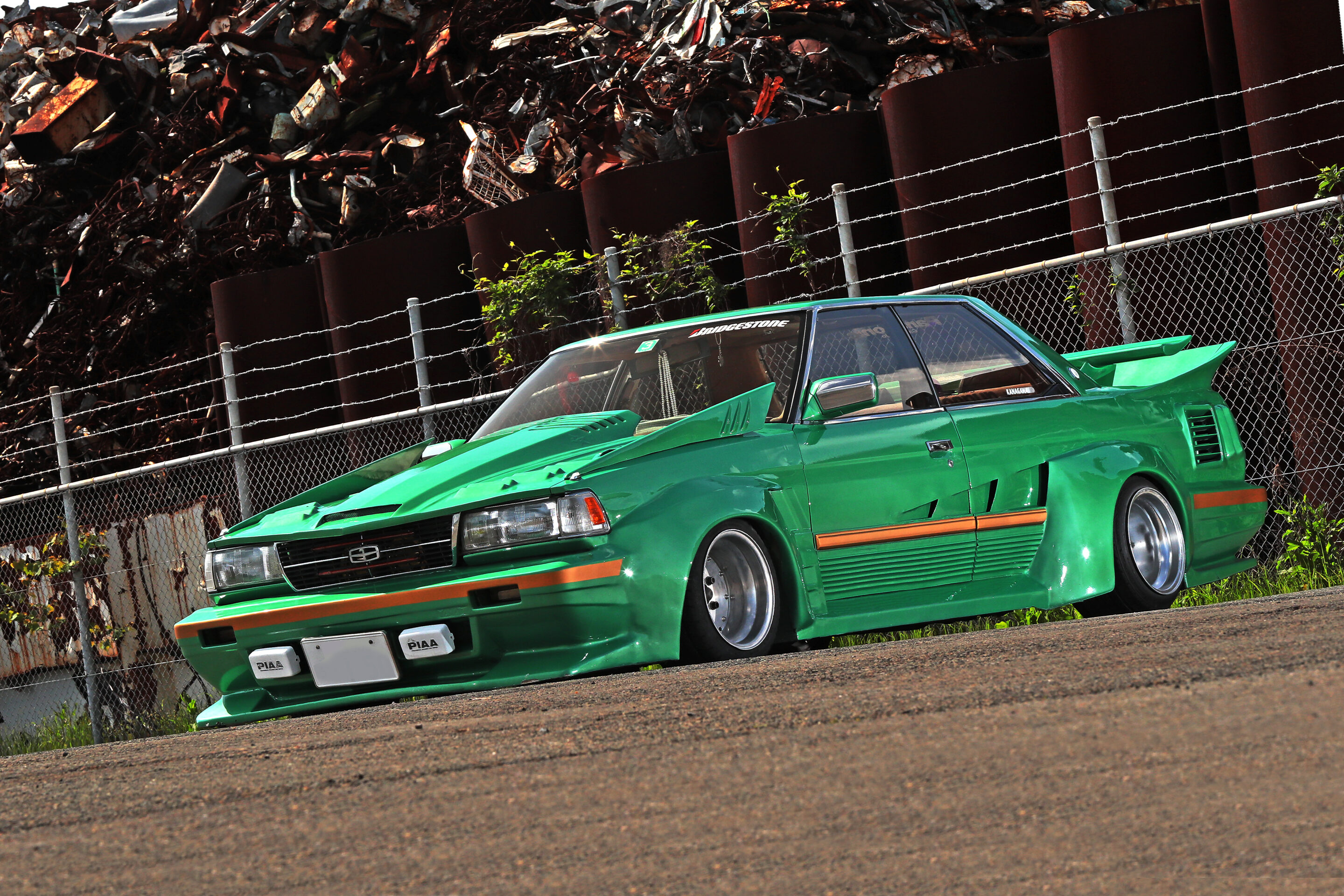
Across the neon-lit toll gates of Kyushu and the coastal expressways of western Japan, modified vintage machines still produce the sharp, metallic rasp of high-revving straight-six engines. While Western audiences often lump all flamboyant Japanese customs under the catch-all banner of bosozoku culture, purists recognize a far more nuanced hierarchy of regional dialects. At the center of this vintage tuning landscape sits the Fukuoka specification (福岡仕様, Fukuoka Shiyo), an exacting aesthetic code established by highway runners on the southern island of Kyushu. As detailed in an investigative Yahoo!ニュース Report on the living heritage of street racers, these custom builds were never meant as mere static showpieces. They originated as functional, road-going interpretations of closed-circuit racecars, built to slice through expressway traffic under the cover of night.
Fukuoka style stands apart from other Japanese regional variations through deliberate restraint and track-focused geometry. Where builders in the Kanto region often push visual absurdity to its absolute limit, Kyushu tuners prioritize low-slung, aerodynamic silhouettes, period-correct two-tone paint, and aggressively tucked running gear. Understanding Fukuoka specifications requires dissecting decades of Japanese underground car culture, racing heritage, and mechanical ingenuity that transformed standard family sedans into highway legends.
📌 Key Takeaways:
- Core Engineering Philosophy: Fukuoka specifications prioritize a clean, competition-inspired silhouette over chaotic accessories, drawing direct inspiration from early 1980s circuit racing.
- Aesthetic Hallmarks: Clean body transitions, body-matched slit spoilers, seamless long-nose conversions, and strictly tucked dual exhaust tips replace external oil coolers and towering bamboo-spear pipes.
- Chassis & Fitment: Ultra-aggressive shakotan stance relies on small-diameter, extreme-negative-offset deep dish SSR wheels wrapped in stretched vintage-spec tires.
Fuji Grand Champion Roots and Kyushu’s Regional Shift
The Kaido Racer movement trace back to the Fuji Grand Champion Series (commonly known as Grachan) held at Fuji Speedway during the 1970s and 1980s. Thousands of motoring enthusiasts packed the circuit parking lots on race weekends, studying the widebody silhouette racers competing on the tarmac. Group 5 machines like the Hasemi Skyline Super Silhouette, the Nichira Impul Silvia, and the Savanna RX-7 ran exaggerated front air dams, boxy overfenders, and towering rear wings. Young street racers promptly copied those aerodynamic modifications on their daily drivers, giving birth to the original Kaido Racer phenomenon.
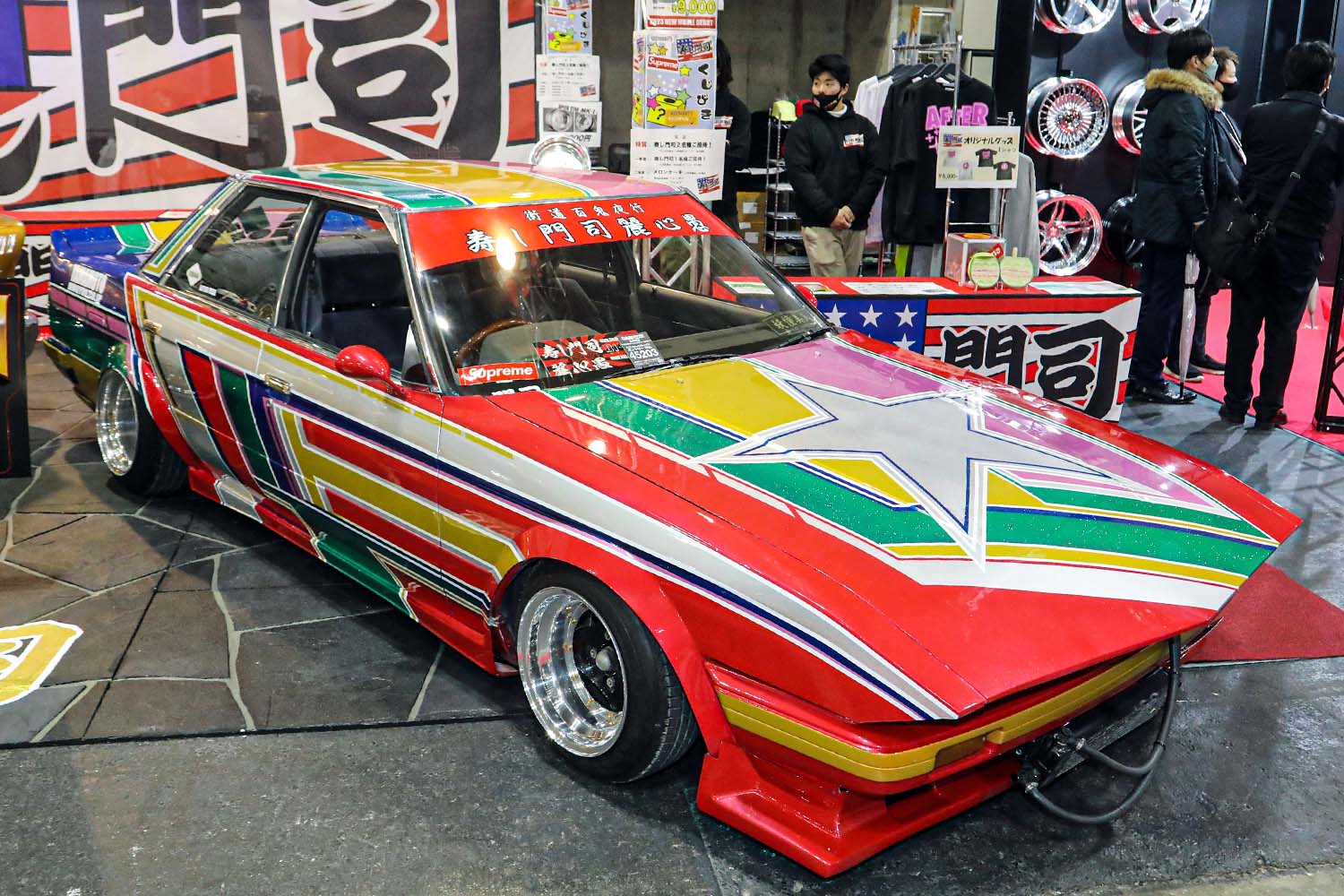
Geography quickly fragmented the movement into stark regional codes. In the Tokyo metropolitan orbit and the Chiba-Ibaraki corridor, builders pioneered the "Chibaragi" style. These eastern cars embraced theatrical excess, deploying multi-tiered plywood front splitters extending two meters from the radiator, enormous jagged side skirts, and vertical takeyari exhausts jutting straight toward the sky. Kyushu builders looked at this eastern trajectory and rejected it outright.
Car clubs across Fukuoka, Kitakyushu, and Kurume developed their own street-level response. Highway racers running the Fukuoka Urban Expressway needed cars capable of escaping police interdiction at real velocity. Massive, brittle fiberglass splitters disintegrated at high speed over highway expansion joints, and skyscraper exhaust pipes attracted immediate attention from local prefectural patrols. Fukuoka racers adapted by eliminating unnecessary visual clutter, perfecting structural proportions, and maintaining clean body lines that mirrored factory racing prototypes rather than comic-book caricatures.
Anatomy of Fukuoka Shiyo: Platforms, Aero, and Slit Spoilers
Building an authentic Fukuoka specification machine begins with selecting the proper platform. The golden era of Kyushu tuning centers almost exclusively on early-to-mid 1980s Japanese rear-wheel-drive chassis. The undisputed kings of the scene are Toyota's "hardtop" siblings: the GX71 Mark II, Cresta, and Chaser. The boxy glasshouse, frameless door windows, and elongated proportions of these Toyota platforms create the ideal canvas for low-drag aero fitment. Other revered donor platforms include the MZ10 and MZ11 Toyota Soarer, the Nissan Skyline C210 "Japan", the Skyline R30 Paul Newman version, and the Nissan Leopard F31.
Once a donor chassis is sourced, body modifications adhere to an unbending visual doctrine. Long-nose fiberglass cowl extensions are common, stretching the hood forward to conceal the headlamps and impart a predatory, hooded rake. Unlike Chibaragi hoods that can extend several feet beyond the front bumper, a Fukuoka long nose extends cleanly, terminating flush with a compact racing air dam. Front oil coolers with external braided steel lines are routinely omitted or mounted discreetly behind the grille, keeping the nose completely uncluttered.
The defining aero trademark of Fukuoka style is the slit spoiler modification. These horizontal louvered accents mount cleanly over the rear side quarter windows, taillights, or front air ducts. Instead of wild, multi-tier rear park-bench wings, Fukuoka cars run tight trunk-mounted ducktails or low-profile slit-spoilers tucked against the rear decklid. Body modifications blend into the factory sheet metal rather than clashing with it. Paint schemes remain equally restrained: high-gloss solid whites, classic pearl whites, or factory two-tone gold and brown finishes dominate, occasionally accented by slender racing stripes rather than chaotic geometric airbrush patterns.
| Aesthetic Dimension | Fukuoka Style (Kyushu) | Chibaragi Style (Kanto) |
|---|---|---|
| Front Aero Architecture | Flush front chin spoilers; clean fiberglass hood extensions; integrated oil coolers. | Massive shovel noses; splitters extending 1, 2 meters forward; exposed front coolers. |
| Exhaust Configuration | Straight-pipe 50mm duals; tucked neatly beneath rear valance or mildly upturned. | Skyward-facing takeyari pipes rising 2, 3 meters, often featuring multi-tube star patterns. |
| Body Paint & Livery | Factory-matched two-tone tones, solid pearls, discrete period pin-striping. | High-contrast neon graphics, metallic flakes, radical multi-colored zig-zag patterns. |
| Wheel Dimensions | 14-inch deep dish SSR or Techno rims; ultra-tight tire stretch with tucked fender lips. | 14, 15-inch ultra-wide modular wheels matched to enormous flared works overfenders. |
| Functional Intent | Sustained high-speed expressway cruising and agility; tight ground clearance clearance. | Low-speed street parade cruising, acoustic disruption, and visual shock impact. |
Footwork Dynamics: Shakotan Stance and Deep-Dish SSR Wheels
The ground clearance of a true Fukuoka Kaido Racer is measured in millimeters. The term shakotan translates directly to "lowered car," but achieving correct posture requires complex mechanical intervention. Fukuoka cars do not use modern air suspension setups; doing so is considered an unforgivable aesthetic compromise in traditional garages. Tuners employ ultra-short-stroke hydraulic dampers paired with heavy-rate chopped springs or bespoke weld-in front coilover conversions adapted from the AE86 Corolla chassis.
The wheels represent the mechanical soul of the build. Diameters are strictly locked to 14 inches, with occasional 13-inch exceptions on early platforms. Speed Star Racing (SSR) alloys are the undisputed industry standard for authentic Fukuoka builds. The holy trinity consists of:
1. SSR Speed Star Mark I: Solid-face aluminum discs with no spoke cutouts, providing an industrial, high-velocity drag look.
2. SSR Speed Star Mark II: Four-spoke cross patterns offering high brake clearance and distinct period contrast.
3. SSR Speed Star Mark III: Iconic eight-spoke cross configurations that define Showa-era circuit racing.
Fitment requires extreme negative offsets (A-Type barrels) ranging from -15 up to -45. Front widths hover between 8.5J and 9.5J, while rear wheels stretch from 10J to 12J. Mounting standard 185/60R14 or 195/60R14 tires onto a 10-inch-wide barrel forces an extreme tire stretch (hippari), pulling the sidewall at a steep 45-degree angle. This extreme stretch allows the tire tread to clear the inner metal fender line while the raw aluminum wheel lip pokes outward. Front suspension mounts receive custom eccentric pillow-ball camber plates dialed to severe negative angles, allowing the front wheels to tuck cleanly into the chassis when cornering hard on coastal roads.
Engine Tuning, Authentic Exhaust Tone, and Legal Friction in 2026
The sonic identity of a Fukuoka machine is as rigorously curated as its bodywork. Engine bays almost exclusively house naturally aspirated inline-six powerplants. The Toyota 2.0-liter 1G-GEU "Twin Cam 24" engine serves as the absolute gold standard across the scene. Famous for its high-rpm scream, the Yamaha-developed cylinder head produces a sharp acoustic signature known in Japanese tuning circles as nakigoe (the crying voice).
Exhaust systems bypass all modern emissions filtration. Fukuoka builders craft hand-fabricated steel or stainless 6-into-2 exhaust headers feeding directly into straight-through twin 50mm downpipes. Unlike the multi-meter takeyari pipes seen on Chibaragi machines, Fukuoka exhaust tips terminate cleanly under the rear valence, occasionally angled upward at a subtle 15-degree kick (hasugiri). When downshifted through a five-speed W55 or W58 manual transmission, the 1G-GEU engine produces an ear-splitting, metallic acoustic resonance that echoes off highway retaining walls for kilometers.
Operating these vintage machines in 2026 presents serious legal obstacles. Japan's periodic motor vehicle inspection, known as Shaken, enforces strict minimum ride-height laws of nine centimeters from the lowest structural point of the chassis. Furthermore, regulations strictly forbid extreme wheel poke beyond the vertical plane of the wheel arch. Prefectural police forces, particularly during the New Year holiday runs to Mount Fuji and annual Daikoku PA gatherings, deploy specialized transport inspection officers to impound non-compliant vehicles on the spot.
Because authentic Fukuoka machines utilize non-reversible metal body modifications and cut suspension towers, passing legal inspections requires either temporary restoration components or clandestine operations late at night. The scarcity of clean 1G engines, paired with skyrocketing auction prices for vintage SSR wheels, where a pristine pair of 10J Mark IIs easily fetches $2,500 to $4,000 on secondary markets, has turned Fukuoka styling into an expensive, high-stakes craft reserved for dedicated collectors and master fabricators.
Frequently Asked Questions (FAQ)
Q1: What is the primary visual difference between Fukuoka style and typical Kaido Racer builds?
A1: Fukuoka style eliminates chaotic exterior add-ons like sky-high bamboo-spear exhaust pipes, front-mounted external oil coolers with loose hoses, and massive three-meter front splitters. Instead, it relies on clean factory bodylines, flush slit-spoiler modifications, seamless fiberglass hood cowl extensions, period-correct two-tone paint, and low-tucked straight-pipe exhausts.
Q2: Which donor cars are historically accurate for a genuine Fukuoka specification?
A2: The quintessential base platforms are the Toyota GX71 series (Mark II, Cresta, and Chaser) from 1984, 1988. Other period-accurate platforms include the first-generation Toyota Soarer (MZ10/MZ11), the Nissan Skyline C210 "Japan," the Skyline R30, and the Nissan Cedric or Gloria 430 and Y30 hardtop models.
Q3: Why are 14-inch wheels strictly mandatory on authentic Fukuoka builds?
A3: Authenticity hinges entirely on period-correct Showa-era race proportions. Wheels larger than 14 inches ruin the sidewall stretch profile and prevent the car from dropping to authentic ground-scraping levels without cutting the factory chassis floorboards. Period SSR, Techno Phantom, and Shadow wheels were produced in 14-inch sizes to match 1980s racing slick dimensions.
The Future of Fukuoka Specifications in Global Kyusha Culture
The international spread of Japanese domestic car culture has thrust Fukuoka specifications into the global collector spotlight. What originated as localized street defiance across Kyushu highway systems is now recognized as a premier discipline within the broader world of vintage automotive restoration. Builders in the United States, Australia, and Western Europe are importing rust-free GX71 Crestas and MZ11 Soarers, spending years sourcing ultra-rare 14-inch SSR barrels and rare fiber-reinforced polymer aero panels from vintage Japanese auction houses.
The durability of Fukuoka style lies in its underlying balance. By rejecting temporary novelty and focusing on balanced wheel offset, pure racing exhaust cadence, and smooth aerodynamic lines, Kyushu tuners created an enduring automotive style that outlived the very circuits that inspired it. As Showa-era steel grows scarcer with each passing year, these low-slung, screaming six-cylinder sedans stand as authentic mechanical monuments to Japan's golden era of underground expressway racing.