The Mentorship That Changed Haikyu!!: The Truth Behind Bokuto and Tsukishima
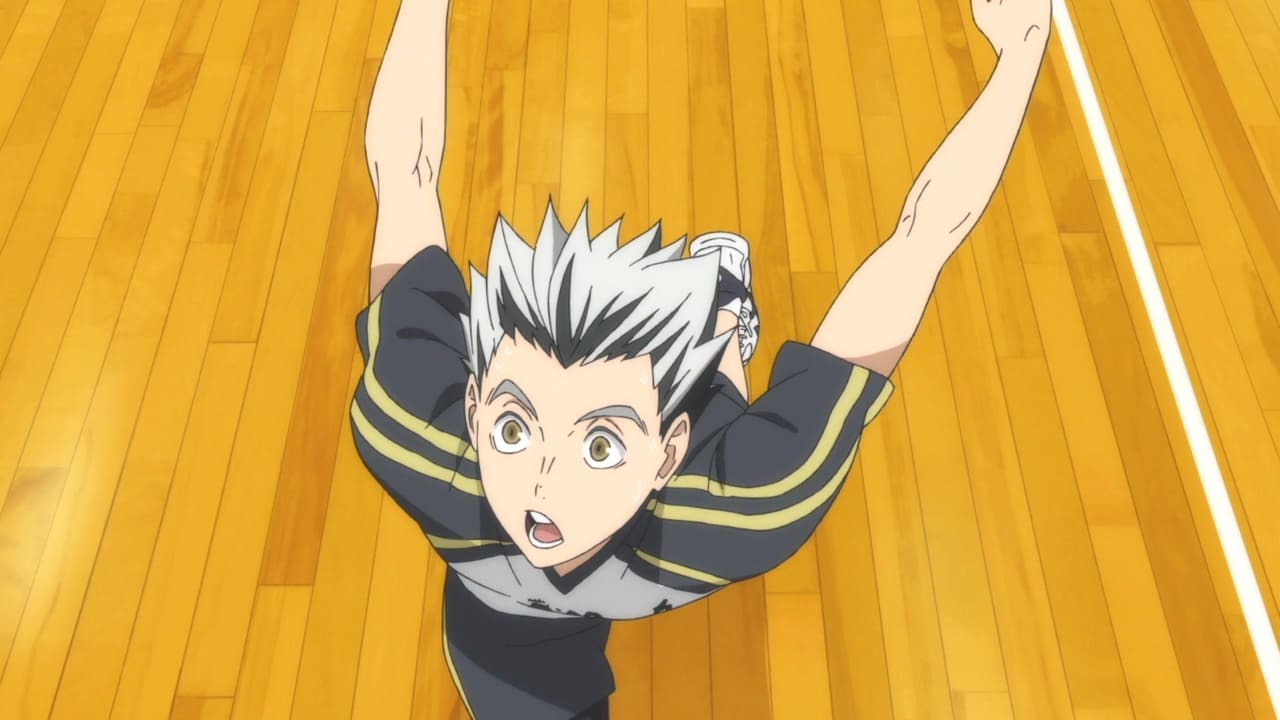
When Haruichi Furudate penned the Tokyo Training Camp arc in Haikyu!!, sports shonen manga underwent a subtle, seismic recalibration. Up until that quiet evening in Gymnasium 3, the narrative ran on familiar engines: Hinata Shoyo’s raw, obsessive hunger and Tobio Kageyama’s technical genius. Then came Kotaro Bokuto. Loud, volatile, and emotionally unpredictable, the Fukurodani Academy ace looked like comic relief wrapped in elite athletic talent. Instead, he delivered a speech on athletic obsession that permanently dismantled the detached cynicism of Kei Tsukishima and laid the philosophical blueprint for the rest of the series.
The sequence did not merely give fans one of the most quotable dialogues in modern sports fiction. It established an enduring framework for how amateur athletes confront the absurdity of pouring hundreds of hours into an activity that promises zero guarantees of long-term glory. Tsukishima entered that gym searching for an intellectual justification to care; Bokuto gave him a visceral sensory truth that transformed his career from passive participation into a fierce defensive masterclass.
📌 Key Takeaways:
- The Catalyst: Bokuto’s answer to Tsukishima dismantled intellectual detachment by framing mastery as a singular, intoxicating breakthrough rather than an abstract pursuit of trophies.
- The Direct Result: The Tokyo training sessions directly engineered Tsukishima’s legendary block against Shiratorizawa’s Wakatoshi Ushijima in chapter 163.
- The Broader Arc: Bokuto’s personal evolution from a coddled "infant ace" to an unflinching professional athlete redefined Fukurodani’s entire Nationals run.
The Midnight Third Gym Sessions of the Tokyo Training Camp Arc
The Tokyo Training Camp arc stripped volleyball down to its bare metal. Karasuno was drowning in technical overhauls, failing repeatedly across five-set practice rotations against powerhouses like Nekoma, Shinzen, and Fukurodani. Amid this friction, Kei Tsukishima drifted toward the exit. Tall, analytical, and emotionally guarded after witnessing his older brother’s heartbreak on Karasuno’s bench years prior, Tsukishima saw no logic in exhausting himself. To him, high school volleyball was simply an extracurricular club. Running yourself ragged made little sense when an undisputed titan like Ushijima waited to crush you down the line anyway.
Then Kuroo Tetsuro and Bokuto pulled him into Gym 3 for late-night extra practice.
Gym 3 functioned like an elite sandbox clinic. Tsukishima found himself standing across the net from Bokuto, a top-five high school ace in Japan, running three-on-three drills alongside Keiji Akaashi and Lev Haiba. Bokuto did not lecture Tsukishima on teamwork or Karasuno pride. He simply spiked ball after ball with terrifying velocity, forcing the freshman blocker to read angles, reset footwork, and absorb the sheer weight of a national-tier offense. The contrast between Tsukishima’s calculated apathy and Bokuto’s unrelenting electricity crackled in every exchange.
Deconstructing the "Hooked on Volleyball" Speech
The turning point arrived when Tsukishima finally voiced his frustration out loud. He asked Bokuto directly why he practiced so furiously when only a tiny fraction of players ever win Nationals or play professionally. Why invest everything when failure is the statistical norm?
Bokuto’s reaction was immediate and completely stripped of intellectual posturing. He leaned down, looked Tsukishima in the eye, and told him his perspective was warped because he simply sucked at volleyball. He explained that skill level dictates enjoyment. When you cannot control the ball, the sport feels like a chore. But the core insight went deeper than technical competence:
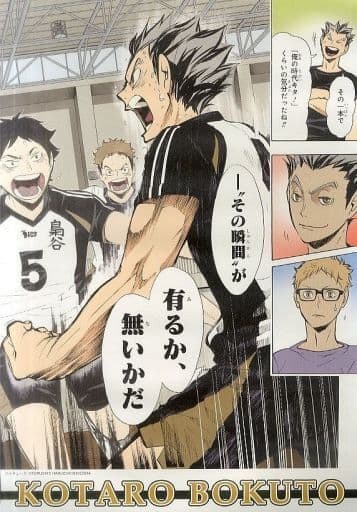
"If that moment arrives for you," Bokuto told him, grinning with pure conviction, "that’s the moment you’ll get hooked on volleyball."
Bokuto described the exact sensation: the split-second when an opponent hits an attack, you read the line, align your hands perfectly, and shut down an elite hitter cold. In that single, electric second, you feel like the center of the universe. The future does not matter. The score does not matter. That single spike or block validates every grueling sprint you ever ran. It was not a speech about victory; it was an explanation of flow state. Bokuto articulated the neurological high of competitive sports better than any technical coach could.
Tracking the Mentorship: From Practice Drills to the Nationals Stage
The lessons shared in Gym 3 were not theoretical. They formed an unbroken chain of tactical and psychological breakthroughs that carried Karasuno and Fukurodani through the Miyagi qualifiers straight into the Spring Nationals tournament in Tokyo.
| Narrative Arc | Bokuto’s Technical & Mental Dynamic | Tsukishima’s Direct Takeaway |
|---|---|---|
| Tokyo Training Camp | Demands relentless spikes; refines the Bokuto cut shot technique against block reads. | Internalizes hand positioning, funnel blocking, and the psychological concept of "the moment." |
| Miyagi Prefectural Final | Watches from afar; Fukurodani secures Tokyo seeding while managing Bokuto's mood swings. | Shuts down Ushijima in set two; raises his fist and screams, finally "hooked" on the game. |
| Nationals Quarterfinals | Sheds "dejected mode" against Mujinazaka; outduels Kiryu Wakatsu as a complete ace. | Coordinates Karasuno's total defense against Kamomedai, using elite timing learned in Gym 3. |
| V.League Division 1 | MSBY Black Jackal debut; declares himself an "ordinary ace" who never drops his level. | Signs with Sendai Frogs (Division 2) while pursuing museum work, keeping volleyball in his life forever. |
The payoff in chapter 163 remains one of the sharpest narrative echoes in sports storytelling. Tsukishima baiting Ushijima into a narrow cross shot, snapping his wrists forward, and stuffing the ball straight into the hardwood was a direct visual reproduction of the Gym 3 drills. As Tsukishima clutched his hands and let out an uncharacteristic roar, Furudate did not write internal monologue about beating Shiratorizawa. The panels called back instantly to Bokuto’s words: he had found his moment.
The Setter Dynamic: How Keiji Akaashi Sustained Bokuto’s Volatility
You cannot understand Bokuto without dissecting Keiji Akaashi. Bokuto’s infamous "dejected mode", a state where an errant line shot, bad officiating, or an unsupportive crowd could cause him to mentally shut down, required precise operational management. Akaashi carried a mental ledger containing 37 distinct Bokuto quirks, calculating toss trajectories, timing, and verbal prompts down to the millisecond just to keep the Fukurodani engine running.
For two years, Fukurodani operated under an unspoken contract: the team sheltered Bokuto’s emotional dips, and in exchange, Bokuto provided unblockable firepower when it mattered. Akaashi tossed high, safe sets whenever Bokuto slumped. He fed him easy cross shots to restore his confidence. But this relationship was not simple codependency. It was an elite setter recognizing that Bokuto’s ceiling sat higher than almost anyone in the country. Akaashi accepted the stress because watching Bokuto play at full throttle was genuinely breathtaking.
Yet, the team could not win a national title while babysitting their best player. The dynamic had to break, and it did on the biggest stage possible.
The Nationals Crucible: Fukurodani vs Mujinazaka and Kiryu's Reckoning
The quarterfinal duel against Mujinazaka High at the Spring Nationals tournament forced Bokuto’s ultimate maturation. Facing Kiryu Wakatsu, a top-three ace renowned for turning terrible tosses into punishing points through ferocious leg drive, Fukurodani hit a wall. When Akaashi crumbled under pressure and got pulled to the bench, the script flipped completely.
Historically, an Akaashi benching would trigger Bokuto dejected mode instantly. Instead, Bokuto looked at his distressed setter and demanded he stop apologizing. For the first time, Bokuto carried the emotional weight of the roster.
During that match, Bokuto displayed the full lethal range of his arsenal. His cut shot technique, threading spikes across razor-thin angles along the net line, sliced through Mujinazaka’s three-man block. He dove for loose floor defense. He took off-target sets and found hands off the block. In defeating Kiryu’s side, Bokuto discarded the title of "infant ace." He told his teammates that up until then, he had relied on them to be great, but from that day forward, he would simply be an ace they could rely on. It was a complete psychological graduation.
Professional Payoff: The Cut Shot and the MSBY Black Jackal Era
When the story jumped forward to the V.League Division 1 clash between the MSBY Black Jackals and the Schweiden Adlers, Bokuto entered the arena as a fully realized weapon. Sharing the court with Hinata, Atsumu Miya, and Kiyoomi Sakusa, Bokuto wore jersey #12 and carried zero baggage. The erratic high schooler had vanished; in his place stood an athletic powerhouse who openly proclaimed himself a "just a normal ace."
In Bokuto’s professional lexicon, "normal" meant consistent perfection. It meant hitting sharp line drives at 120 kilometers per hour, digging jump serves with soft platforms, and bringing unshakeable joy to forty matches a year. The seeds planted under the flickering lights of the Tokyo training camp had grown into an international-caliber career. Bokuto never lost the child-like rush of spiking a ball past a blocker; he simply learned how to command that feeling at will.
Frequently Asked Questions (FAQ)
Q1: In which chapter and anime episode does Bokuto give his speech to Tsukishima?
A1: Bokuto delivers the iconic speech in chapter 89 of the manga, titled "The Purest Energy." In the anime adaptation, this occurs in season 2, episode 8, during the late-night practice drills in Gymnasium 3.
Q2: Why was Bokuto not considered a top-three ace alongside Ushijima, Sakusa, and Kiryu?
A2: Bokuto possessed top-three offensive skill, but his severe emotional volatility and frequent lapses into "dejected mode" kept him ranked among the nation's top five rather than the consensus top three throughout high school.
Q3: How did Bokuto’s mentorship influence Tsukishima’s defensive technique?
A3: Bokuto and Kuroo taught Tsukishima the discipline of timing, showing him how to hold his ground rather than biting on early decoys. This allowed Tsukishima to close hitting lanes against high-caliber attackers, directly enabling his match-winning block against Ushijima.
Q4: What was the significance of Bokuto calling himself "just a normal ace" in the V.League?
A4: In high school, Bokuto believed an ace had to carry mystical, heroic expectations that constantly overwhelmed him. In the professional league with MSBY Black Jackal, calling himself "normal" meant he finally accepted that excellence comes from consistent, daily execution rather than emotional dramatics.
The Lasting Philosophy of Gymnasium 3
Bokuto Kotaro endures as one of Haruichi Furudate’s finest creations because he represents the untamed core of athletic ambition. Sports fiction frequently leans into tragedy, duty, or vengeance to fuel its protagonists. Bokuto operated entirely outside those conventions. He did not play volleyball to escape poverty, validate family expectations, or prove critics wrong. He played because hitting a leather ball flush against the hardwood feels extraordinary.
By articulating that sensation to Tsukishima, Bokuto handed Karasuno the key to unlocking their most stubborn defensive talent. More importantly, he gave readers a clean, honest definition of why humans devote themselves to difficult crafts. You do not endure thousands of exhausting hours for an abstract championship months away; you do it for the fleeting, undeniable brilliance of the moment everything clicks.