The Oimachi Standing Sushi Craze: Why Tokyo Foodies Wait Hours for $10 Feasts

Just one stop south of Shinagawa along the Keihin-Tohoku Line, the narrow alleyways outside Oimachi Station smell of charcoal smoke, reduced dashi, and vinegar-seasoned rice. While international tourists crowd Tsukiji Outer Market or pay ¥35,000 ($230) for seated omakase tastings in Ginza, domestic gourmands queue patiently outside Oimachi's cramped doorways. They stand shoulder-to-shoulder on concrete curbs, waiting for a dining experience that strips luxury sushi down to its barest essentials: counter space measuring barely two feet across, thirty-minute seatings, and fish sourced straight from Toyosu Market at prices that defy modern restaurant economics.
This is the engine of Tokyo’s tachigui (standing-style) sushi renaissance. In Oimachi, an unassuming transit junction historically known for postwar drinking quarters and blue-collar izakayas, standing counters are turning out glistening cuts of medium-fatty tuna (chutoro), sweet sea urchin (uni), and vinegared silver-skin fish (kohada) for roughly ¥150 to ¥450 ($1.00 to $2.95) per piece. The convergence of soaring food inflation, algorithmic travel discovery on Instagram and TikTok, and aggressive direct-from-auction sourcing has transformed Oimachi into an essential pilgrimage site for anyone chasing uncompromising Edomae craft without the white-tablecloth surcharge.
📌 Key Takeaways:
- The Value Proposition: Diners at Oimachi standing counters regularly consume 10 to 12 pieces of pristine, market-fresh nigiri, including premium cuts like otoro and Hokkaido uni, for a bill totaling ¥2,500 to ¥4,500 ($16 to $30).
- The Economic Mechanism: Rapid 20-to-40-minute customer turnover, absence of seating furniture, minimal floor footprints, and wholesale buying power eliminate the 60% overhead that bloats Ginza-style dining rooms.
- The Cultural Context: Far from a modern gimmick, standing sushi revives the original 19th-century Edo street-stall format, offering unpretentious master craftsmanship tailored to fast-paced urban dining.
From Edo Yatai Stalls to the Labyrinth of Higashi-Koji
Sushi did not begin as an hushed, temple-like luxury. During the late Edo period in the 1820s, street vendor Hanaya Yohei popularized nigiriziri from wooden cart stalls (yatai) along the Sumida River. Laborers grabbed fresh, cured fish pressed over seasoned warm rice as a rapid, on-the-go snack, consumed standing up within ninety seconds before moving along. The modern conversion of sushi into an elite, sit-down ritual occurred primarily after the 1923 Great Kanto Earthquake and post-World War II commercial zoning crackdowns, which forced street carts indoors.
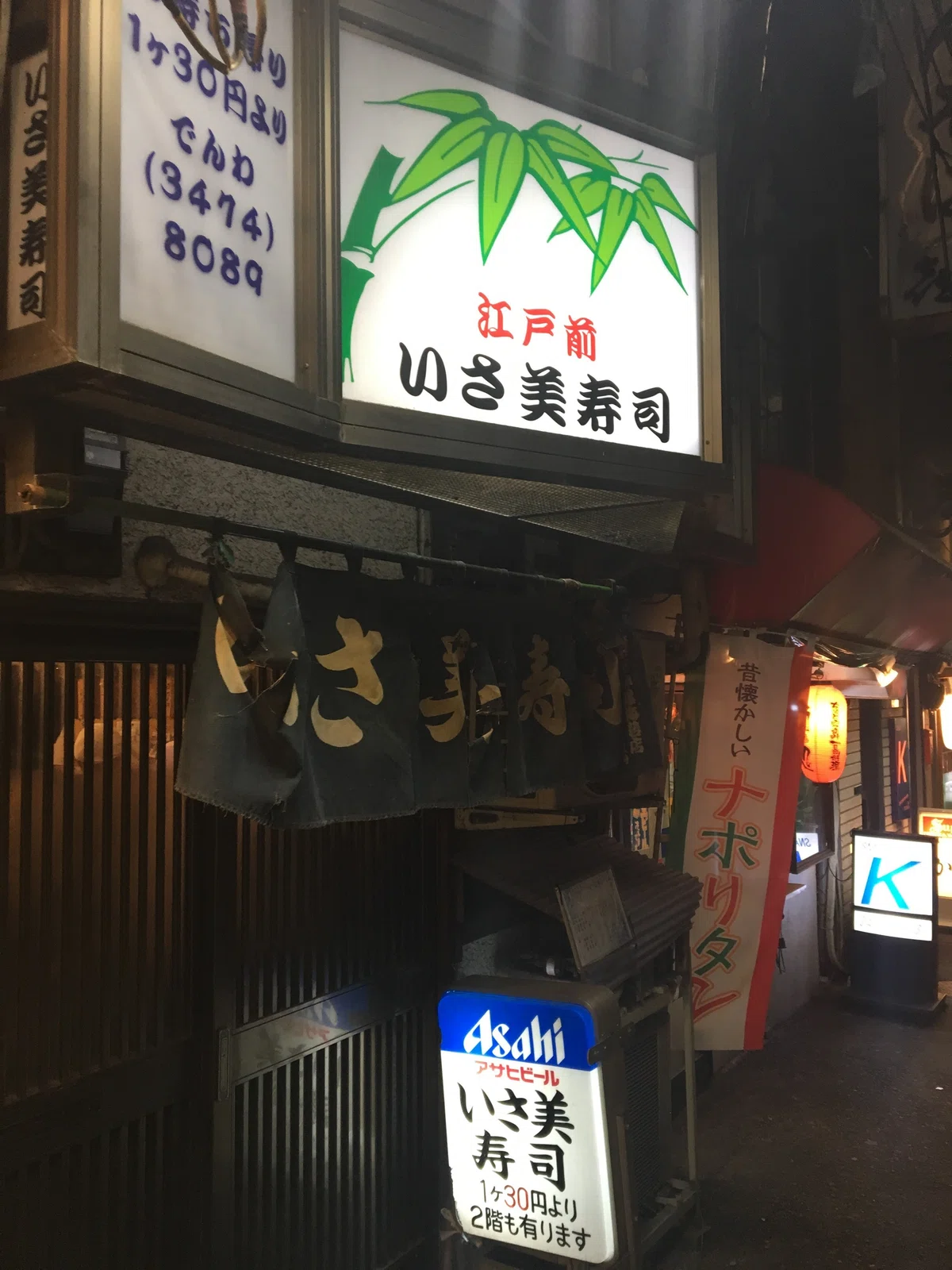
Oimachi preserves the architectural bones of that historic informality. Directly outside Oimachi Station's East Exit lies Higashi-Koji, a tight network of pre-war and mid-century alleyways barely wide enough for two pedestrians to pass abreast. Beneath suspended electrical wires and red paper lanterns, these alleyways resisted the sterile high-rise redevelopment that swept through neighboring Shinagawa. Instead, the neighborhood incubated independent food operators who prioritize knife skills over interior design, laying the foundation for an unpretentious, hyper-concentrated culinary hub.
The Toyosu Supply Chain Powering $2 Nigiri
The central puzzle of Oimachi’s standing counters is simple: how can a five-person stall sell wild Pacific bluefin tuna or freshly shucked scallop for a fraction of department-store prices without cutting corners on quality? The answer lies in inventory mechanics and distribution relationships. Unlike sprawling chain restaurants that lean on frozen, pre-sliced vacuum packs, prominent Oimachi operators, such as regional heavyweight Tachigui Sushi Midori (an offshoot of the celebrated Umegaoka Sushi No Midori) and independent neighborhood counters like Sushi Matsu, leverage high-volume relationships with intermediary wholesalers (nakagawashi) at Toyosu Market.
Every morning before dawn, buyers secure prized central cuts alongside high-yield secondary cuts that high-end kaiseki establishments pass over due to uniform cosmetic standards. Because standing bars operate with rapid customer churn, fresh inventory moves entirely within a 12-hour window. There is virtually zero spoilage. A counter serving 300 to 450 customers across an eight-hour shift can purchase whole fish loins at institutional bulk discounts, passing the margin directly onto the wooden counter.
Standing Counter Economics: Ginza Precision vs. Oimachi Reality
The financial architecture of a seated counter in Chuo Ward versus a standing counter in Shinagawa reveals why the end-consumer price tags diverge so dramatically. Standing counters maximize revenue per square meter by eliminating dead time and decorative fluff.
| Operational Metric | Ginza Seated Counter | Oimachi Standing Counter |
|---|---|---|
| Average Dining Duration | 120, 150 minutes | 25, 40 minutes |
| Seat / Space Turns per Service | 1 to 2 seatings per evening | 8 to 12 rotations daily |
| Average Spend (Full Meal) | ¥25,000, ¥45,000 ($165, $295) | ¥2,200, ¥4,800 ($15, $32) |
| Core Neta Sourcing | Toyosu Tier-1 / Exclusive Auction | Toyosu Tier-1 & Tier-2 High Volume |
| Service Overhead & Rent Ratio | 45%, 55% of gross per head | 12%, 18% of gross per head |
Because the physical footprint of an Oimachi counter rarely exceeds 180 to 250 square feet, monthly commercial leases remain modest. Without hostesses, coat checks, specialized dishwashers, or expansive reservation software, nearly every yen collected flows straight into raw fish purchasing and fair wages for veteran sushi itamae who often spent decades training in traditional brick-and-mortar kitchens.
Inside the Counter: Unwritten Rules and the Oimachi Ritual
Eating at a standing sushi counter requires a distinct rhythm. There are no padded banquettes, background jazz sets, or leisurely drink menus designed for lounging. The workflow is fast, precise, and communicative.
Upon sliding open the door, diners signal their party size with raised fingers, almost everyone dines solo or in pairs. Large groups disrupt the counter's flow. Once positioned behind the wooden partition, you order your drink first: draft beer (nama-biiru), dry green tea shochu highballs, or cold local sake served in utilitarian tumblers. Hot powdered green tea (agari) is free, dispensed via pressurized brass spigots installed directly beneath the counter edge.
Ordering happens in short bursts. Rather than calling out eight items at once, patrons order two or three varieties per round: perhaps light white fish (tai or hirame) followed by an oily mackerel (shime-saba). The chef shapes the warm, vinegared rice (shari) using three swift hand compressions, applies a delicate swipe of fresh wasabi, drapes the fish (neta), and rests the piece on the raised bamboo leaf or clean counter tier before you. You eat with your fingers immediately. Letting nigiri sit for two minutes while taking photographs cools the warm rice and wilts the seaweed, degrading the textural contrast that defines skilled Edomae preparation.
Integrating Oimachi Into a Broader Izakaya Crawl
Part of Oimachi’s magnetism is its seamless role in an evening dining crawl (hashigozake). Standing sushi counters serve as the ideal first or second stop rather than the sole destination of the night. A typical itinerary begins around 5:30 PM, slipping into a standing counter before peak salaryman commuting hours to secure six pieces of pristine seasonal fish and a dry beer for roughly ¥2,000 ($13).
From there, diners step directly into Higashi-Koji's neighboring doorways: a yakitori bar grilling binchotan-charred chicken thighs, an oden counter simmering daikon radish in dashi for hours, or a small vinyl-record bar pouring Japanese single malts. The frictionless transition between diverse food styles without making advance bookings months ahead captures why Oimachi has eclipsed sanitized entertainment districts for those who value authenticity over social-media staging.
Frequently Asked Questions (FAQ)
Q1: Do Oimachi standing sushi counters accommodate foreign travelers who do not speak Japanese?
A1: Yes, most counters are welcoming to solo travelers and tourists. Major spots near the station provide laminated English menus or photo cards. For smaller, traditional stalls, pointing to display cases or using basic dining phrases, such as omakase (chef's choice) or osumi (recommendation), works cleanly. Keep groups to one or two people to avoid wait-time friction.
Q2: How much should I realistically expect to spend for a full meal?
A2: A satisfying meal featuring 8 to 12 nigiri pieces, including seasonal delicacies like chutoro, scallop, and salmon roe, paired with a draft beer or sake, consistently averages between ¥2,500 and ¥4,000 ($16 to $27) per person.
Q3: What are the primary rules of standing counter etiquette?
A3: Keep luggage and bulky backpacks between your feet on the floor; do not place bags on the counter. Order two to three fish varieties at a time rather than rattling off an entire order at once. Eat each piece immediately after it is served, use your hands if you prefer, and avoid lingering to chat on your phone once you finish eating so waiting patrons can take your place.
Q4: What is the best time of day to visit to avoid the longest lines?
A4: Arrive between 2:30 PM and 4:30 PM for a late lunch or early dinner, or join queues right when counters open between 11:00 AM and 11:30 AM. Peak lines surge between 6:00 PM and 8:30 PM, when local office workers leave neighboring Shinagawa and Gotanda corporate towers.
The Enduring Appeal of Unadorned Craft
The staying power of Oimachi’s standing sushi counters does not depend on viral social media cycles or Michelin accolades. It thrives because it solves a basic human equation: delivering superior, uncompromising food quality without unnecessary theatrical barriers. By eliminating multi-month booking systems, costly wine lists, and inflated square-footage margins, Oimachi honors the practical roots of Edomae sushi. Standing on an asphalt floor, shoulder-to-shoulder with strangers while a seasoned chef slices cold fish over warm rice, diners find what fine dining so frequently obscures: absolute focus on the craft itself.