The Resurgence of Nostalgic Stationery: How Kneaded Erasers Trended Again
Across elementary school classrooms in Japan and beyond during the 1990s and 2000s, almost every student engaged in an unauthorized desk craft: collecting microscopic rubber crumbs after math class, rolling them beneath palms, and patiently pressing them into elastic, pliable putty known as nerikeshi. Decades later, that tactile obsession has resurfaced as an analog creative movement online. Sparked by viral DIY demonstrations and low-barrier crafting guides, such as the recent ITmedia Report detailing how a 550-yen budget at Japanese 100-yen shops enabled crafter Morino to trigger tens of thousands of views with handmade stamp tutorials, a broader wave of tactile schoolhouse crafts has captivated audiences seeking mindful, low-cost alternatives to algorithmic digital feeds.
The resurgence taps into something deeper than passive sentimentality. As digital fatigue mounts, creators and illustrators are picking up traditional drawing and sketching tools, rediscovering the practical utility and satisfying sensory mechanics behind classic art supplies. What began as a classroom distraction has evolved into a viral craft trend, where understanding how to make putty eraser substitutes bridges childhood memory and professional fine art technique.
📌 Key Takeaways:
- The Viral Catalyst: Short-form video platforms reignited global interest in handmade schoolyard crafts, fueled by micro-budget 100-yen Japanese creator tutorials.
- The Core Mechanism: Functional kneaded rubber relies on gathering specific polyvinyl chloride (PVC) shavings and binding them with minute amounts of plasticizer or moisture to achieve uniform elasticity.
- The Practical Split: Classroom-style eraser shavings yield a satisfying tactile toy, whereas fine-art graphite lifting demands commercial vulcanized rubber to prevent paper surface damage.
The Playground Alchemy of Desk Shavings
The phenomenon began not in art studios, but on scarred wooden school desks. In Japanese primary schools, commercial nerikeshi, scented, hyper-elastic kneaded erasers sold by brands like Hinodewashi and Kutsuwa, were sometimes restricted by teachers who viewed them as classroom toys. Deprived of store-bought versions, students reverse-engineered their own.
The process was simple yet exacting. Children ran standard white plastic erasers vigorously against blank notebook pages to generate high volumes of fine debris. By carefully sweeping the resulting eraser dust texture into concentrated piles and applying directional thumb friction, the microscopic shavings fused together. Friction produced heat, softening the plastic polymers just enough for individual flecks to bind into a singular, malleable mass.
This classroom rite of passage crossed international borders under various names: blue-tack modeling in the UK, putty kneading in North America, and nerikeshi crafting across East Asia. The shared experience created a generational memory bank that digital creators are now tapping into with striking precision.
Step-by-Step Chemistry: How to Make Putty Eraser at Home
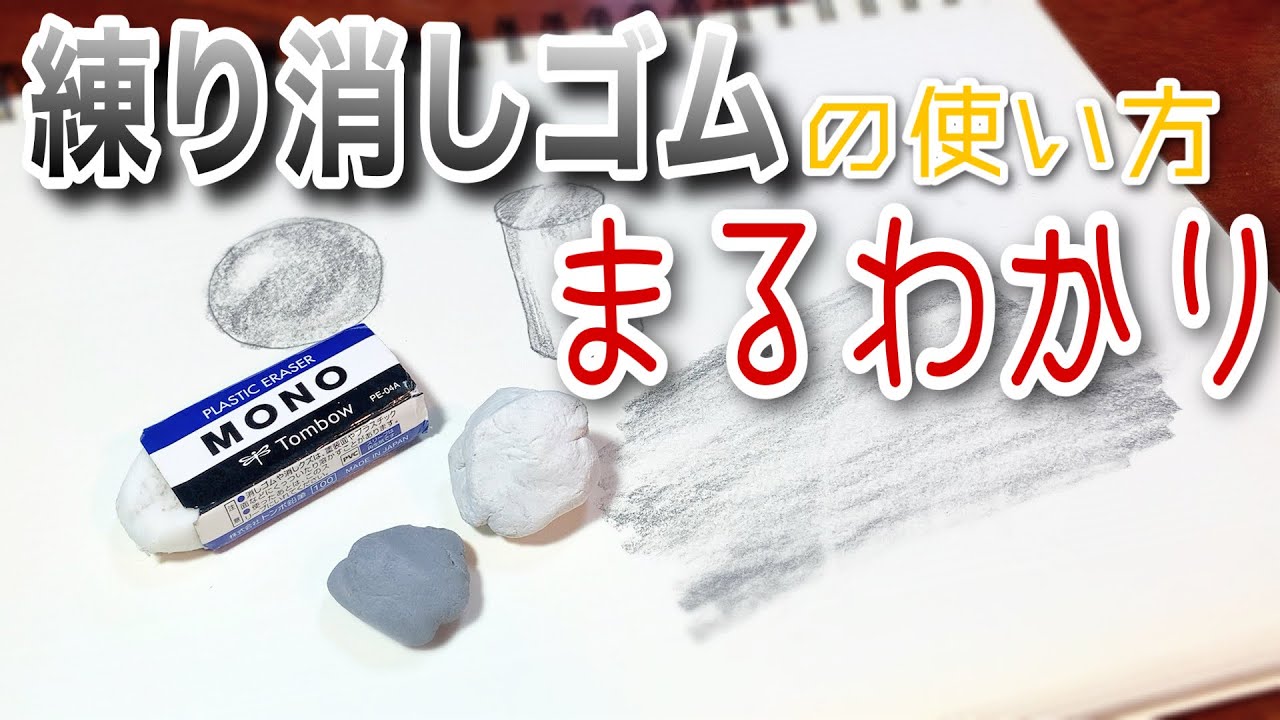
Recreating the authentic eraser shavings method requires attention to material composition rather than brute force. Modern erasers fall broadly into two categories: natural vulcanized rubber and plasticized polyvinyl chloride (PVC). Traditional natural rubber crumbles into brittle, dry specks that refuse to bind. Successful DIY putty requires high-polymer plastic erasers, such as the classic Tombow Mono or Pentel Ain, which contain plasticizers that soften under hand warmth.
To achieve functional kneading consistency, the assembly follows distinct mechanical steps:
First, generate the base material. Rubbing a dense PVC block across clean, tooth-heavy sketch paper yields uniform, elongated shavings rather than powdery dust. Second, gather the debris onto a smooth, non-porous surface. Third, apply firm, rotational pressure with the pad of the thumb. Within 60 to 90 seconds, thermal energy softens the synthetic resins, causing loose curls to cohere into a graying pellet.
At this juncture, most amateur attempts fail due to dry fragmentation. Counteracting brittleness requires a minute binding agent. Introducing a half-drop of liquid hand soap, skin lotion, or non-toxic liquid glue introduces enough synthetic lubrication to bridge the micro-gaps between polymer chains. Continued stretching, folding, and kneading across 5 to 10 minutes produces a pliable, stretchable composite capable of absorbing graphite without crumbling.
Technical Comparison: DIY Desk Putty vs. Professional Art Tools
While DIY art supplies carry genuine sentimental value, their functional performance diverges sharply from factory-produced kneaded rubber designed for academic drafting. Artists relying on the graphite lifting technique require specific chemical purity that playground hacks cannot match.
| Performance Attribute | Schoolyard DIY Eraser Putty | Commercial Artist Kneaded Rubber |
|---|---|---|
| Base Raw Material | Compressed PVC shavings & skin oils | Vulcanized vegetable oil & synthetic elastomers |
| Tensile Elasticity | Moderate; snaps under rapid elongation | High; stretches cleanly into fine points |
| Substrate Residue Risk | High; leaves grease spots and binders | Zero; non-abrasive, residue-free lift |
| Material Cost / Effort | $0.50, $1.50 / 15 minutes labor | $1.20, $3.00 off-the-shelf |
| Primary Ideal Use | Tactile fidgeting, novelty crafting | Charcoal blending, delicate highlights |
Professional kneaded rubber uses unvulcanized natural rubber combined with carbon black or vegetable oil plasticizers. Instead of rubbing pigment away through surface abrasion, it works via physical adhesion: artists dab the tapered point directly against paper to lift charcoal, pastel, or graphite particles without disturbing the underlying cotton fibers. DIY variations made with added hand lotions or cooking oils inevitably deposit trace lipids onto paper, creating water-repellent spots that ruin watercolor washes or archival drawings.
The 100-Yen Phenomenon and the DIY Craft Economy
The current wave of stationery crafting extends far beyond kneaded putty. Japanese discount chains like Daiso, Seria, and CanDo have transformed how everyday hobbies circulate online. In late 2024, Japanese media outlets highlighted how everyday consumers build creative micro-studios using entry-level stationery. The aforementioned video report from ITmedia underscored that for just 550 yen (roughly $3.60), hobbyists can acquire rubber blocks, tracing paper, specialized gouges, and stamp pads to execute intricate printmaking projects at home.
Platforms like YouTube Shorts, Instagram Reels, and TikTok provide the distribution engine for this movement. The appeal relies heavily on the tactile, ASMR-adjacent qualities of the craft: the rhythmic crunch of carving rubber, the silence of rolling eraser crumbs, and the high visual contrast of graphite lifting.
For young urban workers living in cramped apartments, high-end hobbies that demand expensive ventilation, heavy equipment, or large work surfaces are impractical. Low-cost stationery craft hacks deliver an accessible creative outlet. The materials sit on standard desks, cleanup takes seconds, and the financial barrier to entry is essentially nonexistent.
The Sensory Appeal of Retro School Supplies
Sociologists studying post-pandemic recreational habits note a decisive turn toward physical, sensory-rich hobbies among adults in their twenties and thirties. Constant exposure to digital screens has generated deep appreciation for simple, manual tasks that demand complete physical presence.
Kneading eraser putty occupies a unique place in this landscape. It functions simultaneously as an informal tactile sensory device and a low-stakes crafting medium. Unlike structured creative pursuits that carry performance anxiety, such as oil painting, ceramics, or digital illustration, kneading eraser shavings comes with zero expectation of artistic perfection. The medium is impermanent by nature. It can be pulled into sheets, rolled into spheres, pressed into mechanical keyboard crevices to clean debris, or folded over until saturated with pencil lead.
This tactile engagement explains why Japanese stationery manufacturers continue to report strong domestic and export sales for novelty erasers. While schools have increasingly incorporated tablets and digital styluses into curricula over the past decade, physical stationery sales have remained resilient. The mechanical feedback of pencil lead dragging across paper, coupled with the malleable qualities of an eraser, provides an authentic physical grounding that glass touchscreens cannot replicate.
Frequently Asked Questions (FAQ)
Q1: Can homemade kneaded erasers substitute for professional art erasers in sketchbooks?
A1: Homemade putty made from desk shavings works well for light graphite lifting on casual sketch paper, but it is not recommended for finished artwork. Improvised binders like hand creams, soaps, or skin oils transfer onto fine art paper, creating invisible grease marks that cause blotches when applying subsequent ink, watercolor, or charcoal layers.
Q2: Why do my DIY eraser shavings turn into brittle powder instead of sticking together?
A2: The base material is likely natural vulcanized rubber or a dust-free formulation containing high mineral filler content rather than flexible PVC. For successful cohesion, use standard soft high-polymer plastic erasers, gather long ribbon-style shavings, and apply firm, continuous thumb friction on a warm surface.
Q3: How can I restore a kneaded eraser that has dried out or stiffened over time?
A3: For manufactured kneaded erasers, repeated stretching and folding beneath warm hands will reactivate internal plasticizers. If working with DIY eraser putty that has stiffened, massaging in a single microscopic drop of vegetable glycerin or mild liquid soap restores flexibility without disintegrating the polymer structure.
What Lies Ahead for Nostalgic Stationery Crafting
The revival of classroom eraser crafts marks an intentional shift in how modern audiences value everyday tools. What corporate manufacturing lines originally designed as functional cleanup debris has been repeatedly repurposed by consumers into tools of tactile play and artistic expression.
As material costs rise and digital interfaces dominate daily work, the humble stationary kit remains remarkably democratizing. Whether carving rubber stamps for a few hundred yen or working pencil shavings into a pocket-sized stress reliever, these tactile rituals confirm that physical interaction retains enduring cultural power. Manual creativity requires neither expensive gear nor complex software, just a flat desk, a standard block of rubber, and a few minutes of patient, hands-on focus.