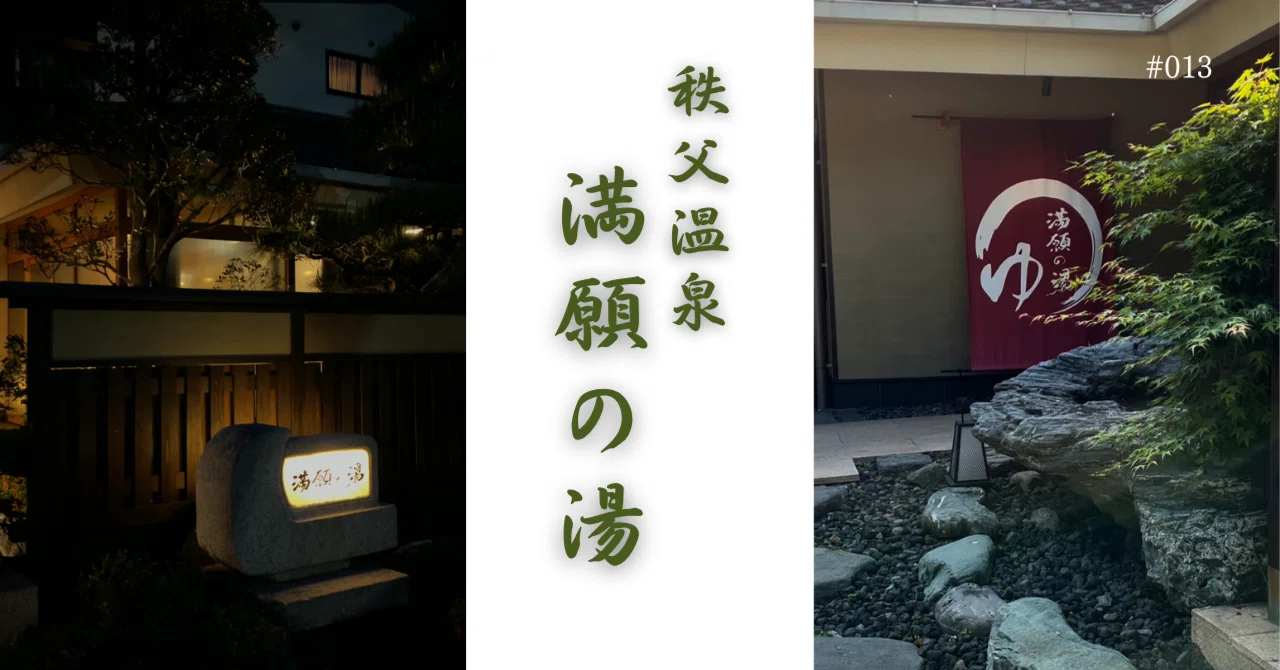
The Rise of Chichibu Day Escapes: Why Mangan-no-Yu Is Surging in Popularity

Crowded commuter platforms in Shinjuku and Ikebukuro tell the same story every Friday evening: exhausted urban workers desperate for an accessible breathing space that does not require an expensive overnight booking. While classic resort towns like Hakone and Atami continue to battle overtourism and surging room rates, a quieter corner of northwestern Saitama Prefecture has emerged as the definitive antidote. Tucked inside the Oku-Nagatoro gorge along the clear waters of the Akahira River, Chichibu Onsen Mangan-no-Yu has seen an influx of day-trippers seeking thermal waters and forested river ravines without the crowds. As documented in a classic dispatch by the 産経新聞 Report on regional hot spring retreats, this secluded bathhouse in Minano town has long held a cult following among nature lovers who prize water quality and tranquil gorge vistas over commercialized resort corridors.
The facility stands out for a singular geological asset: a genuine 100% natural hot spring source that delivers exceptional alkaline properties directly into open-air baths perched above a cascading mountain waterfall. For urban professionals balancing demanding workloads, this pocket of Saitama wellness travel represents an easy escape reachable in under two hours via the Seibu Chichibu Line or Chichibu Railway. What was once a regional secret among local hikers and pilgrims visiting the Chichibu 34 Kannon Sanctuary has transformed into a premier Tokyo weekend getaway, where travelers recharge against granite cliffs and lush seasonal tree canopies.
📌 Quick Summary:
- The Water Chemistry: Mangan-no-Yu taps an unusually high-alkaline hot spring reservoir with a pH reading approaching 10.0, producing signature smooth skin waters that act as a natural mineral cleanser.
- The Natural Setting: The bathhouse sits inside the Oku-Nagatoro gorge, positioning its open-air bath directly above a mountain waterfall surrounded by dense maples and river mist.
- The Transit Advantage: Located in Minano town near Nagatoro, visitors can reach the baths via a short bus or taxi connection from Chichibu Railway stations, making it a frictionless day escape from central Tokyo.
The Hydrogeology of Oku-Nagatoro’s High-Alkaline Waters
Thermal water enthusiasts classify onsen by temperature, mineral concentrations, and pH levels. Most hot spring facilities around the Kanto basin feature neutral or mildly acidic waters heavy in chlorides, which can dry sensitive skin during prolonged exposure. Mangan-no-Yu offers a distinct hydrochemical profile. Sourced directly from deep subterranean rock strata in the Oku-Nagatoro gorge, the water emerges at a natural pH ranging between 9.3 and 10.0, placing it among the highest alkalinity ratings in eastern Japan.
This high alkalinity triggers a saponification process upon contact with human skin. The water gently emulsifies surface sebum and lifts away dead epidermal cells, producing the tactile sensation travelers describe as toromi, a thick, velvet-like slip. Soak in these smooth skin waters for ten minutes, and the skin emerges noticeably softer and hydrated. Unlike municipal facilities that dilute their baths with municipal tap supply, Mangan-no-Yu pumps its mineral water directly to the tubs, preserving high concentrations of metasilicic acid, carbonate ions, and hydrogen carbonate that support muscle recovery and joint mobility after intense physical exertion.
Inside the Open-Air Bath Facing the Waterfall
Water quality brings bathers through the door, but the architectural orientation keeps them returning season after season. The facility’s signature feature is its outdoor bath section, known as the Rotenburo, which projects directly toward the rugged Akahira River valley. Bathers step into heated mineral rock tubs suspended right above a natural, roaring waterfall.
The sensory contrast is immediate. The ambient soundscape is dominated by falling water, rustling oak leaves, and birdsong echoing off damp river stone rather than expressway traffic. During the cooler months, billowing clouds of steam rise from the surface of the pool, catching filtered sunlight through the valley canopy. The facility operates alternating male and female baths, the stone-lined "Mangan no Yu" bath and the cypress-accented wooden deck, each positioned to give unhindered sightlines of the falls below. In an era when modern spa complexes frequently build tall privacy screens that obscure regional geography, this open cliff-edge orientation offers an authentic connection to Saitama’s mountain geography.
Comparing Kanto Day-Trip Hot Springs: Water, Access, and Environment
Choosing a day escape around Greater Tokyo requires balancing travel time against bath authenticity and visitor congestion. The table below benchmarks Mangan-no-Yu against prominent regional alternatives across Saitama, Kanagawa, and Gunma prefectures.
| Bath Facility | Spring Character & pH | Visual Setting | Average Day Crowds |
|---|---|---|---|
| Chichibu Mangan-no-Yu (Minano) | High-Alkaline Simple Spring (pH 9.3, 10.0) | Gorge cliffs & mountain waterfall | Moderate on weekdays; peaks during foliage season |
| Hakone-Yumoto Public Baths (Kanagawa) | Chloride / Neutral Spring (pH 7.2, 8.0) | Urban river valley & townscape | Extremely heavy throughout the week |
| Ikaho Stone Step Baths (Gunma) | Iron-rich Sulfate Spring (pH 6.4) | Historic mountain stone stairway | Heavy on weekends; moderate weekdays |
| Omiya Natural Super Sentō (Saitama) | Sodium Chloride "Fossil" Spring (pH 7.8) | Enclosed urban courtyard / faux rockwork | Consistently crowded evening peaks |
From River Boating to Thermal Waters: The Nagatoro Day Escape Loop
Travelers rarely visit Mangan-no-Yu in isolation. The bathhouse forms the natural culmination of a wider Minano day trip combined with Nagatoro's geological landmarks. A typical itinerary begins at the famous Nagatoro Iwadatami, massive crystalline schist rocks lining the Arakawa River that resemble layered tatami mats. Visitors take traditional wooden flat-bottom boats guided by boatmen with bamboo poles through the rapids, taking in views of cliff faces shaped over millions of years.
From Nagatoro Station, travelers move westward along the foothills toward Minano. Hiking paths along Mount Hodo or pilgrimages to nearby Chichibu temples can take four to five hours on foot, making the hot spring a welcome reward. After a soak, bathers head to the facility's tatami rest hall for local buckwheat soba made with groundwater from the Chichibu range, paired with grilled sweetfish (ayu) and deep-fried potato skewers glazed with regional walnut miso (miso-poteto). This seamless blend of mountain adventure, culinary tradition, and therapeutic soaking transforms a basic afternoon excursion into a comprehensive wellness break.
The Autumn Foliage Surge and Winter Solitude
The visual character of the Oku-Nagatoro gorge changes dramatically across the calendar. From mid-October through late November, the gorge transforms into a celebrated autumn foliage onsen destination. The Japanese maples, beeches, and wild mountain sumacs lining the cliff edges burst into crimson, orange, and gold, framing the waterfall beneath a dense canopy of color. Outdoor bathers soak in steaming mineral pools while cool autumn breezes carry fallen leaves into the river gorge below.
Winter brings its own distinct appeal. When freezing temperatures descend upon the Chichibu mountains, the moisture rising from the waterfall and river rocks occasionally freezes into delicate ice formations along the gorge edges. The contrast between freezing mountain air and 41°C mineral water provides an invigorating hydrotherapy experience that stimulates circulation and relieves chronic tension. For travelers who prefer quiet contemplation over bustling festival seasons, January and February offer peaceful visits marked by empty baths and crisp mountain air.
Transit Logistics: Reaching Minano from Central Tokyo
Navigating out of the capital into rural Saitama is straightforward with basic planning. From Ikebukuro Station, board the Seibu Red Arrow or Laview Limited Express to Seibu-Chichibu Station, a trip that takes approximately 78 to 82 minutes. From there, take a three-minute stroll to Ohanabatake Station and transfer to the Chichibu Railway toward Kumagaya, getting off at Minano Station.
From Minano Station, a municipal bus or local shuttle runs toward the bathhouse gates, taking roughly 15 minutes. Taxis wait outside the station ticket gate for travelers on tighter schedules. Drivers can take the Kan-Etsu Expressway to the Hanazono Interchange, then follow the Yorii-Chichibu Underpass and National Route 140 toward Minano. Parking is free on-site, though arrival before 11:30 AM on weekends is recommended to beat the lunch crowd and secure a prime parking spot.
Frequently Asked Questions (FAQ)
Q1: What are the admission fees and operating hours for Chichibu Onsen Mangan-no-Yu?
A1: Standard adult admission typically ranges from ¥900 to ¥1,100, depending on whether you visit on a weekday or during weekends and national holidays. The facility generally opens from 10:00 AM to 8:00 PM, with last entry permitted 30 minutes before closing.
Q2: Can guests with tattoos enter the communal baths?
A2: Traditional Japanese onsen rules apply here. Patrons with visible tattoos are typically requested to cover them with waterproof patches or flesh-colored tape before entering the common bathing areas to ensure compliance with facility regulations.
Q3: Is Mangan-no-Yu suitable for families with young children?
A3: Yes. The facility features spacious indoor communal baths, open-air baths, and comfortable tatami dining rooms. Keep in mind that high-alkaline water makes stone surfaces quite slippery, so children should be guided carefully along pool edges.
Planning Your Chichibu Wellness Journey
The enduring popularity of Chichibu Onsen Mangan-no-Yu reflects a broader shift in Japanese domestic travel. Rather than spending half a weekend driving through highway traffic to distant coastal resorts, city dwellers are choosing compact, restorative journeys closer to home. High alkalinity, pure spring sourcing, and an unspoiled waterfall setting make this Saitama valley a standout destination for clean air, natural hot springs, and river scenery.
Pack a daypack with a hand towel, hop on the express train out of Ikebukuro, and head toward the Oku-Nagatoro gorge. Whether bathed in amber autumn foliage or wrapped in winter steam, Mangan-no-Yu delivers an authentic slice of Japanese bath culture right when city life demands it most.