The Secret Behind Spirited Away’s 'Oatari': How an Unplanned Character Created a Global Phenomenon
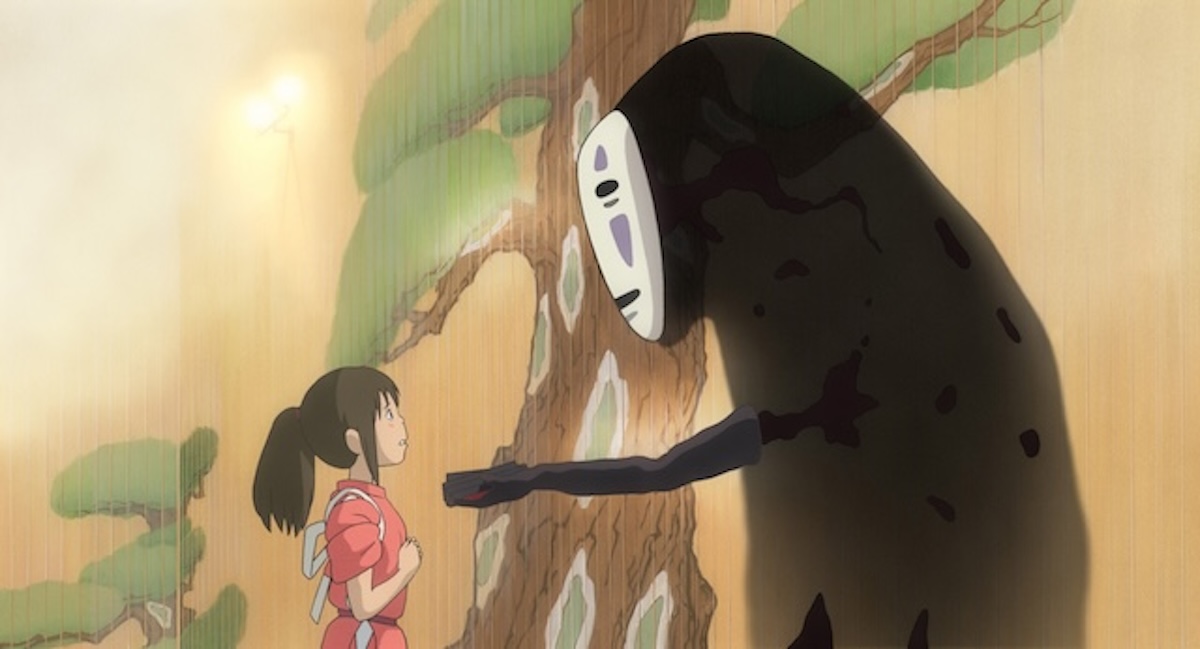
Every visitor queuing at Aichi’s Ghibli Park in 2026 recognizes the scene immediately: a burgundy train car where visitors wait up to an hour to sit beside a shadowy, masked figure staring out the window. Yet that quiet phantom, No-Face (Kaonashi), almost never existed as a speaking role. As detailed in an archival analysis by the Real Sound report, director Hayao Miyazaki initially drew the cloaked creature as an anonymous bystander standing on the bridge leading into the bathhouse, intending him as nothing more than set dressing.
The decision to elevate that background sketch into the central antagonist and spiritual foil of Sen to Chihiro no Kamikakushi (Spirited Away) saved the production from creative collapse. It also catalyzed an unprecedented commercial triumph, a true oatari (jackpot) that transformed Studio Ghibli from an artisanal Tokyo outfit into an untouchable global institution.
📌 Key Takeaways:
- The Production Save: Facing a ballooning three-hour script in mid-2000, Hayao Miyazaki promoted a background extra into Chihiro’s primary foil to resolve the story within theatrical time limits.
- The Commercial Explosion: The narrative shift propelled the film to an initial ¥30.4 billion domestic run, later expanding to ¥31.68 billion and an Oscar win that solidified Ghibli's global footprint.
- The Cultural Endurance: Decades after release, the character drives unprecedented international returns, including a record-breaking 2019 theatrical debut in China and anchor exhibits at Ghibli Park.
The Storyboard Crisis That Rescued Hayao Miyazaki’s Blueprint
By the summer of 2000, production inside Studio Ghibli’s Koganei headquarters had ground to a halt. Miyazaki had initially conceived Spirited Away as an expansive confrontation between ten-year-old Chihiro and Yubaba, the tyrannical proprietress of the supernatural bathhouse. The original script mapped out Chihiro’s climb through the bathhouse hierarchy, culminating in a sprawling battle to free her transformed parents from the spirit realm’s pigsties.
There was just one fatal problem: pacing. When longtime producer Toshio Suzuki calculated the length of the storyboarded sequences, the runtime easily eclipsed three hours. Studio Ghibli faced strict delivery commitments for a July 2001 domestic release. Cutting the narrative down without destroying Chihiro’s emotional coming-of-age arc seemed impossible under standard storyboarding routines.
Miyazaki refused to compromise on the film's psychological weight. He knew the young protagonist needed a mirror rather than another mustache-twirling villain. While flipping through discarded background character sheets, his gaze settled on a blank, semi-translucent figure wearing a traditional Noh-style theater mask. The director grabbed his pencil, scratched out the bathhouse union subplots, and decided that this mute observer would follow Chihiro inside.
Promoting an Extra: The Spontaneous Creation of No-Face
Turning Kaonashi into a narrative pillar altered the entire metabolic rhythm of the film. Instead of an external villain Chihiro had to physically defeat, Miyazaki introduced an entity driven by hollow consumerism and desperate need for validation.
Production notes from the era reveal that the animator assigned to early bridge sequences had simply drawn the cloaked figure to balance the visual composition against the massive red gate. Once Miyazaki promoted the character, the production team scrambled to establish his visual language. Voice actor Akio Nakamura was brought in to deliver haunting, guttural clicks and groans rather than scripted dialogue, emphasizing the character’s lack of an innate identity.
In Suzuki’s production logs, this pivot marks the moment Spirited Away shifted from a conventional children’s fantasy into an indictment of modern transactional society. Kaonashi enters the bathhouse, learns that the staff bows exclusively to raw gold, and attempts to purchase Chihiro’s affection using the same corrupting currency. Chihiro's refusal to accept his conjured mud-gold strips the creature of his power, prompting a grotesque, mud-spewing rampage through the dining halls. By resolving the conflict through empathy and boundaries rather than combat, Miyazaki condensed sixty minutes of cumbersome corporate plotting into a tight, poetic sequence that preserved the production deadline.
| Release Milestone | Box Office / Performance | Industry Impact |
|---|---|---|
| Japan Premiere (2001) | ¥30.4B (later updated to ¥31.68B) | Overtook Titanic to become Japan’s all-time box office record holder for 19 years. |
| Academy Awards (2003) | Best Animated Feature Winner | First non-English-language hand-drawn production to claim the Oscar category. |
| China Theatrical Release (2019) | 300M RMB (¥4.7B) in 8 days | Crushed concurrent Hollywood releases, demonstrating the timeless market value of Ghibli IP. |
| Ghibli Park & Global Stage Run (2022, 2026) | Sell-out runs across Tokyo, London, and North America | Cemented the Sixth Station train scene as the primary visual shorthand for the studio. |
Inside the Box Office Juggernaut: From Tokyo to Beijing
The improvisational shift paid off instantly upon release in July 2001. Domestic theater operators in Japan scrambled to add midnight screenings as word spread that Miyazaki had crafted something fundamentally different from Princess Mononoke. The film stayed in Japanese cinemas for over a year, drawing 23.5 million admissions in a country of 127 million people.
International prestige followed. When the film won the Golden Bear at the 2002 Berlin International Film Festival and subsequently took home the Academy Award for Best Animated Feature in 2003, it exposed Western critics to a visual sophistication that broke Disney's monopoly on prestige animation.
The film’s commercial reach extended far beyond its initial run. Mainland China denied the movie a formal theatrical release for nearly two decades due to strict quota systems and geopolitical friction. When regulators finally approved a wide theatrical release in June 2019, the response was immediate. According to official ticketing records, the film grossed over 300 million RMB (approximately ¥4.7 billion) across its first eight days, easily outpacing Disney-Pixar’s concurrently running Toy Story 4. Chinese moviegoers who grew up watching pirated VCDs packed theaters to experience the bathhouse on the big screen, proving that the film's resonance did not fade with time.
The Architecture of Desire in Yubaba’s Bathhouse Setting
Miyazaki set the bulk of the narrative inside the Aburaya, a bustling bathhouse catering to exhausted spirits and river gods. Visually, the building is an architectural collision of traditional Japanese timber construction, mezzanine baths, and Victorian-style Western interiors where Yubaba hoards her personal wealth.
The bathhouse functions as an engine of relentless labor. Workers exchange their true names for employment contracts, gradually forgetting who they were before stepping through the threshold. When Kaonashi enters this ecosystem, he acts as an accelerant. He consumes the bathhouse’s food, mimics the voice of a swallowed frog attendant, and generates mountains of faux gold that send the bathhouse staff into a frenzy of groveling greed.
[Bathhouse Workers] <--- Bribed by False Gold <--- [Kaonashi (Unchecked Consumption)]
v v
[Loss of Identity] <--- Rejected by Chihiro's Empathy <--- [Clarity / Sixth Station Train]
This sequence provides the film's moral climax. Chihiro gives Kaonashi a piece of the emetic herbal dumpling gifted by the River Spirit, forcing him to vomit out the attendants, the gold, and the toxic bile he ingested within the walls. By the time the two board the sea railway together, Kaonashi is once again silent, sitting docilely beside Chihiro as water ripples across the submerged tracks toward Swamp Bottom.
From Celluloid Anomaly to Ghibli Park’s Main Attraction
Studio Ghibli's physical footprint across the globe demonstrates how completely this accidental character eclipses his origins. When Ghibli Park opened its Grand Warehouse in Aichi Prefecture, planners prioritized iconic moments that invited tactile engagement. Rather than building elaborate machinery around Yubaba's penthouse office or Haku's dragon form, designers spent significant capital fabricating a 1:1 recreation of the red-velvet train compartment from the Sixth Station sequence.
Visitors wait in sprawling lines inside the park's cinema gallery solely to take a single photograph seated beside the life-sized, fabric-draped sculpture of No-Face. The silent passenger who was almost cut from the film's final act has become Ghibli’s single most profitable piece of visual iconography, adorning everything from high-end ceramic merchandise to viral fashion collaborations.
Online communities on platforms like Reddit and X frequently point out the paradox: an entity meant to represent the tragedy of having no personality has become the studio's most recognizable ambassador. Without Toshio Suzuki pressing Miyazaki to shave an hour off the bathhouse rebellion, the quiet passenger on that train would have spent eternity as an uncredited shadow leaning over a red wooden railing.
Frequently Asked Questions
What does the Japanese phrase "Oatari" mean regarding Spirited Away?
"Oatari" (大当たり) translates to hitting a jackpot, scoring a massive triumph, or striking gold. In Japanese film journalism, critics and industry executives frequently use the term to describe Spirited Away's unprecedented box office run, which shattered records in Japan and established Studio Ghibli as a global commercial powerhouse.
Why was No-Face almost excluded from the final version of the film?
Hayao Miyazaki originally conceived Kaonashi as a visual background element to occupy space on the bridge entering the bathhouse. Facing an unwieldy three-hour script that centered on Chihiro battling Yubaba's labor contracts, Miyazaki searched his early sketches for an element that could simplify the narrative, choosing to transform the background phantom into the film’s central emotional foil.
How much did Spirited Away earn during its delayed China release?
When Spirited Away secured its official theatrical debut in mainland China in June 2019, eighteen years after its Japanese premiere, it grossed over 300 million RMB (roughly ¥4.7 billion or $42 million USD) within its first eight days of release, outperforming major contemporary Hollywood releases during the same window.
The Enduring Power of Instinctive Storytelling
Studio Ghibli's creative process has always defied modern commercial filmmaking standards. Hollywood animation relies on exhaustive script treatments, pre-visualization passes, and market-tested focus groups designed to remove narrative ambiguity. Hayao Miyazaki began animating Spirited Away before completing the third act, trusting his instincts to guide Chihiro through the bathhouse labyrinth as production unfolded around him.
Elevating No-Face from a static background drawing into an iconic phantom was an act of raw necessity born under crushing deadline pressure. By choosing psychological ambiguity over an easy villainous showdown, Miyazaki unlocked an emotional resonance that box office algorithms cannot reverse-engineer. More than two decades after its premiere, the silent shadow sitting on that submerged train remains a monument to what happens when master animators abandon rigid blueprints in pursuit of artistic truth.