The Secret Origin of Kappa Sushi’s Express Delivery Chime Revealed
Sit inside any branch of Kappa Sushi across Japan, tap an order of fresh fatty tuna or seasonal red crab into the tabletop tablet, and within minutes, an electric sound rings out. It is a crisp, bright, unmistakable audio cue followed immediately by a miniature white bullet train sliding down an elevated plastic track to your booth. As documented by dining reporters in a Yahoo!ニュース Report, that high-tempo chime cut through the dinner rush as families scrambled to grab platters of toro butsu before sending the automated tray back to the kitchen.
For millions of diners, this miniature sonic fanfare has become synonymous with eating out. It turns routine fast-casual dining into a brief, theatrical performance. Yet behind that familiar jingle lies a calculated mix of transit nostalgia, acoustic psychology, and strict kitchen ergonomics designed to speed up operations in one of Japan's most cutthroat restaurant sectors.
📌 Key Takeaways:
- The Transit Connection: Kappa Sushi deliberately styled its express delivery track after the Shinkansen, borrowing the acoustic philosophy of Japanese train stations to trigger immediate recognition.
- Operational Efficiency: The high-frequency chime cuts through ambient restaurant chatter at roughly 75 to 80 decibels, signaling diners to retrieve their plates and clear the single-lane track in under 15 seconds.
- Corporate Modernization: Under parent company Colowide and Kappa Create CEO Go Yamasumi, the chain turned this acoustic cue into a proprietary brand asset alongside digital ordering tablets and high-profile brand collaborations.
The Sonic Architecture of Japan’s Fast-Track Dining
Traditional kaitenzushi built its fortune on passive discovery. Plates circled perpetually on cold mechanical belts, leaving diners to watch, wait, and grab whatever passed by. By the late 2000s, that model hit severe operational walls: food waste surged, freshness decayed under open air, and custom orders clogged kitchen communication.
Kappa Create solved this bottleneck by splitting the conveyor belt sushi delivery system into two distinct tiers. The lower belt carried standard rotating stock, while an upper high-speed rail, the tokkyu lane (express lane), carried customized orders straight from the kitchen prep counter to specific booths.
Speed created a physical bottleneck. If a party of four ignored their arrival while chatting, subsequent orders down the line were halted. The kitchen needed an assertive, non-verbal interruption. Ambient restaurant noise in busy dining rooms hovers around 68 to 72 decibels, dominated by clattering plates, simmering broth, and background chatter. Engineers introduced a touchscreen ordering audio cue calibrated with sharp attack transients and a distinct melodic lift. It pierced background clatter without startling infants or grating on staff during a six-hour shift.
Why the Order Alert Mimics the Shinkansen Bullet Train
The chime sounds like a Japanese bullet train arrival melody because it was conceptualized to complete an illusion. When Kappa Sushi introduced miniature high-speed trays modeled directly on the iconic E5 series and N700 Shinkansen silhouettes, visual branding alone felt incomplete.
Japan possesses one of the world's most sophisticated cultures of public acoustic cues, known locally as hassha merodi (train departure and arrival melodies). Pioneered by railway operators in the late 1980s, these micro-tunes soothe commuters while prompting instinctive movement. By using a bright, pentatonic sequence resembling classic railway chimes, Kappa Sushi tapped into conditioned behavioral memory.
When customers hear that ascending electronic cadence, their brains match the chime with high-speed transit. The miniature vehicle arrives carrying fresh nigiri, the chime hits its final resolve, and customers instinctively lean forward. It transforms an automated delivery mechanism into a miniature transit event right at table level.
Operational Metrics Across Conveyor Belt Sushi Chains
Acoustic signaling is not uniform across Japan's major kaitenzushi chains. Each operator balances table alert volumes, track mechanics, and customer actions differently to maintain table turnover rates.
| Brand & Delivery Concept | Acoustic Cue Profile | Target Clearance Window | Primary Fleet Mechanism |
|---|---|---|---|
| Kappa Sushi (Express Track) | High-pitched Shinkansen arrival melody with rapid synth chime | 10, 15 seconds | Miniature Shinkansen train car model on dedicated mono-rail |
| Sushiro (Auto-Straight Lane) | Intermittent vocal alert paired with two-tone bell sequence | 15, 20 seconds | Belt-diverter lane routing plates into designated holding zones |
| Kura Sushi (Straight Rail Express) | Synthetic descending ping followed by digital voice alert | 12, 18 seconds | High-velocity dual track with protective dome containers |
| Hama Sushi (Straight Express Lane) | Minimalist melodic trill via tablet speaker | 10, 12 seconds | Flat-bed motorized tray stopping directly adjacent to table |

Colowide’s Automation Push and Modern Acoustic Consistency
When Colowide Group acquired Kappa Create in 2014, the restaurant chain faced intense balance-sheet scrutiny and declining brand loyalty. The new leadership launched a multi-billion-yen capital investment plan aimed at standardizing store equipment, streamlining line-cook operations, and updating physical tracks.
Under current Representative Director and President Go Yamasumi, the chain preserved the express lane sound while modernizing the hardware producing it. Early iterations played the chime through low-fidelity speakers tucked beneath the plastic track, which frequently degraded into muffled, buzzing tones. During comprehensive restaurant renovations between 2021 and 2025, audio hardware shifted directly into the centralized touchscreens.
This change gave kitchen managers granular control over acoustic levels. If a corner booth sat empty, its arrival speakers muted automatically. When dinner rushes peaked at 7:30 PM, software slightly elevated the audio frequency to cut through room reverberation. The chime became an integrated component of Colowide’s back-of-house automated logistics, synchronizing order dispatch timers with real-time station alerts.
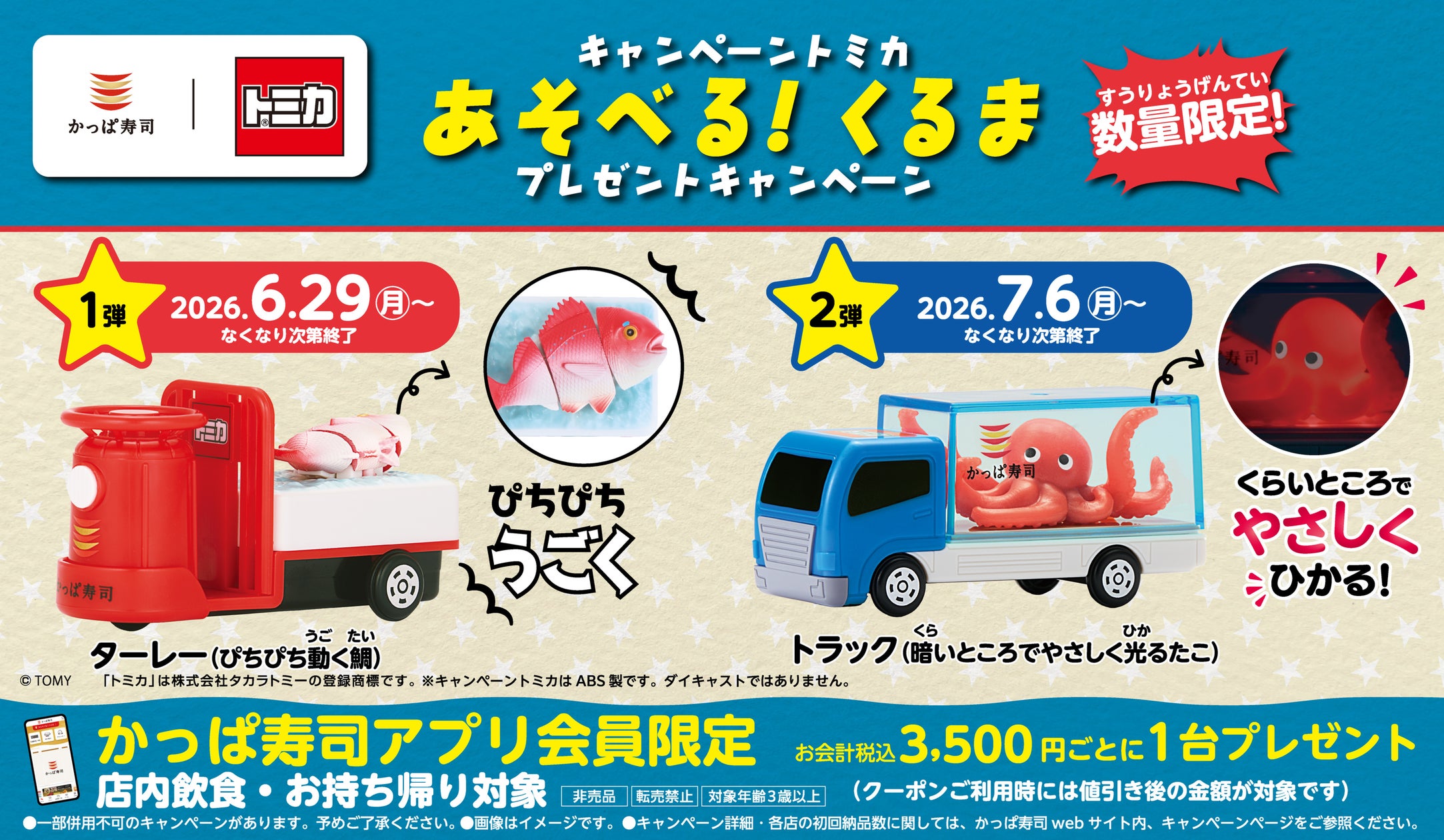
The brand bolstered this train-centric identity through pop-culture campaigns. In June 2026, Kappa Create partnered with Takara Tomy to release custom Tomica miniature die-cast vehicles shaped like moving sushi platters, directly targeting the children who treat the express lane chime as entertainment. Similar creative campaigns, including partnerships with digital animation creators and theatrical anime rollouts throughout 2026, routinely frame the express lane as an interactive playground rather than simple food distribution.
The Sensory Science Behind Pavlovian Table Cues
Sound alters how food tastes. Research across hospitality sound design demonstrates that high-frequency acoustic cues enhance perceived freshness, crispness, and service speed. At Kappa Sushi, that burst of sound acts as a sensory primer.
When diners hear the track's notification melody, dopamine spikes before they touch their chopsticks. Diners stop reading the menu, turn toward the track, and watch their food glide to a halt. This brief ceremony makes a ¥110 to ¥330 dish feel deliberate and personalized rather than mass-produced on an industrial assembly line.
Crucially, the chime creates a collective social feedback loop. One table places an order; their express train races down the corridor with its cheerful jingle; neighboring booths glance up, notice the steaming bowl of ramen or glistening salmon nigiri, and pick up their own touchscreens to order. The sound serves as an ambient, recurring commercial broadcast inside the dining room.
Frequently Asked Questions (FAQ)
Q1: Why does Kappa Sushi use a bullet train instead of an ordinary conveyor belt?
A1: Dedicated express lanes eliminate food waste and reduce delivery times down to under 60 seconds from the chef's counter. The miniature Shinkansen design turns dinner into visual entertainment for families while ensuring custom, high-priced dishes reach the correct party without being taken by other diners on a shared belt.
Q2: Can diners lower the volume of the arrival chime at their booth?
A2: No. While the centralized system dynamically balances restaurant decibel levels, customers cannot manually mute the track's arrival melody. The chime serves an essential operational function, alerting guests to retrieve their food so the express vehicle can return to the kitchen track without causing traffic jams.
Q3: Is the Kappa Sushi express sound an authentic Japanese train melody?
A3: It is an original composition commissioned for restaurant automation, not an exact licensed JR station departure chime. However, it was intentionally composed in the style of Japanese railway sound design, using identical electronic synth tones and ascending major intervals to evoke the familiar feeling of an arriving bullet train.
The Cultural Staying Power of Tabletop Soundscapes
Restaurant design often obsesses over lighting, upholstery, and plating aesthetics, treating ambient noise as an accidental byproduct. Kappa Sushi took the opposite path. By turning an operational requirement, clearing express tracks quickly, into an homage to Japan's high-speed rail culture, the chain created an auditory trademark recognized by diners nationwide.
That ascending electronic melody does more than notify a customer that their tuna is ready. It orchestrates table movement, boosts kitchen efficiency, and reinforces brand identity without a single word of advertising. Long after the meal ends, that brief chime remains the enduring sonic signature of Japan’s automated dining experience.