The Silent Balloon Hack: Why Everyone Is Ditching Needles for Duct Tape

Every parent, venue manager, and event coordinator knows the grim ritual of 11:00 PM cleanup. The music fades, guests leave, and what remains is an archway of three hundred inflated latex balloons that must fit into trash bags before midnight. For decades, the standard disposal method resembled a frantic indoor fireworks show. Workers brandished pushpins, forks, or safety pins, bracing for the inevitable, ear-splitting explosions that scatter shredded rubber across banquet floors.
That chaotic routine is disappearing. A silent balloon pop hack relying on ordinary adhesive tape has swept hospitality circles, viral classroom demonstrations, and sensory-friendly event groups. By placing a small piece of pressure-sensitive tape over the balloon's rubber skin before driving a pin through the center, cleaners are deflating full event displays without generating a single sharp decibel. What looks like a magic trick to party hosts is actually practical materials science solving a legitimate safety concern.
📌 Key Takeaways:
- Acoustic Risk: A ruptured party balloon generates peak impulse noise between 154 dB and 168 dB, exceeding the threshold of unsuppressed gunfire and posing real risks of pediatric auditory trauma.
- The Adhesive Mechanism: Scotch or duct tape prevents catastrophic crack propagation by redirecting latex surface tension across the adhesive backing, permitting smooth puncture without popping.
- Event Protocols: Professional venue crews and schools now mandate silent deflation strategies to accommodate phonophobia balloon fear and streamline post party cleanup hacks.
The Hearing Hazard Hiding in Everyday Party Cleanups
The acoustic violence of an exploding balloon is rarely taken as seriously as it should be. Most people treat the bang as a harmless jump-scare. Auditory research tells an entirely different story. In an acoustic study conducted by researchers at the University of Alberta, acoustic engineers measured the peak sound pressure levels generated by bursting ordinary party balloons under three conditions: popping them with a pin, crushing them until rupture, and blowing them up until they burst.
The results shocked occupational health advocates. Standard latex ruptures produced acoustic peaks ranging from 154 dB to 168 dB. For perspective, the National Institute for Occupational Safety and Health (NIOSH) caps maximum unprotected impulse exposure at 140 dB for adults. A single unshielded party pop exceeds the blast sound of a 12-gauge shotgun or an unbaffled Formula 1 engine at close range. For toddlers whose ear canals amplify high frequencies, repeated pops during ballroom tear-downs represent genuine acoustic hazards.
Beyond physical ear injury, the emotional toll is real. Phonophobia, the severe anxiety or fear of sudden loud sounds, affects thousands of children and neurodivergent adults. For anyone with hyperacusis or sensory processing sensitivity, clearing a party room the old-fashioned way creates an unbearable environment. The search for sensory friendly balloon popping alternatives has shifted from a quirky internet curiosity into standard operating procedure for inclusive community halls.
How Adhesive Physics Overcomes Latex Surface Tension
To understand why the scotch tape balloon trick works, one must look at how elastic polymers fail under stress. An inflated balloon stays intact because long-chain rubber polymers stretch across the perimeter, creating massive latex surface tension. When you pierce stretched rubber with a bare needle, the sharp point severs localized molecular bonds.
Under tension, that microscopic hole cannot hold its shape. Instead of letting air bleed out, the concentrated stress forces the hole to rip outward at supersonic speeds. The tear races around the balloon faster than the speed of sound in rubber, releasing pressurized air in a single, explosive pressure wave. That shockwave is the deafening pop you hear.
Applying adhesive radically transforms duct tape balloon physics. Pressure-sensitive adhesive binds directly to the exterior polymer web, redistributing the mechanical strain across the rigid tape backing. When a pin enters the center of the taped zone, the latex attempts to split outward, but the tape's film backing holds the perimeter firm. The tear stalls out completely. Because the rupture cannot expand, internal air vents through the pinhole in a gentle hiss, dropping ambient noise down to virtually undetectable levels.
Comparing Common Balloon Deflation Methods
Not every teardown allows for the exact same cleanup strategy. Factors like cleanup speed, tape residue, balloon quantities, and sensory requirements dictate which approach works best. The following breakdown compares standard teardown techniques across commercial and domestic environments.
| Deflation Technique | Peak Sound Level | Speed per 50 Units | Debris & Cleanup Factor |
|---|---|---|---|
| Bare Pin Puncture | 154, 168 dB (Violent impulse) | 45, 60 seconds | High; leaves scattered shrapnel across floors |
| Scotch Tape & Safety Pin | 32, 40 dB (Whisper/hiss) | 3, 4 minutes | Zero debris; rubber stays in single piece |
| Duct Tape Cross-Hatch | 30, 35 dB (Near silent) | 4, 5 minutes | Zero debris; handles high-pressure outdoor foil/latex |
| Neck Snip (Below Knot) | 45, 55 dB (Soft whoosh) | 1.5, 2 minutes | Moderate; requires careful grip to stop rockets |
| Knot Untying / Straw Vent | 0 dB (Ambient room sound) | 15, 20 minutes | Reusable items; highly labor-intensive |
The Step-by-Step Field Guide to Puncturing Without Popping
Executing this technique reliably requires understanding balloon topography. If you paste tape haphazardly across overstretched seams, you risk sudden failure. Balloon material is not uniform in thickness, and mechanical equilibrium varies across the sphere.
Begin by cutting 1-inch squares of transparent cellophane tape, packing tape, or heavy duct tape. Apply the square firmly onto the balloon, smoothing out air bubbles with your thumb. The ideal target sits along the side cheek, where curvature is uniform. If you want maximum insurance against tearing, position the tape near the darker crown at the very top or down beside the tied neck, where the latex is least stretched and possesses the thickest density.
Next, use a sharp implement. A standard pushpin, sewing needle, or safety pin works best. Drive the point squarely into the middle of the taped square, keeping your fingers clear. Do not slice sideways. Push directly inward, pull the needle out, and let internal pressure push air out through the puncture channel. Within ten to fifteen seconds, the balloon collapses into a quiet, deflated skin ready for the bin.
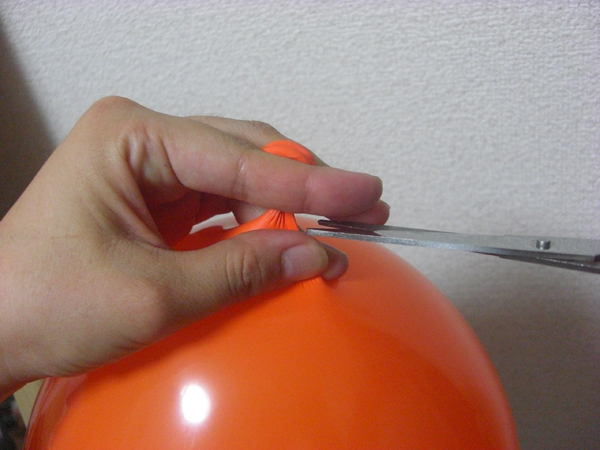
For high-volume event cleanups where taping hundreds of units individually takes too long, event staff combine this insight with scissor techniques. By gripping the rubber tightly right below the tied knot where the tension is lowest and making a tiny partial incision into the uninflated neck lip, air exhausts quietly without sending deflating rubber flying across the room.
Why Venue Directors and Schools Are Formalizing Low-Noise Protocols
The rise of low noise event cleanup is not merely an internet curiosity; it represents a functional workplace shift. Hotel banquet captains frequently field noise complaints from adjoining conference rooms when housekeeping starts bursting party decor late at night. In corporate retreat spaces and shared convention halls, sharp concussive noises can trigger building-wide security concerns or activate acoustic glass-break sensors.
School districts face similar pressures. Early childhood educators and special education coordinators routinely host assemblies featuring extensive balloon garlands. Dismantling those installations while students remain on campus historically caused major distress for children with sensory integration disorders. Adopting silent puncture methods eliminates classroom chaos while demonstrating empathy for neurodiverse students.
Pet-friendly venues and animal shelters hosting adoption fundraisers have embraced adhesive deflation for the same reason. Dogs register sound frequencies up to 45,000 Hz, far beyond human range, and experience acute physical pain from sudden high-amplitude pressure spikes. A barrage of popping balloons can cause severe canine distress or panic-induced bolting. A silent strip of duct tape eliminates that hazard entirely.
Frequently Asked Questions (FAQ)
Q1: Does this quiet deflation hack work on metallic Mylar foil balloons?
A1: Foil balloons do not hold the same elastic tension as latex, so they do not pop violently when pierced. However, you do not need tape for Mylar. To deflate foil balloons silently and keep them reusable, slide a standard drinking straw 6 to 10 inches up into the self-sealing inflation valve until you feel resistance give way, then gently press the air out through the straw.
Q2: Why did my balloon still pop even though I used Scotch tape?
A2: This failure typically happens for two reasons: the tape did not adhere fully to powdery latex surfaces, or the pin was inserted too close to the tape's outer edge. Always press the tape firmly to eliminate micro-gaps, and pierce directly through the dead center of the adhesive pad. Using low-grade, dried-out craft tape can also cause failures.
Q3: Which tape variety provides the highest safety margin against bursting?
A3: Heavy-duty cloth duct tape and reinforced fiberglass packing tape offer the greatest shear strength. Standard transparent cellophane tape works fine for standard 10-inch party balloons, but for overinflated 16-inch or 36-inch jumbo decorative balloons, cloth-backed duct tape provides superior structural reinforcement.
Q4: Can I reuse balloons deflated with the tape technique?
A4: No. Puncturing the rubber skin breaches structural integrity permanently. If you need to salvage expensive specialty latex balloons for future use, you must patiently untie the knot by loosening the neck loop with needle-nose pliers rather than puncturing the surface.
Smarter Deconstruction in Modern Event Design
Event planning discussions traditionally focus on setup: floral arches, uplighting, dramatic balloon cascades, and elaborate staging. The tear-down phase was treated as mindless manual labor. That attitude is fading as venue operations emphasize acoustic wellness, personal safety, and efficient room turnovers.
Mastering low-noise event deconstruction bridges the gap between celebration and consideration. Understanding how adhesive boundaries halt structural failure turns a previously miserable task into a fast, controlled process. As event managers pack their teardown kits, a roll of duct tape and a pack of safety pins have earned their permanent place right beside the trash bags.