The Tragic Death of Crayon Shin-chan's Creator: What Really Happened to Yoshito Usui
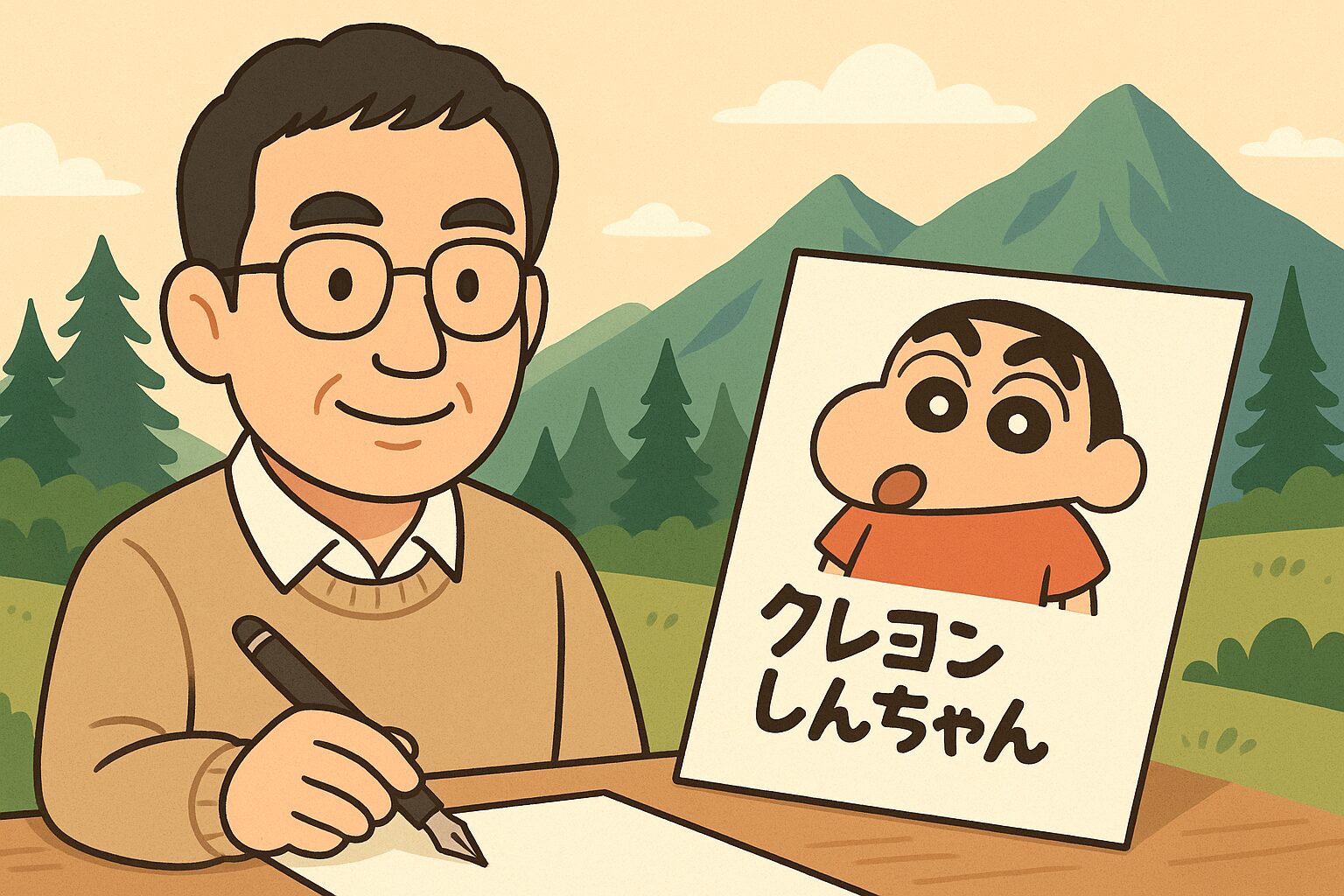
On the morning of September 11, 2009, Yoshito Usui stepped out of his suburban home in Kasukabe, Saitama Prefecture, carrying a light daypack and a digital camera. He told his wife he planned to spend the afternoon hiking the scenic trails of Mount Arafune, a table-topped peak straddling the border between Gunma and Nagano prefectures. Usui was fifty-one years old and the world-renowned creator of Crayon Shin-chan, a comedic manga juggernaut that had spawned an international anime franchise, box-office films, and millions in merchandise. He promised to return by evening. He never came home.
When Usui failed to catch his scheduled train back to Kasukabe, his family alerted local authorities, triggering an intensive week-long search across the rugged volcanic terrain of Gunma Prefecture. What followed was a media frenzy filled with wild internet speculation, followed by a somber forensic investigation that finally established the truth behind one of the anime industry's most shocking losses.
📌 Key Takeaways:
- The Core Ruling: Gunma Prefectural Police officially closed the case as an accidental fall, finding no evidence of foul play or suicide.
- The Critical Evidence: Usui’s recovered digital camera contained a final photograph taken directly over the precipice of the Tomoiwa cliff, showing he lost his footing while leaning out for a shot.
- Autopsy Findings: Medical examiners determined Usui died on the afternoon of September 11, 2009, from catastrophic trauma sustained in a fall of over 100 meters.
- The Franchise Legacy: Publisher Futabasha and Usui’s long-standing assistants continued the manga under the title New Crayon Shin-chan, keeping his satirical vision alive.
The Disappearance That Shook Japan’s Manga Industry
By 2009, Yoshito Usui’s subversive five-year-old protagonist, Shinnosuke Nohara, was a fixture of global pop culture. Translated into dozens of languages and broadcast in over thirty countries, the series brought irreverent slapstick and sharp social satire to mainstream audiences. Yet Usui himself lived a fiercely private life. He rarely appeared on television, avoided high-profile industry parties, and guarded his personal routine closely. Hiking served as his primary creative sanctuary away from the crushing deadlines of weekly serialization.
When Usui did not return on the evening of September 11, his wife filed a missing persons report the following morning. Local police in Saitama contacted authorities in Gunma and Nagano, focusing attention on Mount Arafune after Usui’s vehicle was discovered parked near the trailhead. The mountain is famous for its sheer flat summit, known as Tomoiwa, a towering volcanic plateau that drops abruptly into a dense, forested ravine. Mountain rescue squads, canine units, and police helicopters began sweeping the ridgeline under rapidly deteriorating weather conditions.
For seven days, search teams combated heavy fog and dense foliage along the mountain’s northern face. The absence of immediate clues spawned pervasive tabloid rumors in Tokyo, with some outlets falsely speculating that the artist had gone into hiding or taken his own life due to creative burnout. Those theories collapsed entirely once physical evidence emerged from the cliffside.
The Discovery at Tomoiwa Cliff and the Recovery Mission
On the morning of September 19, 2009, an amateur climber peering down through the mist from the edge of the Tomoiwa viewing platform spotted what appeared to be clothing resting amid the rocky scree roughly 120 meters below. The climber alerted local rangers at the Shimonita police station in Gunma Prefecture.
The terrain below Tomoiwa is notoriously hazardous. Vertical rock faces and loose basalt made an immediate descent by foot impossible. On September 20, a specialized police search and rescue team aboard a disaster-prevention helicopter rappelled into the ravine. Rescuers located a male body caught between shattered boulders, along with a scattered backpack, personal effects, and clothing matching the description provided by Usui’s family. Severe physical trauma had made visual identification impossible at the scene.
The remains were airlifted to the Shimonita police headquarters, where forensic specialists cross-referenced dental records and gathered personal items. By that evening, officials confirmed what fans across the world had dreaded: the body belonged to Yoshito Usui.
| Date | Investigation Milestone | Forensic & Official Findings |
|---|---|---|
| Sept 11, 2009 | Usui departs for Mount Arafune | Failed to return on evening train; estimated time of death established as afternoon. |
| Sept 12, 18, 2009 | Search and rescue operation launched | Car found at trailhead; aerial and ground searches hampered by dense fog. |
| Sept 19, 2009 | Body spotted from Tomoiwa overlook | Climber reports sighting human remains at base of 120-meter drop. |
| Sept 20, 2009 | Helicopter retrieval and formal identification | Remains confirmed as Usui via dental records; personal effects recovered. |
| Sept 21, 2009 | Camera analysis and autopsy release | Catastrophic fall injuries confirmed; memory card proves fatal slip occurred during photography. |
The Autopsy Report and the Decisive Camera Evidence
The post-mortem examination performed by medical examiners in Gunma Prefecture removed all ambiguity regarding the physical cause of death. Usui suffered extensive, non-survivable blunt-force trauma, including severe chest injuries, broken ribs, and lung collapse consistent with an immediate, violent impact against rock faces. The coroner calculated that death occurred almost instantaneously upon impact on the afternoon of September 11.
The most critical breakthrough, however, came from Usui’s damaged digital camera, recovered from his knapsack near the cliff base. Technicians retrieved the device’s flash memory card and reconstructed the sequence of photographs taken on the day of his hike. The card held roughly thirty scenic images documenting his trek up the mountain trail, ending at the Tomoiwa precipice.
The final photograph was captured at the very edge of the plateau. The framing pointed downward at a near-vertical angle, capturing the steep drop and the tree canopy below. Police investigators concluded that Usui had stepped beyond the marked safety perimeter, leaned over the edge to capture the vertiginous perspective, and slipped on loose gravel or moss-slicked basalt. No farewell note existed, nor was there any indication of foul play. Gunma Prefectural Police issued a final determination of accidental death caused by a fall.

Publisher Statements and Busting Online Rumors
In the days immediately following Usui’s disappearance, sensationalist online forums and tabloids circulated ungrounded theories of suicide. Some pointed to darker chapters in the *Crayon Shin-chan* manga published earlier that summer, claiming the humor had taken a cynical turn reflecting Usui's mental state. Others attempted to link his death to religious tensions or financial disputes.
Following the police briefing, long-time publisher Futabasha held a press conference in Tokyo to dismantle those claims with documented facts. Representatives revealed that Usui had submitted completed manga drafts well ahead of deadline, was actively reviewing storyboards for the upcoming 2010 theatrical movie, and had enthusiastically booked future hiking excursions with friends. His editorial team noted that his scripts were vibrant, full of planned running gags, and showed zero signs of psychological distress.
Futabasha’s executive board issued a formal statement highlighting the reality of the accident: "Mr. Usui was an avid outdoorsman who simply loved nature. The evidence demonstrates conclusively that he fell while taking photographs from an unfenced cliff edge. We urge the media to respect the dignity of the deceased and allow his family to grieve without answering to baseless speculation."
How Crayon Shin-chan Survived Its Creator’s Death
The death of an intellectual property's sole creator often marks the end of the work itself. For *Crayon Shin-chan*, the financial and cultural stakes were immense. Hundreds of production animators at Shin-Ei Animation, television broadcast partners at TV Asahi, and merchandising licensees depended on the continuity of the franchise.
Rather than freezing production, Futabasha worked directly with Usui’s family and his long-serving studio team, known as UY Studio. Usui had maintained a disciplined studio structure where assistant artists had drawn backgrounds, inked panels, and adapted his signature loose, kinetic style for nearly two decades. Using leftover story notes and Usui's private character sketches, the team completed the final chapters of the original manga run in early 2010.
In August 2010, the studio officially launched New Crayon Shin-chan (Shin Crayon Shin-chan). The transition demonstrated how modern manga collectives can preserve an auteur’s comedic voice while granting creative credit to the assistants who built the world alongside him. The animated television series continues to air weekly in Japan, commanding dependable ratings and proving that the humor Usui created transcends the tragedy of his passing.
Frequently Asked Questions (FAQ)
Q1: What was the official cause of Yoshito Usui's death?
A1: Gunma Prefectural Police and medical examiners ruled his death an accident caused by a fall. Usui suffered massive blunt-force trauma after falling over 100 meters down the Tomoiwa cliff on Mount Arafune on September 11, 2009.
Q2: Did Yoshito Usui leave a suicide note?
A2: No. Police found no suicide note among his possessions, at his home, or on his personal computer. His publisher, Futabasha, confirmed he had planned work assignments months in advance and was in good spirits.
Q3: What was shown in the final picture on his digital camera?
A3: The final photograph recovered from his camera showed the view looking straight down over the sheer edge of the Tomoiwa cliff. This proved he was leaning over to shoot a landscape picture when he slipped and fell.
Q4: Did the Crayon Shin-chan series end when Usui died?
A4: No. His long-time studio assistants formed a creative collective under Futabasha to produce New Crayon Shin-chan, while the animated television series and annual feature films continue production without interruption.
The Lasting Cultural Footprint of Yoshito Usui
More than fifteen years after the incident on Mount Arafune, Yoshito Usui’s legacy remains secure across global animation culture. Shinnosuke Nohara continues to lampoon social pretension, poke fun at adult hypocrisy, and champion childhood innocence across televisions and movie screens worldwide.
The tragic events of September 2009 serve as a stark reminder of the hazards inherent even to popular recreational trails, prompting Gunma Prefecture to install enhanced safety signage and warning barriers around the Tomoiwa overlook. Yet Usui is remembered not for how he died, but for what he built: an unruly, laughing kindergarten boy who taught an entire generation to look at daily life with irreverence and joy.