The Ultimate 2026 Travel Guide: Taking the Kyoto Station to Itami Airport Limousine Bus
Navigating transit out of Kyoto requires balancing historic charm with hyper-efficient logistics. While Kansai International Airport handles long-haul intercontinental traffic, Osaka Itami Airport (ITM) remains the pulsating hub for rapid domestic flight connections across the Japanese archipelago. For travelers hauling luggage between Kyoto's temple districts and morning flights to Sapporo, Fukuoka, or Haneda, direct rail connections do not exist without at least one transfer. According to regional transit evaluations cited in the Japan Experience Report, the highway coach network bridges this geographic gap, carrying thousands of domestic passengers daily along the Kansai expressway system.
The Airport Limousine Bus linking Kyoto Station to Itami delivers curb-to-curb simplicity. Yet, boarding this bus without checking peak roadway congestion patterns, payment protocols, or terminal drop-off points can turn a tranquil departure into a sprint through airport security.
📌 Key Takeaways:
- The Direct Route: The Airport Limousine Bus runs directly from Kyoto Station Hachijo Exit to Osaka Itami Airport in approximately 50 to 55 minutes under normal conditions.
- Ticketing Flexibility: Riders can purchase paper passes at automated ticket vending machines or tap major transit IC Card payment options (Suica, Pasmo, ICOCA) directly at the platform.
- Traffic Variance: Peak hour traffic delays along the Meishin Expressway regularly add 20 to 35 minutes to transit windows during weekday morning and holiday rushes.
- Terminal Split: Itami operates separate North and South Terminal drop-offs; boarding staff sort your luggage into distinct bays depending on your airline carrier.
Finding the Departure Bay at Kyoto Station Hachijo Exit
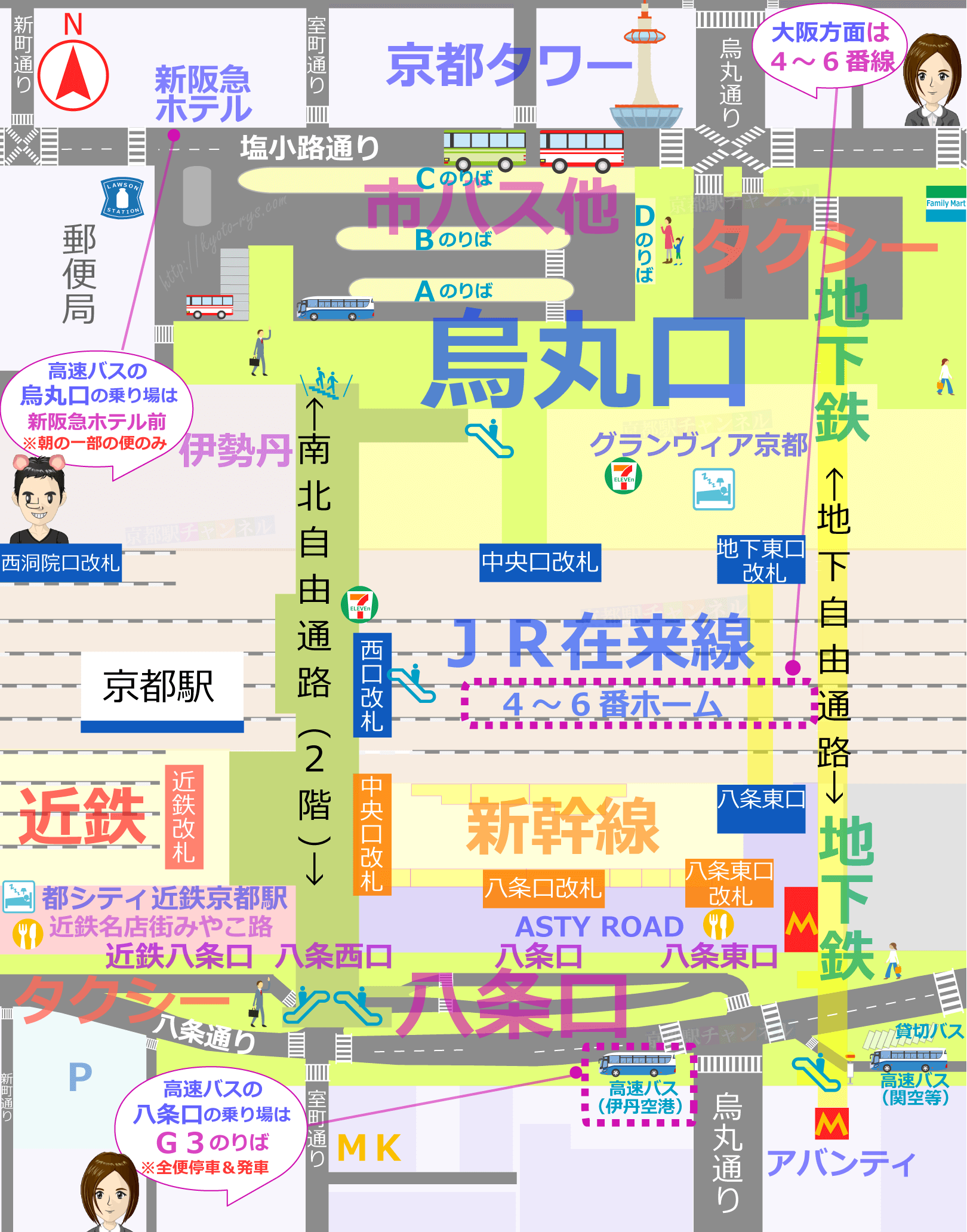
Kyoto Station is an architectural labyrinth. The northern Karasuma side faces the Kyoto Tower and handles city municipal buses. If you search for the airport bus there, you will waste valuable time. The highway buses bound for Osaka Itami Airport depart exclusively from the southern side, known as the Kyoto Station Hachijo Exit.
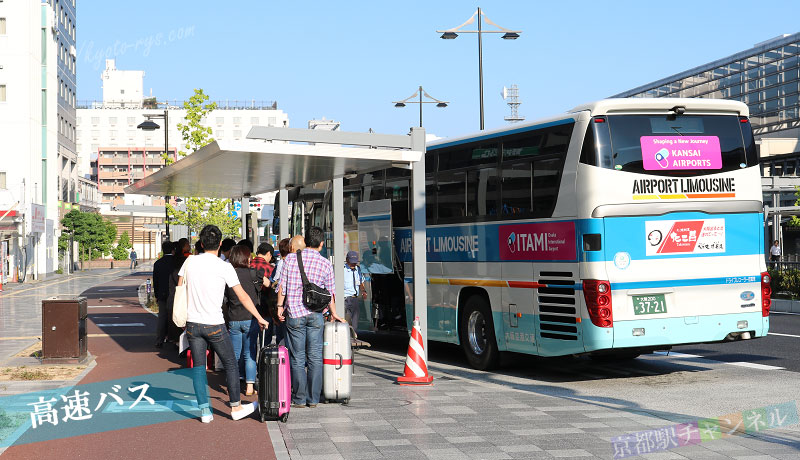
Exit the Shinkansen gates or follow overhead signs toward the Hachijo West or Central exits. Step outside across from the Avanti commercial complex and the Keihan Hotel. The Itami coach departs from the designated airport bus boarding bays along Hachijo-dori street, predominantly Bay G3 (or adjacent clearly marked digital stands managed by dispatch staff). Marshalling attendants in high-visibility uniforms stand near the curb throughout the operational window, which runs from roughly 05:50 to 19:40. Buses depart at steady intervals of 15 to 20 minutes during peak midday hours, widening to 30-minute intervals during early mornings.
Ticketing Mechanics: IC Cards, Touch Screens, and Cash
The standard adult one-way fare sits at ¥1,340 (children pay half-fare at ¥670). You do not need to decipher confusing ticketing menus inside the train concourse. Multi-language ticket vending machines stand immediately behind the bus boarding shelters on the sidewalk, operating in Japanese, English, Simplified Chinese, and Korean.
Payment ecosystems are straightforward:
- Transit IC Cards: You can skip paper tickets entirely. Tap your physical or mobile wallet IC Card (Suica/Pasmo/ICOCA) at the terminal reader beside the driver when boarding. Ensure your digital card balance exceeds the fare before the bus pulls into the bay.
- Credit and Contactless Cards: Select kiosks accept credit cards, and regional transport groups continue piloting open-loop contactless EMV tap-to-ride systems across Kansai.
- Ticket Kiosks: The kiosks accept Japanese yen banknotes and credit cards, printing a compact QR-coded slip that the attendant inspects upon boarding.
- No Seat Reservations: Unlike the reserved Kansai Airport (KIX) service, coaches running this corridor do not accept advance seat reservations. Passengers board on a strict first-come, first-served basis. If a bus reaches full capacity, attendants direct the remaining line to the next bay queue fifteen minutes later.
Meishin Expressway Travel Times and Peak Congestion Patterns
The scheduled transit timetable lists the run at 50 to 55 minutes. Operated primarily by Hankyu Kanko Bus in partnership with regional coach lines, the route leaves Kyoto via the Kyoto-Minami Interchange, merges onto the Meishin Expressway, and branches off at Toyonaka toward Itami's elevated bypass.
Clear highway conditions deliver you to the airport curbside precisely on schedule. However, Kansai expressway traffic fluctuates wildly. A sudden construction lane closure or rain squall can double travel times without warning.
| Departure Window | Typical Expressway Duration | Bottleneck Vulnerability | Recommended Pre-Flight Buffer |
|---|---|---|---|
| Early Morning (05:50, 07:15) | 45, 55 minutes | Low (free flow traffic) | 75 minutes before departure |
| Morning Rush (07:30, 09:30) | 65, 85 minutes | High (Suita, Toyonaka commuter crawl) | 110, 120 minutes before departure |
| Midday (10:00, 15:30) | 50, 60 minutes | Moderate (occasional roadworks) | 90 minutes before departure |
| Evening Peak (16:30, 18:45) | 60, 80 minutes | High (outbound commercial transport) | 105, 120 minutes before departure |
Travelers bound for urgent flight connections should monitor expressway congestion overhead signs. When digital display boards at Kyoto Station show heavy red congestion across the Meishin artery, pivoting to the JR Tokaido Line to Shin-Osaka followed by a quick taxi or monorail link offers an alternate escape route.
Luggage Storage Restrictions and Boarding Etiquette
One primary reason visitors choose the limousine bus over complex rail transfers is luggage management. Navigating train stairs at Hotarugaike or Umeda with three rolling suitcases is exhausting. The limousine bus removes that burden, though clear guidelines apply.
Hankyu Kanko Bus enforces specific luggage storage restrictions for coach cargo bays:
- Allowance per Passenger: Standard policy permits up to two checked bags per paying passenger in the lower cargo hold.
- Size and Weight Limits: Each bag must remain under 30 kilograms (66 lbs), with total combined dimensions (length + width + height) not exceeding 250 centimeters.
- Valuables and Electronics: Laptops, high-capacity lithium battery power banks, luxury cameras, and passports must ride in the passenger cabin overhead rack or under your seat.
- Prohibited Items: Flammable materials, unpackaged bicycles, and excessively long surfboards are banned from cargo bays unless secured in certified folding travel cases that fit standard dimensional racks.
When you arrive at the platform queue, loaders tag your bags and hand you a numbered claim stub. Attendants ask for your departure carrier immediately because bags are sorted into separate bays for the two terminals.
North and South Terminal Drop-Off Differences
As the bus approaches Osaka Itami Airport (ITM), it navigates a split arrivals ring. The airport divides operations between two distinct wings connected by a central shopping concourse.
The coach makes two successive stops:
- First Stop, South Terminal: Dedicated to All Nippon Airways (ANA) and IBEX Airlines. If your flight confirmation lists an ANA code, disembark here.
- Second Stop, North Terminal: Dedicated to Japan Airlines (JAL), Amakusa Airlines, and Fuji Dream Airlines (FDA). The bus rolls forward roughly 200 meters to this second drop bay.
If you mistakenly step off at the South Terminal with a JAL ticket, do not panic. The indoor connecting atrium between the terminals is a level, climate-controlled walk of approximately three minutes. Hand your baggage claim ticket to the curbside attendant, confirm your luggage tag number, and walk directly to the security gates.
Domestic Flight Connections: Buffer Windows and Scheduling Strategies
Itami is essentially an all-domestic hub. The security checkpoints move faster than the international halls at Narita or Kansai, but domestic aviation rules in Japan are strict regarding boarding cutoffs. Japan Airlines and ANA close domestic security gates exactly 20 minutes prior to departure. If you arrive at security 19 minutes before takeoff, your boarding pass will be rejected.
When planning your bus departure from Kyoto Station Hachijo Exit, calculate your schedule backward. Aim to step off the coach at Itami at least 60 minutes before domestic takeoff if you travel with carry-on luggage only. If you need to drop heavy checked bags at airline counters, allow 75 to 90 minutes at the airport. Factoring in potential peak hour traffic delays, schedule a bus that departs Kyoto at least two hours to two hours and fifteen minutes before your flight takes off.
Frequently Asked Questions (FAQ)
Q1: Can I reserve a seat on the Kyoto to Itami bus online ahead of time?
A1: No. Unlike limousine buses servicing Kansai International Airport (KIX), the Kyoto, Itami route operates without advance seat reservations. Passengers join the physical queue at the Hachijo Exit bus stop, and boarding operates on a first-come, first-served basis.
Q2: What happens if highway traffic makes me miss my domestic flight?
A2: Highway bus operators do not issue compensation or cover airline rebooking fees for delays caused by traffic congestion, weather, or highway accidents. If you travel during morning peak hours or national holiday periods like Golden Week and Obon, catch a coach 30 to 45 minutes earlier than standard schedule recommendations.
Q3: Is the bus cheaper and faster than riding the train from Kyoto to Itami?
A3: The bus costs ¥1,340 and takes 50 minutes without transfers. Traveling by train requires taking the JR Kyoto Line to Shin-Osaka or Osaka Station, transferring to a subway or private line, and then taking the Osaka Monorail to Itami Airport. Rail costs roughly ¥800 to ¥1,100 and takes 55 to 65 minutes. While trains avoid road traffic, carrying luggage through multiple station transfers makes the direct bus far more convenient for most travelers.
Navigating the Kyoto to Itami Transit Corridor in 2026
The journey from Kyoto Station to Osaka Itami Airport remains one of the simplest transit corridors in Western Japan when executed with an eye on the clock. Direct curbside boarding at the Hachijo Exit eliminates the exhaustion of navigating subway stairwells with heavy suitcases. By keeping your transit IC card loaded, selecting the correct bus bay, and adding a conservative buffer for Meishin Expressway traffic, you ensure your transition from Kyoto's historic avenues to domestic flight gates is seamless and stress-free.