The Ultimate Seoul November Packing Guide: Layering Essentials, Footwear, and Tips
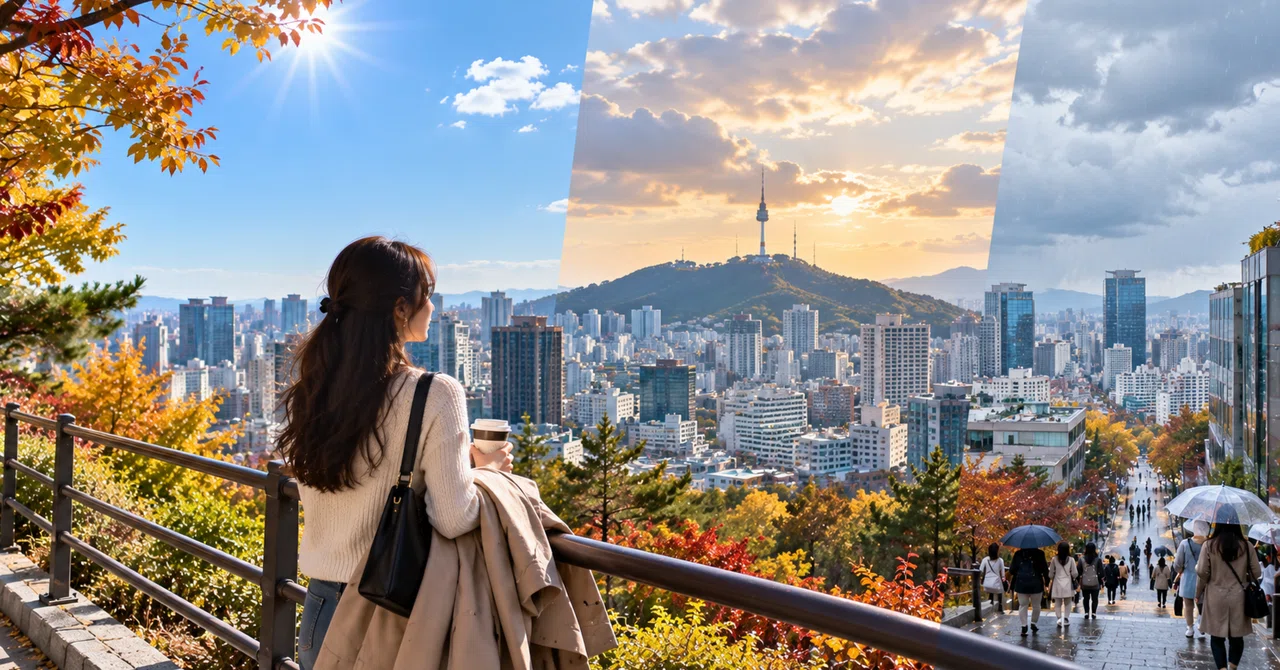
Seoul in November catches thousands of travelers unprepared every year. The month begins with lingering gold across the gingko canopies of Samcheong-dong, accompanied by mild afternoons around 15°C (59°F). By the final week, continental air masses surging from Siberia drag nighttime readings below freezing, cutting through urban street canyons with sharp wind chills. Navigating this climate requires tactical planning rather than generic fall attire. A comprehensive travel advisory published in a recent note Report detailed how continental autumn shifts create severe daily fluctuations across South Korea's inland basin, leaving uninitiated visitors caught between outdoor chills and aggressively heated transit networks.
Stepping out of Incheon International Airport into early November feels entirely different from boarding a train back in late November. The entire month serves as a rapid corridor between late autumn and deep winter. Dressing successfully means mastering modular insulation, selecting breathable synthetics, and respecting the city's notorious diurnal temperature swings.
📌 Key Takeaways:
- The Temperature Divide: Early November averages daytime highs of 12°C, 16°C (54°F, 61°F), while late November drops daytime highs to 5°C, 8°C (41°F, 46°F) and pushes evening lows below 0°C (32°F).
- The Thermal Trapping Dilemma: Subways, retail complexes, and traditional dining spots run floor heating (ondol) and forced-air systems at high settings, making heavy single garments inconvenient. Modular layers are mandatory.
- Strategic Footwear: Seoul’s topography demands comfortable walking boots with supportive insoles and slip resistance to handle steep granite inclines and 15,000 daily steps.
The Meteorological Reality of Seoul's Autumn-Winter Pivot
Historical readings from the Korea Meteorological Administration indicate that November experiences the sharpest month-over-month temperature drop on the Korean peninsula. The average monthly high hovers around 11.6°C (53°F), with an average low of 3.2°C (38°F). These monthly aggregates obscure the day-to-day reality. During early November, a light jacket over a crewneck sweater keeps you comfortable throughout the afternoon. By the third week, cold fronts strip the trees bare, bringing dry, biting wind chills that make 4°C (39°F) feel like -2°C (28°F).
Diurnal temperature variation frequently spans 10°C to 12°C in a single twenty-four-hour cycle. You might leave your hotel in Hongdae under clear skies and a gentle breeze at 10:00 AM, only to find yourself shivering by 6:00 PM along the Cheonggyecheon Stream. This rapid drop creates a practical challenge. Travelers who step outside wearing only a light sweater find the dusk air punishing, while those bundled into heavy down parkas swelter inside underground shopping arcades and crowded subway cars.
Trench Coat vs. Wool Coat: The Mid-Month Outerwear Shift
Choosing your outer layer depends on the exact dates of your itinerary. For arrivals between November 1 and November 10, a classic trench coat paired with a medium-weight knit sweater provides sufficient barrier against morning breezes without overheating during midday exploration. Trench coats cut from heavy gabardine or water-repellent cotton block wind effectively, which matters far more than ambient temperature when standing at open-air intersections in Gwanghwamun.
From November 11 onward, trench coats lose their utility. You will want to transition to a structured wool coat with a high wool or cashmere content (at least 70%), or an ultra-lightweight down jacket that packs down into a daypack. Korean street style balances heavy tailored wool overcoats with understated inner layers. A tailored wool coat offers structural wind defense and blends into upscale dining rooms across Gangnam and Hannam-dong. If your travel dates span late November, prioritize outerwear with high collar closures, storm flaps, and sufficient room in the shoulders to accommodate multiple base garments.
Thermal Base Layers and the Subway Heat Trap
The secret to comfortable movement through Seoul in late autumn lies beneath the outer jacket. Heattech innerwear and equivalent micro-polyester or merino wool thermal base layers provide an invisible temperature shield. Synthetic thermal shirts trap body heat without adding bulk, preserving clean silhouettes under fitted shirts and knitwear.
However, thermal base layers carry a hidden operational risk: indoor overheating. Seoul Metro trains, department stores in Myeongdong, and local cafes crank their heating units high starting in early November. Traditional restaurants run floor-based ondol heating systems that warm seating areas rapidly. If you wear heavyweight expedition-grade thermals designed for sub-zero alpine sports, you will overheat the moment you step indoors. Opt for standard or medium-weight thermal base layers that manage moisture and breathe well. Avoid wearing ultra-heavy fleece-lined tops unless the forecast calls for prolonged outdoor sightseeing in below-freezing temperatures, such as late-evening palace walking tours.

November Temperature Shifts and Packing Requirements Across the Month
Planning your suitcase requires an honest look at the three distinct phases of Seoul’s November climate. Packing for the first ten days of the month looks remarkably different from outfitting yourself for the final stretch heading into December.
| Travel Phase | Typical Temperature Range | Primary Outerwear Strategy | Recommended Inner Layers |
|---|---|---|---|
| Early Nov (Nov 1, 10) | High: 14°C, 17°C (57°F, 63°F)Low: 5°C, 8°C (41°F, 46°F) | Gabardine trench coat, denim jacket, or lined blazer | Long-sleeve cotton tees, thin knits, light cardigans |
| Mid Nov (Nov 11, 20) | High: 9°C, 13°C (48°F, 55°F)Low: 1°C, 4°C (34°F, 39°F) | Medium-weight wool coat or packable lightweight down jacket | Standard thermal base tops, wool-blend crewnecks, fleece vests |
| Late Nov (Nov 21, 30) | High: 4°C, 8°C (39°F, 46°F)Low: -3°C, 1°C (27°F, 34°F) | Heavy tailored wool overcoat or insulated down parka | Extra-warm thermal base layer, chunky turtlenecks, thermal tights |
Korean Street Style Layering from Hongdae to Seongsu
Seoul locals treat winter preparation as an architectural exercise. Walking through fashion epicenters like Seongsu-dong, Sinsa-dong, or Hannam-dong reveals a distinct preference for structured, layered volume over shapeless bulk. Rather than donning a single monstrous mountaineering jacket in mid-November, the local standard focuses on thoughtful tiering: a crisp collared button-down under a brushed knit, topped by a packable down vest, and finished with an oversized wool coat cut past the knee.
Color palettes throughout November lean heavily into neutrals: charcoal, oatmeal, deep espresso, olive, and matte black. Chunky wool scarves serve as both personal temperature regulators and aesthetic anchors. An oversized cashmere or brushed alpaca scarf protects the exposed neck against wind tunnels near towering commercial blocks, yet tucks easily into a tote bag when entering a climate-controlled store. Beanies and leather gloves appear in force during the last ten days of the month, functioning as critical barriers against the biting evening chill.
Footwear Realities: Pavement, Hills, and Comfortable Walking Boots
Seoul is an aggressive walking city where 15,000 to 20,000 steps per day is normal. Between navigating multi-level subway interchanges with endless staircases and trekking up the steep residential inclines of Ihwa Mural Village or Bukchon Hanok Village, your choice of footwear dictates the quality of your trip. Leave stiff, untested leather shoes at home.
Comfortable walking boots with rubberized, shock-absorbing outsoles are essential. Lug-sole Chelsea boots, cushioned leather combat boots, or dark lifestyle trail-running sneakers excel in this terrain. Granite pavers throughout palace complexes and historic corridors turn cold underfoot by mid-afternoon, making thin-soled canvas sneakers a poor choice. Pack medium-weight merino wool socks to insulate your soles against ground chill while pulling moisture away during long transit journeys. If your footwear lacks arch support or adequate cushioning, the unforgiving pavement will cut your days short long before the evening cold sets in.
Frequently Asked Questions (FAQ)
Q1: Do I need a full-length padded down parka (long padding) in Seoul during November?
A1: Generally, no. A floor-length padded down parka is standard for deep winter (December through February). In November, a heavy wool overcoat, a mid-length insulated parka, or a packable lightweight down jacket layered under a tailored coat offers sufficient warmth without causing you to overheat indoors.
Q2: Can I buy cold-weather clothes and thermal layers easily after arriving in Seoul?
A2: Yes, extremely easily. Neighborhoods like Myeongdong, Gangnam, and Hongdae feature massive flagship locations for brands like Uniqlo, SPAO, Musinsa Standard, and Topten, where you can buy inexpensive thermal base layers, packable vests, scarves, and outerwear on day one.
Q3: What kind of pants should I pack for Seoul's November weather?
A3: Heavyweight denim, corduroy trousers, and wool-blend slacks work best. Lightweight linen, silk, or thin summer cotton trousers will leave you shivering in the wind. For travel dates in late November, slipping ultra-thin thermal leggings under standard denim provides excellent defense against low evening temperatures.
Essential Gear and Strategic Packing for 2026
Succeeding on a November trip to Seoul comes down to adaptability. Pack items that perform two functions simultaneously: an ultra-lightweight down jacket that serves as clean outerwear on a dry afternoon or as an insulating mid-layer under a wool coat after sunset; a spacious tote or daypack capable of stowing your scarf, gloves, and outer layers when stepping into heated subways; and dependable, supportive footwear built to handle miles of hard concrete.
Rather than stuffing your luggage with heavy, rigid sweaters that limit your options, curate a capsule of refined base layers, versatile knits, and a wind-blocking outer coat. By respecting Seoul's dramatic day-to-night temperature shift and planning for fluctuating indoor climates, you can explore the city's historic palaces, street food stalls, and bustling fashion districts with absolute comfort and effortless local style.