Timeline of a Myth: How Esper Itoh's Ghost Photo Became an Enduring Internet Mystery
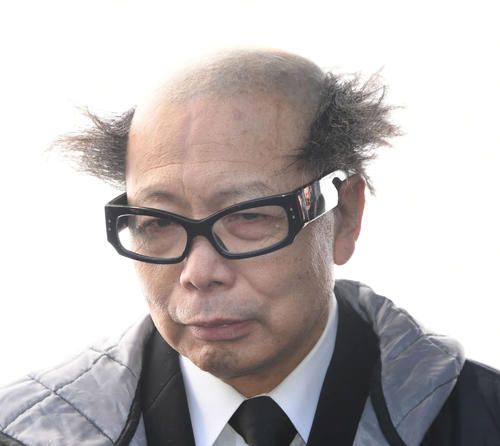
When Japanese physical comedian Esper Itoh passed away on January 16, 2024, at age 63, the entertainment world mourned the loss of a peerless vaudevillian. Born Masuo Itoh, the performer had spent decades folding his 5-foot-5 frame into tiny sports bags, downing scorching peppers, and risking bodily harm for laughs. Tributes flooded television and social feeds. His longtime friend, Torahada Nanbu of Tokyo Shock Boys, voiced raw grief over being unable to visit him during his final days, an emotional reaction captured in a 日刊スポーツ Report. Yet alongside heartfelt remembrances, an older, stranger digital artifact resurfaced across Japanese cyberspace: the infamous Esper Itoh shinrei shashin (ghost photo).
What began as a low-resolution freeze-frame from a late-night variety broadcast snowballed over two decades into one of Japan's most durable paranormal urban legends. Viewers spotted an unnatural, shadowy distortion hovering directly above Itoh while he was crammed inside his signature travel bag. Rumors of studio curses, unscripted paranormal interference, and spectral visitations spread across early internet message boards. By tracking the photo from its late-1990s broadcast origin to its viral revival in 2026, the mechanics of Japanese occult television and internet folklore come into sharp focus.
📌 Key Takeaways:
- The Phenomenon: The "Esper Itoh ghost photo" refers to widely circulated freeze-frames of Itoh's bag contortion stunt that supposedly captured a disembodied face or ghostly limb hovering behind him.
- The Broadcast Origin: The image originated during the late-1990s boom of occult variety specials, where broadcast compression and high-contrast studio lights routinely warped fast-motion tape.
- The Technical Reality: Photographic analysis confirms the ghostly anomaly is a classic case of pareidolia, caused by folded stage fabric, sweat, and interlacing artifacts on analog NTSC video.
- The Cultural Impact: Itoh's death in January 2024 and subsequent tributes by management agency Office Shoya prompted a massive retrospective wave, turning the image into a touchstone of early Japanese web lore.
The Boston Bag Stunt and the Boom of Heisei Occult TV
To understand how an acrobatic comedian became tangled in a paranormal mystery, one must look at Japanese television during the late 1990s and early 2000s. Esper Itoh was not an occultist. He was an extreme variety performer. His headlining act involved stripping down to black spandex shorts and squeezing his entire torso into an ordinary nylon Boston bag, zipping it shut from the inside. Audiences loved the absurdity.
At the same time, major Japanese networks were obsessed with the paranormal. Programs routinely aired segments dedicated to shinrei shashin, alleged spirit photography submitted by viewers or captured during celebrity shoots. Producers brought in spiritual mediums alongside skeptical camera technicians to analyze faint streaks, unexplained shadows, or distorted hands. The line between high-camp variety comedy and genuine ghost hunting blurred constantly. Itoh made regular appearances on variety lineups where stunt performers shared billing with paranormal investigators.
During one such variety special, a brief production still or on-air freeze-frame caught something unintended. While Itoh struggled inside the bag, the shadows folding around his neck and the zipper line created the silhouette of a pale, agonized human face peering out from the darkness.
Anatomy of the Broadcast: What the Screenshot Actually Shows
The original broadcast image was grainy. In the lower half of the frame, Itoh's sweat-slicked face strains against the black fabric of the bag. Just behind his left shoulder, embedded in the dark background of the studio stage, sits an anomaly: a pale, semi-translucent oval with two dark horizontal indents resembling sunken eyes and a jagged mouth.
Viewers called the station almost immediately. Speculation mounted that a spirit was latched onto the comedian's back, drawn by the physical stress and oxygen deprivation of the contortion act. Studio lore held that places of extreme exertion or bizarre public performance attracted wandering spirits (fuyurei).
The broadcast took place in the analog era of NTSC television. Visual noise was an everyday reality. Still, the image carried a visceral, unsettling weight. Unlike staged hoaxes where a ghost model clearly poses in the background, this shape was indistinct, half-hidden in the visual clutter of Itoh's equipment. It looked accidental, which made it far more terrifying to casual viewers.
Tracking the Image Across Decades of Web Culture
The transition from broadcast oddity to immortal urban legend happened on the textboards of 2channel (2ch). In the early 2000s, threads dedicated to "Terrifying Television Broadcasts" and "Unexplained Shinrei Shashin" archived the Esper Itoh screengrab. As digital cameras replaced film and CRT screens gave way to flat panels, low-res JPEGs of Itoh were copied, cropped, and circulated across blogs and image boards.
The mystery resurfaced in waves, usually corresponding with milestones in Itoh's career or broader internet retrospectives on Heisei-era media.
| Era & Timeframe | Media Platform | Core Narrative & Impact |
|---|---|---|
| Late 1990s, 2001 | Broadcast Variety TV | Freeze-frame appears during a stunt broadcast; viewers report a phantom face hovering over the bag. |
| 2002, 2010 | 2channel (Occult Boards) | The JPEG spreads as quintessential "cursed broadcast media." Speculation links the image to Itoh's frequent injuries. |
| 2018, 2019 | News Outlets & YouTube | Itoh announces retirement due to health issues and osteoarthritis; occult archivists revisit the photo as an ominous premonition. |
| January, March 2024 | X (Twitter) & Mainstream Press | Itoh passes away on Jan 16 at 63; Torahada Nanbu mourns, then dies Jan 30. Joint memorial held March 23 in Shinagawa. |
| 2024, 2026 | Short-form Video & Web Archives | Bito Takeshi of Office Shoya confirms burial completion. TikTok and YouTube creators re-examine the photo using modern AI upscalers. |
The tragic events of early 2024 accelerated this internet rediscovery. After Itoh's death on January 16, his close peer Torahada Nanbu died suddenly two weeks later on January 30 at age 72. On March 23, 2024, fans and colleagues gathered at Shinagawa Grand Hall in Tokyo for a joint farewell service. Attendees followed the dress code: bright, garish colors honoring both men's anarchic stage presence. The stage was framed by Pokémon balloon art and vibrant floral displays. In June 2024, impersonator and Office Shoya agency head Bito Takeshi confirmed that Itoh's remains had been formally interred.
As fans celebrated Itoh's eccentric life, younger internet users encountered the old shinrei shashin threads for the first time. Stripped of original broadcast context, the screengrab seemed even more spectral.

Technical Debunking: Optics, Compression, and Pareidolia
Separating media hysteria from physical reality requires looking at the technical limitations of late-20th-century television production.
First, consider the physical mechanics of the stunt itself. When Itoh climbed inside a bag, he folded his spine, tucked his legs, and used his hands to pull black canvas flaps around his frame. Studio lighting in Japanese television relied on scorching hot tungsten key lights mixed with early overhead fluorescents. This setup cast deep, razor-sharp shadows within any crevice of fabric.
Second, the human brain is hardwired for pareidolia, the psychological tendency to perceive meaningful patterns, especially faces, in random visual input. A folded strap, a patch of white studio tape, and sweat reflecting off fabric produce high-contrast highlights. When an audience is told to look for a face, the brain fills in the missing features automatically.
[ Studio Tungsten Key Lighting ]
│
▼
[ Wrinkled Black Canvas Bag ] ──► Deep Crevices / Shadow Pooling
│
▼
[ Analog NTSC Video Tape ] ──► Interlacing Artifacts & Motion Blur
│
▼
[ Low-Res Web Compression ] ──► Quantization Noise & Block Artifacts
│
▼
[ Pareidolia Trigger ] ──► Human brain registers a "ghost face"
Third, analog interlacing played a critical role. NTSC television broadcast 30 frames per second using two alternating fields of 262.5 lines. Capturing a single freeze-frame of a moving subject on analog magnetic tape routinely resulted in "interlacing comb artifacts." If Itoh or an assistant moved quickly just outside the key light, the combined odd and even scan fields would smear. When digitized into 8-bit JPEG formats in the late 1990s, discrete block compression erased fine textures, solidifying the illusion of smooth, pale skin amidst the dark shadows.
No supernatural entity was ever present. The phantom was built entirely of fabric folds, sweating polyester, phosphor glow, and digital compression noise.
The Cultural Legacy of Masuo Itoh
Urban legends survive because people care about the figure at the center of the frame. Esper Itoh was an underdog. He took physical punishment for a living, rarely complained, and remained devoted to entertaining everyday audiences.
When Bito Takeshi organized Itoh's final affairs through Office Shoya, the entertainment community rallied around his memory. The somber realities of his final years, battling chronic illness, isolation, and physical exhaustion, stood in stark contrast to the colorful, frantic persona he had maintained for three decades.
The persistent myth of the ghost photo highlights an uncomfortable truth about Heisei pop culture: audiences were fascinated by the physical toll Itoh endured. The urban legend became an eerie externalization of that toll. For millions of viewers, the image of a tortured spirit hovering over a contorted man trapped inside a canvas bag captured the raw, manic energy of Japanese variety television better than any official tribute ever could.
Frequently Asked Questions (FAQ)
Q1: Did Esper Itoh ever publicly address the ghost photo?
A1: Yes. On multiple variety panel programs, Itoh laughed off the image. He maintained that the strange shapes were simply stage equipment, folded bags, or assistants caught in the shadows. He embraced the publicity, as eccentric performers frequently leveraged bizarre rumors to book appearances.
Q2: Why did so many Japanese variety shows air ghost photos in the 1990s and 2000s?
A2: Occult programming drew massive ratings during the late Showa and early Heisei eras. Programs like USO!? Japan and various summer horror specials treated spirit photography (shinrei shashin) as standard television entertainment, creating an appetite for freeze-frame anomalies.
Q3: Has modern digital restoration or AI upscaling proven what the anomaly was?
A3: Modern upscalers and contrast-adjustment tools reveal distinct stitching, strap buckles, and video scan line noise where the "face" appears. While AI algorithms sometimes smooth over these artifacts, ironically creating an even creepier digital illusion, raw analog analysis demonstrates it is purely fabric folds and lighting glare.
Q4: What happened to Esper Itoh's management and estate after his death?
A4: Management was overseen by his long-running agency Office Shoya, directed by impersonator Bito Takeshi. Takeshi and fellow performers handled Itoh's medical coordination, organized the March 2024 joint memorial alongside Torahada Nanbu's family, and finalized his burial in June 2024.
The Lingering Power of Analog Folklore
The Esper Itoh ghost photo endures not because it presents undeniable proof of the supernatural, but because it captures a lost era of broadcasting. Before high-definition digital sensors flattened studio lighting and exposed every seam, television was full of genuine visual ambiguity. Mystery thrived in the shadows of standard-definition tape.
Masuo Itoh spent his life performing the impossible inside tight spaces. It is only fitting that the internet preserved his memory inside a mystery of its own making. The photograph remains an accidental masterpiece of Heisei-era folklore, a strange, enduring intersection of extreme physical comedy, broadcast technology, and the human imagination.