Toy Story That Time Forgot Complete Guide: Characters, Cast, and Streaming
Toy Story That Time Forgot: The Definitive Guide to Pixar's Cult Television Special
When audiences talk about Pixar’s toy box, attention naturally drifts toward billion-dollar theatrical releases or the upcoming arrival of Toy Story 5 on July 3, 2026. Yet tucked away in the franchise catalog sits a 22-minute gem that inverted the entire mythos of the series: Toy Story That Time Forgot (released in Japan as トイ・ストーリー 謎の恐竜ワールド). Directed by Steve Purcell, this post-Christmas television special first aired on ABC on December 2, 2014, pulling in 6.79 million viewers on its debut night before finding a permanent streaming home on Disney+. As retail promotions and digital catalog rentals surge across platforms like Amazon ahead of the franchise's cinematic return, as detailed in recent coverage by the MSN Report, this prehistoric chapter has evolved into an essential piece of franchise lore.
📌 Key Takeaways:
- Core Premise: Trixie the Triceratops takes center stage during a post-Christmas playdate, navigating a society of heavily armed dinosaur action figures who do not realize they are toys.
- Production Pedigree: Directed and written by Steve Purcell (co-director of Brave and creator of Sam & Max), featuring an original voice performance by Kevin McKidd as gladiator champion Reptillus Maximus.
- Platform Availability: Streamable worldwide in 4K Ultra HD on Disney+, alongside Pixar’s complete suite of shorts and holiday television productions.
How a Post-Christmas Playdate Sparked the Battlesaur Saga
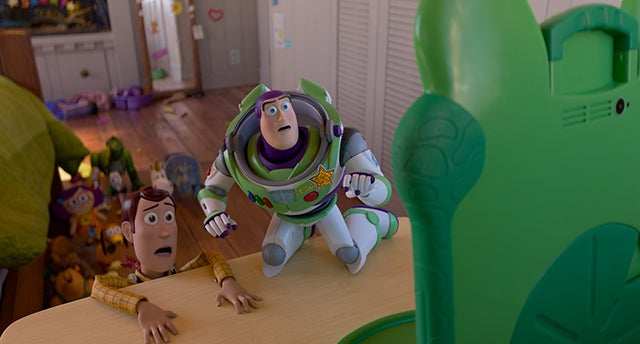
The narrative premise of Toy Story That Time Forgot hinges on a universal childhood scenario: the forgotten toy bag during an exciting holiday visit. Two days after Christmas, Bonnie visits her friend Mason for a playdate. Inside her backpack ride Woody and Buzz Lightyear, accompanied by Rex, Mr. Pricklepants, an ornament kitty named Angel Kitty, and Trixie the Triceratops. Bonnie abruptly abandons her bag on Mason's bedroom floor after discovering he has received an Optimum X video game console. Left unattended, Bonnie's toys venture into Mason's room, encountering a massive, unboxed playset known as the Battlesaurs.
Unlike Andy's or Bonnie's familiar play environments, this room belongs to a newly minted, hyper-commercialized world. The Battlesaurs are ferocious, gung-ho dinosaur figures wrapped in gladiatorial armor, living inside an elaborate fortress called the Battleopolis. Crucially, they suffer from the identical cognitive delusion that afflicted Buzz Lightyear in 1995: they possess no awareness of their true identity as plastic toys. Their entire society revolves around lethal combat staged for an unseen audience, sustained by rigid tribal hierarchies and unyielding militarism.
This dynamic flips the central dramatic engine of the series. Instead of veteran toys educating a newcomer, Bonnie's toys find themselves outmatched, unarmed, and trapped inside an aggressive society governed by ritual violence. Trixie quickly emerges as the sole figure capable of brokering peace, challenging the ideological conditioning of Mason's play area.
Character Profiles and Complete Voice Cast Credits
While Tom Hanks and Tim Allen reprise their standard anchor roles as Woody and Buzz Lightyear, the short deliberately pushes them into supporting comic relief. The emotional weight rests squarely on Trixie, voiced with vulnerability and comedic timing by Kristen Schaal. Schaal imbues Trixie with genuine angst over how Bonnie plays with her, establishing a grounded contrast to the theatrical grandeur of the Battlesaur warriors.
Kevin McKidd delivers a standout vocal performance as Reptillus Maximus, the champion warrior of the Battlesaurs. McKidd plays Reptillus with unironic classical theater earnestness, evoking Shakespearean tragedy through an anthropomorphic plastic lizard clad in bronze armor. Opposite him stands The Cleric Battlesaur, voiced by British veteran Steve Purcell himself. The Cleric acts as the calculating orchestrator of the arena, deliberately concealing the toys' artificial nature to maintain absolute control over the realm.
| Character Name | Original Voice Actor | Japanese Dub Actor | In-Universe Role |
|---|---|---|---|
| Trixie | Kristen Schaal | Kimiko Saito | Bonnie's neglected plastic triceratops; primary protagonist |
| Reptillus Maximus | Kevin McKidd | Kensuke Uchida | Battlesaur champion; conflicted gladiator leader |
| The Cleric | Steve Purcell | Katsuhisa Hōki | Ruler of Battleopolis; manipulator of the dinosaur horde |
| Woody | Tom Hanks | Toshiaki Karasawa | Pull-string cowboy; captured and sentenced to the pit |
| Buzz Lightyear | Tim Allen | George Tokoro | Space Ranger action figure; ally to Woody in captivity |
| Angel Kitty | Emma Hudak | Ai Shimizu | Enigmatic, philosophical Christmas tree ornament cat |
Production Trivia: The 1980s Toy-Line Parody
Director Steve Purcell designed the Battlesaurs line as an explicit tribute to the aggressive syndicated cartoon toy lines of the mid-1980s. The production team constructed an exhaustive backstory, modeling the packaging, color palettes, and joint articulation after properties like Masters of the Universe, Dino-Riders, and ThunderCats. During initial design passes, Pixar artists fabricated mock commercial style guides, blister-pack cards, and a fully orchestrated retro theme song composed by Michael Giacchino.
Inside the animated short, that design fidelity extends directly to the toys' physical mechanics. Reptillus Maximus moves with stiffer hinge joints than Woody or Rex, mirroring the heavy molded plastic figures sold across that era. Purcell incorporated authentic manufacturing flaws, such as faint injection-molding seam lines on the dinosaur armor and paint applications that slightly bleed outside the carved grooves. Even the arena pit, The Great Bowl of the Sarlacc-esque waste chute, was created to resemble molded blow-molded plastic playsets sold at Sears or Toys "R" Us during the holiday seasons of 1985 through 1989.
The production also marked one of the few instances where Pixar created a self-contained companion piece within a tightly budgeted six-month broadcast timeline. Animators completed the 22-minute project alongside early visual development for The Good Dinosaur and Inside Out, utilizing custom surface shaders to differentiate the gritty, matte-finish vinyl of the Battlesaurs from the glossy, child-handled plastics of Bonnie's personal toy chest.

How to Stream Toy Story That Time Forgot on Disney Plus
For home viewing, Toy Story That Time Forgot is readily accessible across global territories. The special resides permanently on Disney+ within the Pixar Animation Studios hub, streamable in native 4K Ultra HD with Dolby Vision and Dolby Atmos spatial audio support.
Locating the title on the streaming platform requires a quick search under its exact title or through the dedicated Toy Story franchise collection tab. Subscribers can select between multiple language tracks, including the definitive Japanese voice track featuring Toshiaki Karasawa and George Tokoro alongside English closed captions. Outside of Disney+, digital retailers like Amazon Prime Video, Apple TV, and Google TV offer the title for individual purchase or standard rental pricing, frequently bundled within Pixar Short Film Collections.
Thematic Resonance: Screen Addictions and the 2026 Landscape
Over a decade after its initial broadcast, Toy Story That Time Forgot reads with surprising prescience. The inciting incident of the narrative, Mason abandoning his brand-new physical toys the instant a video game console fires up, tackles the tension between tactile play and digital consumption. Mason and Bonnie sit transfixed in blue-tinted room light with game controllers gripped in their hands, while mountains of unopened plastic figures sit untouched behind them.
As audiences look toward the release of Toy Story 5 on July 3, 2026, that exact thematic thread has taken center stage in public discussions. Early project overviews revealed by Pixar leadership indicate that the upcoming theatrical sequel explores the friction between vintage toys and modern mobile devices. In retrospect, Purcell’s TV special served as Pixar's pilot testing ground for this modern technological anxiety. By showing how Mason’s disconnection from his toys bred the violent, ungrounded neurosis of the Battlesaurs, the special demonstrated that toys lose their soul when children stop investing their own imaginations into them.
Frequently Asked Questions (FAQ)
Q1: Is Toy Story That Time Forgot considered official canon in the Pixar timeline?
Yes. The special takes place chronologically after the events of Toy Story 3 (2010) and the Halloween special Toy Story of Terror! (2013), but before the narrative arc of Toy Story 4 (2019). All characters, relationships, and settings align directly with Bonnie's household continuity.
Q2: Why does the Japanese release carry a completely different title?
In Japan, the special was localized as トイ・ストーリー 謎の恐竜ワールド (literally: Toy Story: The Mysterious Dinosaur World). The Japanese distribution team opted for a title that explicitly highlighted the dinosaur setting, making it immediately recognizable and appealing to younger demographic segments accustomed to creature-centric adventure media.
Q3: Does Reptillus Maximus appear in any other Toy Story projects?
Reptillus Maximus made a brief background cameo in Toy Story 4, appearing on a lunchbox graphic inside Bonnie’s kindergarten classroom. The character also stars in a standalone mock vintage commercial short included in the physical Blu-ray bonus features of the special.
Long-Term Standing in the Pixar Pantheon
Rather than functioning as mere holiday programming filler, Toy Story That Time Forgot stands as one of Pixar’s sharpest, most concentrated narrative experiments. By decentering Woody and Buzz, Steve Purcell proved that the emotional mechanics of the franchise could support fresh protagonists without shedding its core identity. The short balances biting commercial satire against genuine character discovery, anchoring its chaotic gladiatorial arena in Trixie's struggle to be valued on her own terms. As the franchise prepares for its fifth mainline theatrical release, this 22-minute detour remains a sharp, hilarious reminder of why these characters endure across generations.