Tuffy or Nibbles? Why Tom and Jerry’s Diaper-Wearing Mouse Is Dominating Fashion Trends
Walk through the flagship retail districts of Shibuya or scan global streetwear resale platforms this season, and an unexpected face appears on embroidered knitwear, vinyl collectible art, and oversized tees. It is not Tom the scheming feline or Jerry the triumphant brown mouse. Instead, the undisputed darling of modern apparel collaborations is a diaper-wearing gray mouse known alternately as Tuffy and Nibbles. The pint-sized Hanna-Barbera veteran has quietly morphed into an aesthetic powerhouse across casualwear, collectible toys, and international licensing catalogs.
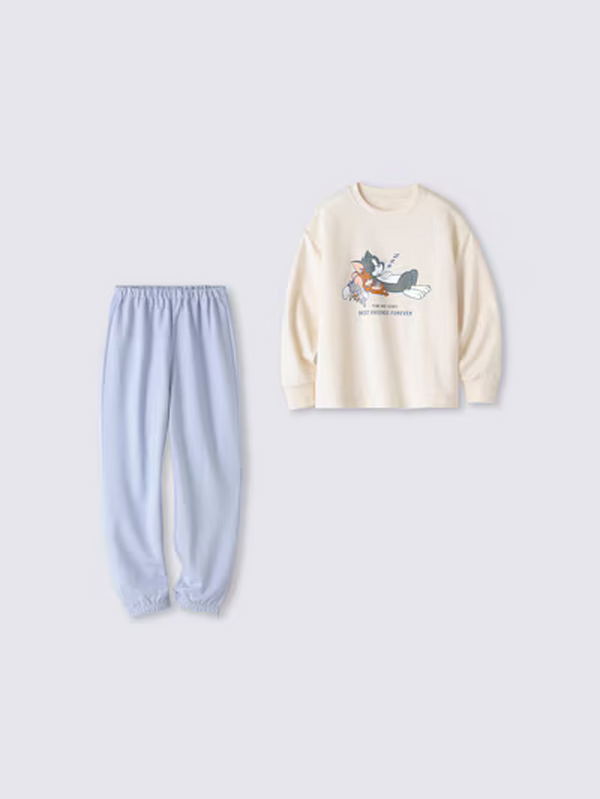
The sudden surge in commercial visibility gained sharp momentum following an official アニメ!アニメ!Anime Anime Report detailing a nationwide GU loungewear release spotlighting a sleeping Tuffy alongside the franchise leads. Within weeks, parallel apparel launches from Japanese fashion label AS KNOW AS plus and Medicom Toy's lifestyle division MLE (MEDICOM TOY LIFE Entertainment) pushed the miniature rodent into prime retail placement. Decades after making his animated debut in hand-painted Golden Age theatrical shorts, Jerry’s diapered companion is driving sales numbers that rival top-tier contemporary character brands.
📌 Key Takeaways:
- The Commercial Surge: High-profile streetwear capsules from AS KNOW AS plus, Medicom Toy MLE, and fast-fashion giant GU cemented Tuffy as a primary fashion anchor across late 2026.
- The Identity Puzzle: Originally introduced as Nibbles in MGM’s Academy Award-winning 1946 theatrical short The Milky Waif, the character acquired the permanent alias Tuffy via 1950s Dell comic book adaptations.
- Consumer Psychology: Nostalgic Gen Z shoppers and retro cartoon fashion collectors increasingly favor imperfect, humorous secondary sidekicks over overexposed marquee protagonists.
The 2026 Retail Boom Propelling a Diaper-Wearing Sidekick
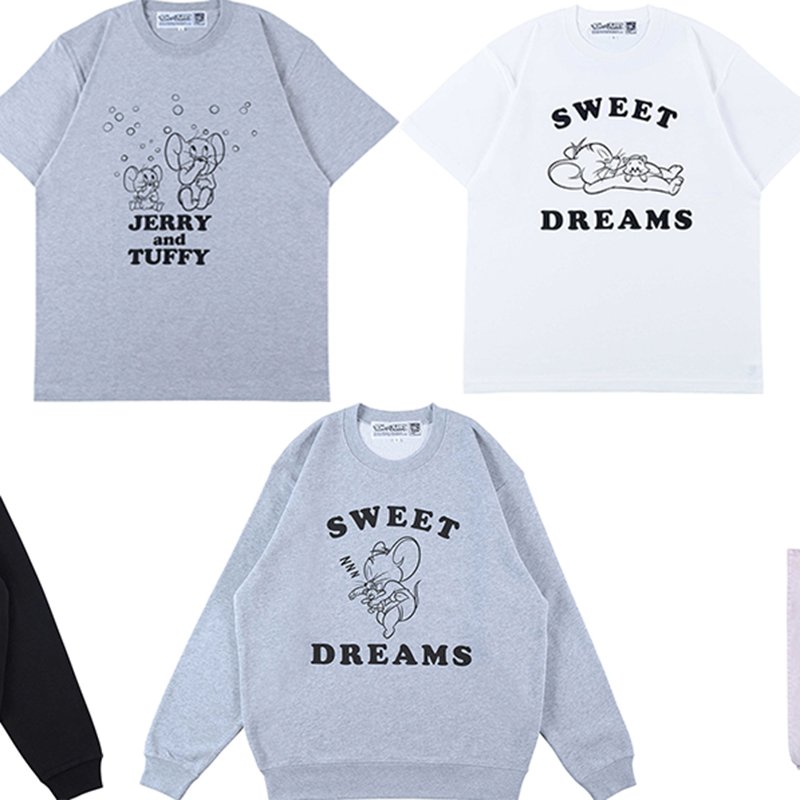
The character's current visibility on retail racks is not an accident of licensing roulette. Major apparel producers have systematically elevated the gray orphan from background gag asset to headline graphic. AS KNOW AS plus anchored their late-summer collection around plush, textured embroidered character tees that showcase Jerry and Tuffy sharing food or sneaking through cartoon architecture. Distributed across ZOZOTOWN, Rakuten Fashion, and physical retail flagships, the collection paired heavy-gauge cotton tops with collectible acrylic keyholders to capture young adult trendsetters who grew up watching reruns on television.
Medicom Toy took a different cultural vector. Under its MLE lifestyle division, the Japanese toy manufacturer integrated Tuffy directly into premium housewares, soft goods, and minimalist apparel targeted at mature design enthusiasts. Medicom's curation stripped away loud children's graphics in favor of clean lines, muted pastel color palettes, and archival mid-century screen grabs. Fast-fashion retailer GU rounded out the push with an accessible loungewear capsule in September 2026, centering on drowsy sleep motifs of Tom, Jerry, and Tuffy rendered in brushed fabrics.
What unites these disparate releases is the deliberate choice to frame Tuffy not as an afterthought, but as an equal co-star. Retailers report that designs pairing the miniature gray mouse with food props, oversized cheese wedges, soup spoons, or stolen turkey legs, sell out faster than solo graphics featuring Jerry alone. His tiny silhouette adds immediate visual irony when stamped across streetwear staples.
Nibbles or Tuffy: Untangling Hanna-Barbera’s Dual Naming Legacy
Despite his ubiquitous presence on modern sweatpants and designer rugs, confusion still surrounds the character's real name. Western viewers often know him interchangeably as Nibbles or Tuffy, while Japanese consumers recognize him universally as タフィー (Taffy/Tuffy). This divergence stems from a corporate split between theatrical animation shorts and print comic syndication in the mid-twentieth century.
Directors William Hanna and Joseph Barbera first conceived the character in the 1946 Metro-Goldwyn-Mayer short The Milky Waif. The plot introduced a starving gray mouse left on Jerry’s doorstep, wrapped in a white cloth diaper and clutching an insatiable appetite. In this Oscar-winning debut and subsequent classic shorts like The Two Mouseketeers (1952) and Touche, Pussy Cat! (1954), MGM official title cards and theatrical credits billed him strictly as "Nibbles." His primary personality trait was his boundless stomach and his ability to babble fluent French in period-piece parody cartoons.
The split occurred when Western Publishing began printing licensed Tom and Jerry comic books under Dell Comics during the early 1950s. Comic book writers altered his name to "Tuffy," framing him specifically as Jerry’s rambunctious nephew rather than a random abandoned foundling. For several decades, theatrical cartoons stuck with Nibbles while print media and consumer products favored Tuffy. By the time Warner Bros. absorbed the Hanna-Barbera library and modernized the franchise with The Tom and Jerry Show in the 2010s, "Tuffy" had become the global corporate standard across all retail merchandising.
Animation History and the Identity Shift Across Decades
The transformation of Nibbles from an impoverished wartime orphan into modern high-street graphic icon required multiple corporate rebrandings. Tracking the mouse across key production eras clarifies how his look, personality, and commercial utility shifted over eighty years.
| Production Era | Primary Name | Canonical Relationship | Visual & Aesthetic Trait |
|---|---|---|---|
| 1946, 1958 (MGM Classics) | Nibbles | Orphan / Ward left on doorstep | Safety-pin diaper, ravenous appetite, musketeer tabard |
| 1952, 1980s (Dell Comics & Print) | Tuffy | Jerry's hyperactive nephew | Printed two-color line art, oversized ears, babyish speech |
| 1990, 1993 (Tom & Jerry Kids) | Tuffy / Nibbles | Playful sibling surrogate | Bright pastel palette, simplified Saturday morning animation |
| 2014, Present (Modern Era) | Tuffy (Officially standardized) | Jerry’s resident nephew & sidekick | Tactile embroidery, vintage streetwear graphics, designer vinyl |
The character's design has remained strikingly stable compared to Tom and Jerry themselves. While Tom evolved through several radical stylistic overhauls, shifting from the realistic, mangy feline of 1940's Puss Gets the Boot to Chuck Jones's angular 1960s interpretation, Tuffy retained his rounded proportions. That compact circular geometry makes him singularly adaptable to modern industrial embroidery machines, circular patch designs, and knit sweater patterns.
From Comic Print to ZOZOTOWN: Why Gen Z Adopted the Gray Mouse
Understanding Tuffy's modern retail footprint requires examining broader shifts in apparel design. Over the past three years, vintage sportswear and 1990s cartoon aesthetics have drifted away from obvious emblems. Shoppers in their teens and twenties are weary of plain character headshots. Instead, they seek out deep-cut sidekicks, ironic visual contrasts, and tactile garments.
Online fashion communities on TikTok and specialized streetwear forums frequently highlight Tuffy's distinct visual balance: a delicate, innocent baby mouse engaged in brutal slapstick violence. Wearing a garment featuring Jerry feels predictable. Wearing a vintage-wash drop-shoulder tee showing a diapered gray mouse swinging an oversized French rapier or napping inside an empty sardine tin carries an understated comedic irony.
Texture plays an equally critical role in his retail conversion. AS KNOW AS plus leaned heavily into multi-layered chenille patches and bouclé loop embroidery for their collections. The tactile fuzziness of a mouse lends itself naturally to dimensional needlework. When buyers touch the raised, wool-like texture of Tuffy's gray belly on a heavy crewneck, the garment bridges the gap between animated nostalgia and modern tactile streetwear.
Licensing Economics Behind Warner Bros. Discovery’s Archival Push
Behind the aesthetics lies calculated corporate strategy. Warner Bros. Discovery oversees an enormous IP catalog, but few properties possess the frictionless cross-generational recognition of Tom and Jerry. In Asian territories, specifically Japan, South Korea, and Taiwan, the franchise enjoys an untouchable cultural standing, frequently rivaling domestic powerhouses like Sanrio or Pokémon in seasonal novelty gift sectors.
Licensing directors discovered that mature consumers who consider a full-body cat-and-mouse graphic too youthful will happily wear a subtle, localized illustration of Tuffy. The character functions as an aesthetic shortcut to mid-century vintage Americana without the aggressive branding of modern superhero cinema.
This dynamic creates exceptional margins for apparel licensees. By rotating Tuffy into capsule drops alongside established staples, manufacturers generate organic buzz on social media. Fans collect apparel variations like limited-edition sneaker colorways. When GU launched their mid-September sleepwear series, the inclusion of Tuffy drove instant shares on X (formerly Twitter), where fans highlighted his peaceful sleeping pose as the definitive reason to purchase the set over standard plain cotton pajamas.
Frequently Asked Questions (FAQ)
Q1: Why does the mouse have two official names in different media?
A1: Metro-Goldwyn-Mayer named the character Nibbles when he debuted in the 1946 theatrical short The Milky Waif. However, Dell Comics renamed him Tuffy in licensed print comic books in 1952. Over decades of media expansion, Tuffy gradually became the dominant consumer brand name, although Western re-releases of early theatrical cartoons still credit him as Nibbles.
Q2: Is Tuffy canonically Jerry's nephew, brother, or an orphan?
A2: His canonical origins depend entirely on the production era. The classic 1940s Hanna-Barbera shorts framed him as an abandoned orphan foundling left on Jerry's doormat with a note requesting care. The comic books and all modern television series from the 1980s onward recast him permanently as Jerry’s nephew.
Q3: Are the 2026 Japanese apparel collaborations available for international shipping?
A3: Yes. While physical drops occurred across Japanese department stores and specialty boutiques, global shoppers can purchase collections from AS KNOW AS plus via Rakuten Fashion Global and ZOZOTOWN’s international forwarding services. Select Medicom Toy MLE merchandise also sees official distribution through worldwide designer art retailers.
The Staying Power of Classic Animation in Contemporary Apparel
The ascendancy of Tuffy from a mid-century storyboard gag into high-margin retail collections illustrates how animation archives sustain value in the modern economy. He represents a rare convergence in commercial licensing: eighty years of historical pedigree coupled with an inherently expressive, meme-friendly silhouette. As fast-fashion and boutique labels continue hunting for graphics that provide authentic visual warmth without corporate stiffness, the gray mouse in the safety-pin diaper proves that secondary characters often hold the longest creative and economic shelf life.