Twist Perm on Natural Curls: Expert Stylists Debunk the Biggest Hair Myths
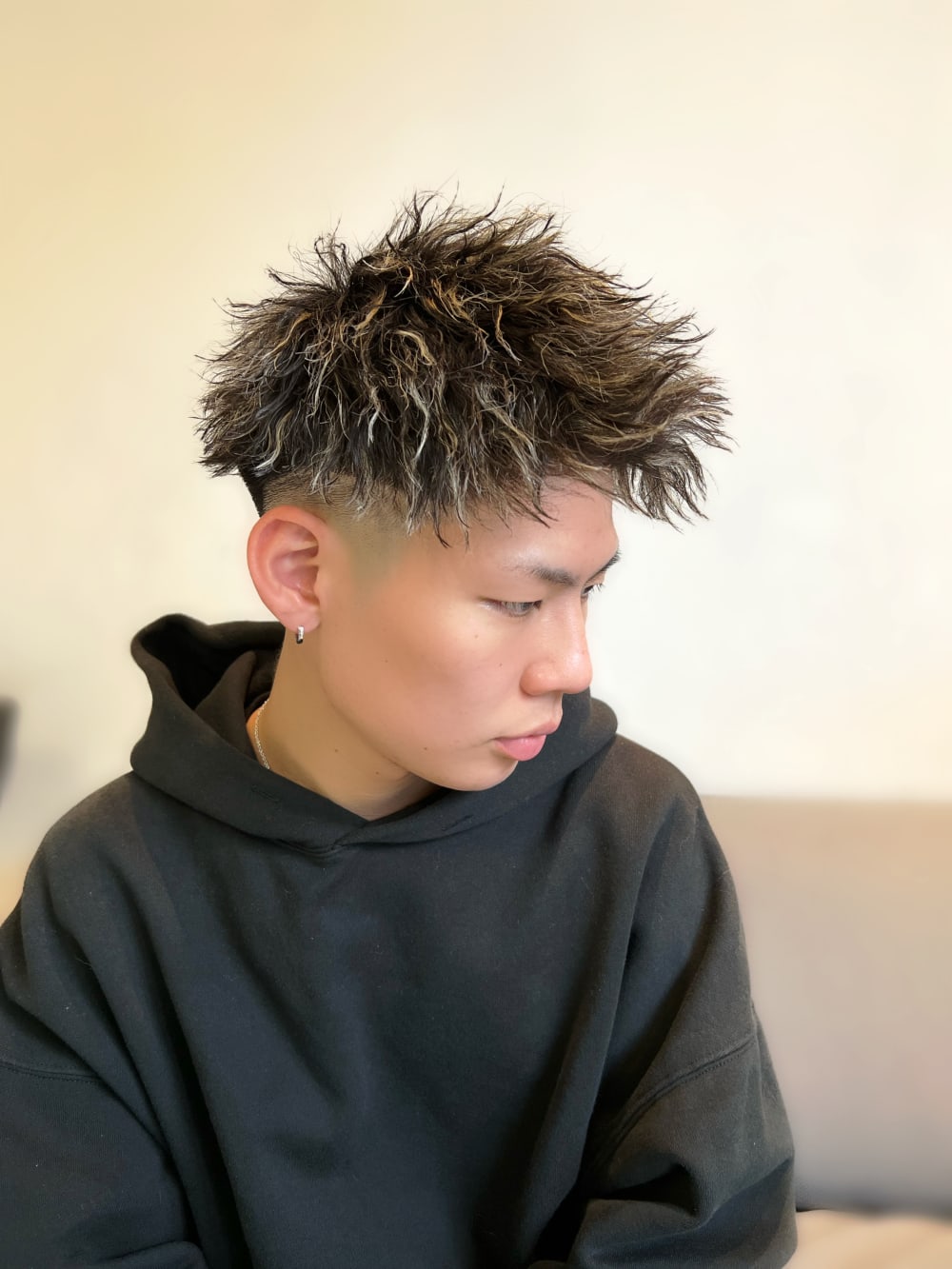
For men with naturally curly or unruly wavy hair, colloquially known in Japan as tenpa, booking a perm often sounds counterintuitive. Traditional advice warns that adding artificial curls to an already unpredictable curl pattern invites structural disaster, extreme frizz, and irreversible cuticular damage. Yet across Tokyo's premier salons, clients battling inconsistent wave patterns and thinning crowns are doing the opposite: using modern textured perms to establish control over their locks.
The viral traction behind this movement is measurable. Stylists like Taisuke Horikoshi (@lalaroomo_horikoshi) recently showcased how targeted root lift volume turned around a 49-year-old client's thinning crown, garnering widespread social engagement as detailed in a recent Yahoo!ニュース Report on salon-driven transformations. Simultaneously, Shinjuku-based stylist @saikaaan has driven tens of thousands of views documenting clients swapping unmanageable frizz for crisp, deliberate spirals. Rather than fighting natural curls with damaging thermal straighteners, men are embracing the twist perm technique as an intentional texture reset.
📌 Quick Summary:
- The Core Function: A twist perm does not double down on chaos; it overrides irregular natural curl patterns with uniform, mechanical tension and disciplined directional flow.
- Root Cause of Success: By blending physical rod twisting with alkaline or cysteamine chemical solutions, stylists reset internal disulfide bonds into defined, deliberate clusters.
- Client Reality: Ideal for Type 2 wavy and Type 3A loose curly hair seeking structured volume, but high-porosity or bleached hair faces severe breakage without prior bond-building therapy.
How Mechanical Twisting Overrides Natural Wave Chaos
Natural curls rarely grow with symmetry. An individual strand often changes direction mid-shaft, reacting violently to changes in atmospheric humidity and day-to-day sebum distribution. This irregular growth pattern creates the illusion of unkempt frizz because individual hair shafts push away from one another instead of clumping into clean groups.
The modern twist perm technique resolves this discord through mechanical grouping. Stylists section clean damp hair into micro-bundles, twist each bundle tightly along its own axis, and wrap the strand around narrow perm rods or pin curls under calibrated perm rod tension. When the chemical hair treatment breaks the hair's cystine linkages, the hair conforms entirely to the new, compressed twist. The natural wave is not erased; its chaotic trajectory is brought to heel under an intentional, uniform design that locks strands together into neat, textured ropes.
Chemical Mechanics: Disulfide Bonds and Cysteamine Formulations
Applying a chemical service to natural curls demands strict chemistry control. Natural curls feature an asymmetrical hair follicle structure, meaning the outer cuticle is thinner at the inner bends of each curl. Flooding naturally curly strands with harsh thioglycolate lotions often leads to chemical hot spots, severe moisture depletion, and mushy elasticity.
Leading salons have largely phased out aggressive ammonium thioglycolate on delicate natural curls, switching instead to cysteamine-based reducing agents or neutral-pH wave lotions. Operating at a gentler pH of 6.5 to 7.8, cysteamine penetrates the cortex gradually. This gives the stylist full control over disulfide bond reduction while keeping cuticular swelling minimal. Salons frequently incorporate hydrolyzed keratin and maleic acid pre-treatments, maintaining hair damage prevention protocols from the initial application straight through the neutralizing oxidation bath.
| Hair Characteristic | Untreated Natural Curls (Tenpa) | Post-Twist Perm Transformation |
|---|---|---|
| Curl Uniformity | Asymmetric, random bends; divergent ends | Cohesive spiral clusters; directional alignment |
| Root Lift & Volume | Flat crown with bulky, flared-out sides | 30% to 50% increase in crown root clearance |
| Daily Styling Effort | 15, 25 minutes of flat ironing or blowouts | 3, 5 minutes applying moisture mousse or balm |
| Humidity Resistance | Severe frizzing and shape collapse at 70%+ humidity | Stable defined clumps; minimal ballooning |
| Service Cost & Upkeep | Baseline cut: $40, $75 | Perm package: $120, $220; re-service in 8, 12 weeks |
Evaluating Candidacy: Who Thrives and Who Risks Breakage
Every head of hair presents unique limitations. A twist perm delivers dramatic aesthetic rewards when applied to the right foundation, but misdiagnosing hair density or porosity produces disastrous results.
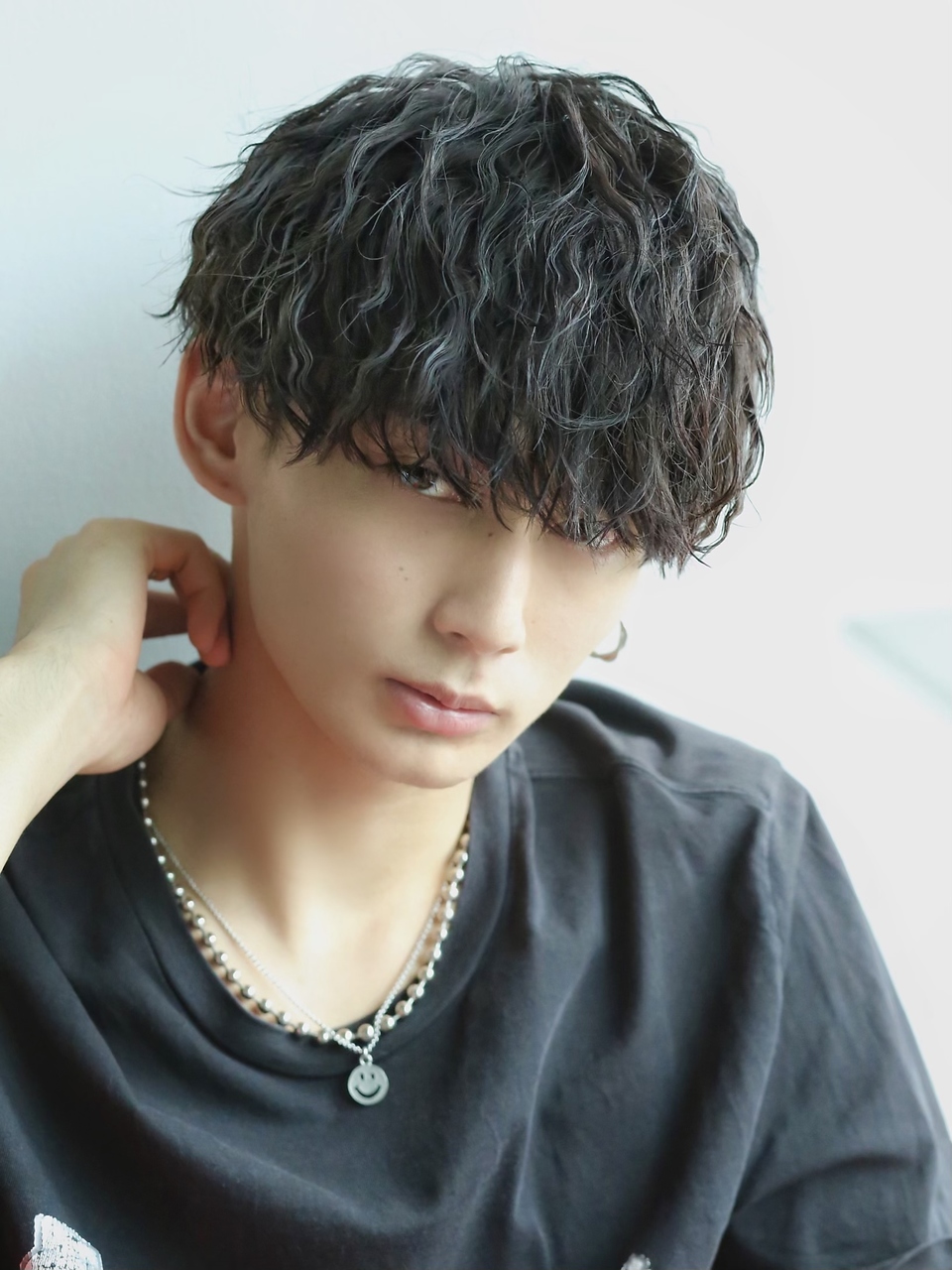
Clients with loose S-waves (Type 2A to 2C) or soft spiral rings (Type 3A) find this treatment life-changing. These patterns often lack vertical structural integrity, collapsing into an undefined cloud whenever air moisture climbs. A twist perm builds a firm, matte spine down each shaft, enabling the cut to hold architectural fades and pompadour-adjacent shapes without requiring heavy pomade.
Conversely, certain conditions demand an outright refusal from the stylist. Anyone with double-bleached hair, chemical straightener history, or tight coily hair (Type 4B/4C) should pass on standard twist perms. Bleaching removes up to 45% of hair's natural protein density, leaving cortex walls too fragile to endure the torque of a physical twist coupled with chemical processing. In those cases, the hair simply shears off at the twist junction.
Daily Styling Protocols and Frizz Management
The post-treatment routine shifts entirely away from mechanical tools toward moisture preservation. Blow dryers with concentrated nozzles and flat irons must be retired; intense heat strips the newly formed matrix and produces instant flyaways.
Styling begins directly out of the shower while hair remains roughly 70% wet. Rubbing with terrycloth towels is banned, as coarse loops snag cuticles; micro-fiber drying wraps or gentle patting prevent frizz from sparking. Work a dime-sized dollop of water-based curl cream or lightweight hair grease through the mid-lengths and ends using an open-palm scrunching technique. Let the hair air dry, or attach a wide-bowl diffuser set to low heat and minimal airflow. This locks the twist bundles into place for 24 to 36 hours without flaking.
The Economic Equation of Salon Grooming in 2026
Specialized male grooming salons in major urban hubs have capitalized on this technique as a premier service tier. In cities like New York, London, and Tokyo, a bespoke cut combined with a precision twist perm runs between $120 and $220, depending on chemical additive upgrades and salon prestige.
While the upfront investment triples the price of a standard clipper cut, clients report a dramatic drop in ancillary grooming costs. Daily dependence on luxury styling pastes, clays, and anti-frizz serums diminishes rapidly. The service retains peak visual fidelity for roughly 60 to 90 days, requiring only a tidy taper cut around the neckline and ears at the four-week mark to keep the silhouette sharp.
Frequently Asked Questions (FAQ)
Q1: Will a twist perm permanently ruin my natural curl pattern once it grows out?
A1: No. A perm alters only the hair shaft already exposed outside the scalp. New growth emerging from your follicles will retain your original natural curl pattern unaltered. The chemically treated portion gradually softens over two to three months or gets trimmed off during regular hair maintenance appointments.
Q2: How does a twist perm differ from a spiral perm or wave perm on natural curls?
A2: Spiral and wave perms wind hair flat around wide cylindrical rods, creating rounded, bouncy, romantic loops. A twist perm twists the hair bundle on its own axis before winding, producing sharp, linear, dreadlock-adjacent ridges with a matte, edgy finish that controls wild volume rather than amplifying it.
Q3: How soon can I wash my hair after getting a twist perm?
A3: Wait at least 48 hours before your first shampoo. Although modern neutralizers stabilize quickly, the re-formed disulfide bridges remain vulnerable to water swelling and surfactant stripping during the initial two-day window. Rinsing thoroughly with lukewarm water and applying light conditioner is safe if necessary.
The Evolution of Curl Management
The era of treating natural curls as an aesthetic flaw requiring chemical flattening or aggressive heat styling has closed. Men are no longer interested in plastering their hair down with dense pomades to survive a rainy afternoon. By harnessing the targeted mechanics of the twist perm technique, men with unruly hair gain structure without sacrificing texture, turning unmanageable morning routines into effortless, defined style.