Ultimate Konosu Fireworks Guide: How to Witness the Yonshakudama in Person
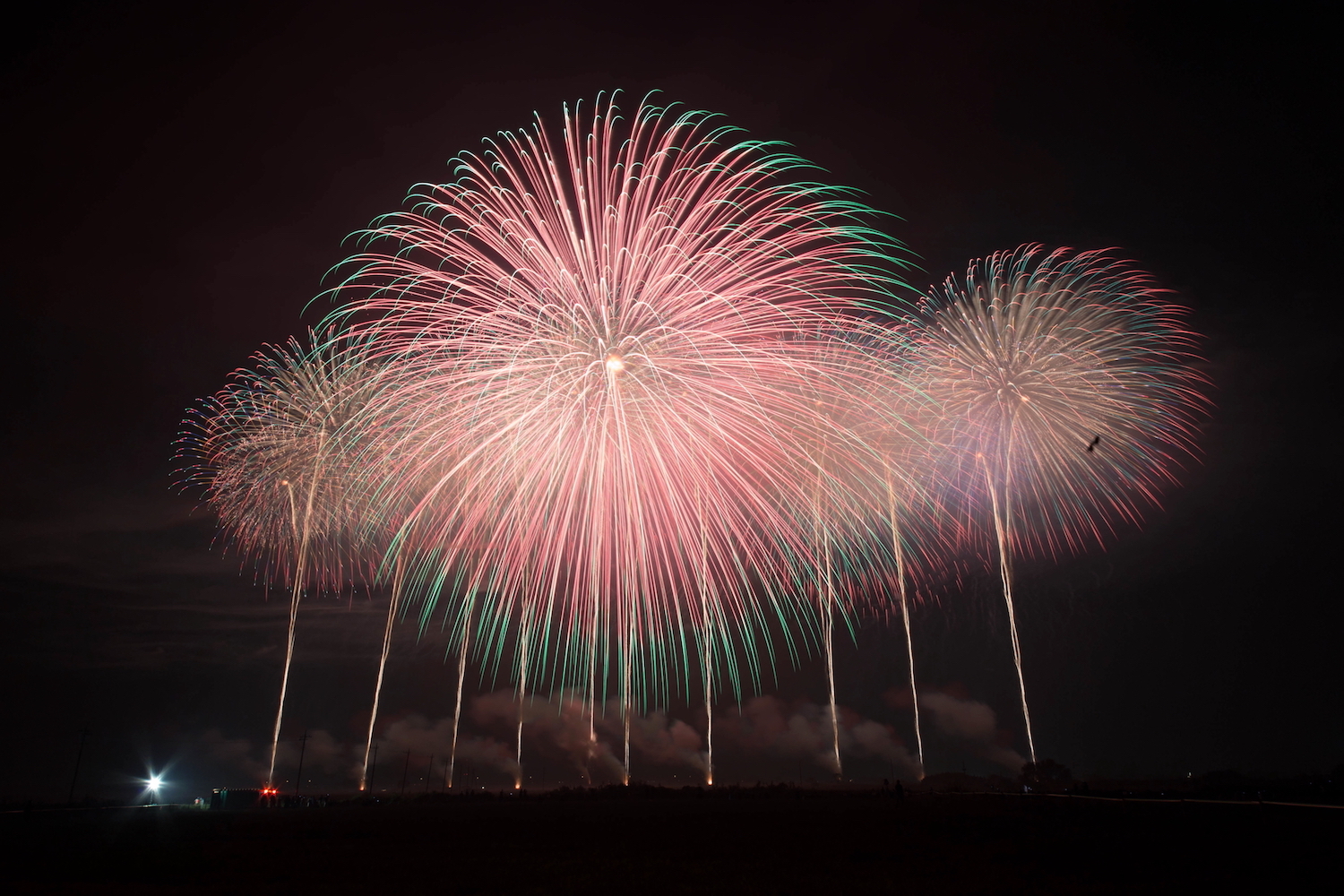
When a four-shaku shell detonates, you do not merely hear it. The blast wave hits your sternum fractions of a second before the acoustic roar rolls across the floodplain. Launched every autumn over the wide floodplains of the Arakawa River in Saitama Prefecture, the yonshakudama stands as one of the most audacious engineering feats in modern pyrotechnics.
While major metropolitan shows rely on rapid-fire computerized barrages of smaller calibers, the Konosu Fireworks Festival operates on raw kinetic scale. Organizers build their entire showcase around a single, record-breaking aerial sphere weighing nearly half a ton. As chronicled in a detailed SPICE(スパイス) Report on the festival’s development, this spectacle exists not through municipal bureaucracy, but through the local Konosu Chamber of Commerce Youth Division, who spent years refining the logistical and firing systems required to safely loft the world's heaviest firework record into the atmosphere.
📌 Key Takeaways:
- The Payload: The headlining 4-shaku aerial shell measures roughly 120 centimeters across, weighs over 460 kilograms, and detonates into a floral blossom exceeding 800 meters in diameter.
- The Location: The Arakawa riverbed viewing area offers natural amphitheater acoustics, with paid reservations centered at the Nukata athletic field seating grounds.
- The Transit Bottleneck: With upwards of 400,000 spectators funneling through JR Konosu Station, platform holds of 60 to 90 minutes are standard immediately following the finale.
The Engineering Feat of the World's Heaviest Aerial Shell
Standard Japanese aerial shells, known as shakudama (10-go), measure approximately 30 centimeters in diameter and weigh around 8.5 kilograms. They produce an impressive bloom roughly 300 meters wide. The yonshakudama operates on an entirely different scale of physics.
To launch a 120-centimeter shell weighing approximately 464 kilograms, pyrotechnicians use a custom-forged steel launch mortar standing several meters high. Lifting that immense mass requires dozens of kilograms of black powder in the lifting charge alone. The shell climbs past 800 meters into the night sky before the internal time fuse reaches the central bursting charge.
When detonation occurs, the burst diameter spans over 800 meters, filling the viewer's entire field of peripheral vision. The payload creates a golden willow canopy that lingers for seconds, drifting slowly toward the riverbank while the concussive boom rattles vehicle windows miles away in neighboring towns.
| Shell Classification | Diameter & Weight | Burst Diameter | Burst Altitude |
|---|---|---|---|
| Standard Shakudama (10-go) | 30 cm | 8.5 kg | ~300 meters | ~330 meters |
| San-shakudama (30-go) | 90 cm | ~280 kg | ~600 meters | ~600 meters |
| Yonshakudama (Konosu Standard) | 120 cm | ~464 kg | 800+ meters | 800+ meters |
Firing a projectile of this mass requires vast safety margins. Japanese pyrotechnic safety regulations mandate extensive clear zones around the launch site. The Arakawa riverbed offers the widest unobstructed open floodplain in the Kanto region, making it one of the few places near Tokyo legally permitted to host a blast of this magnitude.
Navigating the Arakawa Riverbed: Paid Seating vs. Free Turf
Spectator positioning dictates your experience. The primary event grounds divide into two distinct geographic zones: the Konosu side and the Yoshimi side across the river.
The official hub rests at the Nukata athletic field seating grounds. This area houses the festival headquarters, food stall avenues, and paid reserved seats. Reserved blue sheets, folding chair spaces, and photography platforms go on sale roughly two months prior via Japanese ticketing portals like Ticket Pia and convenience store kiosks. Securing a reserved spot eliminates the need to hold ground six hours early, granting front-row access to the low-altitude musical starmine sequences.
Unpaid attendees crowd the grassy slopes of the Arakawa embankment. Sightlines here remain clear because the river corridor contains no high-rise structures. However, prime levee positions fill completely by 1:00 PM for an evening start.
The western bank in Yoshimi Town functions as the insider alternative. While located farther from Konosu Station, this side offers vast grassy fields, shorter food stall queues, and a direct downwind view if prevailing October breezes blow westward. If you choose Yoshimi, plan your transport around private vehicle parking lots or local bus routes from Higashi-Matsuyama Station.
The Phoenix Finale and the Rhythm of an Autumn Sky
Unlike classic mid-summer shows that battle July humidity and haze, Saitama autumn fireworks benefit from crisp October air. Colder evening temperatures yield higher visibility and sharper color definition across long distances.
The program fires roughly 15,000 to 20,000 shells across two hours. The pacing builds rhythmically, alternating between traditional single-shell artistic competitions and high-density barrages set to dramatic orchestral scores.
Everything builds toward the festival's signature closer: the "Phoenix" musical starmine finale.
The finale begins with hundreds of rapid-fire starmines erupting in synchronized waves across a half-mile firing line. Just as the smoke clears from a rolling salvo of 100 consecutive shakudama large-caliber shells, the launch site goes pitch black. Announcers fall silent. A single deep ignition thump thuds in the distance, followed seconds later by a climbing gold tail that soars twice as high as anything seen prior. When the yonshakudama opens, the sky becomes a dome of falling gold embers.
Transit Realities: Managing the Konosu Station Bottleneck
The journey home requires careful tactical planning. Konosu Station sits on the JR Takasaki Line, roughly 50 minutes north of central Tokyo via the Ueno-Tokyo Line or Shonan-Shinjuku Line.
On festival night, a quiet commuter hub of 40,000 residents swells tenfold. The walk between the Nukata athletic field and Konosu Station takes 25 to 30 minutes under normal circumstances. Post-finale, the wall-to-wall foot traffic slows that pace to over an hour.
Local police implement aggressive crowd-metering gates at the station's west and east entrances. Queues to reach the ticket gates routinely back up into the station plaza, leaving thousands standing outside in the brisk autumn air for up to 90 minutes.
To avoid being stranded:
- Load your transit IC card (Suica or Pasmo) with at least 3,000 yen before departing Tokyo; ticket machines at Konosu will be inaccessible.
- Pack warm clothing. Autumn riverbed temperatures often fall into the single digits Celsius (low 50s or high 40s Fahrenheit) after dark.
- Consider walking south along the levee toward Kitamoto Station instead of joining the mass herd toward Konosu Station. The walk runs roughly 50 minutes, but you board the train one stop earlier, securing a seat before the crush hits.
Essential Gear for Riverbed Spectators
Autumn field viewing presents unique physical demands compared to urban waterfront shows. Preparation makes or breaks your evening:
- Ground Insulation: The riverbed grass leeches body heat through standard plastic picnic tarps. Pack a closed-cell foam pad or an aluminum-insulated ground mat.
- Layered Cold-Weather Outerwear: Wind whips unobstructed through the river corridor. A windproof shell, packable down layer, and fleece cap will keep you comfortable during the static wait between 3:00 PM and the 6:00 PM launch.
- Compact Headlamp: Street lighting across the inner riverbed is virtually non-existent. A hands-free light source prevents trips down steep levee stairs and helps you manage trash disposal in the dark.
- Cash Reserves: While electronic payments have spread across Tokyo, the hundreds of pop-up food stalls lining the levee operate almost exclusively in physical yen notes and coins.
Frequently Asked Questions (FAQ)
Q1: What date is the Konosu Fireworks Festival held each year?
A1: The festival is traditionally held on the first or second Saturday of October. In the event of stormy weather or flooded river conditions, organizers postpone the event to Sunday or cancel it entirely.
Q2: Is admission to the festival grounds free?
A2: General access to the vast majority of the Arakawa river embankment is completely free. Paid tickets are only required for reserved seating sections at the Nukata athletic field and select levee platforms.
Q3: Can you see the Yonshakudama if you arrive late?
A3: Because the four-shaku shell detonates at an altitude of over 800 meters, it is visible from kilometers away across the Saitama plain. If you arrive late and cannot reach the riverbed, you can still view the massive high-altitude burst from open areas surrounding Konosu Station or along the route 17 bypass.
What to Expect on Ground Level in 2026
Attending the Konosu Fireworks Festival means experiencing an extraordinary level of civic volunteerism alongside staggering pyrotechnic force. While municipal displays in central Tokyo focus on slick entertainment, Konosu remains an unapologetic display of raw power, community pride, and heavy industrial art. If you make the journey north into Saitama this autumn, dress warmly, arrive early, and give yourself plenty of time to navigate the departing crowds along the Arakawa. The sensory shock of that half-ton shell bursting over the floodplain will stay with you long after the final train pulls back into Tokyo.