Ultimate Okayama Tsudaka Lunch Guide: Top Dining Picks, Prices, and Parking Tips
Tucked just off the Sanyo Expressway's Okayama Interchange along National Route 53, Tsudaka has quietly become one of northern Okayama City's most practical dining corridors. Commuters, university staff from nearby campuses, and cross-prefecture travelers frequently converge here between 11:30 a.m. and 1:30 p.m. While downtown Kita Ward draws crowds toward Omotecho and the station mall basements, Tsudaka delivers something downtown rarely can: expansive suburban parking lots, swift service, and remarkably competitive pricing.
Inflationary pressures across the restaurant industry have made midday value a critical deciding factor for diners throughout western Japan. Regional culinary operators have shifted tactics to meet this demand. As tracked in a recent PR TIMES Report, Kita Ward-based Marine Polis Co., Ltd., overseen by President and CEO Ken Ikeda, expanded its weekday nigiri sushi lunch set priced at ¥1,100 across 17 branch locations in six prefectures. That emphasis on affordable, freshly prepared meals mirrors the wider dining landscape in Tsudaka, where farm-to-table outposts, classic Western diners, and hidden neighborhood cafes consistently undercut city-center price tags.
📌 Key Takeaways:
- Highway Corridor Advantage: Tsudaka sits directly south of the Okayama Interchange, making nearly all major restaurants driver-friendly with dedicated parking plazas.
- Farm-to-Table Expansion: Maniwa Agri Garden's Okayama outpost at Tsudaka 278-1 brings northern plateau greens and seasonal teishoku sets into suburban Kita Ward.
- Everyday Value Focus: Midday pricing remains exceptionally stable, anchored by weekday nigiri specials at ¥1,100 and generous Japanese-Western yoshoku plates under ¥1,400.
The Northern Hub: Why Tsudaka Attracts Midday Diners
Route 53 serves as northern Okayama’s primary arterial spine. Heavy morning traffic between the central business district and Tsuyama feeds straight through Tsudaka. Because commercial rent here runs lower than in central Okayama Station districts, restaurateurs design spacious dining rooms accompanied by 15-to-40-space private parking lots.
Drivers avoid the stressful hunt for paid multi-story garages. Solo workers on 45-minute lunch breaks slide into counter seats, receive hot tea within thirty seconds, and finish their meals before parking meters would even start ticking downtown. This logistical convenience shapes the local menu offerings. Tsudaka restaurants prioritize speed, generous portion sizes, and seasonal produce delivered straight from inland farms.
Farm Produce and Market Plates at Maniwa Agri Garden
The high-profile arrival of Maniwa Agri Garden’s dedicated Okayama branch at Tsudaka 278-1 signaled a major shift in the neighborhood's culinary identity. Originating in the cooler highland plateau of Maniwa City, the brand established its first permanent presence within Okayama City to connect urban consumers directly with northern mountain agriculture.
The venue functions as part fresh grocery market, part casual lunchtime diner. Lunch services center on balanced Japanese teishoku sets that elevate root vegetables, locally milled rice, and slow-braised meats. Diners build meals around rotating seasonal deli selections:
- Cold-pressed dressed greens sourced that morning from northern farms.
- Miso soups brewed with artisanal fermented paste from Maniwa producers.
- Low-temperature roasted pork and herb-crusted chicken cutlets.
Seating fills quickly after 11:45 a.m., populated by local residents and office workers seeking meals that avoid excessive cooking oil. An on-site retail corner allows guests to purchase the exact vegetables, dressings, and soy sauces used in their midday lunch sets before heading back to their vehicles.
The ¥1,100 Benchmark: Value-Driven Sushi and Seafood Sets
Seafood remains a core staple of Tsudaka lunch breaks. Regional conveyor-belt and counter-sushi operators in northern Kita Ward face steep competition from both independent izakayas and national restaurant chains. In response, regional operators have doubled down on weekday-only lunch menus designed to lure value-conscious solo diners.
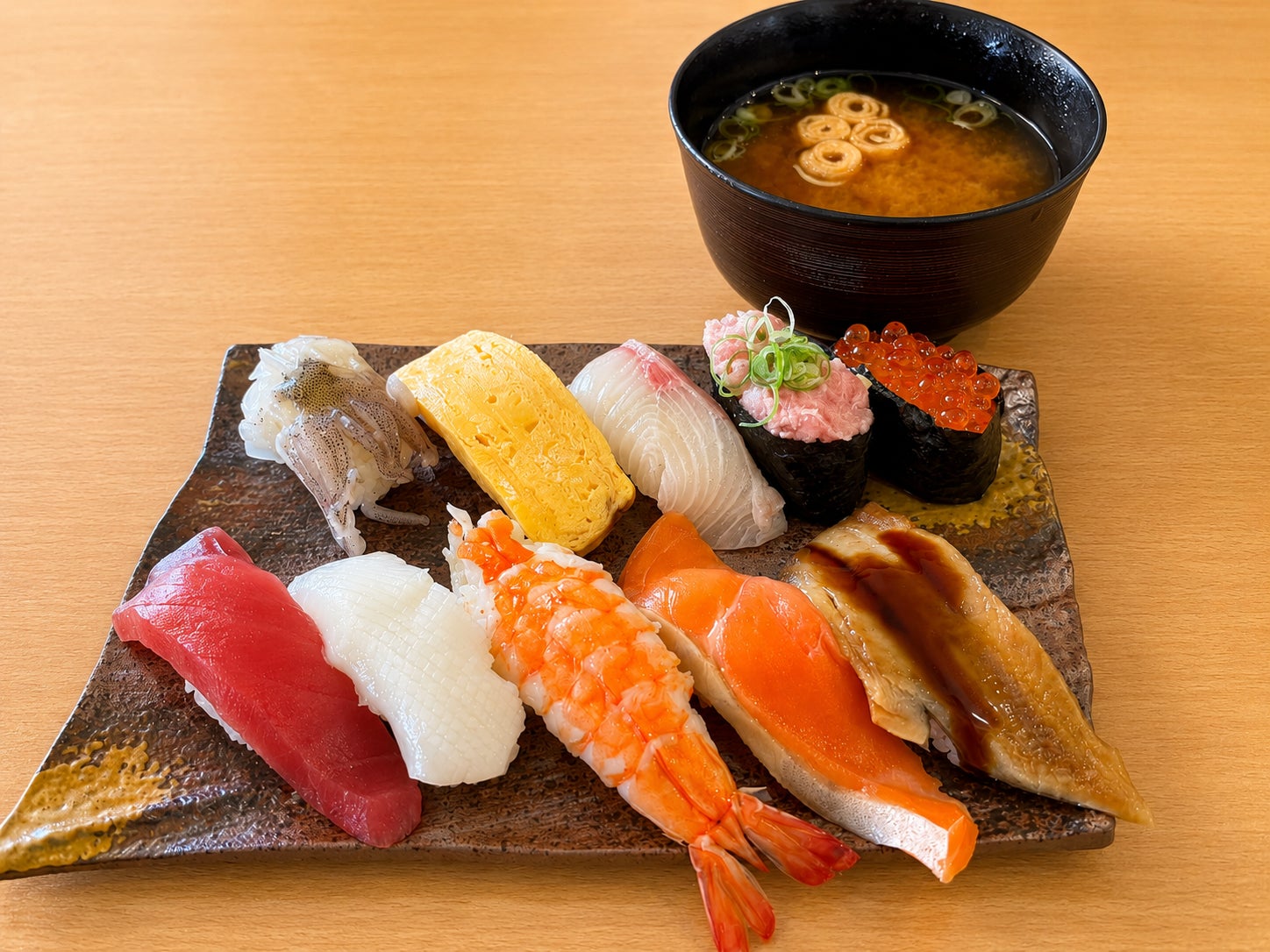
Marine Polis Co., Ltd., which operates chains including Kaito and Sea Jack from its headquarters in Kita Ward, demonstrated this dynamic by standardizing a freshly rolled nigiri lunch set for ¥1,100. The plate pairs eight to ten pieces of daily market catch, such as sea bream, yellowtail, and tuna, with a steaming bowl of red-miso fish soup (arataki). Independent seafood spots along Route 53 match this baseline with their own sashimi bowls (kaisendon) and tempura combinations ranging from ¥1,200 to ¥1,600. Seafood lunch sets in Tsudaka typically cost 20% to 30% less than equivalent configurations sold inside Okayama Station's retail corridors.

Comparing Tsudaka's Top Midday Dining Formats
Navigating lunch along the Route 53 corridor requires balancing speed, appetite, and parking availability. The following overview outlines what diners encounter across Tsudaka’s primary culinary genres during standard weekday operating hours:
| Dining Style | Signature Menu Items | Average Price Range | Parking & Speed |
|---|---|---|---|
| Farm-to-Table Market Dining | Seasonal vegetable teishoku, steamed pork deli plates | ¥1,200, ¥1,800 | Large on-site lot; moderate wait during 12:00, 12:45 peak |
| Suburban Sushi Counters | Nigiri sets (8, 10 pcs) with soup, kaisendon | ¥1,100, ¥1,500 | Shared strip-mall lots; rapid turnaround under 25 minutes |
| Classic Yoshoku Diners | Demi-glace hamburg steak, fried shrimp towers, pork tonkatsu | ¥1,000, ¥1,400 | 10, 15 private stalls; queues form outside by 11:40 a.m. |
| Residential Specialty Cafes | Rice flour waffles, curry bowls, Shirobara soft serve | ¥800, ¥1,300 | Compact 4, 8 vehicle lots; relaxed pace, best for post-lunch visits |
Sizzling Skillets: Western-Style Yoshoku Diners
Japanese Western food (yoshoku) maintains a loyal following in Tsudaka. These venues operate under family ownership rather than corporate franchise models, serving hefty comfort food on cast-iron hot plates.
The midday draw here revolves around classic combo platters. Hand-patted ground beef hamburg steaks arrive sizzling beneath thick, simmered demi-glace sauces. They share plate space with jumbo fried shrimp (ebi furai) coated in coarse panko crumbs and dollops of tart pickled-relish mayonnaise. White rice is served on flat ceramic plates alongside shredded cabbage mountains dressed in house sesame oil vinaigrette.
Because these kitchens prepare items to order, tables turn over slower than at ramen counters or noodle houses. Arriving before 11:30 a.m. or after 1:15 p.m. allows diners to bypass the standard 20-minute roadside queue. For active tradespeople and logistics drivers moving through the Tsudaka Interchange, these yoshoku spots remain the undisputed heavyweight choice for pure calorie-per-yen value.
Residential Backstreets: Shirobara Soft Serve and Rice Flour Waffles
Turn off Route 53 into the residential blocks of Tsudaka, and the commercial bustle disappears. Tucked along narrow neighborhood streets stand intimate dessert-focused cafes serving customers who prefer a lighter, sweet midday break.
One notable fixture in Tsudaka's residential zone specializes in dairy treats made with milk from Daisen Dairy Cooperative in nearby Tottori Prefecture, famous for its Shirobara milk soft serve. The rich, milk-forward ice cream carries a clean sweetness that pairs with house-baked rice flour waffles. Made without wheat flour, these waffles deliver a crisp golden exterior and a chewy, mochi-like interior.
These residential cafes operate with limited capacity, often offering just four to five indoor tables alongside a takeout counter. Dedicated parking spaces are tight, typically accommodating four to eight vehicles, meaning visitors must follow neighborhood parking rules carefully. They serve as an ideal decompression stop following a heavier meal along the highway strip.
Frequently Asked Questions (FAQ)
Q1: Do restaurants in Tsudaka offer customer parking?
Yes. Almost all dining establishments in Tsudaka, from roadside highway venues to small residential cafes, provide free dedicated customer parking. Roadside venues like Maniwa Agri Garden feature spacious parking plazas, while smaller cafes generally offer 4 to 8 dedicated spots.
Q2: What is the average price for a weekday lunch set in Tsudaka?
Most standard lunch sets fall between ¥1,000 and ¥1,500. Fast-casual sushi sets start at ¥1,100, hearty yoshoku skillets average ¥1,200 to ¥1,400, and organic farm-to-table lunch plates range from ¥1,200 to ¥1,800.
Q3: Is a car necessary to access Tsudaka's lunch spots?
A personal vehicle or rental car is strongly recommended. While local buses run along Route 53 from Okayama Station toward the northern suburbs, walking between residential cafes and highway retail parks takes considerable time under summer heat or rain.
Navigating Tsudaka's Midday Food Scene
Tsudaka offers a clear blueprint for what suburban Japanese midday dining does best: unpretentious execution, frictionless parking, and tangible food quality. Whether dropping in for Maniwa-grown highland vegetables, taking advantage of a competitive ¥1,100 nigiri sushi lunch, or winding through quiet neighborhood streets for freshly made rice flour waffles, travelers through northern Kita Ward will find midday satisfaction without the city-center stress. Timing your visit slightly outside the 12:00 to 12:45 peak ensures fast seating, stress-free parking, and a seamless stop along Okayama's northern transit gateway.