Up Close with Wild Flora and Chipmunks: A Visual Tour of Hida Mountain Wildflower Garden
Ten minutes south of Takayama’s preserved Edo-period merchant streets, the urban asphalt abruptly yields to cedar-lined slopes and crisp mountain air. Here sits Risu no Mori (Hida Squirrel Forest and Mountain Wildflower Garden), a quiet sanctuary where hundreds of Siberian chipmunks dart between the roots of native Japanese highland flora. While most international travelers head to Gifu Prefecture strictly for the historic Sanmachi Suji district or UNESCO-listed Shirakawa-go, this foothill retreat provides an unscripted look at the Northern Alps' native biodiversity.
The site also mirrors a broader conservation movement sweeping the Hida Basin. The Ministry of the Environment honored neighboring Hida City with the Partnership Award at the 19th Ecotourism Grand Prize for its "Mori-Suke!" initiative under Mayor Junya Tsuzuku, recognizing community-driven forestry preservation as documented in a PR TIMES Report. As regional artisans and culinary figures revitalize native mountain herbs, Risu no Mori serves as a bridge between Gifu's wild highland ecology and visitor-led conservation.
📌 Key Takeaways:
- The Experience: An open-air highland enclosure where free-roaming Siberian chipmunks and Japanese squirrels interact directly with visitors amidst native alpine garden beds.
- Botanical Significance: The grounds protect dozens of wild mountain herbs and alpine wildflowers indigenous to Gifu's subalpine terrain.
- Travel Logistics: Located roughly 4 kilometers from JR Takayama Station, the garden operates from mid-spring through late autumn before animals enter winter torpor.
The Mountain Foothills Shaping Gifu's Botanical Sanctuary
The Hida region sits boxed in by 3,000-meter peaks. Cold air drains off Mount Norikura into the basin, creating dramatic temperature swings that stunt commercial crops but nourish tough, resilient mountain perennials. Risu no Mori was founded to preserve this delicate ecosystem while giving travelers an unhurried, tactile encounter with highland biology.
The botanical grounds feature naturally graded footpaths that curve through low-canopy woodland. Instead of manicured, symmetrical flower beds, the facility maintains a semi-wild undergrowth. Ephemeral spring wildflowers emerge from melting snowdrifts in April, followed by heat-tolerant medicinal roots in July and blazing deciduous foliage in October.
This environment supports two distinct squirrel species. The main attraction is the Siberian chipmunk (Tamias sibiricus), recognized by its five dark dorsal stripes. Alongside them are Japanese squirrels (Sciurus lis), larger and more cautious, navigating elevated timber runs overhead. Together, the wildlife and surrounding flora recreate the micro-habitat of the Northern Japan Alps.
Inside the Enclosure: The Daily Rhythm of Siberian Chipmunks
Visitors enter through double magnetic containment doors designed to prevent escapes. Staff members hand each guest a heavy work mitten and a small paper cup containing roasted sunflower seeds.
The chipmunks do not hesitate. Conditioned to associate human silhouettes with high-fat seeds, they sprint down spruce branches, scaling trouser legs and leaping into outstretched palms. Watching a chipmunk pack its cheek pouches, stuffing up to eight full seeds into its elastic cheek skin before scampering off to bury the stash, provides real-time insight into mammalian caching instincts.
The behavior changes with the sun. Early morning visitors between 9:00 AM and 11:00 AM encounter an energetic scramble, as hungry chipmunks forage aggressively after overnight rest. By mid-afternoon, activity drops noticeably. Full pouches give way to basking behavior on warmed granite boulders, allowing photographers to take steady, macro-lens captures of the animals resting beside mountain ferns.
A Seasonal Guide to Hida’s Alpine Flora and Wildlife Cycles
Timing a trip to Risu no Mori dictates both the floral scenery and the behavioral state of the animals. The park closes entirely during the freezing winter months, leaving a seven-month window to experience the site.
| Season | Peak Floral Blooms | Chipmunk Behavioral Patterns | Field Conditions |
|---|---|---|---|
| Spring (April, May) | Asian fawn lily (Katakuri), Japanese primrose, skunk cabbage | High foraging intensity post-hibernation; thin spring coats | Crisp mornings (5°C, 12°C); damp soil paths |
| Summer (June, August) | Alpine gentian, daylilies, wild angelica, mountain hydrangeas | Peak activity in early morning; resting in shaded logs by midday | Warm, humid; thick undergrowth and vibrant greenery |
| Autumn (Sept, Nov) | Japanese bellflowers, silver grass, burning red mountain maples | Hyperphagia phase; relentless seed burying before winter sleep | Cool mountain breeze; heavy leaf fall covering ground caches |
Spring reveals fragile understory blossoms that vanish once the forest canopy closes. By late September, the dynamic flips. Chipmunks enter hyperphagia, a biological phase marked by non-stop eating and caching to accumulate brown fat. Their coats thicken, their bodies round out, and their interactions with park visitors become urgent.
Reviving Highland Botanicals: Ecotourism and Medicinal Herb Heritage
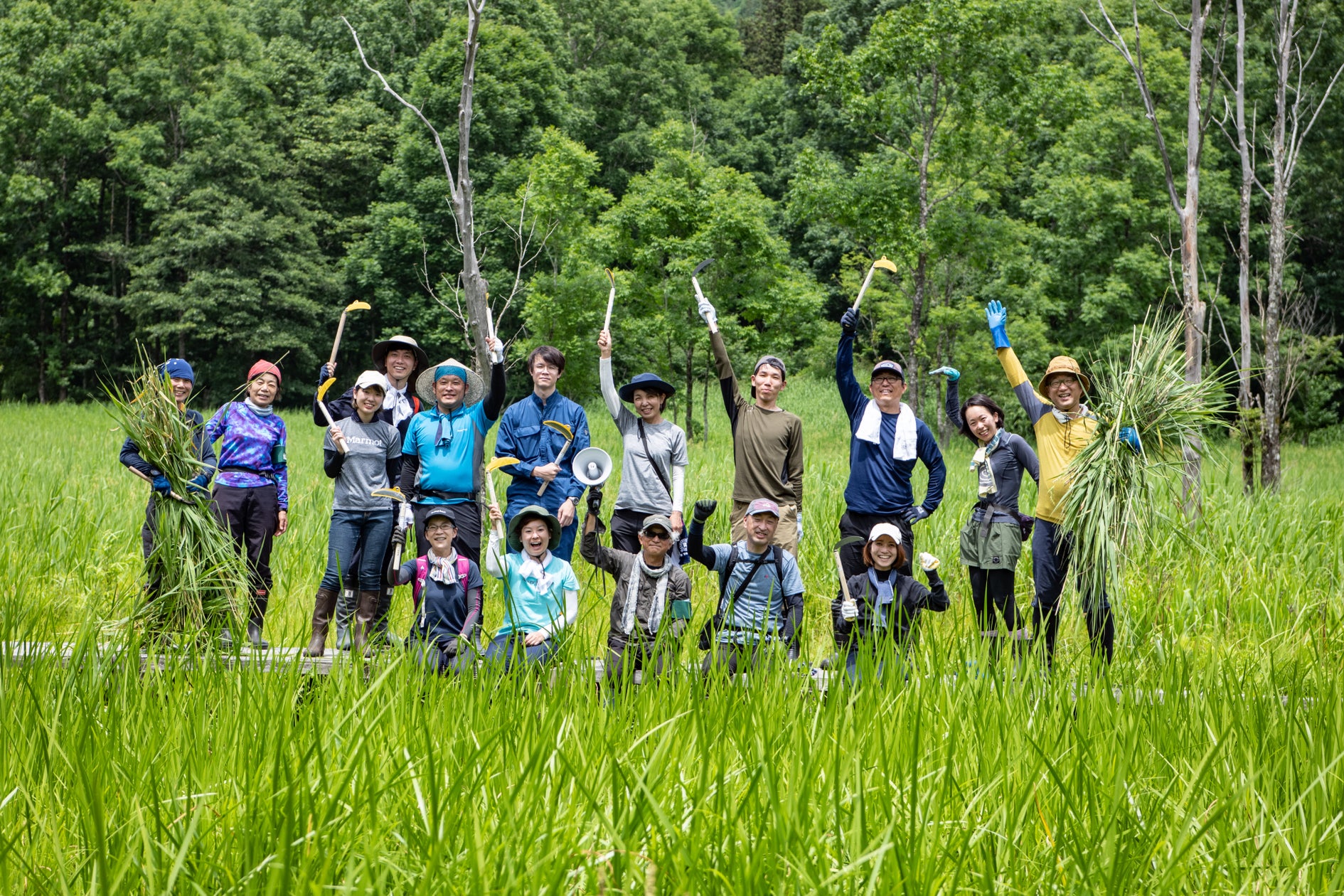
The botanical garden side of the park connects directly to the historical identity of the Hida mountains. For centuries, isolated mountain settlements relied on wild forest vegetation (yakusou) for survival and home remedies. Over 240 species of native medicinal plants grow across these highlands, including dokudami (chameleon plant), wild ginger, and angelica root.
This botanical heritage is finding new life across Gifu. Culinary figures such as Chiaki Kitahira of Busuitei OHAKO have begun incorporating wild highland herbs into modern confectionery and wellness cuisine, demonstrating how traditional forestry knowledge can create sustainable livelihoods.
At Risu no Mori, this same botanical legacy is presented as an interactive living catalog. Visitors can trace how native rodents and local plants rely on one another. The chipmunks disperse seeds throughout the garden floor, tucking them beneath roots where forgotten supplies germinate the following spring. It is a closed, visible loop of alpine regeneration.
Navigating the Grounds: Logistics for Takayama Day Trips
Adding Risu no Mori to a Takayama itinerary requires minor advance planning, as it sits away from the central rail hub.
- Getting There: From JR Takayama Station, the easiest option is a 10-minute taxi ride, costing approximately ¥1,800 to ¥2,400. Alternatively, local Nouhi buses run along the Matsunoki route; get off at the Matsunoki Higashi stop, followed by a gentle five-minute uphill walk.
- Admission and Hours: Adult entry runs around ¥880, while children enter for ¥440. Seed packets generally cost ¥100 to ¥200 per container. The park typically operates from 9:00 AM to 5:00 PM (final entry 4:30 PM), closing from late November through March for animal hibernation.
- Handling Protocols: Visitors must use the provided gloves. Siberian chipmunks have sharp claws and needle-thin teeth; while habituated to people, they act purely on feeding reflexes. Loose clothing, dangling camera straps, and open bags often attract curious climbers.
Frequently Asked Questions (FAQ)
Q1: Are the chipmunks kept in tiny cages or free to move?
A1: The chipmunks live in a spacious, walk-in outdoor mesh enclosure built directly over natural earth, rocks, and trees. They run across branches, dig natural burrows, and roam freely around visitors along the garden pathways.
Q2: Can visitors bring outside food or nuts to feed the animals?
A2: No. Outside food is strictly prohibited to protect animal health and prevent dietary complications. Visitors may only feed the dried sunflower seeds sold on-site by the park staff.
Q3: How does weather affect a visit to the park?
A3: Because the main enclosure and botanical walking paths are outdoors, heavy rain drives the chipmunks into covered shelters and hollow logs, sharply reducing activity. Overcast or partly cloudy mornings offer the best conditions for both animal activity and photography.
The Enduring Pull of Takayama's Living Forest
A visit to Risu no Mori cuts through the museum-like polish of Takayama's tourist center. Standing quietly on a damp pine-needle path with an alpine chipmunk balanced on your wrist offers a different understanding of Gifu Prefecture. This mountain basin is not just an architectural relic of the Edo era. It remains a wild, living landscape where alpine botanicals, local conservationists, and mountain wildlife hold fast to their native ground.