Visible Signs Your Refrigerator Cooling System Is Failing Before It Dies

You open the refrigerator door on a Tuesday morning to find softened butter, sweaty cheese packages, and milk that smells sour two days before its expiration date. You check the freezer compartment below, but the ice cubes remain frozen solid. This uneven temperature split is one of the most common early alarms of domestic refrigeration trouble. According to a case documented in a recent note Report, a household running a 14-year-old unit experienced total cooling failure exclusively in the fresh food compartment while the freezer operated normally, forcing the family to weigh an expensive technical call-out against full replacement.
Most homeowners assume a refrigerator dies all at once, accompanied by silence or smoke. In practice, modern compressor systems rarely suffer instantaneous cardiac arrest. Instead, domestic refrigeration units signal their demise over several weeks through subtle physical cues: degraded magnetic seals, silent ice blockages behind plastic paneling, clicking start relays, and persistent heat radiation from side panels. Catching these early mechanical breakdowns determines whether you face an inexpensive $40 part swap or complete food spoilage and an emergency $1,500 appliance purchase.
📌 Key Takeaways:
- Core Symptom: A freezing freezer paired with a warm fresh food chamber almost always points to an airflow obstruction or defrost failure rather than a dead compressor.
- Mechanical Culprits: Frost buildup on evaporator coils, failed air damper control assemblies, and burned-out evaporator fan motors cause more than 60% of localized compartment warming.
- Financial Decision Line: If a unit has operated for more than 10 to 12 years and the repair quote exceeds 50% of a replacement unit's purchase price, replacement offers significantly better energy payback.
The Lukewarm Fresh Food Chamber: Why Freezers Stay Cold While Milk Spoils
Traditional dual-compartment refrigerators do not feature two separate cooling engines. A single compressor circulates refrigerant through a single set of evaporator coils tucked behind the rear wall of the freezer compartment. That single coil produces 100% of the cooling for the entire appliance.
To keep the fresh food compartment at the standard 37°F (3°C) while maintaining the freezer at 0°F (-18°C), the system relies on an evaporator fan motor to blow sub-zero air across those cold coils and up through an internal channel. An automated air damper control regulates this exchange. The damper acts as a motorized mechanical flap, opening when the fresh food section warms up and snapping shut once the target temperature is reached.
When the fresh food compartment turns lukewarm while the freezer remains cold, the failure sits directly in that distribution pathway. If the air damper control jams shut due to stripped plastic gears, freezing air stays locked in the freezer. If the evaporator fan motor burns out or suffers broken blades, cold air pools uselessly at the bottom of the unit. The compressor continues running continuously, driving freezer temperatures far below zero, while vegetables wilt and dairy spoils in the upper chamber.
Surface Warning Signs You Can Inspect Without Professional Tools
Before unscrewing interior panels or calling an emergency technician, direct physical inspection reveals clear visual evidence of systemic cooling trouble. Household owners often ignore these symptoms until catastrophic temperature collapse occurs.
The first point of inspection is the door gasket seal leak. Flexible vinyl gaskets line the perimeter of every refrigerator door, embedded with flexible magnetic strips designed to pull the door flush against the metal cabinet. Over five to seven years, residual oils from human hands, spilled condiments, and simple friction cause the vinyl to crack, warp, or lose elasticity. When warm, ambient room air constantly seeps past a compromised gasket, it introduces continuous humidity into the refrigerated space.
You can verify seal integrity using the dollar bill test: close the door on a crisp dollar bill along several points on the frame. If the bill pulls out easily without firm magnetic resistance, the seal is broken. In severe cases, moisture visibly gathers along the exterior mullion, or lower crisper drawer movements cause the upper doors to pop open unexpectedly, a common symptom reported by long-term appliance owners before cooling degrades entirely.
The second visible indicator involves the rear interior vents. If you notice thick, snowy frost creeping out from the horizontal air vents inside the freezer, the automated defrost system has broken down. In a healthy cycle, an electric defrost heater melts accumulated frost off the coils every 8 to 12 hours, regulated by a defrost thermostat or electronic control board. When the defrost thermostat malfunctions, frost accumulates continuously. Within 48 hours, a solid wall of ice completely encases the coils, choking off uneven cooling airflow to the fresh food zone.
Diagnostic Breakdown: Mechanical Failure vs. Routine Maintenance
Distinguishing between external airflow blockages and internal component failure prevents unnecessary appliance abandonment. The following diagnostic reference details typical symptoms, mechanical causes, and verified replacement cost projections based on current North American and global repair benchmarks.
| Visible Symptom | Underlying Component Fault | Physical Clue / Verification | Average Repair Cost (2026) |
|---|---|---|---|
| Freezer cold, fresh food chamber warm | Air damper control blockage or failed motor | No airflow coming from upper interior baffle | $120, $240 |
| Snowy frost across freezer back panel | Defrost thermostat malfunction or burned heater | Coils solid with ice; open circuit on multimeter | $150, $320 |
| Rattling, squealing, or silent rear section | Evaporator fan motor failure | Fan blades do not spin when door switch is held | $140, $280 |
| Cabinet sides scalding hot; cycles run 24/7 | Condenser coils dust buildup | Thick lint, pet fur, and grease carpet underside coils | $0 (DIY) / $90, $150 (Service) |
| Both compartments slowly warming above 45°F | Refrigerant leak symptoms or compressor failure | Oily residue on copper tubing; partial coil frosting | $650, $1,100 |
| Wild temperature swings from freezing to warm | Defective temperature sensor thermistor | Incorrect resistance reading against temperature chart | $110, $210 |
The Heat Engine Stalls: Compressor Overheating and Refrigerant Leaks
When clean airflow and functional defrost components check out, the problem enters the sealed refrigeration loop. Here, two primary culprits cause total system failure: compressor overheating and slow refrigerant discharge.
The compressor pump sits in the bottom rear compartment, pressurizing vaporized refrigerant gas and pushing heat out through the condenser coils. Household dust, pet dander, and grease routinely adhere to these coils. Official maintenance advisories released by major manufacturers, including technical bulletins from Panasonic, repeatedly stress that restricted heat dissipation forces the compressor to run under extreme thermal stress. When air cannot flow across the condenser, internal cylinder temperatures skyrocket. Thermal overload switches trip every few minutes, producing an audible metallic click followed by silence. The unit tries to restart, overheats, and shuts down again before moving any significant heat out of the cabinet.
A more insidious failure involves refrigerant leak symptoms. Unlike automotive tires, a refrigerator's sealed system never consumes or burns refrigerant. If the chemical charge drops, the system has developed a pinhole puncture, typically caused by galvanic corrosion where copper tubing joins aluminum heat exchangers.
The telltale sign of a low refrigerant charge is partial coil frosting. While a defrost failure turns the entire evaporator into a solid block of ice, a refrigerant leak leaves the coil mostly dry, with frost forming exclusively on the first few inches where the capillary tube feeds refrigerant into the system. Technicians also look for dark, oily residue on solder joints, as lubricating oil suspended in the refrigerant escapes alongside the gas. Because recharging a sealed system with modern refrigerants requires brazing, EPA-certified recovery, and vacuum drying, professional labor costs make this repair uneconomical on older units.
The Math of Longevity: Repair Costs Versus Modern Replacement
Deciding whether to salvage an aging refrigerator comes down to operational math. In consumer households, appliances routinely operate well beyond their designed economic lifespan. While older mid-century refrigerators lasted 20 years, contemporary units equipped with digital microprocessors, dual-zone dampers, and high-efficiency inverter compressors operate with an anticipated service lifespan of 10 to 14 years.
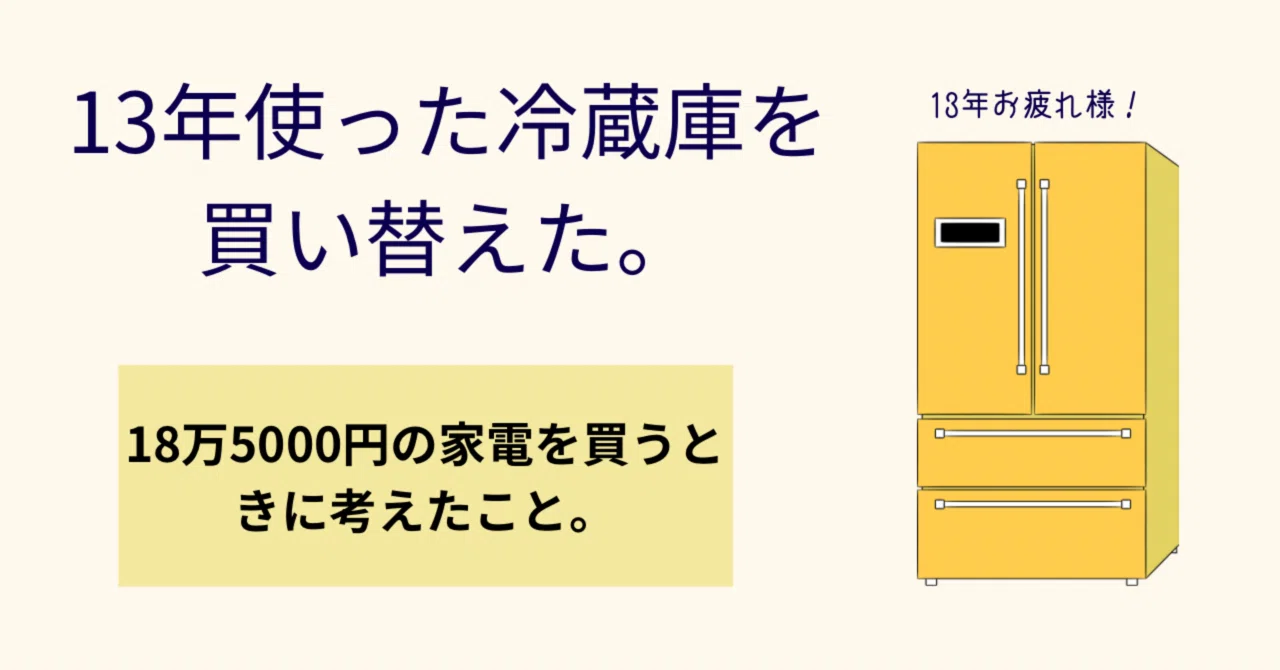
Consider the practical economics documented by Japanese appliance owner accounts, where consumers replacing a 13-year-old 400-liter multi-door unit spent roughly 185,000 yen (approximately $1,200 to $1,300) on a modern energy-efficient model. The family had noticed degrading cooling performance and doors unlatching spontaneously for nearly a year. A full compressor or sealed-system repair on that aging unit would have cost between $600 and $800, easily exceeding half the value of a brand-new appliance carrying a fresh manufacturer warranty.
Industry service veterans apply the 50% rule: if an appliance is more than halfway through its expected 10-to-12-year lifespan and the estimated repair bill exceeds 50% of the cost of a comparable replacement, repairing it yields negative financial returns. Inverter-driven compressors manufactured in 2026 consume 30% to 45% less annual kilowatt-hours than units manufactured prior to 2014. Throwing several hundred dollars at an aging chassis with hardened plastic fittings, brittle wire harnesses, and tired magnetic seals only delays an inevitable replacement by a few short months.
Frequently Asked Questions (FAQ)
Q1: Why is my refrigerator compartment warming up while the freezer is still freezing solid?
A1: This almost always indicates an airflow or defrost breakdown, not a blown compressor. Frost buildup on the evaporator coils, a broken evaporator fan motor, or a stuck air damper control prevents chilled air from migrating from the freezer compartment into the fresh food section.
Q2: How can I tell if my condenser coils need immediate cleaning?
A2: Place your hand against the exterior cabinet walls or inspect the lower metal grille. If the sides feel hot to the touch, the refrigerator runs continuously without cycling off, or you see a visible blanket of dust on the coils underneath or behind the machine, clean them immediately using a refrigerator coil brush and vacuum.
Q3: Is it worth repairing a refrigerant leak on an 8-year-old refrigerator?
A3: Generally, no. Repairing a sealed system requires locating microscopic pinholes, brazing corroded tubing, replacing the filter-drier, and recharging the refrigerant. Quotes for sealed-system work routinely range from $650 to over $1,000, which approaches the cost of a new mid-range refrigerator.
Navigating the Tipping Point Between Maintenance and Replacement
Confronting an ailing refrigerator requires swift, objective troubleshooting before food safety risks force an unresearched emergency purchase. Start with the zero-dollar physical inspections: clean the lower condenser coils, examine the door gasket seals with the dollar bill check, verify that interior vent ports are not physically obstructed by oversized food containers, and listen for the distinct hum of the evaporator fan motor.
When diagnostic testing points to a single low-cost component, a $25 thermistor, a $45 defrost thermostat, or a $60 air damper, tackling the repair delivers clear practical value. But when diagnosis reveals an overheated compressor struggling against a leaking sealed system inside a cabinet that has been humming for over a decade, recognize the operational limit. Stepping back from an unfixable sealed loop and investing in an updated, energy-efficient platform protects your food supply, trims monthly utility bills, and permanently ends the uncertainty of lukewarm mornings.