Visual Guide: How to Spot a Tanuki-Faced Shiba Inu Puppy Before Adopting
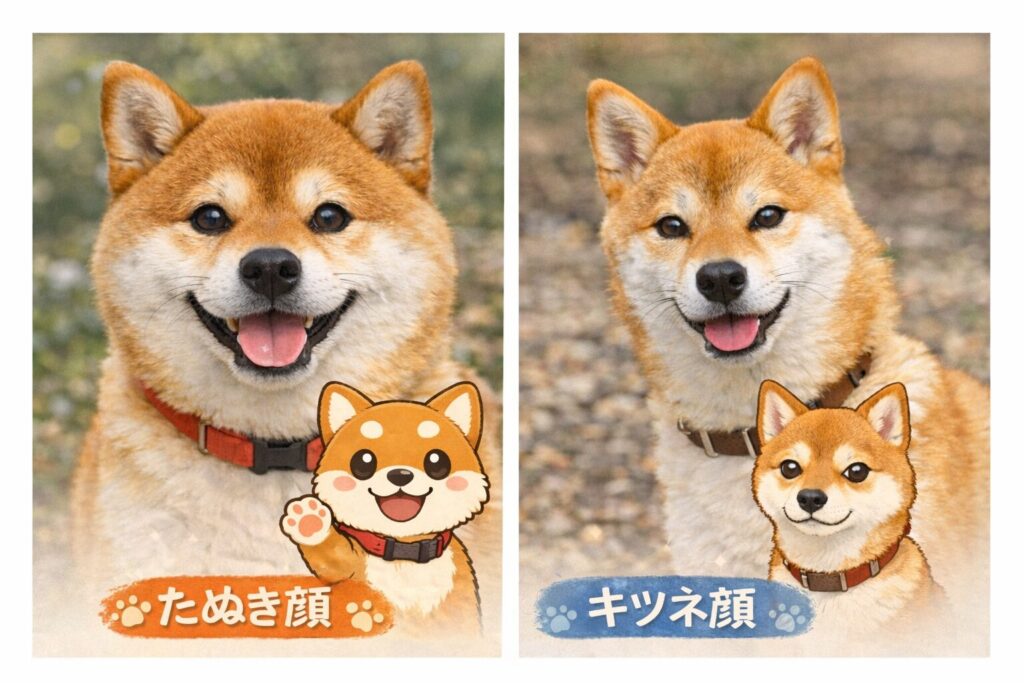
Prospective Shiba Inu owners often find themselves drawn to the rounded, plush look of the "tanuki" face, a classic phenotype evoking the wild Japanese raccoon dog. As highlighted in a viral Yahoo!ニュース Report documenting an eight-year-old Shiba named Yuna-chan, puppies that look like round, mischievous tanuki bundles at two months old routinely grow into muscular, broad-chested adults with commanding presence.
Evaluating an eight-week-old puppy for these characteristics requires a trained eye. Baby fat and puppy fluff conceal underlying skeletal architecture, and many young dogs experience radical growth spurts that reshape their skulls entirely between four and ten months of age. Discerning authentic tanuki traits before bringing a puppy home means looking past temporary cuteness to examine skeletal proportion, muzzle depth, and bloodline lineage.
📌 Key Takeaways:
- The Bone Factor: Genuine tanuki traits stem from broad zygomatic arches and a deep, blunt muzzle rather than puppy fur volume.
- Lineage Traces: The look traces directly to the historical Shinshu Shiba bloodline, renowned for solid bone mass, tight ear spacing, and compact frames.
- The "Monkey Face" Phase: Between 4, 7 months, almost every puppy temporarily loses facial volume, testing whether adult cheek fullness will actually materialize.
- Standard Adherence: Japanese preservation standards value balance; ethical breeders evaluate whole-body structure rather than breeding purely for exaggerated facial roundness.
The Genetic Divide: Kitsune-gao vs Tanuki-gao
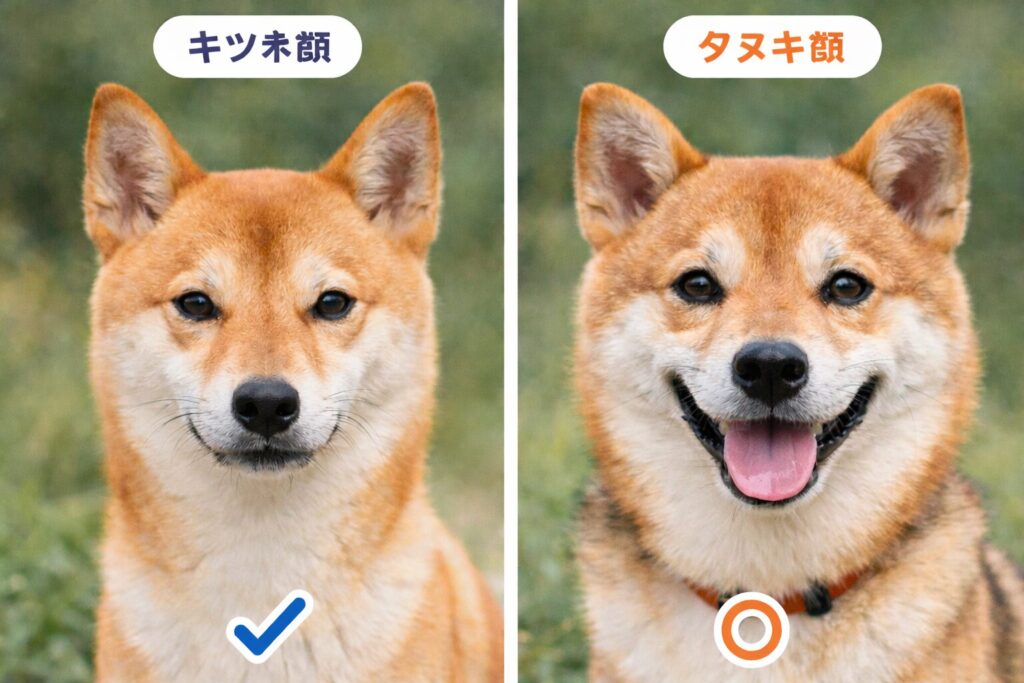
In Japan, dog enthusiasts divide Shiba Inu aesthetics into two distinct archetypes: kitsune-gao (fox face) and tanuki-gao (raccoon dog face). Neither represents a separate breed. Both fall under the broader umbrella defined by the Nihon Ken Hozonkai (NIPPO) standard established in 1934, yet they reflect the distinct regional landraces that survived the near-extinction of native Japanese dogs during World War II.
The kitsune profile traces back to ancestral hunting stock like the Mino Shiba and San'in Shiba. These dogs featured slender skulls, elongated muzzles, higher ear sets, and lithe frames optimized for agility in steep mountain terrain. Their facial contours form an inverted triangle, giving them an alert, keen expression.
The tanuki profile descends from the central mountainous Shinshu Shiba bloodline. Bred to navigate heavy snow and thick brush, these dogs developed heavier skeletal frames, thicker necks, and wide cranial vaults. The zygomatic arches (the cheekbones) flare outward, supporting dense musculature that produces a flat, broad forehead and substantial cheeks. When you look at a tanuki-type dog head-on, the head forms a rounded, robust hexagon rather than a narrow wedge.
Puppy Cranial Breadth and Muzzle Depth
Evaluating an eight-to-twelve-week-old puppy begins with the muzzle profile. Pet shoppers often mistake soft puppy lips for a wide jaw, but the skeletal foundation beneath tells the real story.
Place your fingers gently along the sides of the puppy’s muzzle. A future fox-faced dog shows a taper that begins immediately forward of the eyes, angling sharply toward a narrow, delicate nose leather. A puppy carrying tanuki traits features a blunt, cylindrical muzzle that retains thickness all the way to the tip. The ratio of muzzle length to skull length should ideally sit near 40:60 under Japanese breed guidelines.
Examine the stop, the indentation where the muzzle meets the forehead. Tanuki-type puppies display a defined, well-chiseled stop angle. The transition is pronounced, creating a clear shelf between the bridge of the nose and the broad, flat planes of the forehead. If the bridge of the nose slopes upward gradually into the crown without a distinct break, the dog will develop a streamlined, fox-like head as an adult.
Ear Set, Geometric Spacing, and Eye Angles
Ears reveal structural proportion long before the dog develops its adult coat. Shiba puppies are born with floppy ears that gradually erect between six and twelve weeks. How and where those ears sit on the cranium provides an immediate diagnostic marker for adult head shape.
On a tanuki-faced puppy, the ears are comparatively small, thick, and spaced widely apart on the outer perimeter of the skull. The outer edges of the ears should follow the line of the neck when viewed from the front, tilting forward slightly in a characteristic posture called sashi-ashi. If the ear bases sit close together at the crown of the head, the skull lacks cranial breadth, and the mature dog will take on a higher, narrower silhouette.
Eye shape reinforces this architecture. Tanuki-type dogs possess deep-set, triangular eyes where the outer corner tilts subtly upward toward the outer base of the ear. The distance between the eyes matters: broad eye spacing mirrors a wide underlying nasal cavity and sturdy jaw structure. Close-set, circular eyes often indicate poor breeding and rarely accompany sound, traditional bone balance.
Structural Indicators: Comparing Puppy Facial Hallmarks
Puppies change dramatically from weaning to maturity. To identify whether an eight-week-old puppy exhibits genuine tanuki framework or simply lingering nursing plumpness, compare structural markers against standard developmental traits.
| Morphological Marker | Tanuki-Gao (Raccoon Dog Type) | Kitsune-Gao (Fox Type) |
|---|---|---|
| Cranial Vault & Cheeks | Broad forehead; flared zygomatic arches with firm muscular pads. | Flat, narrow crown; flat cheekbones that angle smoothly to the snout. |
| Muzzle Form | Thick, blunt, round cylinder; strong lower jaw that resists tapering. | Elongated, wedge-shaped; tapers sharply toward refined nose leather. |
| Ear Placement | Set wide apart; compact, equilateral triangles with thick ear leather. | Set higher and closer together; taller profile with thinner ear leather. |
| Stop Definition | Abrupt, pronounced drop between brow and bridge of the muzzle. | Shallow, sloping transition with minimal indentation. |
| Coat Texture & Density | Dense, stiff guard hairs with abundant undercoat standing off from the ruff. | Sleeker, closer-lying guard hairs with moderate ruff fullness. |
The "Monkey Face" Phase and Developmental Transitions
First-time owners often experience buyer's remorse between four and seven months of age. Around sixteen weeks, a Shiba puppy sheds its dense infant fuzz, losing the uniform roundness that defined its early weeks. The hair on the forehead recedes first, leaving a distinct heart-shaped line of darker puppy coat around the perimeter of the cheeks. In Japan, breeders call this the saru-gao (monkey face) stage.
During this transition, the puppy's skull elongates faster than the cheekbones can widen. Legs stretch out, bodies lean down, and ears appear disproportionately huge. A puppy destined to be a classic tanuki dog often looks distinctly fox-like, gangly, and uncoordinated throughout this phase.
Do not assess final head shape during this growth sprint. True cheek fullness returns only when the adult double coat comes in and the temporal and masseter muscles thicken around 12, 18 months. Look closely at the roots of the guard hairs around the neck and cheeks during the monkey stage. If the undercoat grows in thick, dense, and springy, pushing the coarser outer coat straight outward at a 45-degree angle, the broad, circular tanuki profile will reassert itself as the skeleton reaches full maturity.
Vetting Breeders and Avoiding the "Mame" Deception
High consumer demand for rounded, cartoonish faces has led unscrupulous breeders to compromise physical health. Some commercial puppy mills market severely inbred dogs or cross Shibas with Pugs or Pomeranians to artificially induce rounded skulls. Others deliberately stunt litters to market them as "tanuki-type Mame (miniature) Shibas," charging upwards of $3,500, $5,000 for dogs prone to hydrocephalus, patellar luxation, and chronic respiratory narrowing.
Ethical breeders do not breed for an exaggerated tanuki face at the expense of structural soundness. The Japanese dog breed standard demands kan'i (spirited boldness), ryosei (good nature), and soboku (artlessness). A proper tanuki expression must still look like a functional, agile hunting dog, not a brachycephalic lapdog.
When visiting a kennel, examine the sire and dam directly:
- Adult females naturally display softer, slightly more refined expressions than males, but both parents should demonstrate strong bone density, solid pasterns, and firm, stand-off coats.
- Ask to see three-generation pedigrees registered through NIPPO, the Japan Kennel Club (JKC), or the American Kennel Club (AKC).
- Bloodlines rich in historical Shinshu champions consistently produce the dense cheek ruffs, broad muzzles, and confident demeanor characteristic of the genuine tanuki phenotype.
Frequently Asked Questions (FAQ)
Q1: Is a tanuki face officially recognized as a separate breed variation?
A1: No. The Japanese kennel clubs do not classify the tanuki-gao or kitsune-gao as official, distinct varieties. Both expressions represent natural phenotypic variation within the single, unified Shiba Inu breed standard.
Q2: Can a breeder guarantee an eight-week-old puppy will retain a tanuki face as an adult?
A2: Absolute guarantees are impossible due to the dramatic restructuring that occurs during the juvenile growth stage. However, an experienced preservation breeder can predict head development with high accuracy by inspecting parental bone structure, zygomatic arch width, and the depth of the puppy's muzzle stop.
Q3: Does coat color affect whether a Shiba looks like a tanuki?
A3: While facial bone structure dictates the phenotype, coat coloration heavily influences visual perception. Red (aka) and sesame (goma) coats with crisp, white urajiro (ventral white markings) across the cheeks create an optical illusion of greater width. Black-and-tan Shibas can have identical bone structure, but their tan eye spots and contrasting facial masks draw focus vertically rather than horizontally.
Evaluating Structural Integrity Beyond Baby Fluff
Selecting a tanuki-faced Shiba Inu puppy requires patience and objective scrutiny. Every eight-week-old puppy looks round and fluffy when sitting next to its littermates, but that infant softness quickly fades into the awkward angles of adolescence.
Focus your inspection on the permanent landmarks: the distance between the ear bases, the thickness of the muzzle, and the lineage of the parents standing before you. When broad bone structure and dense double coats align, that rambunctious, bear-like puppy will grow into the steadfast, full-cheeked companion celebrated throughout Japanese canine history.