Why Artisanal Spots Like Japanese Tea Cafe Yawayawa Are Rescuing Japan's Fading Tea Farms
Across the misty mountainsides of Shizuoka and the terraced river valleys of Wazuka, Japan's green tea heartlands are running out of time. Over the past two decades, domestic green tea consumption has tumbled, farm consolidation has flattened unique regional flavors into bland commercial blends, and the average age of independent tea growers has surged past 68. Yet inside quiet, wood-paneled urban sanctuaries like Japanese tea cafe Yawayawa, a counter-movement is taking hold. These boutique spaces bypass standard corporate wholesale auctions, sourcing hyper-limited lots directly from family plots and serving them with exact, slow-drip precision.
Urban consumers are responding to this radical recalibration of value. As documented in a recent PR TIMES Report detailing nationwide beverage trends and experiential dining rollouts, modern hospitality groups and independent teahouses alike are designing spaces focused around curated single-origin tasting sets and sustainable farming partnerships. By turning an everyday commodity into an artisanal culinary experience, specialty tea salons are breathing commercial viability back into historic cultivars that were on the brink of extinction.
📌 Key Takeaways:
- Supply Chain Crisis: Japan lost more than 35% of its active tea farms over the past fifteen years as steep mountain plots proved impossible to harvest with heavy machinery.
- Direct Market Premium: Spaces like Japanese tea cafe Yawayawa pay up to three times standard commodity spot prices to source rare, unblended leaves directly from independent growers.
- Consumer Experience Shift: Modern tea drinkers increasingly reject mass-market bottled beverages, opting instead for multi-stage tasting flights that celebrate terroir and low-temperature extraction.
The Quiet Crisis Across Shizuoka and Kyoto Hillside Terraces
The postcard image of Japan’s lush, rolling tea terraces masks a severe demographic collapse. The Ministry of Agriculture, Forestry and Fisheries records that total tea cultivation acreage has contracted steadily each year since the early 2000s. Mechanized mega-farms on the flat plains of Kagoshima have stepped up industrial production to satisfy supermarket demand and ready-to-drink bottled tea manufacturers. However, small hillside plots in Shizuoka and Kyoto, where steep inclines yield exceptional mist cover and mineral-rich drainage, cannot accommodate heavy tractors.
When elderly farmers retire without successors, those labor-intensive hillside terraces are simply abandoned to brush and wild bamboo. With their loss goes generations of specialized agricultural intuition. Rare single-origin sencha varieties such as Koushun, Yamakai, and Asatsuyu require precise harvest timing and customized steaming protocols. Commercial distributors favor Yabukita, a hardy, uniform cultivar that occupies roughly 70% of Japan’s total tea acreage. Because mass-market auction blocks penalize unconventional flavor profiles, growers historically had zero financial incentive to keep heritage bushes alive.
This monoculture weakened the financial resilience of multi-generational growers. Commodity green tea prices at primary regional auctions hovered at unsustainable lows for years, rarely covering the manual labor costs of spring pickings. Smallholders had two choices: pull out ancestral bushes to plant Yabukita, or let the farm go fallow.
Inside the Micro-Salon: How Yawayawa Reinvents Farm-to-Cup Brewing
Enter the modern artisanal green tea salon. Tucked away on quiet neighborhood side streets, Japanese tea cafe Yawayawa strips away the stiff, intimidating formality of old-school establishments while honoring the spatial discipline of a traditional Japanese chashitsu. There are no paper menus listing generic "green tea." Instead, visitors encounter slate display trays holding dry, dark-green needles labeled by farm altitude, harvest date, and cultivar name.
The business model relies entirely on farm-to-cup brewing that cuts out multiple layers of agricultural cooperatives and middlemen. By establishing personal contracts with Kyoto and Shizuoka growers, cafes like Yawayawa secure micro-lots that might measure only twenty or thirty kilograms for an entire harvest year. They pay farmers upfront prices that reflect the actual cost of chemical-free, sustainable tea farming, providing rural families with steady, predictable operating margins.
The drinking experience inside these spaces feels more like a visit to a high-end specialty pour-over coffee bar or an omakase counter than a quiet souvenir shop. The barista measures leaf weight down to the tenth of a gram, monitors water mineral content, and adjusts water temperatures with electric gooseneck kettles. Sitting at an oiled-cedar bar, customers watch hot water transform brittle, needle-like leaves into luminous jade infusions, bringing long-neglected agricultural craft directly into modern metropolitan life.
Economics of Scale: Commodity Mass Production vs. Artisanal Direct Trade
The economic divide between industrial tea processing and boutique curation explains why smallholder farming in Japan reached an emergency threshold. Mass distributors prize consistency and shelf-life, whereas artisanal cafes treat variation as a core asset.
| Production Metric | Industrial Tea System | Artisanal Salon Model (Yawayawa) |
|---|---|---|
| Cultivar Strategy | Monoculture (Yabukita ~70%) blended for uniform flavor | Endangered tea cultivars and micro-lot single origins |
| Farm Pricing | Auction spot price: ¥1,200, ¥2,200 per kilogram | Direct farm-gate price: ¥4,500, ¥8,500 per kilogram |
| Terroir Traceability | Broad regional blending (e.g., "Shizuoka Blend") | Single estate, specific mountain ridge, harvest date |
| Consumer Format | Bottled ready-to-drink or bulk teabags | Multi-steep flights, seasonal releases, whole-leaf retail |
This direct-trade dynamic provides the missing financial pillar that allows younger agricultural apprentices to take over heritage tea estates. When a farmer knows their limited harvest will sell at a premium to boutique venues in Tokyo, Osaka, and overseas, continuing to hand-prune steep hillside bushes makes economic sense.
Precision Extraction: Gyokuro Brewing and Multi-Steep Flights
The centerpiece of the artisanal salon is the Japanese tea tasting flight. Rather than filling a single mug with boiling water, baristas guide guests through three distinct extractions of the exact same leaves, demonstrating how temperature dictating solubility alters flavor compounds.
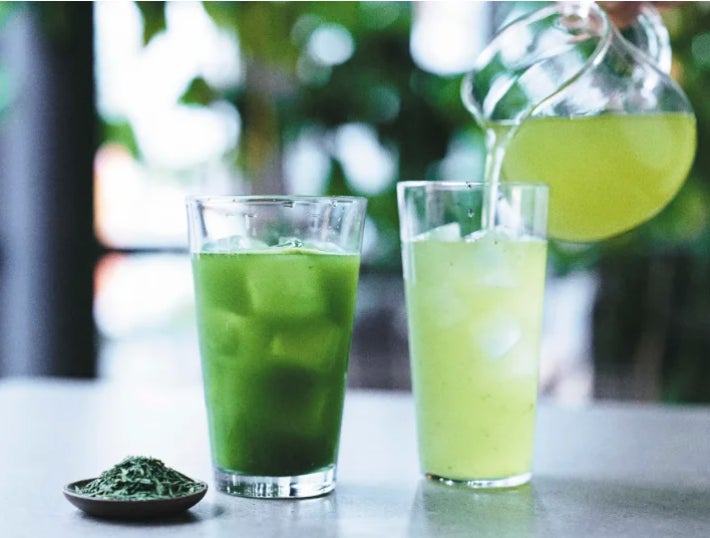
The technical summit of this method is the traditional gyokuro brewing technique. Gyokuro bushes are shaded under reed screens and straw for three weeks prior to harvest, forcing the plant to build up massive concentrations of theanine while reducing astringent catechins. At Yawayawa, baristas brew these leaves using water cooled down to 40, 50 degrees Celsius (104, 122 degrees Fahrenheit), using a leaf-to-water ratio that looks closer to an espresso extraction than a loose infusion.
The first extraction drops into a small ceramic cup as a thick, viscous liquor. It carries an intense, savory burst of pure umami that tastes more like concentrated dashi broth than sweet herbal tea. For the second extraction, the barista raises the water temperature to 65 degrees Celsius, coaxing out floral top notes and delicate sweetness. The third steep hits 80 degrees Celsius, releasing vibrant astringency and refreshing bitterness. Finally, some cafes dress the spent, tender leaves with a drop of citrus ponzu, inviting guests to eat them directly from the pot. Nothing goes to waste.
Urban Micro-Hubs and the Rise of Direct Farm Partnerships
The resurgence of whole-leaf tea is not confined to Tokyo backstreets. In commercial hubs across Western Japan, new hybrid formats are proving that specialty tea appeals to broader demographics. Osaka's bustling Shinsaibashi district has become an active testbed for this evolution. Long-established operators like Cafe Company, which oversees dozens of community-oriented dining locations across Japan, have integrated interactive tea tasting flights directly into urban cafe menus. At the same time, specialized concept shops like Ichirinka no Tobira, also in Shinsaibashi, spent over a decade developing specialized single-cultivar tea powders to make farm-fresh aromas accessible to casual city shoppers.
These retail formats serve as cultural translation engines. The traditional Japanese craft matcha ceremony, while globally famous, carries behavioral rules and social etiquette that many modern Japanese urbanites find unapproachable for everyday relaxation. By stripping away rigidity while preserving technical rigor, modern salons create an inviting entry point. A customer walks in looking for a quiet place to work or chat, orders a cold-brew single-origin sencha, and discovers for the first time that green tea can carry the fragrance of Muscat grapes, toasted pine nuts, or fresh bamboo shoots.
This direct exposure builds a conscious consumer base willing to buy twenty-gram bags of loose leaves for home preparation. That home-brewing habit creates ongoing subscription revenue for rural estates, turning urban cafes from mere novelty spots into vital infrastructure for agricultural survival.
Frequently Asked Questions (FAQ)
How does visiting an artisanal tea cafe like Yawayawa differ from a traditional tea ceremony?
A traditional tea ceremony (chado) focuses on strict choreography, philosophical etiquette, and powdered matcha served in a prescribed room setting. Boutiques like Yawayawa prioritize agricultural education, cultivar discovery, and relaxed social tasting. Guests can examine loose leaves, ask detailed questions about processing and soil composition, and enjoy unblended sencha or gyokuro without knowing ceremonial rules.
Why are single-origin teas so much more expensive than commercial supermarket teas?
Supermarket teas are blended from industrial harvests to hit a low, consistent price point. Single-origin leaves come from specific hillside micro-plots picked by hand or with handheld shears during a narrow window in spring. Yields are low, processing requires manual oversight from experienced tea masters, and cafes pay direct living-wage premiums to the farmers to safeguard sustainable farming practices.
Can I brew single-origin sencha at home without specialized equipment?
Yes. While a traditional clay kyusu (side-handled teapot) provides optimal leaf expansion, all you need is a basic ceramic vessel and a strainer. The key to quality brewing is controlling water temperature. Never pour boiling water directly over delicate green tea leaves. Cool your boiled water in an open mug down to 70 degrees Celsius (158 degrees Fahrenheit) before pouring it over the leaves, and steep for 60 to 90 seconds.
The Fragile Survival of Japan's Independent Tea Masters
Artisanal tea cafes alone cannot reverse the macro-level demographic contractions shrinking Japan’s agricultural countryside. Miles of historic terraces in Shizuoka and Mie will inevitably revert to wilderness over the next decade as aging cultivators lay down their shears. The domestic market for cheap, machine-harvested commodity tea will continue to consolidate around automated agricultural plains in the south.
Yet the rise of spaces like Japanese tea cafe Yawayawa proves that green tea can break free from the race-to-the-bottom commodity trap. By treating the tea leaf as an agricultural vintage worthy of deep study, these micro-salons have built a viable life raft for independent growers. They have established a direct, transparent supply line connecting curious metropolitan drinkers with rural fields, ensuring that the country’s most distinct, expressive cultivars survive to see another spring harvest.