Why Does My Armpit Smell Like Curry? The Shocking Science Behind Spicy Body Odor
You step out of an intense afternoon meeting or strip off your gym clothes, and an unmistakable aroma hits your nose: toasted cumin, warm turmeric, or a simmering pot of Madras curry. The confounding part is that you may not have eaten Indian takeout, chili, or Middle Eastern spiced meats in weeks. Yet, your shirt seams smell distinctly like a restaurant pantry.
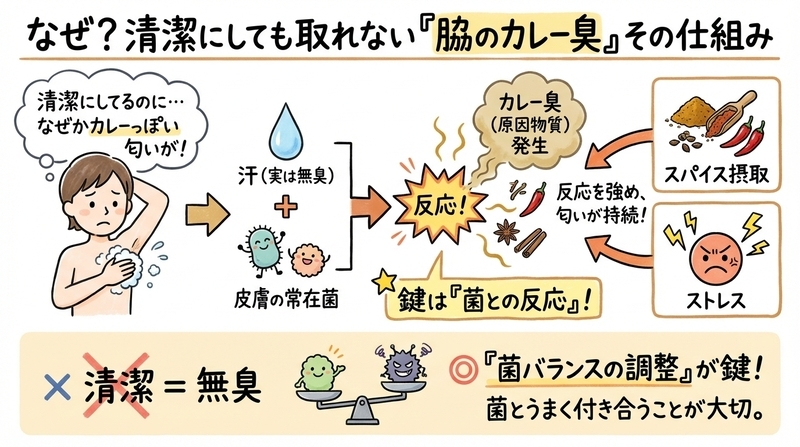
The phenomenon is far more common than people admit. Threads across dermatological forums and social health channels routinely feature confused individuals wondering if a hidden illness or a single heavy dinner altered their body chemistry. The explanation sits at the intersection of microbiology, metabolic waste elimination, and evolutionary biology. Sweat itself carries virtually no scent. The spicy sweat odor you detect is the byproduct of volatile chemical compounds generated when specific dermal flora feed on your glandular secretions.
📌 Key Takeaways:
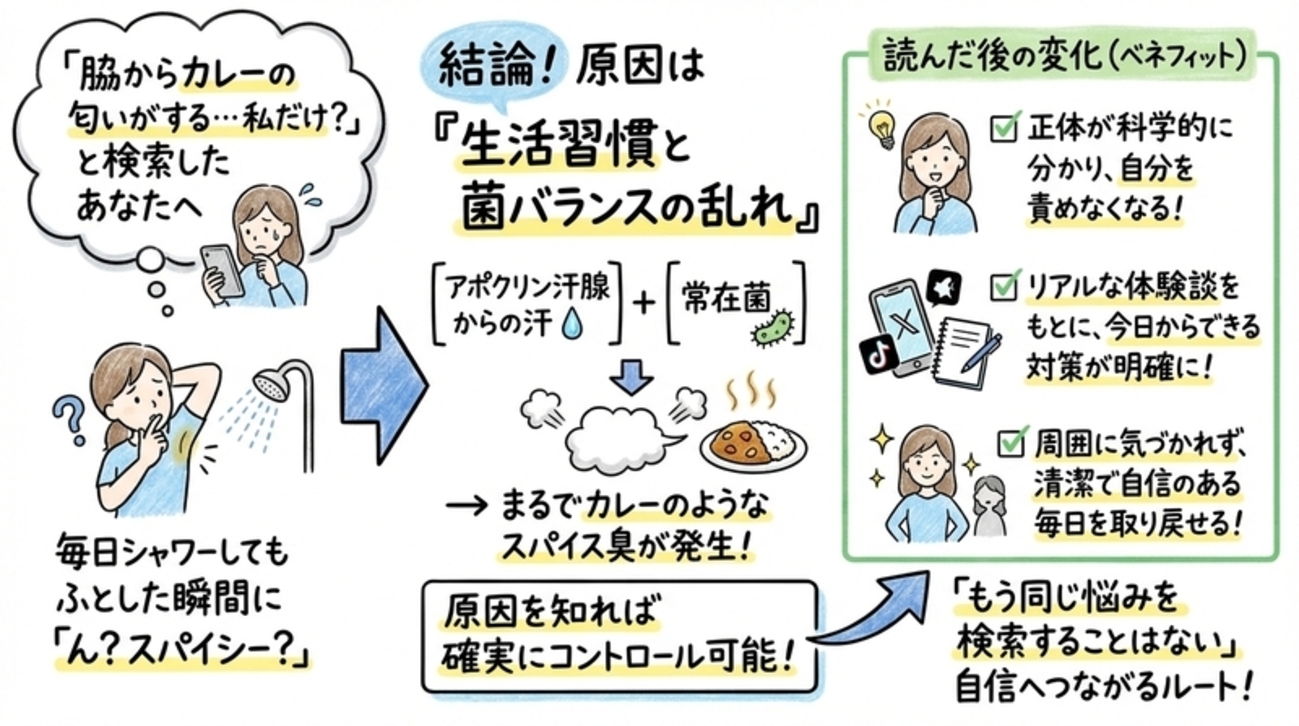
- The Molecular Cause: The distinct cumin body odor is primarily caused by Corynebacterium bacteria breaking down odorless secretions from apocrine sweat glands into volatile sulfur compounds and branched-chain fatty acids.
- Dietary Amplifiers: Spices rich in fat-soluble aromatic chemicals, particularly cumin, fenugreek, and garlic, bypass simple digestion and exit through sweat glands, lingering in dermal tissues for up to 72 hours.
- The Stress Multiplier: Acute emotional distress floods the armpits with lipid-heavy apocrine sweat, giving skin bacteria an immediate feast and sharpening the pungent scent within minutes.
The Biochemistry of Spicy Underarm Odor
Human skin houses two primary types of sweat glands: eccrine and apocrine. Eccrine glands cover nearly the entire body, producing a watery solution of 99% water and trace sodium chloride designed for thermoregulation. When you jog on a treadmill, eccrine sweat cools your skin and evaporates cleanly without generating pungent notes.
Apocrine sweat glands operate entirely differently. Clustered predominantly in the axillae (armpits) and groin, these glands open directly into hair follicles. They secrete a thick, milky fluid laden with proteins, lipids, steroids, and volatile fatty acids. These secretions act as raw fuel for resident skin microorganisms.
When dietary body odor triggers enter your digestive tract, lipid-soluble aromatic chemicals do not break down completely in the stomach or liver. Compounds like cuminic aldehyde (found in cumin) and sotolon (found in fenugreek) absorb into the bloodstream. As your body carries out metabolic waste elimination, small fractions of these volatile aromatic metabolites travel to the apocrine glands. They are expelled onto the skin surface, producing an intense olfactory profile that mirrors the spices you consumed days earlier.
The Culprit Microbes: How Bacteria Synthesize Cumin Aromas
Diet is only half of the equation. Many people who haven't touched a curry powder blend still produce a sharp cumin body odor. In those cases, the true culprits are microscopic residents of the axillary biome: Corynebacterium bacteria.
Axillary skin is an ecosystem dominated by Staphylococcus, Cutibacterium, and Corynebacterium species. Research in microbial biochemistry demonstrates that Corynebacterium strains carry specialized enzymes known as N-acyl-glutamine aminoacylases. These enzymes cleave odorless precursor molecules in apocrine sweat, specifically glutamine-conjugates, into sharp, pungent volatile organic compounds.
The most notorious of these compounds is 3-methyl-2-hexenoic acid (3M2H), an organic acid that emits an earthy, animalic, and distinctly spicy scent. When coupled with sulfur compound excretion, particularly 3-sulfanylhexan-1-ol, the resulting profile replicates the warm, bitter aroma of roasted cumin or curry paste. If your axillary microflora contains a high proportion of Corynebacterium over Staph species, your sweat naturally shifts toward spicy, herbal notes rather than sour or vinegar-like tones.
Evaluating the Triggers: Diet, Biology, and Bromhidrosis
Spicy underarm odor ranges from a transient quirk after dinner to chronic axillary bromhidrosis, the medical term for foul or excessive body odor that resists standard hygiene. Understanding which biological category your odor falls into determines whether you need a dietary adjustment, a stress management strategy, or targeted medical care.
| Odor Category | Primary Biochemical Triggers | Duration & Characteristics |
|---|---|---|
| Dietary Excretion | Sotolon, cuminic aldehyde, allicin, and lipophilic spice compounds | Lasts 24, 72 hours after consuming heavily seasoned or sulfur-rich meals. |
| Microbial Bromhidrosis | Enzymatic breakdown of apocrine proteins by Corynebacterium | Persistent daily scent; returns within hours of bathing, independent of diet. |
| Stress & Neuroendocrine | Adrenaline-driven apocrine discharge and sulfur compound excretion | Sudden, rapid onset during high-anxiety episodes; highly concentrated. |
| Hormonal Shifts | Fluctuations in estrogen, progesterone, and androgen activity | Cyclical or phase-based; common during puberty, luteal phases, or perimenopause. |
When the condition impairs daily life, dermatologists evaluate patients for underlying bromhidrosis causes. While rare cases point to metabolic disorders like maple syrup urine disease or trimethylaminuria, the vast majority trace back directly to microbiome imbalances combined with active apocrine glands.
Cortisol Spikes and Hormonal Sweat Changes
A sudden change in underarm odor often coincides with lifestyle pressure rather than changes in the kitchen. Stress sweat chemistry differs fundamentally from thermal sweat. When you experience high anxiety or panic, your adrenal glands flood your bloodstream with epinephrine and cortisol.
Adrenaline stimulates the myoepithelial cells surrounding apocrine sweat glands, forcing immediate contraction and emptying concentrated nutrient fluid into hair follicles. Because this happens in seconds, bacteria on the skin surface encounter an abrupt surge of lipid-rich sustenance. The bacteria ferment these substrates at an accelerated pace, generating sharp, sulfurous volatile fatty acids.
Hormonal sweat changes also alter your baseline scent profile across different biological life stages. Androgens stimulate both sebaceous and apocrine output. Increases in testosterone or variations in progesterone during the luteal phase of the menstrual cycle thicken glandular secretions. The result is a richer nutrient substrate for bacteria, amplifying any underlying spicy sweat odor.
Clinical and Practical Armpit Odor Remedies
Resolving persistent curry or cumin body odor requires altering the skin's microbial environment rather than masking it with synthetic floral fragrances. Layering commercial cologne over 3-methyl-2-hexenoic acid creates a heavier, more chaotic scent profile.
Effective treatment centers on targeted armpit odor remedies that reduce bacterial loads and control glandular moisture:
First, use a dedicated antibacterial wash for underarms. Washes containing 4% to 10% benzoyl peroxide drastically reduce local Corynebacterium populations without creating bacterial resistance. Apply the wash in the shower, allow it to sit on the axillary skin for two to three minutes so the active agent penetrates the hair follicles, and rinse thoroughly.
Second, introduce chemical exfoliants. Leave-on formulations containing glycolic acid (5% to 7%) or salicylic acid lower the pH of the underarm skin. Corynebacterium species flourish in alkaline environments between pH 6.0 and 7.5. Dropping skin pH below 4.5 creates an acidic barrier that arrests bacterial enzymes, stopping the conversion of precursor lipids into volatile sulfur compounds.
Third, apply clinical-strength antiperspirants containing aluminum zirconium compounds at night before bed. Aluminum plugs apocrine ducts when sweat production is at its lowest circadian baseline, choking off the fluid supply that bacteria require to ferment odor molecules the following day.
Frequently Asked Questions (FAQ)
Q1: Can drinking more water flush out a curry smell faster?
Yes. Hydration accelerates the renal clearance of dietary aromatic compounds. Increasing your daily water intake forces water-soluble metabolites out through urine rather than leaving lipid residues to escape through dermal and apocrine pores.
Q2: Why does the spicy smell linger on shirts even after washing?
Synthetic fabrics like polyester and nylon are hydrophobic and lipophilic. They strongly bind to oily apocrine secretions and volatile fatty acids like 3M2H. Standard cold-water detergent cycles rarely dissolve these lipid bonds. Use an oxygen-bleach soak or an enzymatic sports detergent to break down the embedded proteins and fatty acids.
Q3: When should a spicy armpit odor prompt a visit to a doctor?
If the scent appears suddenly without any dietary changes, occurs alongside night sweats, fever, or unexplained weight loss, or fails to respond to benzoyl peroxide and clinical antiperspirants after two weeks, consult a dermatologist. A clinician can rule out metabolic disorders, hyperhidrosis, or localized secondary fungal infections.
Restoring Balance to Your Axillary Microbiome
Detecting a faint curry or cumin scent from your armpits is a normal biochemical consequence of human digestion, stress responses, and microbial ecology. The human body is not a closed, sterile engine; it is a porous organism hosting trillions of active bacteria that react dynamically to what you eat, how you feel, and how your hormones fluctuate.
By swapping standard bar soap for an acidic cleanser or benzoyl peroxide wash, managing acute stress surges, and laundering workout gear with targeted enzymatic formulas, you strip Corynebacterium bacteria of the fuel they need. The spices belong on your dinner plate, not embedded in the fabric of your favorite shirts.