Why Is Toumyu Ending in 2027? Dissecting the Series Finale, Cast Legacies, and Fan Rankings

When the production committee behind Musical Touken Ranbu issued a sudden notice on December 1, 2025, the news jolted the global 2.5D theatre community. After a decade of commanding arena-scale venues and shattering box-office records for video-game stage adaptations, the franchise declared that its main production run will officially wrap up in December 2027. As detailed by an immediate ORICON NEWS Report, social media feeds instantly filled with disbelief, confusion, and grief from fans trying to understand why one of Japan’s most profitable theatrical properties would choose an exit date two years in advance.
Ending a commercial juggernaut while it still sells out multiple stadium performances within seconds is practically unheard of in commercial Japanese theatre. Yet the decision represents a deliberate artistic choice rather than a financial collapse. As the production marks its Toumyu 10th anniversary milestones and navigates an aging, increasingly in-demand cast, the producers have set a fixed deadline. The road to the Toumyu 2027 series finale is now an intentional, carefully mapped farewell tour that forces a reassessment of the franchise's most iconic runs, vocal tracks, and character portrayals.
📌 Key Takeaways:
- The Definitive Conclusion: The Touken Ranbu production committee finale announcement confirms the musical series will wrap up permanently in December 2027, concluding a 12-year theatrical arc.
- Cast Trajectories: Marquee Touken Ranbu stage actors like Ryuji Sato (Kashuu Kiyomitsu) and Mario Kuroba (Mikazuki Munechika) have transitioned into mainstream film, television, and major commercial productions, making perpetual franchise commitments unsustainable.
- The Touken Ranbu Musical Popularity Ranking: Early narrative arcs like Bakumatsu Tenroushu and monumental arena concerts like Shinken Ranbu Sai 2018 remain the highest-rated milestones among domestic and international audiences.
- Two-Year Transition: The planned 2026, 2027 timetable allows the production to stage full narrative conclusions for its main sword lines without abrupt cancellations or unceremonious cast replacements.
Behind the Curtain: What Sparked the Toumyu 2027 Series Finale
Commercial stage franchises in Tokyo rarely publish retirement dates. When a show makes money, production committees typically replace the cast with younger talent and run the property indefinitely. That formula built franchises like *The Prince of Tennis* musical (*Tenimyu*), which has cycled through four generations of teenage actors across two decades. The Musical Touken Ranbu committee rejected that path.
The core philosophy of Toumyu tied character identities to specific performers. When Ryuji Sato first put on the red scarf and black coat of Kashuu Kiyomitsu in trial performances in autumn 2015, he established an irreplaceable blueprint. The same dynamic occurred with Mario Kuroba, whose portrayal of the ancient, graceful Mikazuki Munechika grounded the entire metaphysical lore of the stage universe. Fans did not merely buy tickets to see historical swords brought to life; they bought tickets to see these exact actors breathe spirit into them.
By 2025, those same actors entered their thirties. Sato, Kuroba, and their peers have booked roles in major Toho musicals, live-action network dramas, and major Japanese film releases. Staging a single Toumyu production requires three months of grueling sword-fighting choreography, vocal rehearsals, and nationwide tours, followed by high-octane pop live concerts. Demanding that top-tier industry talent maintain those schedules year after year created severe calendar bottlenecks. Rather than recasting the foundational swords with green actors and diluting the prestige of the brand, the production committee opted for a definitive artistic resolution.
The Structural Pressure of the Toumyu Cast Legacy and Graduation
Graduation in 2.5D theatre is a sensitive subject. If an agency pulls a star actor from an ensemble piece, ticket sales often drop precipitously. Toumyu managed to evade this fate for years through clever structural rotations. The committee created distinct narrative squads: the historical Shinsengumi unit, the Genji brothers, the Tokugawa retainers, and the Gou sword collective. When one group was unavailable, another took the stage.
Yet this rotation model faced systemic limits. The lore of Touken Ranbu relies on an escalating chronological conflict against the Time Retrograde Army. Fans expected individual character arcs to reach a cohesive climax. Mikazuki Munechika's ongoing metaphysical isolation, a central plot thread running from *Aki no Sakazuki* through *Musubi no Hibiki, Hajimari no Oto* and late-stage arena revivals, demanded resolution. Continuing the story past 2027 without Kuroba or Sato would leave core narrative threads permanently severed.
Scheduling challenges intensified outside Tokyo. Domestic venue booking costs surged throughout the 2024, 2026 theatrical cycles, and arena-tier locations like Pia Arena MM and Makuhari Messe faced heavy multi-year backlogs. Maintaining a rotating repertory company of over 35 leading men became an operational liability. The December 2027 sunset gives the committee a runway to engineer proper on-stage send-offs for each faction, converting what could have been sudden departures into high-demand farewell runs.
Milestone Rankings: Evaluating Toumyu’s Greatest Productions
Over a decade of stage runs, Toumyu perfected a distinct two-act architecture. Act One delivers a heavy, historically grounded dramatic tragedy; Act Two pivots into a full-throttle idol concert where the sword warriors sing, rap, dance, and interact directly with fans. Among the dozens of standalone runs, spin-offs, and arena tours, certain productions set the benchmark for 2.5D musical stage play rankings.
The comparative table below outlines the five defining productions that shaped Toumyu’s critical and commercial standing, evaluated by box-office footprint, narrative execution, and long-term community reception.
| Production Title | Release Window | Anchor Characters | Narrative Distinction & Fan Impact |
|---|---|---|---|
| Bakumatsu Tenroushu | 2016 (Re-run 2020) | Kashuu Kiyomitsu, Yamatonokami Yasusada, Shinsengumi | Consolidated Toumyu's emotional core; set the gold standard for tragic sword-and-master storytelling. |
| Mihotose no Komoriuta | 2017 (Re-run 2019) | Ishikirimaru, Tonbokiri, Sengo Muramasa | Elevated the series' vocal expectations through Spi's operatic delivery; tackled Tokugawa family history. |
| Musubi no Hibiki, Hajimari no Oto | 2018 | Izuminokami Kanesada, Horikawa Kunihiro, Mutsu | Regarded by critics as the dramatic peak of the scriptwriting; brought Hijikata Toshizo's final stand to life. |
| Shinken Ranbu Sai 2018 | 2018 | 33-Actor Full Ensemble | The absolute commercial peak of arena lives; blended Japanese folklore (Maturi) with modern rock staging. |
| Koki no Hana Aite Moyuru | 2022, 2023 | Otegine, Suishinshi Masahide, Minamoto Kiyomaro | Demonstrated the franchise could build compelling theatre around later-generation sword additions. |
In fan-voted surveys across Japanese portal rankings, *Musubi no Hibiki, Hajimari no Oto* routinely captures first place for narrative weight. The tragedy of Hijikata Toshizo’s blades confronting their master’s inevitable death at Goryokaku struck a balance between gaming fan service and genuine period drama. It proved that 2.5D productions could handle grief and historical fatalism with nuance.
Fan Favorites: The Shinsengumi Blades and Vocal Showstoppers
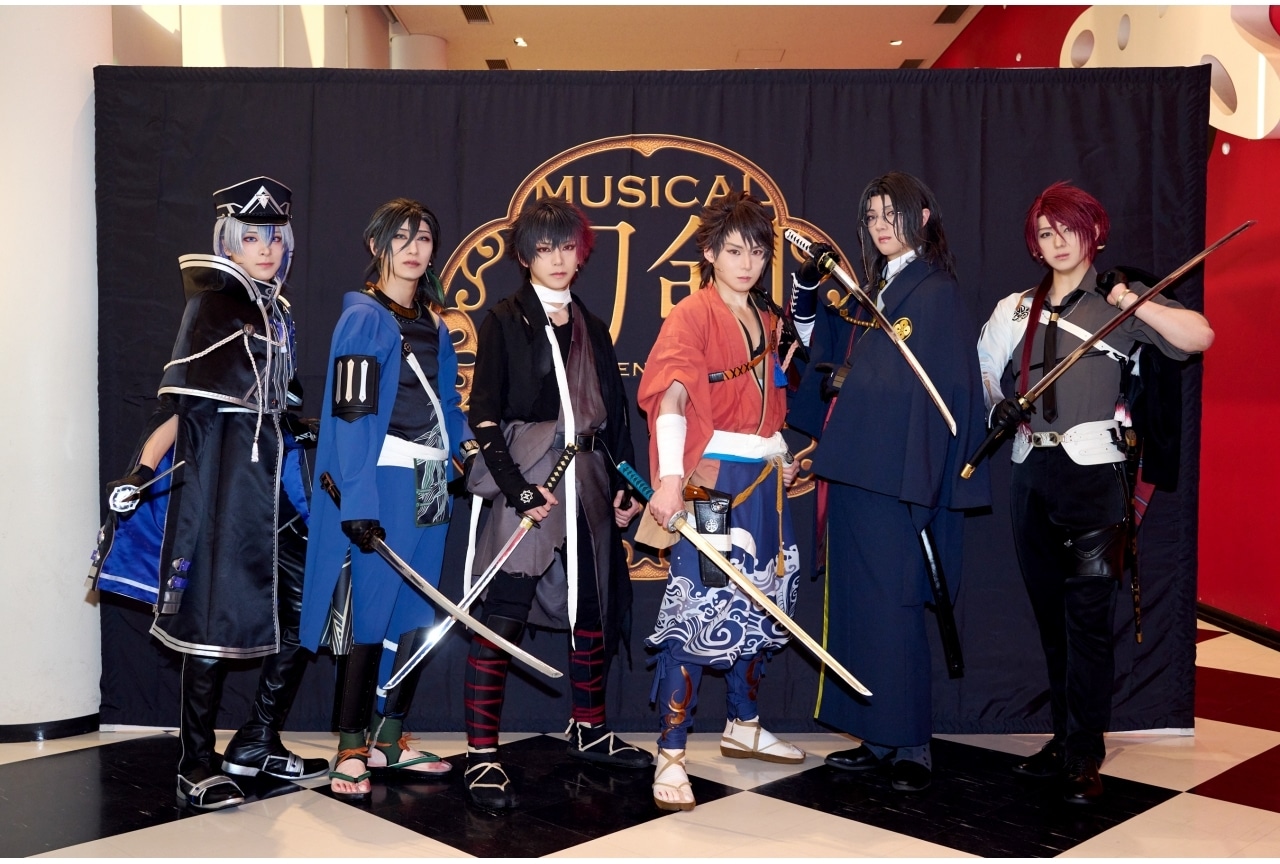
Character resonance remains the primary driver of Toumyu's longevity. Among the expansive cast, the Shinsengumi sword warriors have consistently dominated popularity polls. Kashuu Kiyomitsu and Yamatonokami Yasusada established an early emotional baseline: the pain of surviving an owner who perished in battle. That dynamic deepened when Izuminokami Kanesada (played with swagger by Shogo Sakamoto) and Horikawa Kunihiro entered the fold.
The musical choices in Toumyu played an equally massive role in establishing its cultural standing. The second act transformed sword boys into contemporary idols. The musical range spanned traditional shamisen-driven ballads, heavy metal breakdowns, and contemporary city pop.
Several numbers stand out across fan community surveys:
- "Touken Ranbu" (Theme): The unifying anthem rearranged for each run, carrying symphonic strings and heavy percussion that signal the start of combat.
- "Can You Guess What?": Spi's vocal showcase as Tonbokiri, proving that Toumyu possessed musical-theatre vocal power that could rival West End or Broadway imports.
- "Ketsubetsu no Hata" (The Flag of Parting): The emotional crescendo of *Musubi no Hibiki*, capturing the despair of historical samurai ideals meeting the modern firearm era.
- "Mistake": The definitive Act Two dance track, famous for its rotating vocal solos and energetic crowd engagement that filled dome-sized venues.
Fans connected with these songs because they extended character psychology into music. A sword forged in the Heian period sang with deliberate, archaic elegance; a blade from the Bakumatsu period delivered hurried, restless rock verses. This musical detail set Toumyu apart from competitors who treated songs merely as transitions.
The Structural Shockwave for Tokyo's 2.5D Theatre Industry
The conclusion of Toumyu in 2027 will leave a noticeable vacuum in Japan's commercial live-entertainment sector. Along with its sister stage property, *Stage: Touken Ranbu* (*Touste*, the non-musical play division managed by Marvelous), the musical served as the primary revenue engine for agency Nelke Planning and its production partners. It generated tens of millions of dollars annually through live ticket sales, domestic streaming distributions on DMM TV, luxury Blu-ray box sets, and character merchandise.
Beyond pure revenue, Toumyu acted as the central training ground for young male actors in Japan. Securing a role as a sword warrior historically served as a direct launchpad to commercial stardom, securing fan clubs, photobook releases, and eventual major agency representation. With the series winding down, agencies must find new multi-year properties capable of sustaining similar talent pipelines.
The announcement also draws a sharp contrast with *Touste*. While the stage-play branch continues to explore sprawling, complex historical narratives with an alternate cast, the musical's exit emphasizes the reality of staging massive, athletic musical lives. Toumyu’s physical demands, combining hour-long heavy broadsword combat with intensive synchronized pop choreography, impose a natural shelf life on its creative team and performers.
Frequently Asked Questions (FAQ)
Q1: Is Musical Touken Ranbu ending completely in December 2027?
A1: Yes. According to the Touken Ranbu production committee finale announcement, the ongoing musical series will conclude its main runs and reach its finale in December 2027. Ancillary live events or special retrospective concerts may occur later, but the official narrative cycle ends then.
Q2: Will the non-musical stage plays (Touste) also end in 2027?
A2: No. The December 2027 finale announcement applies exclusively to Musical Touken Ranbu (Toumyu). The stage play franchise (Touste), managed by Marvelous, operates under a separate creative team, production schedule, and storyline.
Q3: Why doesn't the production simply recast the original characters with younger actors?
A3: The production committee built the Toumyu brand around specific actor-character chemistry, particularly Ryuji Sato's Kashuu Kiyomitsu and Mario Kuroba's Mikazuki Munechika. Recasting core roles after a decade risks severe pushback from fans, prompting producers to end the series on an artistic high note instead.
Q4: Where will the final 2027 performances be staged?
A4: Official venue bookings have not yet been announced, but industry patterns and previous Shinken Ranbu Sai arena tours suggest the finale will conclude in major arenas, likely culminating in Tokyo-area venues such as Makuhari Messe, Pia Arena MM, or the Tokyo Dome.
The Road to the December 2027 Curtain Call
The next two years will be an extended, highly orchestrated goodbye. The production committee's advance notice gives international and domestic fans an opportunity that theatrical audiences rarely receive: the ability to prepare for the end. Ticket lotteries for upcoming 2026 and 2027 runs will see unprecedented competition as fans attempt to witness original cast members take the stage one last time.
Toumyu changed how the global theatre scene views video game adaptations. It showed that digital avatars and historical artifacts could sustain nuanced, multi-year theatrical narratives without collapsing into cheap novelty. As the swords prepare to return to their scabbards, the franchise leaves behind an influential catalog of productions, music, and performances that set a lasting standard for modern Japanese stage entertainment.