Why Miki Kawai Is the Most Hated Anime Character in A Silent Voice
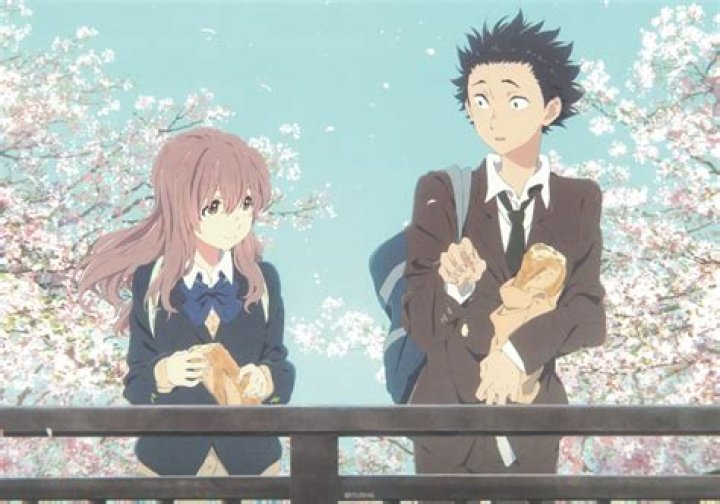
Few cinematic antagonists provoke as visceral a reaction as Miki Kawai. In Yoshitoki Oima’s A Silent Voice (Koe no Katachi), brought to the screen by Kyoto Animation, the primary conflict revolves around guilt, disability, and the agonizing pursuit of redemption. Yet years after the film's release, fan discussions remain dominated by a singular disdain for Kawai. Character rankings frequently single her out, with a detailed DualShockers Report listing Kawai among anime's most reviled personalities alongside mass murderers and galactic tyrants.
Kawai never detonates a city or wields supernatural terror. Her actions belong entirely to the mundane cruelty of a high school classroom. Audiences despise her precisely because her cowardice is authentic. She acts as a mirror to everyday social hypocrisy, weaponizing performative tears and moral purity while dodging any responsibility for the torment inflicted on deaf student Shoko Nishimiya.
📌 Key Takeaways:
- Core Finding: Miki Kawai triggers intense viewer hostility because she embodies an unpunished, realistic archetype: the bystander who participates in bullying while convincing herself of her innocence.
- Psychological Mechanism: Her behavior relies on weaponized tears, deflection, and narcissistic hypocrisy, positioning herself as the primary victim whenever confronted with her complicity.
- Narrative Contrast: Unlike overt bully Naoka Ueno or self-loathing protagonist Shoya Ishida, Kawai undergoes zero personal reckoning, leaving viewers with no sense of narrative justice.
The Weaponized Innocence of Miki Kawai
Kawai functions on a psychological premise that infuriates viewers: complete moral self-delusion. In both Oima’s original manga and Naoko Yamada’s Kyoto Animation feature, Kawai views herself as an inherently kind, sweet-natured class leader. She wears wire-rimmed glasses, braided hair, and an attentive smile. These visual cues broadcast model-student gentility.
This aesthetic serves as armor. When sixth-grade classroom dynamics sour after Shoko transfers in, Kawai does not throw hearing aids into ponds like Shoya Ishida. Instead, she giggles into her sleeve when others mock Shoko's speech. She sighs dramatically when asked to read along in class. When the school choir struggles to stay in rhythm, Kawai frames Shoko’s deafness as a communal burden, murmuring condescending pity that validates the class's rising resentment.
Her cruelty operates through social insulation. By framing her frustration as concern for group cohesion, she legitimizes ostracization while maintaining plausible deniability. She never considers herself a bully. That total absence of self-awareness separates her from classical antagonists and turns every scene she occupies into an exercise in moral vertigo.
Elementary School Complicity and the Bystander Shield
The bystander effect rarely operates in absolute silence. More often, it thrives on collective giggles and subtle nods. When sixth-grade teacher Mr. Takeuchi demands to know who contributed to Shoko’s torment, Ishida names his conspirators. He points directly at Kawai, who actively laughed at his cruelest jokes and encouraged the hostility.
Kawai's response establishes her lifelong playbook. She immediately bursts into loud, theatrical sobs. "Ishida is blaming me!" she wails to the entire room, instantly recalibrating the dynamic. The classroom pivots from investigating systemic abuse to comforting an upset girl. In seconds, Ishida becomes the solitary pariah, and Kawai secures her status as an innocent target of slander.
Sociological studies on adolescent peer violence emphasize that enablers are essential for targeted harassment to persist. Ishida provided the brute force, but Kawai provided social permission. By laughing at the jokes, she signaled to the rest of the class that cruelty was acceptable. By weeping when questioned, she sacrificed Ishida to save herself.
The Bridge Scene: When Deflection Collapses into Sabotage
The turning point for audience hatred occurs during the bridge scene confrontation. At this juncture in high school, Ishida attempts to assemble an uneasy circle of friends to help Shoko. Kawai enters this space purely to preserve her social standing alongside her romantic interest, Satoshi Mashiba.
When rumors circulate that Ishida was an elementary school bully, Kawai panics. Fearing that any association with him will taint her reputation, she preemptively exposes his sixth-grade past to their entire high school class. She does not do this out of empathy for Shoko; she does it to proclaim her own historical innocence before anyone can question her.
On the bridge, when Ishida directly confronts the group's collective dysfunction, Kawai unleashes pure vitriol dressed as righteous indignation. When Ishida bluntly tells her she only cares about herself, she immediately retreats into hysterics: "You're terrible! Everyone knows how hard I tried to protect Nishimiya!"
She rewrites history in real time. Facing exposure, Kawai actively shifts blame, claiming Ishida has always been a monster intent on hurting her. It is an extraordinary display of DARVO, Deny, Attack, and Reverse Victim and Offender. That single exchange cemented her standing in Comic Book Resources' retrospective character likability rankings as the narrative's least redeemable figure.
Comparative Morality: Kawai Versus Naoka Ueno and Shoya Ishida
To understand why Kawai generates more visceral fury than Naoka Ueno, one must examine intentionality versus deception. Ueno is overtly hostile, physically aggressive, and unapologetic. Yet audiences frequently tolerate Ueno more easily than Kawai.
| Character | Nature of Bullying | Self-Awareness Level | Accountability & Resolution |
|---|---|---|---|
| Shoya Ishida | Direct physical torment, verbal mockery, destruction of property | Complete self-loathing; recognizes his cruelty as monstrous | Endures years of social isolation; dedicates his youth to making amends |
| Naoka Ueno | Open relational aggression, active exclusion, physical assault | Clear self-awareness; admits she resents Shoko without hiding it | Refuses false apologies; eventually learns rudimentary sign language |
| Miki Kawai | Passive encouragement, public outings, weaponized self-pity | Zero self-awareness; perceives herself strictly as a benevolent victim | Zero accountability; forces others to comfort her and folds paper cranes |
Ueno operates out in the open. She loathes Shoko because she believes Shoko's presence fractured their friend group, and she never pretends her hostility is virtuous. Kawai, by contrast, cloaks her cruelty in the language of concern. She attacks while weeping, strikes while playing the victim, and demands praise for tolerating the people she quietly undermines.
Human psychology routinely treats overt hostility as less disorienting than sanctimonious betrayal. Ueno can be confronted because she stands on a defined ground of antagonism. Kawai cannot be confronted because any challenge causes her to immediately construct a reality where the accuser is an abusive bully and she is a traumatized martyr.
Why Real-World Narcissistic Hypocrisy Triggers Viewers
Online forums across Reddit and YouTube feature endless essays dissecting Kawai's behavior. The consensus points to a single explanation: nearly everyone has met a real-life Miki Kawai. As an analytical piece from Animated Times pointed out, the story's depiction of its worst personality functions as an uncomfortably accurate warning about social predation.
Anime villains who destroy planets evoke distant, theatrical terror. A classmate, coworker, or friend who gossips behind your back, betrays your secrets to protect their career, and then cries in front of management when caught triggers immediate, personal memory. Kawai represents workplace saboteurs, cliquey school peers, and fair-weather friends.
Her actions during the film's climax underscore this frustration. After Shoko’s suicide attempt and Ishida’s hospitalization, Kawai organizes the class to fold paper cranes. This gesture costs her nothing, demands zero introspection, and publicly advertises her benevolence. When she delivers those cranes, she demands emotional gratification from the very people whose lives she helped unravel.
Frequently Asked Questions (FAQ)
Q1: Does Miki Kawai ever apologize to Shoko Nishimiya in A Silent Voice?
A1: No. In neither the Kyoto Animation film nor Yoshitoki Oima’s manga does Kawai offer a sincere, direct apology for her childhood complicity. Instead, she folds paper cranes and frames her gestures as acts of magnanimous charity, preserving her self-image to the very end.
Q2: Why do viewers hate Kawai more than Naoka Ueno, who was physically violent?
A2: Ueno is transparent about her malice, making her motives honest and direct. Kawai operates through covert narcissism, using tears and moral grandstanding to ruin others while securing sympathy for herself. Viewers find that psychological cowardice far more infuriating than overt confrontation.
Q3: Does the manga provide more context for Kawai's behavior than the movie?
A3: Yes. The manga dedicates chapters to the amateur film project subplot, showing Kawai obsessing over her image as an actress and manipulating Mashiba. While the manga clarifies her crippling terror of being disliked, it confirms her total lack of moral growth, making her depiction even more explicitly self-serving than the film adaptation.
The Enduring Discomfort of Unpunished Cowardice
Narrative fiction generally abides by an unwritten contract: the wicked must suffer, or at minimum, recognize their wickedness. Ishida endures crippling depression and social ostracization. Ueno confronts her internal ugliness after a brutal brawl outside the hospital. Even secondary characters like Kazuki Shimada face the sting of fractured trust.
Kawai escapes completely unscathed. She walks away with her reputation intact, her romantic prospect unbothered, and her self-perception thoroughly unblemished. She does not learn sign language. She does not reflect on her elementary school cruelty. She remains exactly who she was on the playground: a coward who navigates the world by sacrificing anyone nearby to preserve her standing.
That lack of closure makes A Silent Voice a brilliant, unsettling work. Yoshitoki Oima understood that in the real world, the most destructive bullies rarely twirl mustaches or pay for their sins. They graduate with honors, hand out paper cranes, and live peaceful lives, forever convinced that they were the victims all along.