Why Rubbing Lipstick Stains Ruined Your Shirt: The Pro Blotting Secret
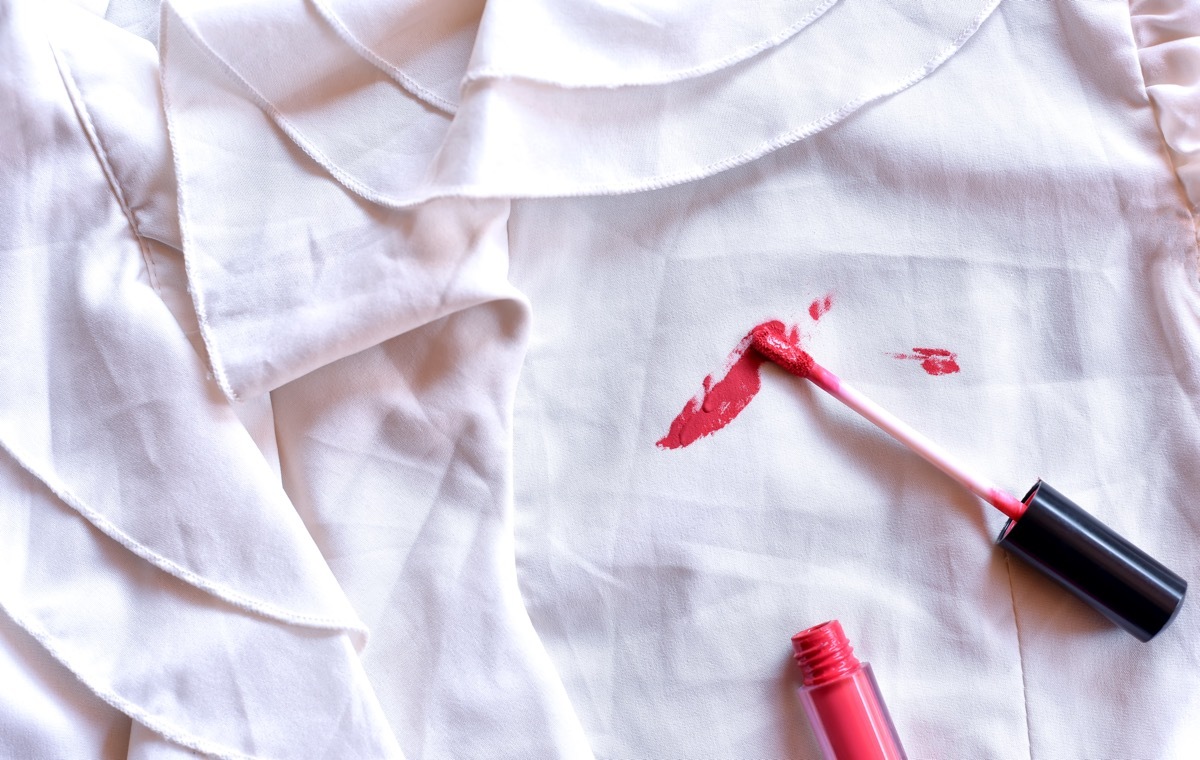
A crimson streak across a pristine cotton collar triggers an immediate, almost involuntary panic. Most people rush to the nearest bathroom mirror, wet a rough paper towel, and scrub vigorously against the mark. Within five seconds, a neat smudge blooms into a diffuse pink cloud twice its original diameter, permanently grinding cosmetic pigments deep into the weave.
That scrubbing reflex destroys garments. Professional textile conservators and dry cleaners consistently warn that mechanical friction turns a surface problem into an irreversible structural bind. As detailed in a practical garment care advisory from a recent Yahoo!ニュース Report, aggressive rubbing pushes oil-based compounds sideways across the weave instead of lifting them. Water-based rinsing fails because the lipid barrier repels moisture, leaving high-density pigments trapped inside twisted yarns. Rescuing the garment requires matching the chemical solvent to the cosmetic vehicle before the fabric hits a washing machine.
📌 Key Takeaways:
- The Friction Trap: Scrubbing lipstick drives wax bases deep into microscopic yarn crevices and breaks delicate fibers, turning a two-millimeter surface spot into an expansive fiber stain.
- Chemical Solubility: Water cannot dissolve cosmetic waxes; treating an oil-based makeup stain demands lipophilic solvents such as cleansing oil, liquid dish soap degreasers, or isopropyl alcohol.
- The Field Rule: Immediate damage control relies on a dry cotton swab pre-treatment to lift top-layer solids, followed by backward solvent blotting onto an absorbent backing pad.
The Chemistry of the Smudge: Why Water Makes Lipstick Worse
Modern lipsticks are marvels of cosmetic formulation, engineered to endure heat, friction, and moisture. Manufacturers blend high-melting-point waxes like microcrystalline, ozokerite, or carnauba with heavy castor oils, synthetic esters, and silicone polymers. Suspended inside this hydrophobic matrix are concentrated mineral pigments and lake dyes designed to bind securely to biological tissue.
When lipstick strikes cotton or polyester, those same clinging properties work against you. Fabric fibers are porous tubes. Under a microscope, spun cotton looks like twisted, hollow ribbons. Liquid waxes and emollients wick readily into these channels. Introducing water causes the hydrophobic wax molecules to clump together tighter, locking the finely milled colorants inside the fiber core.
Frictional pressure adds another hazard: pilling. Rubbing a wet fabric against itself fractures fragile surface filaments. These frayed ends tangle around pigment particles, trapping red iron oxides or synthetic red dyes in fuzzy knots that no ordinary laundry cycle can release.
The Restroom Crisis: Emergency Damage Control Away from Home
When disaster strikes at a dinner or during a morning commute, restraint is your strongest tool. Drop the rough paper towels and keep tap water away from the area. Every droplet applied at this stage seals the pigment into the fabric architecture.
Begin by testing if the mark has built up three-dimensional mass. If a thick streak remains on the surface, use an edge, a stiff business card, plastic gift card, or blunt butter knife, to scrape off excess wax vertically. Work strictly inward from the edges so you do not spread clean areas.
Next, use a dry cotton swab to dab lightly at the center of the residue. Roll the cotton tip between your fingers as you touch the stain so clean fibers pick up surface residue without grinding it across the weave. If you happen to carry micellar water or an oil-based lip balm in your bag, hold off on applying them haphazardly. An incorrect solvent can cause dyes to bleed into adjacent threads, leaving an unsightly ring that resists later treatment.
Solvent Performance Across Everyday Fabrics
Different textile fibers demand tailored chemical solutions. Treating delicate mulberry silk with harsh industrial rubbing alcohol strips natural sericin proteins, causing permanent chalky rings. Conversely, heavy twill cotton handles strong surfactants without structural degradation. Selecting the right intervention depends on your garment's specific fiber composition.
| Solvent Type | Active Mechanism | Best Fabric Match | Primary Risk Factor |
|---|---|---|---|
| Cleansing Oil | Dissolves heavy wax matrices and lipophilic binders | Heavy cotton, denim, sturdy poly-blends | Leaves secondary vegetable oil ring if not washed promptly |
| Liquid Dish Soap | Anionic surfactants strip grease and suspend colorants | Cotton shirt care, linen, broadcloth | Can cause color fading on non-colorfast artisanal dyes |
| 70% Isopropyl Alcohol | Breaks chemical dye bonds and dissolves synthetic resins | White cotton, synthetic athleisure, canvas | Dries out delicate wool; weakens acetate and rayon |
| Enzyme Stain Sprays | Proteases and lipases break down protein-lipid binders | Everyday cotton blends, modal, bamboo viscose | Breaks down natural protein fibers (silk, wool, cashmere) |
The Pro Oil-Dissolving Protocol: A Step-by-Step Breakdown
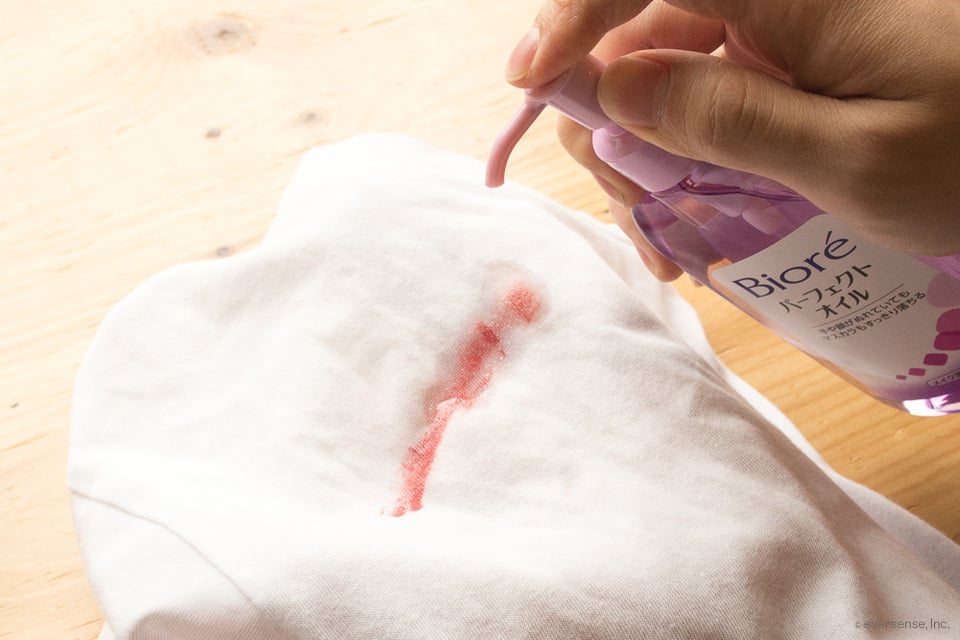
To lift a fresh or stubborn stain at home, follow a disciplined mechanical approach. You will need an absorbent backing layer, cosmetic cleansing oil or concentrated dish soap, clean cotton rounds, and lukewarm tap water.
Place a folded clean white washcloth, thick paper towel, or cardboard sleeve directly inside the garment, flat beneath the stain. This barrier catches dissolved makeup as it flushes out of the fabric, preventing the dye from transferring onto the back of your shirt.
Dispense two drops of cleansing oil or undiluted dish soap directly onto the back of the fabric, right behind the mark. Working from the reverse side forces the stain out the front where it entered, rather than pushing it deeper through the entire weave.
Use a damp cotton swab or the edge of a microfiber towel to tap the back of the fabric with firm, rhythmic pressure. Do not drag the applicator across the fabric. As the solvent breaks down the wax binders, you will see bright pigments seep directly onto the absorbent backing below. Shift the backing pad frequently so you are always blotting against clean material.
Once the majority of the pigment migrates downward, apply a tiny drop of dish soap to the front of the garment to emulsify remaining oils. Work the soap into the fibers using your fingertips in gentle circular motions. Rinse thoroughly under running lukewarm water. Finally, run the garment through a standard laundry detergent wash cycle using your machine's recommended fabric setting.
Rescuing Set-In Stains After an Accidental Dry Cycle
The real nightmare happens when a stained shirt slips through laundry uninspected and bakes in a hot dryer. High heat acts as a fixing agent. Dryers melt cosmetic waxes, flowing them completely around internal cotton fibrils before hardening. Simultaneously, hot air oxidizes dye pigments, bonding them to the cellulose matrix.
Even set-in marks can be cleared with patience and the right solvent order. Avoid chlorine bleach, which can chemically react with certain cosmetic additives to turn bright red stains into a permanent mustard-brown scorch mark.
Instead, apply 70% isopropyl alcohol to a clean microfiber cloth. Firmly press the saturated pad against the dried smudge and hold it motionless for 45 to 60 seconds. Alcohol breaks the hardened resin bonds holding old pigments in place. Lift the pad directly upward; you should see dried colorants begin to release onto the cloth.
Follow immediately with an oxygen-based powdered bleach paste made with sodium percarbonate and warm water. Work the thick paste into the affected threads using a soft-bristled toothbrush. Allow the enzymes and active oxygen to rest on the stain for at least 30 minutes before laundering in warm water. Inspect the fabric closely while it remains wet. If faint color shadows linger, repeat the pre-treatment immediately. Never return the garment to a heated dryer until the weave is completely clean.
Frequently Asked Questions (FAQ)
Q1: Can I use micellar water to clean lipstick off my clothes?
A1: Micellar water works well on light, sheer lip glosses, but struggles against pigmented matte lipsticks. The micelle surfactant concentration is diluted for skin safety, which makes it too weak to break down heavy carnauba or paraffin waxes in dense fabrics. Undiluted dish soap or a dedicated facial cleansing oil yields much cleaner results.
Q2: Why does rubbing alcohol fade certain colored shirts?
A2: Isopropyl alcohol is an aggressive organic solvent that dissolves not just lipstick waxes, but also certain commercial vat dyes and disperse colorants on synthetic fabrics. Always dab an inconspicuous inner hem or seam allowance for 30 seconds to confirm the base fabric dye does not bleed onto your swab.
Q3: Will dry cleaning automatically remove lipstick from dry-clean-only fabrics?
A3: Yes, professional dry cleaning solvents like perchloroethylene or liquid hydrocarbon dissolve cosmetic greases effectively. However, you must explicitly point out the lipstick smudge to the cleaner upon drop-off. Untreated makeup exposed to industrial steam presses will bake into silk or wool fibers, making later removal far more difficult.
Protecting Fine Garments from Cosmetic Transfer
Preventing cosmetic transfer is far easier than stripping heavy waxes out of delicate yarns. Makeup artists backstage at major runway shows slip sheer silk scarves or lightweight nylon hoods over models' heads before dressing them in high-collared apparel. Adopting a similar habit, covering your face with a clean silk square or stepping into garments feet-first, shields collars and necklines from accidental contact.
When an accidental smudge occurs, remember that patience and chemical compatibility will always outperform elbow grease. Keep calm, resist the urge to scrub with tap water, and let oil-dissolving surfactants do the heavy lifting from the back of the weave. Treating fabrics with gentle, solvent-driven care preserves fibers, guards vibrant garment colors, and keeps your wardrobe looking sharp for years to come.