Will Masahiro Nakai's Episodes Air Overseas? Fact-Checking the Global Deal

When Yoshimoto Kogyo and European production powerhouse Banijay Entertainment announced an international partnership in late February 2026 to take Zettai ni Waratte Wa Ikenai global, longtime comedy obsessives celebrated. For two decades, the brutal, slapstick centerpiece of Nippon TV’s Downtown no Gaki no Tsukai ya Arahende! defined Japanese New Year’s Eve television. Within hours of the announcement, social feeds lit up with overseas fans asking whether legendary archive broadcasts, specifically the historic, fourth-wall-breaking appearances by former SMAP leader Masahiro Nakai, would finally receive official worldwide streaming releases.
The reality of international television rights is rarely that straightforward. As detailed in the official マイナビニュース Report covering the joint venture, the deal between Yoshimoto Kogyo and Banijay focuses on licensing You Laugh You Lose as an unscripted production format rather than syndicating Nippon TV's legacy broadcast tapes. That distinction closes the door on hopes for a sudden, worldwide library release of Nakai’s classic variety hours, highlighting the tangled legal web that still traps Japanese broadcast history behind domestic borders.
📌 Key Takeaways:
- The Core Ruling: The 2026 Yoshimoto-Banijay agreement licenses the You Laugh You Lose format for local overseas adaptations, not the international streaming rights to Nippon TV's original broadcast archives.
- The Nakai Barrier: Masahiro Nakai's iconic guest stints remain ensnared in Japan's labyrinth of legacy performer contracts, multi-agency clearances, and unbundled music copyrights.
- The Production Strategy: Banijay aims to replicate the physical batsu game formula in territorial markets like the US and Europe, mirroring the structural rollout of global unscripted hits.
The Banijay Pact and the Speculation Around Nakai's Legendary Cameos
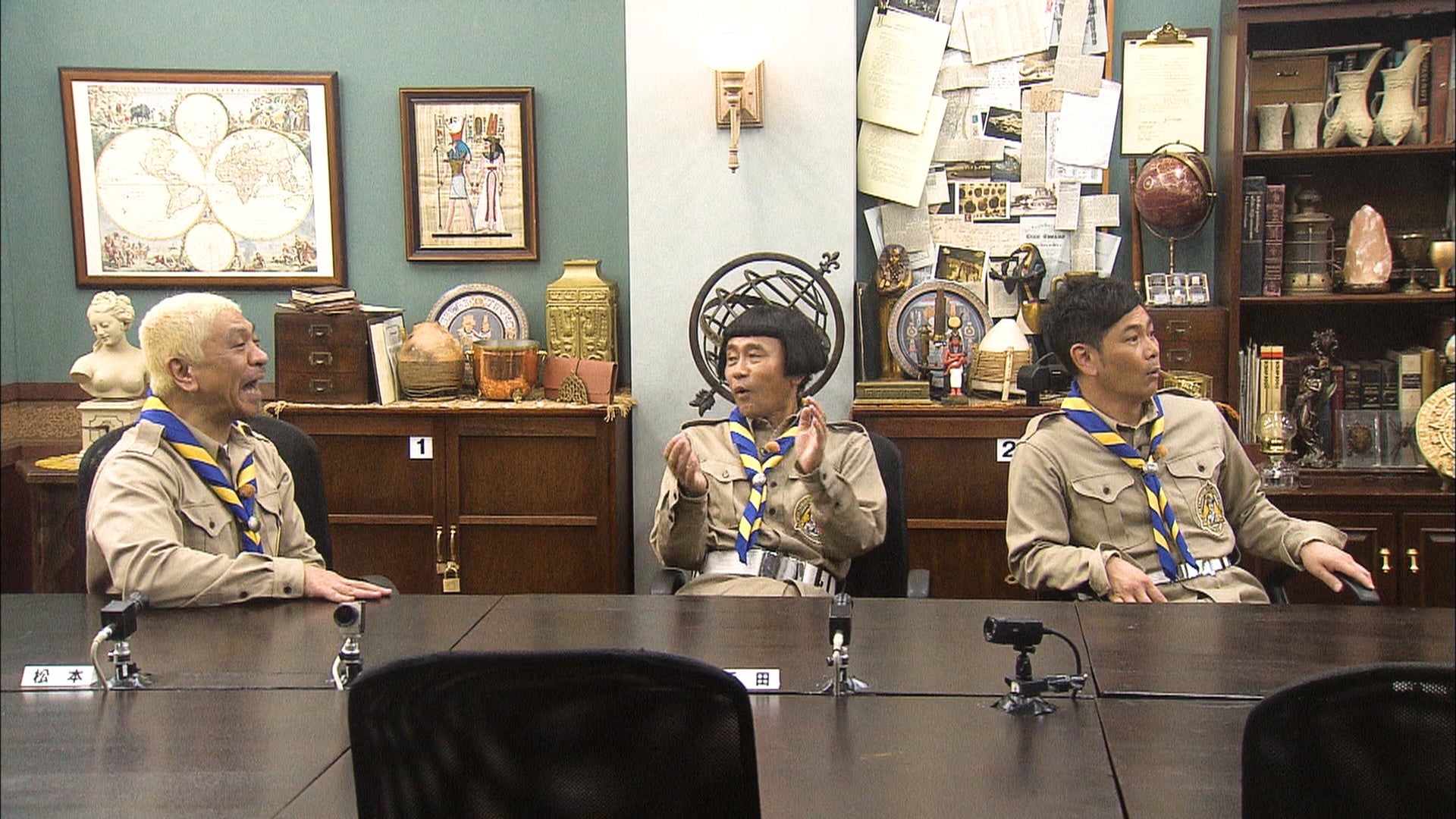
The announcement from Yoshimoto Kogyo executive vice president Akihiko Fujiwara and Banijay executives marked a massive corporate milestone for Japanese comedy. Waratte Wa Ikenai, created as an escalating punishment game for comedy duo Downtown (Hitoshi Matsumoto and Masatoshi Hamada), grew from a recurring segment into an immovable New Year's Eve ratings juggernaut. Between 2006 and 2020, millions tuned in annually to watch Downtown, Hōsei Tsukitei, and Cocorico endure merciless rubber-bat swats whenever they cracked a smile.
Among those hundreds of hours, few moments electrified domestic audiences like the guest appearances of Masahiro Nakai. Top-tier idol singers rarely subjected themselves to physical indignities on television. Yet Nakai broke every rule. In the 2017, 2018 special No Laughing American Police, he arrived disguised alongside the core cast, enduring physical punishments and satirizing his own pop-star persona. When news broke that Banijay had acquired global rights, English-speaking fan communities across Reddit and X immediately linked the deal to those vintage segments, hoping legal, high-definition masters would finally replace grainy fansubs.
Format Adaptation Versus Archival Streaming: The Crucial Contract Difference
The core misunderstanding stems from how global television commerce operates. Yoshimoto Kogyo holds the international format sales agency rights for Waratte Wa Ikenai, marketing the structural mechanics under the English title You Laugh You Lose. Banijay bought the right to produce localized versions of the show with domestic comedians in regions like North America, the United Kingdom, and continental Europe. They did not purchase Nippon TV's original program tapes for direct subscription streaming.
Distributing finished archival programs across international borders requires a completely different legal framework known as finished-tape syndication. Format sales purchase an intellectual blueprint: the rulebook, the black-masked punishment enforcers, the hidden speakers, and the escalating comedic traps. Tape syndication requires securing secondary exploitation rights from every single person who stepped in front of Nippon TV's cameras over a twenty-year period. For an ensemble series packed with uncredited extras, rival talent agencies, and impromptu celebrity cameos, that clearance process represents a financial and administrative nightmare.
Comparing Archival Realities: Format Licensing Against Legacy Broadcast Rights
To understand why a global remake can move forward while original Nakai episodes stay locked away, it helps to examine how intellectual property and talent clearances split across different distribution models.
| Production Dimension | Banijay Global Format Deal (2026) | Nippon TV Broadcast Archives (2004, 2020) |
|---|---|---|
| Core Asset Traded | Production mechanics, game rules, physical set concepts | Finished master tapes featuring original celebrity casts |
| Talent Clearances | Handled locally with newly contracted overseas performers | Requires unanimous sign-off from dozens of domestic agencies |
| Music & Audio Rights | Newly composed production cues or pre-cleared local libraries | Encumbered by uncleared commercial J-pop and foreign cues |
| Masahiro Nakai Inclusion | None (unrelated to local territory casting) | Blocked by legacy agency contracts and likeness protections |
The Talent Agency Labyrinth Surrounding Masahiro Nakai's Television Legacy
Nakai’s career trajectory adds unique layers of contractual friction. During his golden-era appearances on Gaki no Tsukai, Nakai was managed by Johnny & Associates, an agency historically infamous for aggressive protection of its performers' visual likenesses and extreme reluctance toward digital distribution. Although Nakai established his own management agency, Nonbiri na Kai, in 2020, retrospective streaming rights for appearances filmed under prior corporate contracts remain legally fraught.
Japanese variety shows from the 2000s and 2010s were produced strictly for domestic linear broadcast. Standard production agreements rarely secured global on-demand distribution rights from performers, musicians, or external agencies. Even within Japan, domestic streaming platform Hulu Japan offers only a carefully curated, heavily edited fraction of the annual New Year's specials. Commercial pop songs used during punishment sequences are routinely muted or replaced with generic synth tracks due to licensing expiration. Clearing those master recordings and performer likenesses for an overseas Netflix or Prime Video rollout would cost more than the projected streaming revenues could ever justify.
From Community Fansubs to the Commercial Realities of Global Formats
For more than fifteen years, international awareness of Waratte Wa Ikenai relied entirely on dedicated amateur translation circles. Volunteer translation communities like Team Gaki painstakingly subbed tens of gigabytes of raw holiday broadcasts, creating an immense English-language subculture around Downtown’s brand of slapstick. These grassroots audiences came to view Downtown, Nakai, and recurring character actors like Kenji Saga as indispensable pillars of the viewing experience.
Commercial format executives see the asset through an entirely different lens. International producers view You Laugh You Lose as an elastic, easily replicable game engine. Amazon demonstrated the massive commercial viability of the core premise with its Documental adaptation, LOL: Last One Laughing, which spawned successful regional spin-offs across Germany, France, Australia, and Mexico. Banijay's acquisition follows that exact production blueprint. Rather than educating American or British viewers on the cultural status of a former SMAP idol, producers will cast local comedians who can bring immediate recognition to regional audiences.
Frequently Asked Questions (FAQ)
Q1: Did Banijay purchase the rights to put original Gaki no Tsukai episodes on international streaming services?
No. Banijay acquired format licensing rights, allowing the company to develop and produce localized adaptations of the game concept in foreign territories. Nippon TV and Yoshimoto Kogyo retain ownership of the original Japanese broadcast footage.
Q2: Why is it so difficult to officially stream Masahiro Nakai's guest episodes overseas?
Nakai's appearances were produced under legacy domestic broadcast contracts. Releasing them globally would require complex secondary-use agreements involving multiple talent agencies, resolution of legacy representation rights, and costly global clearances for background music and proprietary likenesses.
Q3: Will the upcoming Banijay adaptations feature Japanese comedians from the original show?
Local versions typically cast regional comedians native to each broadcast market. While Downtown or Yoshimoto talent could theoretically make honorary cameo appearances as consulting producers, the core cast in each territory will consist of domestic entertainers.
What the Banijay Partnership Signals for Japanese Variety Exports
Yoshimoto Kogyo’s push to globalize You Laugh You Lose proves that Japanese comedy mechanics carry immense commercial value on the international stage. The conceptual brilliance of Downtown's batsu games transcends language barriers effortlessly. A room full of adults trying not to laugh while facing absurd physical consequences requires zero cultural translation to generate laughs.
Yet the persistent confinement of the original tapes illustrates a chronic challenge for Japan’s entertainment sector. The archival gems that built the format's global cult following, including Masahiro Nakai’s riotous, image-shattering performances, remain preserved primarily in physical home video releases and fan memories. As Banijay prepares to build new, localized sets across Western markets, the original broadcasts stand as a singular product of a broadcast era that television legal frameworks cannot easily reproduce.