Yomiuriland Bungee Jump Height Exposed: Footage and Behind-the-Scenes From VS. Chotokkyu
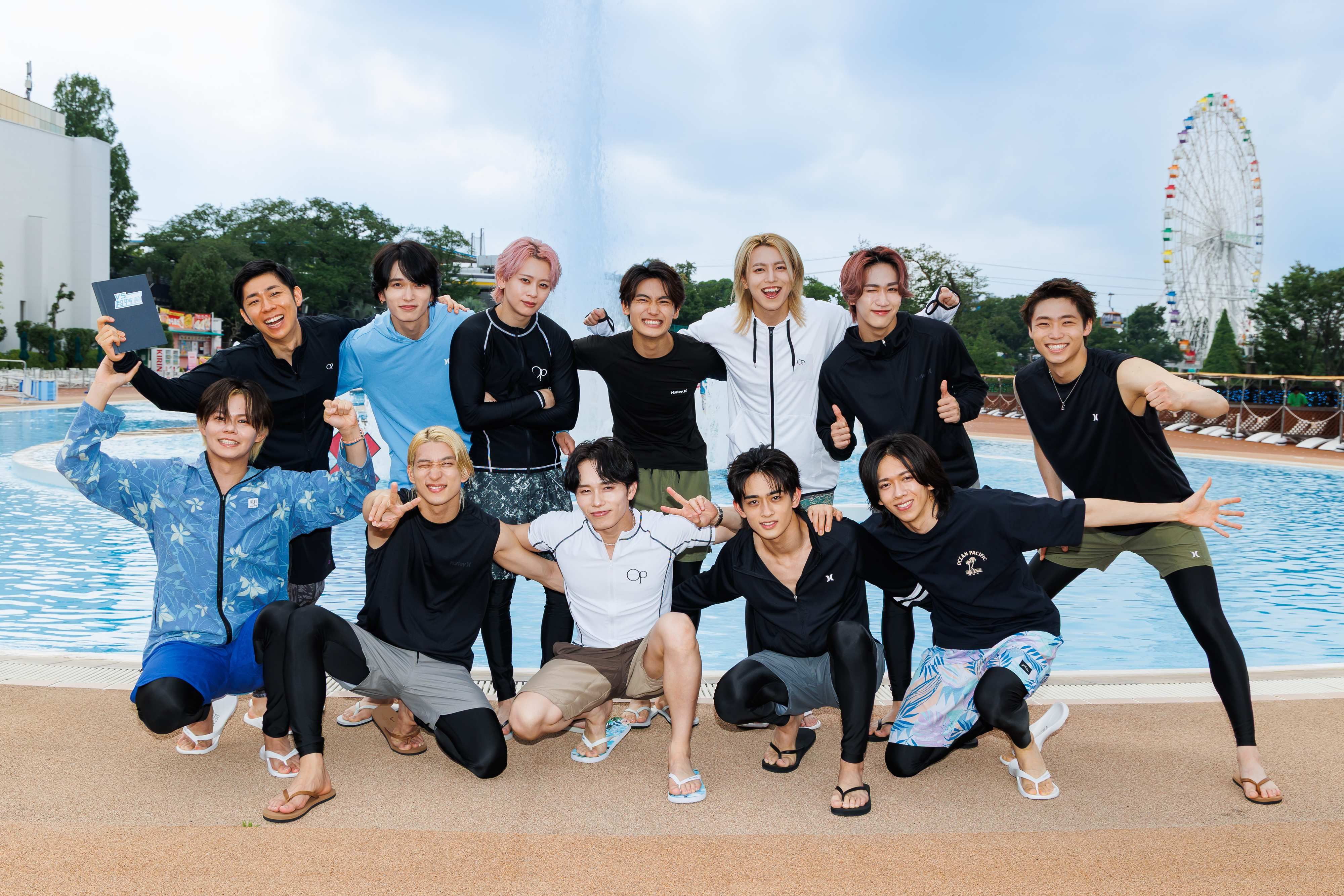
Standing on the metal grate of the jump tower at Yomiuriland, the Tama Hills stretch out toward the Kawasaki skyline, but your eyes inevitably lock onto the landing mattress below. That distance measures exactly 22 meters, roughly the vertical drop from a seven-story residential building. Most visitors hesitate before taking that step off the edge. When Nippon TV brought nine-member dance and vocal group Bullet Train (Chotokkyu) and six-member rising outfit WATWING together for a summer special, producers replaced backstage comfort with a raw plunge into open air.
As documented in a detailed 楽天Infoseek Report covering the broadcast, the two entertainment groups descended on the historic amusement park to film a high-stakes, two-week summer edition of VS. Chotokkyu. Airing August 10 and August 17 at 24:59 JST, the face-off transformed Tokyo's lone permanent bungee platform into an arena for an unhinged idol dare: leap into gravity while trying to hold a pristine, camera-ready "kime-gao" (smoldering facial expression) for the production's high-speed lenses.
📌 Key Takeaways:
- The Elevation: Yomiuriland operates Tokyo's sole permanent bungee jump installation, launching participants off a 22-meter tower equivalent to a seven-story structure.
- The Idol Showdown: Nippon TV's VS. Chotokkyu matched Bullet Train against rival boy band WATWING in a summer special testing psychological composure during extreme acceleration.
- Visitor Parameters: Operations require jumpers to weigh between 38 kg and 109 kg, meet an age threshold of 12 years, and clear rigid harness and wind safety protocols.
The Mechanics of Tokyo's Lone Metropolitan Freefall Tower
Urban theme parks rarely allocate footprint to vertical drop towers with open cords. Yomiuriland, operating on the border between Inagi City and Kawasaki since 1964, maintains an odd distinction: it houses the only permanent commercial bungee jump within the Tokyo metropolitan expanse. While Japan features taller bridge jumps in mountainous prefectures like Ibaraki and Gunma, Yomiuriland's 22-meter jump platform sits just thirty minutes from Shinjuku Station.
The experience is engineered for psychological pressure. Unlike bridge jumps where vast canyons blur immediate depth perception, an urban platform forces jumpers to reference nearby architecture. You see handrails, Ferris wheel spokes, and asphalt pathways directly beneath your feet. Free-fall velocity tops roughly 55 to 60 km/h before the specialized latex cord catches the body harness. That split second between stepping into void and feeling the cord tense produces a sensory jolt that indoor simulators cannot replicate.
Park technicians calibrate cord elasticity based on exact morning temperature checks and individual weight brackets. Jumping here does not require backcountry excursions or hiking boots. It requires walking up a flight of open-air steel stairs, listening to bilingual jump marshals, and consciously overriding every survival instinct in your central nervous system.
The Variety Show Showdown: Bullet Train Meets WATWING at the Gantry Edge
Japanese variety television relies heavily on physical ordeals to crack through polished media training. The two-part summer programming on Nippon TV marked the third on-screen clash between Bullet Train and WATWING. The rivalry started during joint music events in 2024 and simmered through subsequent appearances. Bullet Train member Takashi jokingly remarked during filming that WATWING felt like "semi-regulars" on their home show.
The challenge stripped away rehearsed choreography. Contestants stood on the edge of the 22-meter platform tasked with delivering their sharpest idol expressions straight into a boom-mounted camera during terminal acceleration. What looked simple on the briefing board dissolved the moment the countdown hit zero. Behind-the-scenes accounts revealed nervous pacing on the gangway, sudden vocal warmups turned into panicked laughs, and genuine hesitation as performers stared down at the modest air cushion below.
Viewers watching the midnight broadcasts saw unvarnished reactions. The split-second transition from theatrical swagger to sheer ocular terror became an instant social media talking point. Even seasoned performers accustomed to stadium pyrotechnics found the bare steel platform a distinctly unforgiving stage.
How Yomiuriland Compares to Japan's Premier Jump Locations
Travelers assessing extreme attractions across Honshu often confuse urban amusement park drops with rural bridge expeditions. Yomiuriland provides an accessible entry point, but the structural dynamics vary wildly across the country's certified drop zones.
| Location & Facility | Drop Height | Structural Equivalent | Weight & Age Limits |
|---|---|---|---|
| Yomiuriland Bungee (Tokyo/Kanagawa) | 22 meters | 7-story office structure | 38, 109 kg | Age 12+ |
| Kaiun Bungee (Nara Prefecture) | 30 meters | 10-story building | 40, 105 kg | Age 13+ |
| Minakami Bungee (Gunma Prefecture) | 42 meters | 14-story building | 40, 105 kg | Age 15+ |
| Ryujin Suspension Bridge (Ibaraki) | 100 meters | 33-story skyscraper | 40, 105 kg | Age 15+ |
The 22-meter height at Yomiuriland sounds approachable on paper when lined up next to Ryujin's staggering 100-meter gorge. Yet sports psychologists routinely note that mid-height jumps trigger acute visual dread. At 100 meters, terrain flattens into abstract landscapes. At 22 meters, you clearly see individual spectators watching from safety, gravel paths, and structural girders rushing toward you in real time.
Rigid Operational Protocols and Harness Safety Checks
Behind the televised theatrics sits an uncompromising maintenance apparatus. Amusement park jump facilities operate under stringent Japanese municipal safety inspections. Every visitor walking onto the Yomiuriland platform undergoes a strict physical check before donning gear.
The basic parameters remain firm across all operating days:
Jumpers must weigh between 38 kilograms and 109 kilograms. Operators weigh participants on calibrated scales directly before harness fitting; clothes and shoes factor into the final readout. Anyone outside those boundaries is turned away without exceptions. Age limits mandate participants be at least 12 years old, with minors requiring signed parental consent.
Apparel rules are equally non-negotiable. Skirts, dresses, high heels, and loose sandals are prohibited on the platform. Jumpers must wear secure athletic footwear. If shoes lack proper laces, staff provide safety bindings to keep footwear from becoming airborne projectiles over park guests. Glasses must be removed or secured with specialized sports straps.
Meteorological variables dictate operations hour by hour. High winds sweeping through the Tama Hills force immediate operational pauses. Lightning warnings within a 10-kilometer radius shutter the tower automatically. The dual-harness connection system, linking waist and chest securing points via independent locking carabiners, ensures redundant load-bearing protection throughout the swing phase.
The Cultural Function of Tokyo's Extreme Television Dares
The footage captured during the Bullet Train and WATWING showdown reflects a long-running Japanese entertainment tradition. Extreme dares have anchored variety programming since the early days of Showa-era comedy. Pushing young performers into genuine physical stress serves as an equalizer.
Idol groups maintain strict aesthetic management in music videos, fan meetings, and stage routines. High-definition choreography and autotuned perfection build an aspirational aura. Variety directors counter this by setting scenarios where physical instincts strip the artifice bare. Standing on a cold steel platform twenty-two meters above the ground, the urge to retreat is universal.
Watching artists like Bullet Train's Takashi or members of WATWING grapple with real dread before plummeting down creates an empathetic bond with viewers. Audiences do not tune in merely to see a smooth jump; they watch for the cracking voice at the countdown, the nervous laughter, and the wild adrenaline surge after landing safely back on solid ground.
Frequently Asked Questions (FAQ)
Q1: Is the Yomiuriland bungee jump included in the park's standard One-Day Pass?
A1: No. The bungee jump is operated as an independent pay-per-ride attraction. Even if you purchase an unlimited One-Day Pass, you must buy a dedicated bungee ticket at the attraction entrance, which costs around 1,200 to 1,500 yen depending on current seasonal pricing.
Q2: What happens if you climb the tower but freeze and refuse to jump?
A2: Operators allow jumpers a brief countdown window to steady their nerves. However, if you refuse to leap after multiple attempts, staff will safely unharness you and guide you down the stairs. Park policy does not offer ticket refunds for voluntary jump cancellations.
Q3: Can visitors film their own jump using an action camera or smartphone?
A3: Handheld smartphones, loose selfie sticks, and unsecured personal cameras are strictly forbidden on the platform due to drop hazard regulations. Guests wishing to document their jump can sometimes opt for staff-managed camera recordings or secure head-strap mounts approved by safety marshals on site.
What Tokyo Thrill-Seekers Face at the Edge
Yomiuriland's bungee jump maintains its enduring appeal because it sits right at the intersection of urban convenience and real biological dread. Twenty-two meters will never match the canyon-spanning drops of the Japanese Alps. Yet stepping off that steel grate into open metropolitan air remains an undiluted adrenaline shock. As Bullet Train and WATWING demonstrated under the harsh lights of late-night television, no amount of celebrity confidence can outmaneuver the pull of gravity.